
Hulk Teach! #2 Review: Jeffrey Brown Smashes Middle School with Marvel Mayhem
·Al Mega
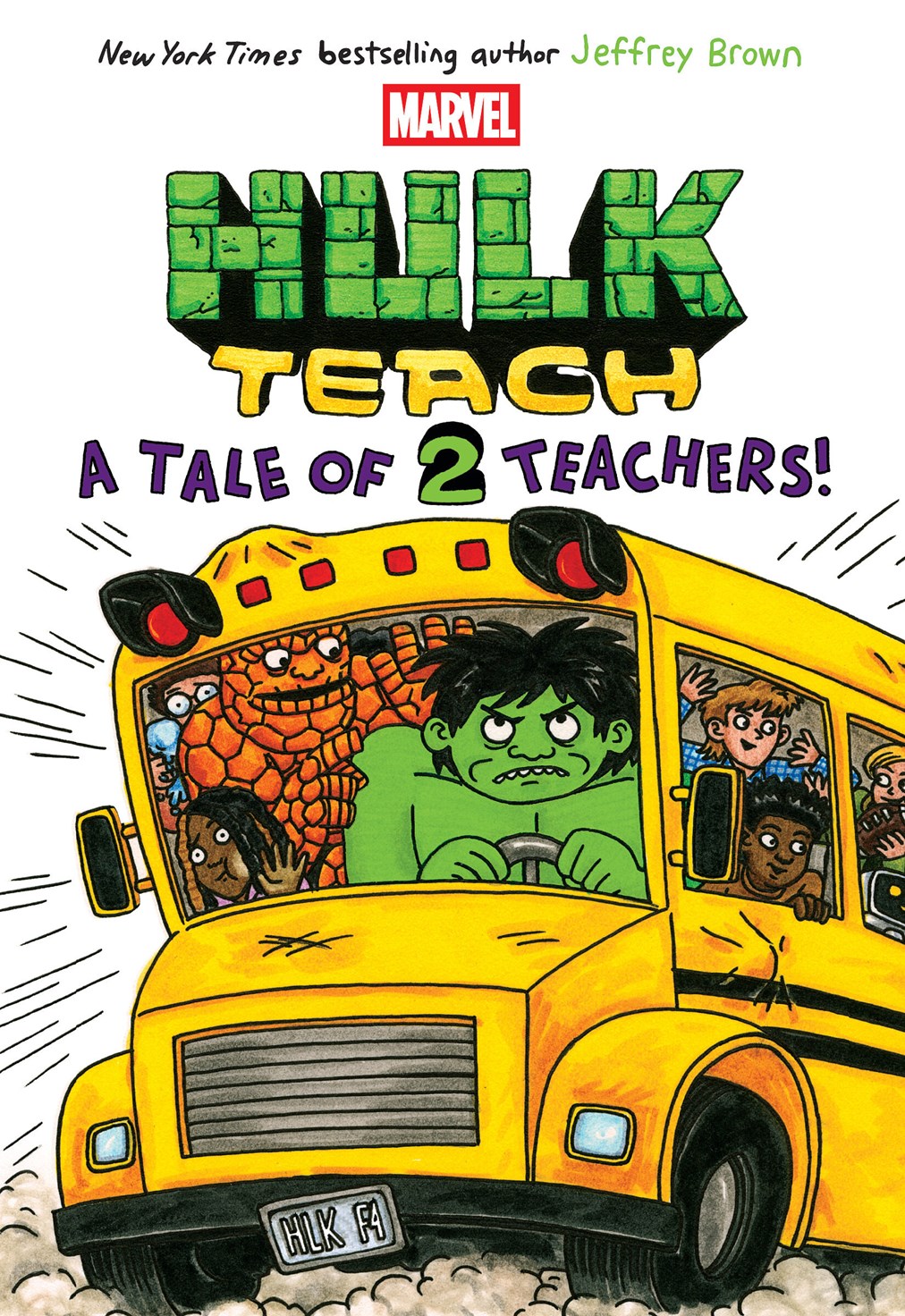
WEPA! Somebody ring the school bell, hide the standardized tests, and reinforce every desk in the building, because A Tale of Two Teachers: Original Marvel Graphic Novel (Hulk Teach! #2) is back in class and this thing is pure middle-grade madness with a Marvel-sized grin. Jeffrey Brown takes the wildest idea on paper Hulk as a teacher and somehow turns it into something funny, sweet, chaotic, smart, and weirdly relatable for anyone who has ever survived school, taught school, had kids in school, or wanted to Hulk-smash a confusing worksheet at 8:07 in the morning. This graphic novel is not trying to be some grim, brooding superhero saga where everyone whispers in shadows like they forgot to pay the electric bill. Nah, this is Hulk in the classroom, Thing trying to teach literature, kids outsmarting adults, Watchers acting like intergalactic podcast commentators, and one school trying to survive a system that feels way too real even under all the superhero silliness.
Jeffrey Brown’s magic here is that he knows exactly what this book needs to be. It is quick, visual, accessible, goofy, and loaded with jokes that young readers will catch instantly, while adults will sit there nodding like, “Yeah… that is exactly how a parent-teacher conference feels.” The story kicks off with that perfect Marvel-meets-middle-school absurdity: Bruce Banner is still dealing with the fallout of his Hulk-sized community service situation, and teaching has become part punishment, part growth opportunity, and part emotional demolition derby. What makes this sequel pop is the “two teachers” dynamic. Hulk/Banner is not the only super-powered classroom disaster anymore, because Ben Grimm, a.k.a. The Thing, gets thrown into the mix, and suddenly the book becomes a buddy comedy where the buddies are two legendary Marvel heavy-hitters trying to guide kids through school without turning every lesson into rubble, pizza, robots, or existential dread.
And let me tell you, Brown understands comedy rhythm. The jokes do not feel forced. They tumble out of the characters like pencils falling from an overstuffed backpack. The Watchers, especially Uatu and his side-commentary crew, are hilarious because they treat every school mishap like a cosmic event worthy of analysis. It is ridiculous in the best way. One minute they are observing Hulk’s emotional growth; the next they are basically reviewing classroom management like celestial Yelp critics. That framing device gives the whole book this playful “documentary from the moon” vibe, and it works because Brown keeps the Watchers deadpan while the Earthbound chaos gets louder and goofier.
The core of the book, though, is not just “Hulk funny because Hulk smash.” That would get old faster than cafeteria pizza under a heat lamp. The real juice is that Brown keeps finding ways to make Hulk’s size, temper, innocence, and blunt honesty meaningful. Hulk is not simply a walking punchline. He is a character trying to figure out how to help kids when most people only see him as a problem with green skin and property damage. That gives the book a sneaky emotional engine. Hulk wants to be useful. Hulk wants to be understood. Hulk wants the kids to win. And in classic Hulk fashion, he keeps accidentally teaching the lesson while trying not to break the room.
The kids are a major win here. Brown does not write them like tiny adults in sneakers, and he does not write them like helpless background props waiting for superheroes to save the day. They are funny, distracted, anxious, creative, clever, messy, and way more observant than the adults give them credit for. That is where the book really earns its place on middle-grade shelves. The students are not just learning from Hulk and Thing; the heroes are learning from them. There is a fantastic undercurrent about education being more than test scores, more than rigid systems, and definitely more than adults arguing over who gets credit when kids succeed. The book says, in its own silly Hulk-sized way, that learning is curiosity, teamwork, confidence, and the ability to keep going when the system feels like it is designed by someone who has never met an actual child.
The Academatchalon plot gives the book its structure and keeps everything moving. Literature, robotics, art, history, speech, field trips Brown turns school subjects into comedy battlegrounds. This is where the book shines as a graphic novel for reluctant readers, classroom libraries, and young Marvel fans who want action but also want something they can actually laugh with. The robotics sequence is especially fun because it lets the kids use problem-solving instead of just waiting for a superhero to punch the issue into next Tuesday. The art museum section is another standout because it pokes fun at art criticism, abstract expression, performance art, and Hulk’s very direct relationship with creativity. Hulk does not overthink the assignment. Hulk feels the thing, makes the thing, maybe breaks the thing, and keeps it moving. Honestly? That is a whole creative philosophy right there. Big WEPA energy.
Visually, Jeffrey Brown’s style is a perfect match for this tone. The loose, hand-drawn, two-color approach gives the book personality on every page. It feels like a kid’s notebook came alive after eating a stack of Marvel comics and drinking too much chocolate milk. The characters are expressive without being overcomplicated. Hulk’s faces alone deserve their own report card. Confused Hulk. Proud Hulk. Angry Hulk. Trying-to-be-patient Hulk. “I am about to destroy this desk but I am growing emotionally” Hulk. Brown’s panels are clean and easy to follow, which matters big time for the 8–12 crowd, but they are also packed with little background gags, reactions, and body language that reward careful reading. That is why this book does not feel thin even though it moves fast. The pages breathe, but they also bounce.
The Thing is another excellent addition because he brings a different flavor of comedy. Ben Grimm’s whole “rough outside, soft heart” energy fits the classroom perfectly. He is not polished. He is not traditionally teacherly. But he cares, and that matters. Watching him try to connect with students through literature, teamwork, and his own clobberin’ charm is a blast. He also gives Hulk a mirror. Both characters are strong enough to level buildings, but the book is more interested in whether they can help a kid feel brave enough to give a speech, create a project, or believe they belong. That is the secret sauce. It is not about smashing harder. It is about showing up better.
There is also a villainous adult energy running through the story that hits harder than expected because, beneath the comedy, the book is poking at real-world pressures around schools, funding, testing, closures, and adults treating education like a spreadsheet with lockers. Brown keeps it kid-friendly, but the satire is there. The idea that a school can be judged, threatened, or undervalued because of numbers and optics is painfully recognizable. Then the book flips that into something empowering: the students’ creativity, effort, friendships, and unconventional learning become the very things that prove the school matters. That is a beautiful message wrapped in superhero shenanigans. Sneaky, smart, and effective.
What I really appreciate is that Hulk Teach! never talks down to its audience. It trusts young readers to understand jokes, emotional beats, and bigger ideas. It also respects teachers enough to show that teaching is not just standing in front of a room saying smart stuff while kids magically behave. Teaching is improvisation. It is patience. It is paperwork. It is chaos. It is caring when you are exhausted. It is trying to make something meaningful happen before the bell rings and everyone bolts like they heard free pizza got delivered. Brown captures that with charm and silliness, but also with genuine affection.
For Marvel fans, this is a delightful sideways doorway into the universe. You get Hulk, Banner, Thing, She-Hulk, Watchers, S.H.I.E.L.D.-style field trip energy, superhero cameos, and comic book absurdity without needing a doctorate in continuity. For Jeffrey Brown fans, especially readers who loved his Jedi Academy work, this has that same approachable doodle-powered humor and emotional clarity. For parents, librarians, and teachers, this is an easy recommendation because it has enough superhero sugar to hook kids and enough thematic fiber to make it more than empty calories. It is funny, fast, and full of heart.
A Tale of Two Teachers: Original Marvel Graphic Novel (Hulk Teach! #2) is a big green classroom comedy with brains in the backpack and heart under the rubble. Jeffrey Brown takes Marvel’s strongest hero, puts him in one of the most terrifying battlegrounds known to humankind middle school and turns the whole thing into a joyful, clever, super-readable graphic novel that celebrates creativity, teamwork, weird kids, tired teachers, and the beautiful disaster of learning. This is a summer-read winner, a classroom-library no-brainer, and a perfect pickup for young readers who like their comics funny, their heroes flawed, and their lessons served with a side of clobberin’. Hulk teach. Kids win. Comic readers eat good. WEPA!
CRUSADERS SCORE:
4.5/5

Big salute to Graphix, Scholastic, and Marvel for putting Hulk in a middle-grade mayhem machine that actually has brains, heart, and cafeteria-chaos comedy.
On Sale:
August 4, 2026
Author / Illustrator: Jeffrey Brown
Colorist / Compositor / Designer: Salena Mahina
Marvel Publishing / Licensed Publishing Team: Lauren Bisom, Farah Javed, Jeremy West, Sven Larsen, C.B. Cebulski
Scholastic / Graphix Team: Michael Petranek, Rachel Prater, Salena Mahina
Title: A Tale of Two Teachers: Original Marvel Graphic Novel (Hulk Teach! #2)
Series: Hulk Teach!
Publisher: Graphix, an imprint of Scholastic Inc.


Leave a Reply
You must be logged in to post a comment.