Warm Fusion Hardcover Review: Cyberpunk Body Horror With a Human Heart Beating Under the Neon
Warm Fusion from DSTLRY is a neon-drenched cyberpunk nightmare packed with body horror, corporate rot, human vulnerability, and killer artwork from Alberto Ponticelli.
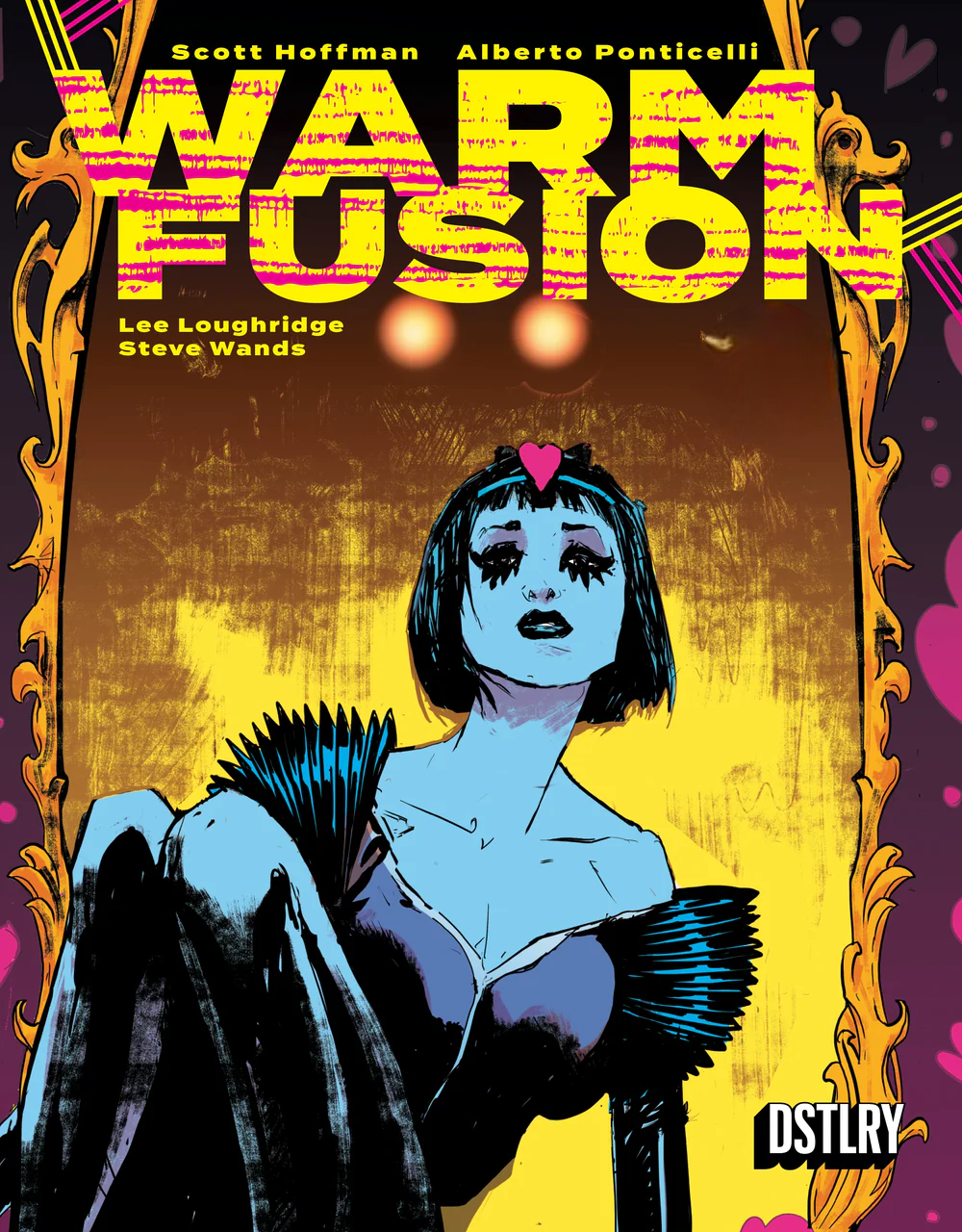
Warm Fusion is the kind of comic that grabs you by the collar, drags you through a rain-slick alley glowing hot pink and toxic green, whispers something nasty about the future in your ear, then dares you to pretend you did not feel it. This hardcover collection from DSTLRY is cyberpunk with its makeup running, body horror with a pulse, and noir with enough weirdness in its bones to make your average dystopian detective story look like it ordered mild sauce. WEPA, this one is not walking into the club politely. It kicks the door open wearing platform boots, a haunted stare, and a whole lot of trauma stitched under the skin.
Scott “Babydaddy” Hoffman comes into comics with a voice that feels jagged, rhythmic, and absolutely unafraid to get ugly when the story needs ugliness. The world of Warm Fusion is not just “future NYC with neon signs.” Nah, that would be too easy. This is a world where flesh, commerce, desire, technology, and survival have all been tossed into the same dirty blender, and nobody bothered to check if the lid was on. We are thrown into the Blacklight District, a place dripping with sex-club spectacle, synthetic temptation, corporate experimentation, and the kind of street-level desperation that cyberpunk does best when it remembers the “punk” part. This is not shiny tech fantasy. This is the future with a hangover.
At the center of this nightmare is a young woman fighting to hold onto whatever humanity she can while her body, identity, and future are being warped by forces much bigger, richer, and colder than she is. That is where Warm Fusion hits hardest. Yes, there is body horror. Yes, there are mutations, grotesque visuals, violent reveals, and some truly wild “what am I looking at and why can’t I look away?” moments. But the real horror is not just the physical transformation. It is the loss of control. It is being studied, bought, hunted, categorized, and rewritten by people who see human beings as experiments, assets, problems, or products. That right there? That is the scary sauce.
Hoffman does something smart with the script. He keeps the story moving like a noir investigation, but underneath the procedural shell is a grimy meditation on exploitation. Sex workers, transhuman bodies, synthetic biology, corporate greed, addiction, trauma, and class violence all orbit the narrative without turning the book into a lecture. The story has bite because it does not flatten its characters into symbols. It lets them be messy, funny, scared, selfish, loyal, wounded, and alive. Even when the book goes full grotesque, there is an emotional engine underneath it. You are not just watching people mutate; you are watching people try to matter in a world that keeps filing them under disposable.
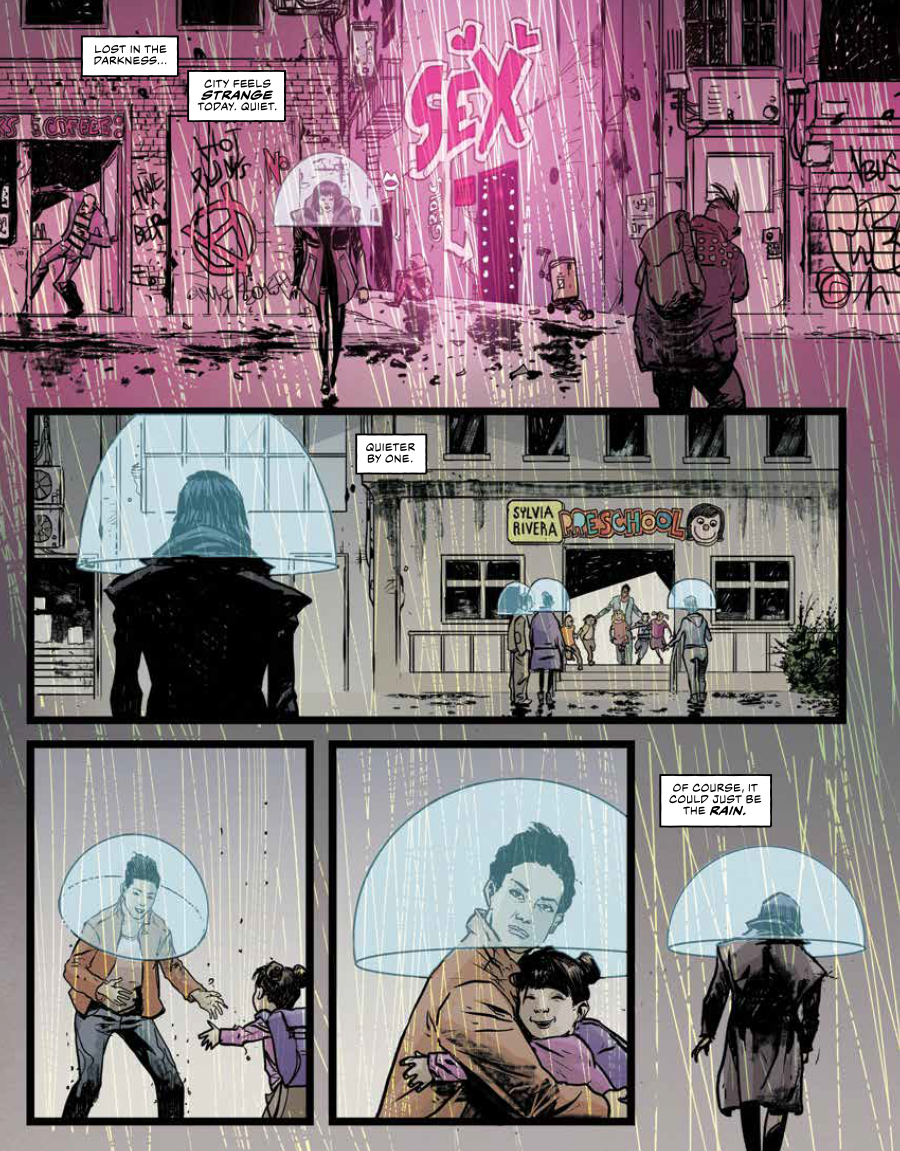
Alberto Ponticelli’s art is absolutely unhinged in the best possible way. His linework has that raw, sinewy, beautifully unpleasant quality that makes every alley, room, body, and monster feel like it was dragged out of a fever dream and stapled to the page while still twitching. There is nothing sterile here. Even the clean corporate spaces feel infected. Faces carry stress. Bodies carry history. Backgrounds feel lived-in, wet, dirty, and dangerous. Ponticelli understands that great cyberpunk is not just about the skyline; it is about the grime in the corners, the exhaustion in the posture, the way a character stands when they know the world has already decided their worth. The art makes this world feel hostile before anyone even throws a punch.
And then Lee Loughridge comes in with the colors like somebody handed him a box of radioactive candy and said, “Make it hurt beautifully.” The pinks, yellows, blues, greens, and sickly atmospheric washes do not simply decorate the story. They define it. The Blacklight District glows like a place built to seduce you before it eats you. The rain becomes mood, texture, and threat. The neon is gorgeous, but it is also oppressive, like the city itself is flashing advertisements over a crime scene. Loughridge’s palette gives the book its fever temperature. This thing sweats color.
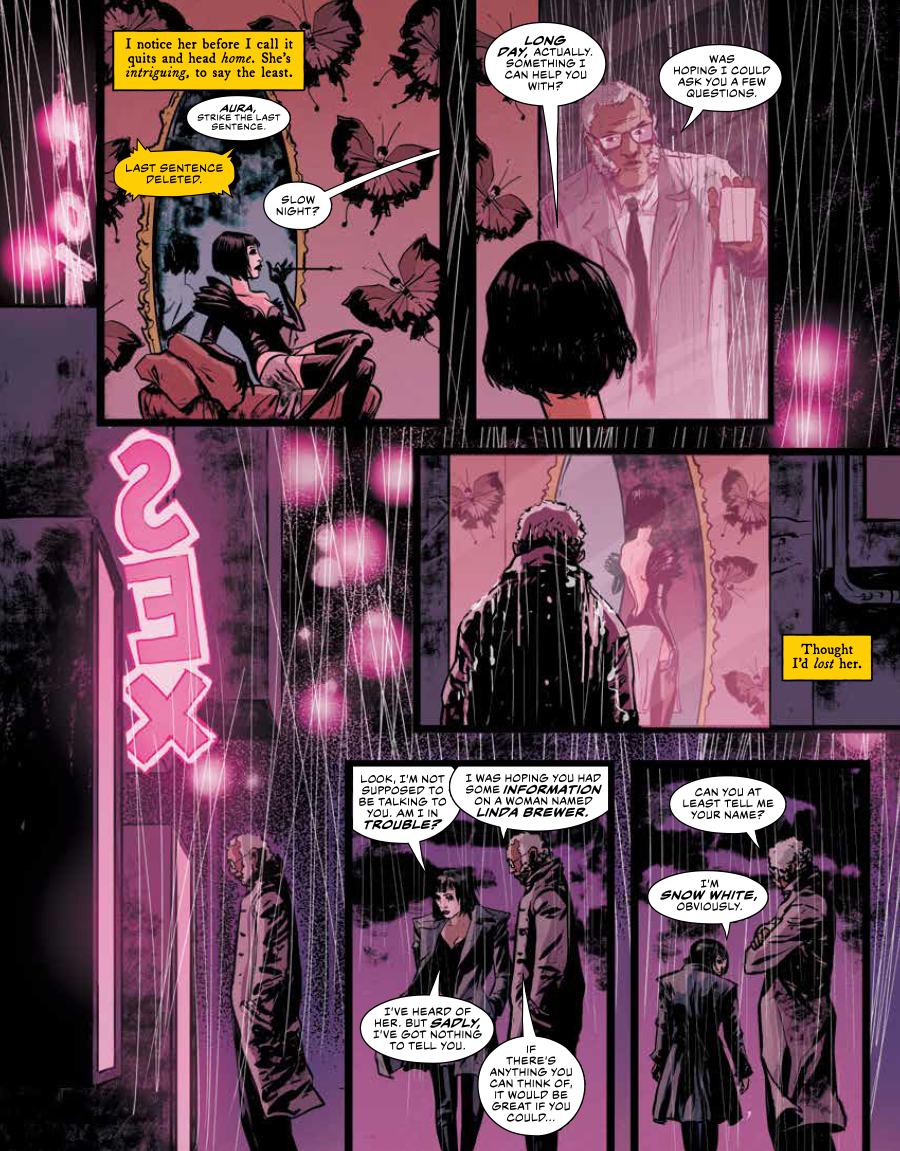
Steve Wands deserves major love too, because the lettering and design are doing serious heavy lifting. The transcription boxes, glitchy information flow, sound effects, and sharp dialogue placement help sell the layered, surveillance-soaked nature of this world. There is a strong sense that everything is being recorded, categorized, misread, or manipulated. The lettering never just “sits there.” It participates. In a book this visually aggressive, bad lettering could get swallowed alive. Wands keeps the rhythm clean, stylish, and mean when it needs to be.
What I really appreciate about Warm Fusion is that it does not confuse mature content with empty shock value. This is definitely for mature readers, no debate there. It has sex, violence, body horror, and some deeply uncomfortable material. But the book is not waving that stuff around like a teenager trying to be edgy at the lunch table. It uses discomfort as atmosphere and argument. It wants you uneasy. It wants you questioning who benefits when bodies become markets and identity becomes something corporations think they can patent, harvest, improve, or discard. That is where this comic has teeth.
The hardcover format helps the story breathe. Reading this as a collected experience makes the descent feel more cohesive, like you are sinking deeper with each chapter into a city that keeps changing shape around you. The pacing has a woozy confidence, moving from investigation to intimacy to horror to full-on chaos without losing its grim emotional spine. There are moments where the density of the world can feel intentionally overwhelming, but honestly, that fits. This is not a clean little cyberpunk postcard. It is a dirty transmission from a collapsing future. Static included.
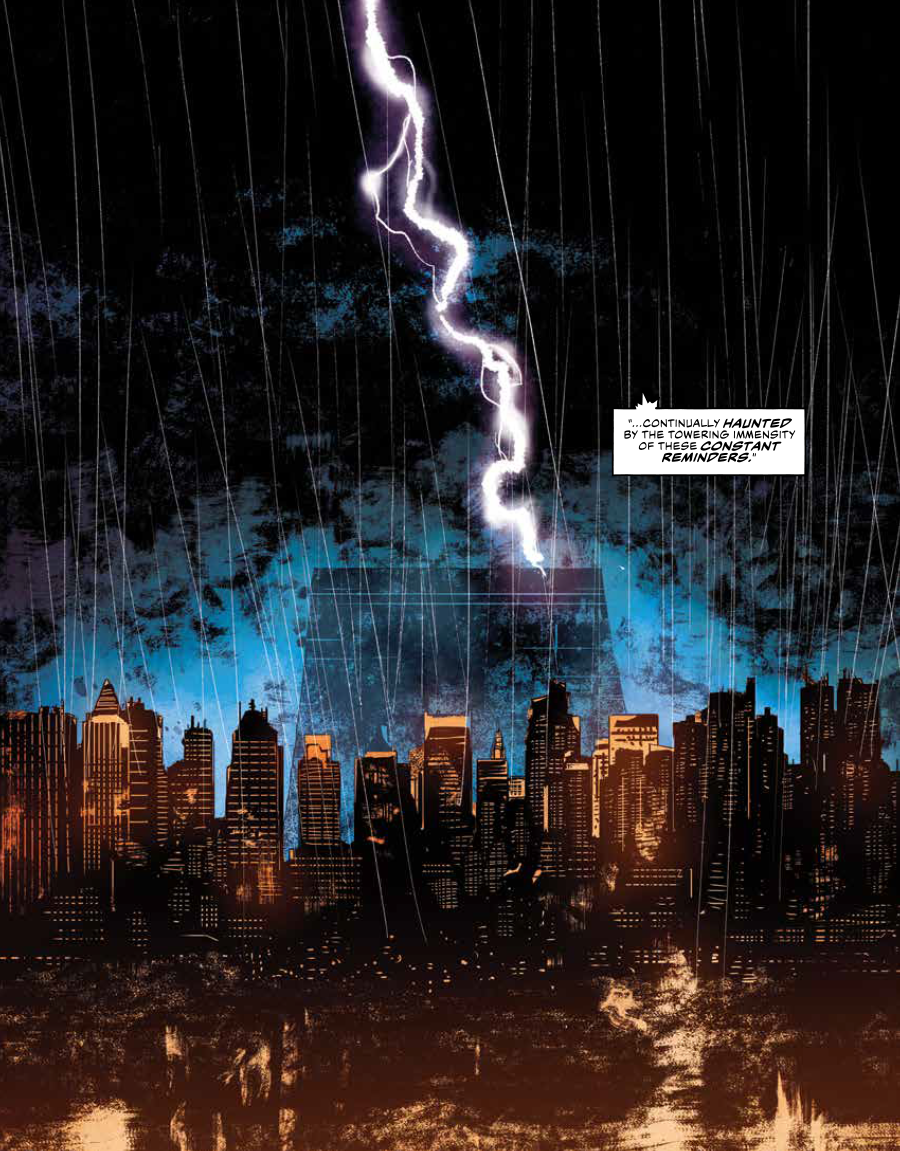
DSTLRY continues to show that it is willing to publish big, strange, creator-driven comics that do not ask permission to be weird. Warm Fusion is not trying to be safe. It is stylish, nasty, bold, compassionate, and visually unforgettable. It has that underground-club-at-3AM energy where everyone looks beautiful, dangerous, and one bad decision away from becoming a cautionary tale. Hoffman and Ponticelli build a world that feels like it came out of cyberpunk’s bruised ribcage, but the reason it works is because the story never forgets the person trapped inside the transformation.
This is body horror with heartbreak. Cyberpunk with grime under its fingernails. Noir with a neon migraine. And at its core, a story about humanity fighting to survive when the future keeps trying to turn people into product. Warm Fusion is strange, savage, and seductive in the most uncomfortable way possible. Not for the faint of heart, but absolutely for readers who like their comics bold enough to stain the table. Comic Crusaders says: plug in, brace yourself, and don’t touch anything glowing unless you got insurance.
CRUSADERS SCORE:
4.5/5

Writer: Scott “Babydaddy” Hoffman
Artist: Alberto Ponticelli
Colors: Lee Loughridge
Letters & Design: Steve Wands
Editor: Will Dennis
Based on a Story by: Scott Hoffman and Sam Stewart
Packaged by: Tiny Onion, Inc.
Publisher: DSTLRY Media
FOC:
05/25/2026
In Shops:
08/04/2026
Trailer:
Author Profile

- I'm Al Mega the CEO of Comic Crusaders, CEO of the Undercover Capes Podcast Network, CEO of Geekery Magazine & Owner of Splintered Press (coming soon). I'm a fan of comics, cartoons and old school video games. Make sure to check out our podcasts/vidcasts and more!
Latest entries
 ComicsJuly 29, 2026First Trailer Unleashed for BABY., Chang Sheng’s Award-Winning Mecha Nightmare
 Movies & TVJuly 29, 2026Bill Sienkiewicz Documentary Unleashes Its First Trailer at San Diego Comic-Con
- ComicsJuly 28, 2026Comic Crusaders HOT List: The 10 Hottest Comics for July 28 and July 29, 2026
 ComicsJuly 28, 2026Vault Turns Up the Heat With Corin Howell’s Lilith: Blood & Burlesque