
REVIEW: VLAD #1 Brings Blood, Brotherhood and One Nasty Medieval Nightmare
·Al Mega
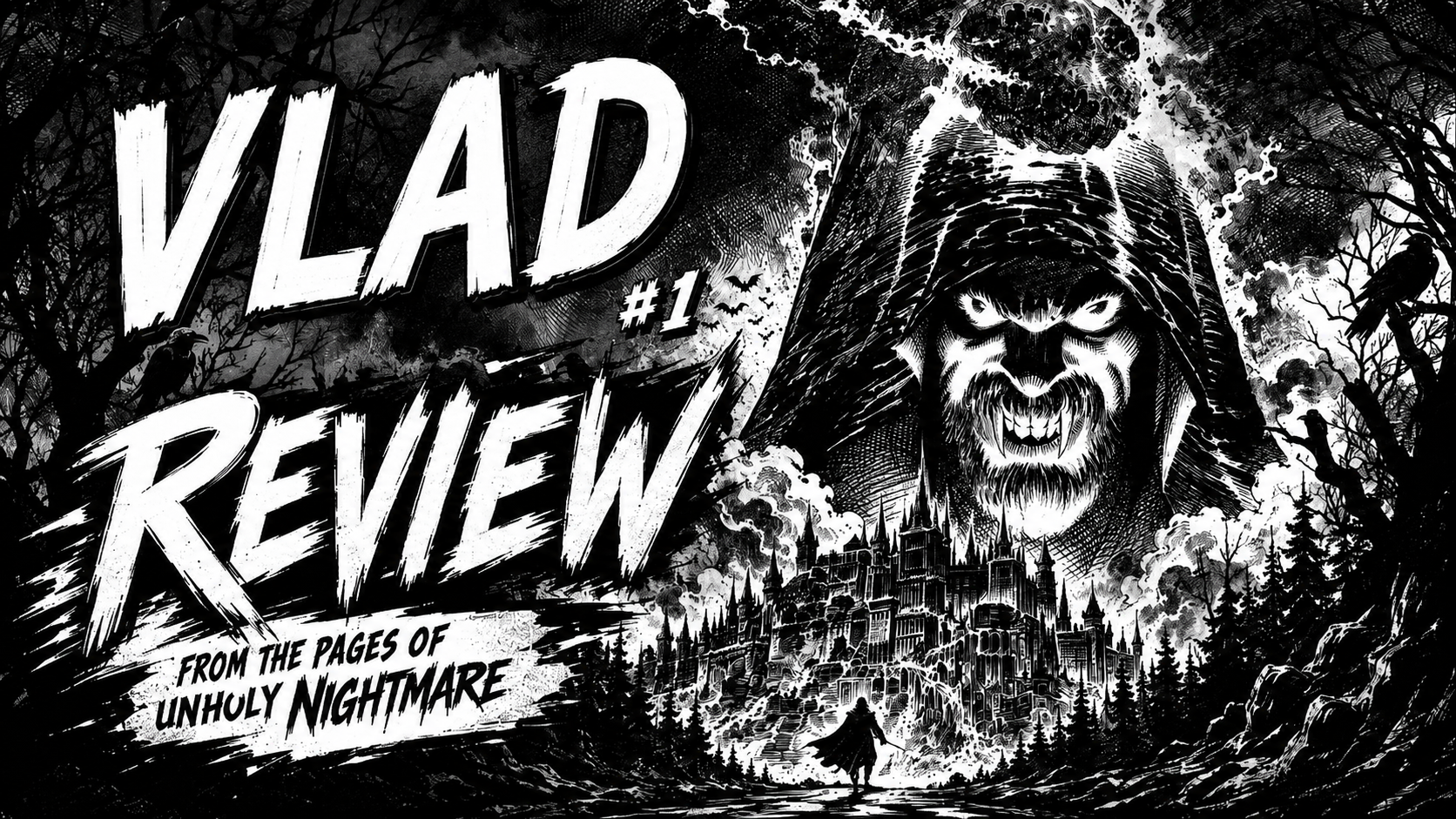
WEPAAAA! Horror heads, grab the sword and keep the garlic close because VLAD #1 ain’t strolling quietly into 1442. This bad boy rides up to the castle gates on horseback, boots covered in mud, steel already drawn, looking like somebody mashed medieval warfare into an old-school black-and-white horror comic and told everybody involved, “Yo, make it mean.” Writer Dolan Waddick and artist Andrey Lunatik waste very little time establishing the flavor. We’re talking war, faith, family, superstition, monsters, and one seriously pissed-off Vlad who looks like diplomacy left his vocabulary somewhere three villages back.
Waddick’s smartest move is not making the supernatural threat the whole meal. Vlad’s relationship with his younger brother Radu gives the story its pulse. Radu is entering his first crusade, still carrying a little humanity behind the eyes, while Vlad already feels carved out of harder material. Pride, violence, loyalty, religion, ambition, all of it is tangled between these two dudes before anything unnatural even starts throwing hands. Vlad praises his brother, pushes him, protects him, and expects him to embrace the same brutal worldview. Radu ain’t completely buying what big brother is selling, and good, because that friction gives the issue somewhere emotionally interesting to go beyond swords slicing through dudes in chainmail.
Vlad himself comes across exactly how a character like this should. Charismatic enough to command a room, dangerous enough that everybody probably wishes he never walked into it. Waddick never needs to hang a sign around his neck saying, “THIS MAN IS TROUBLE.” The arrogance handles that job just fine. Some of his dialogue is deliberately savage, including language toward the Turkish soldiers that lands with all the subtlety of a mace through a tavern table. It communicates the ugliness of Vlad’s worldview, although a few lines lean so hard into the pulpy brutality that they overpower the scene instead of deepening it. A little restraint here and there would actually make Vlad feel colder, because sometimes the quiet psycho at the table is scarier than the dude yelling across it.

The biggest limitation is simply how damn fast everything moves. The story section runs roughly ten pages before the backmatter kicks in, so VLAD #1 reads more like a vicious opening chapter or supernatural prologue than a traditional full-length single issue. Castle approach, trap, battle, dark discovery, and then things start going sideways fast. Momentum? Absolutely. Boredom? Not invited. Still, another few pages inside those castle walls could have allowed the uneasiness to marinate. Radu sensing something unnatural deserves a little more oxygen, and the main supernatural confrontation arrives so quickly that Lunatik barely gets time to make us sweat before the blades come out.
Visually, though? Man, Andrey Lunatik came dressed for the occasion. The opening castle image instantly announces the book’s personality with thick blacks, smoky clouds, moonlight, trees clawing across the sky, mounted soldiers, stone walls, and enough crosshatching to make your eyeballs smell the damp medieval air. Lunatik’s artwork carries an old-school independent horror flavor without looking like somebody simply photocopied yesterday’s comics. Vlad is broad, grim, and physically dominant. Radu reads younger and less hardened without needing dialogue to explain the difference. Faces get ugly when they need to, swords feel heavy, stone looks cold, and cloaks actually occupy space instead of floating around like superhero capes at a fashion show.
The action sequencing also has some juice. Lunatik switches between narrow reaction panels, wider cinematic strikes, abrupt close-ups, and aggressive diagonals when combat erupts. The ambush works because the page accelerates with the attack instead of stopping to admire itself. Later swordplay has enough directional movement that you can follow who’s attacking, who’s defending, and who’s suddenly realizing they picked the wrong medieval lunatic to mess with. A few of the denser compositions get crowded when black cloaks, masonry, weapons, speed lines, and figures all collide inside the same space. My eye occasionally had to work harder than it should, but when Lunatik opens the page up and lets a dramatic image breathe, the artwork hits hard.

No colorist is credited, and frankly, color would probably screw up the mood anyway. The black-and-white presentation belongs here. Stark white backgrounds crash against enormous pools of shadow, while line texture creates depth without softening the book’s nasty atmosphere. It feels weathered and dirty, like somebody found these pages chained inside the basement of a monastery nobody has visited since the plague. Some gray separation could have helped a couple of busier scenes, but the uncompromising black ink also gives VLAD its identity. Leave the shiny gradients at home, fam. This dude came for blood, not RGB values.
Bill Williams’ lettering keeps everything readable despite a surprising amount of dialogue packed into the short runtime. Balloons mostly guide the eye naturally, while sound effects like KRUNCH, CLANG, and WHAM feel embedded in the violence instead of pasted over it after somebody remembered comics need noise. A handful of speech-heavy panels get cramped, especially once characters start explaining the supernatural business, but readability never completely collapses. The lettering understands the visual era the artwork is channeling, which matters because slick digital balloons over Lunatik’s rough black-and-white linework would look like somebody parked a Tesla outside Dracula’s castle.
The final stretch is where Waddick starts showing what VLAD is really cooking. Without ruining the payoff, the story makes it very clear this raid was never just another battlefield victory. Something ancient has been disturbed, Radu’s discomfort suddenly carries much more weight, and Vlad’s appetite for conquest starts colliding with forces he does not fully understand. The closing image is grotesque, huge, and exactly the kind of final-page punch a short horror comic needs. You finish it knowing the real nightmare hasn’t even gotten out of bed yet.

VLAD #1 is lean, vicious, visually confident, and smart enough to build its horror around character before dropping the supernatural hammer. The short page count keeps the blood pumping but also robs a few scenes of atmosphere they deserved. Waddick’s dialogue occasionally pushes the pulp bravado harder than necessary, yet the Vlad and Radu relationship gives the story genuine tension, Lunatik’s black-and-white artwork looks tailor-made for medieval horror, and Williams keeps the whole blood-soaked ride readable when swords, screaming, and monsters start crowding the room.
Historical horror with teeth, fam. Literally headed in that direction too. VLAD #1 gives us a brutal little taste of a larger nightmare and gets out before overstaying its welcome. I wanted more pages, which might be the book’s biggest complaint and best compliment at the same damn time. WEPAAAA! The Dragon has entered the building, and somebody better lock the cellar.
CRUSADERS SCORE:
4/5
Writer: Dolan Waddick
Artist: Andrey Lunatik
Letterer: Bill Williams
Editor: Aaron Sparrow
Based on the World of Unholy Nightmare by Mazzara and Waddick
Published by: Mutant Farm Comics
Leave a Reply
You must be logged in to post a comment.