

Midnight Spider-Man #1 Review: With Great Power Comes Some Seriously Twisted Problems!
·Al Mega
WEPAAAA! Yo, fam, Marvel really looked at Spider-Man and decided this poor kid hadn’t suffered enough! Welcome to Midnight Spider-Man #1, where Phillip Kennedy Johnson takes that familiar wall-crawling mythology, drags it through a laboratory full of nightmares, and serves us a version of Peter Parker’s world that’s got more body horror than your average superhero crossover. Forget the friendly neighborhood routine for a minute. This joint has flesh doing things flesh ain’t supposed to do, scientists playing games with people’s lives, and enough questionable decisions to make you wonder whether anybody in this universe ever heard of an ethics committee. Madre mía, somebody call Aunt May!
Johnson opens with a strange little suburban nightmare, and right away the book establishes that something is deeply wrong beneath the surface of everyday life. A seemingly ordinary neighborhood becomes the setting for grotesque biological horror, with bodies twisting into shapes that belong in somebody’s worst fever dream. The sequence is nasty, beautifully unpleasant, and a slick way of establishing the rules of this world without sitting everybody down for a twenty-minute lecture. Then we shift toward Peter Parker, whose life is already complicated before the bigger nightmare starts creeping into view. The contrast between everyday teenage problems and outright monstrosity gives this debut its personality.
Peter is still recognizably Peter, which I appreciate. He’s awkward, intelligent, curious, and carrying that familiar combination of nervous energy and questionable luck. The circumstances surrounding him have changed considerably, but Johnson understands that Spider-Man works because there’s a human being underneath all the superhero business. Watching Peter navigate school, social interactions, and the increasingly suspicious adults around him creates a decent emotional foundation. The conversations aren’t always subtle, especially when characters start explaining the scientific and institutional machinery surrounding the story, but Peter’s personality keeps the material from becoming completely buried under exposition.
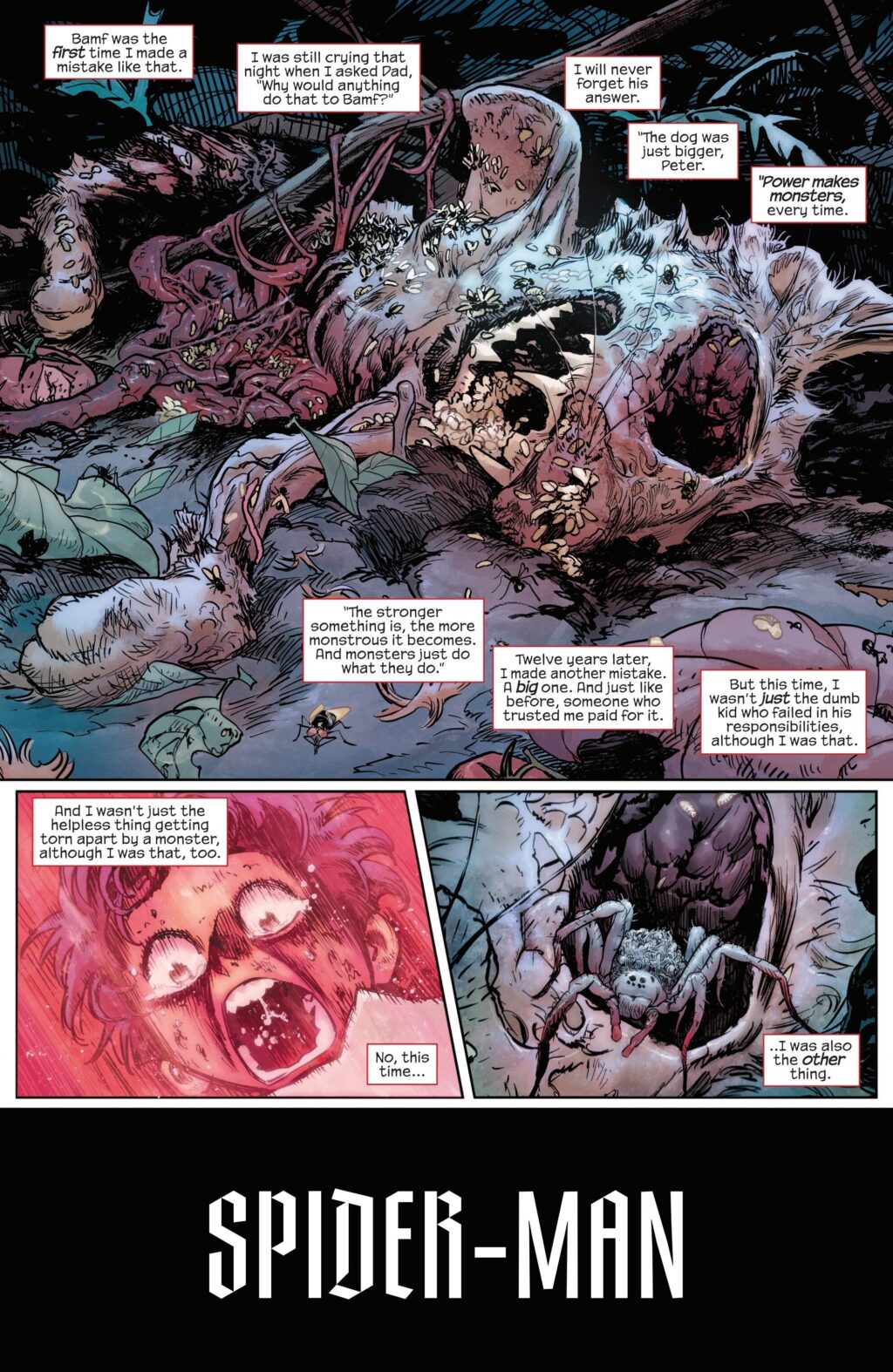
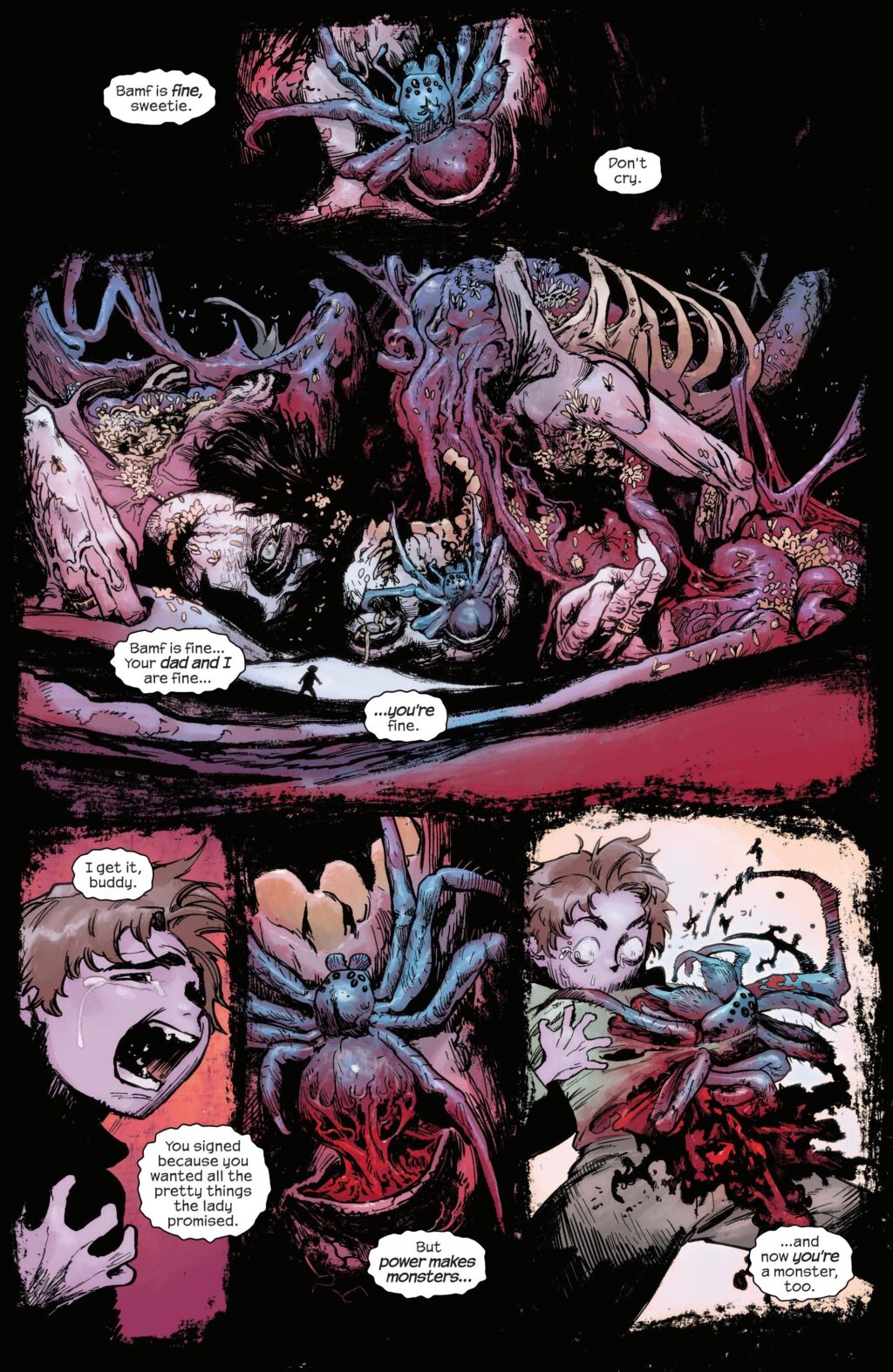
Then there’s the scientific horror, and hermano, this is where the book starts getting gloriously disgusting. Johnson introduces a world where biological experimentation and corporate ambition have created something far more dangerous than another costumed criminal. The transformation sequences lean hard into the grotesque, with flesh, bone, and unnatural growth becoming part of the visual language. There’s a particularly ugly sequence involving a monstrous biological mass that looks like somebody crossed a laboratory accident with the nastiest creature feature you ever rented from the video store. It’s disturbing, sure, but it also gives this Midnight Universe a different flavor from Marvel’s regular superhero line.
SciETronc’s artwork deserves serious attention because this book moves between completely different visual environments. One moment we’re dealing with suburban streets, school hallways, and corporate offices. The next, we’re staring at a nightmare made of exposed tissue and impossible anatomy. The character expressions are expressive without becoming cartoonish, and the quieter scenes have enough visual personality to keep the dialogue-heavy stretches moving. When the horror arrives, though, the page layouts become much more aggressive. Panels crowd together, angles get uncomfortable, and the creatures practically spill out of their own anatomy. Yo, these things need a priest, a surgeon, and probably an industrial-strength mop!
Neeraj Menon’s colors give the artwork its unsettling character. The everyday scenes use comparatively restrained palettes, with natural daylight, soft interiors, and ordinary urban surroundings making the world feel believable. Then the grotesque material arrives, bringing those violent reds, sickly greens, and fleshy pinks into the picture. That contrast does some heavy lifting. The horror feels invasive because the surrounding world looks so normal. Menon also handles the darker sequences without letting everything dissolve into an unreadable swamp of shadows, which is something I wish more horror comics remembered.
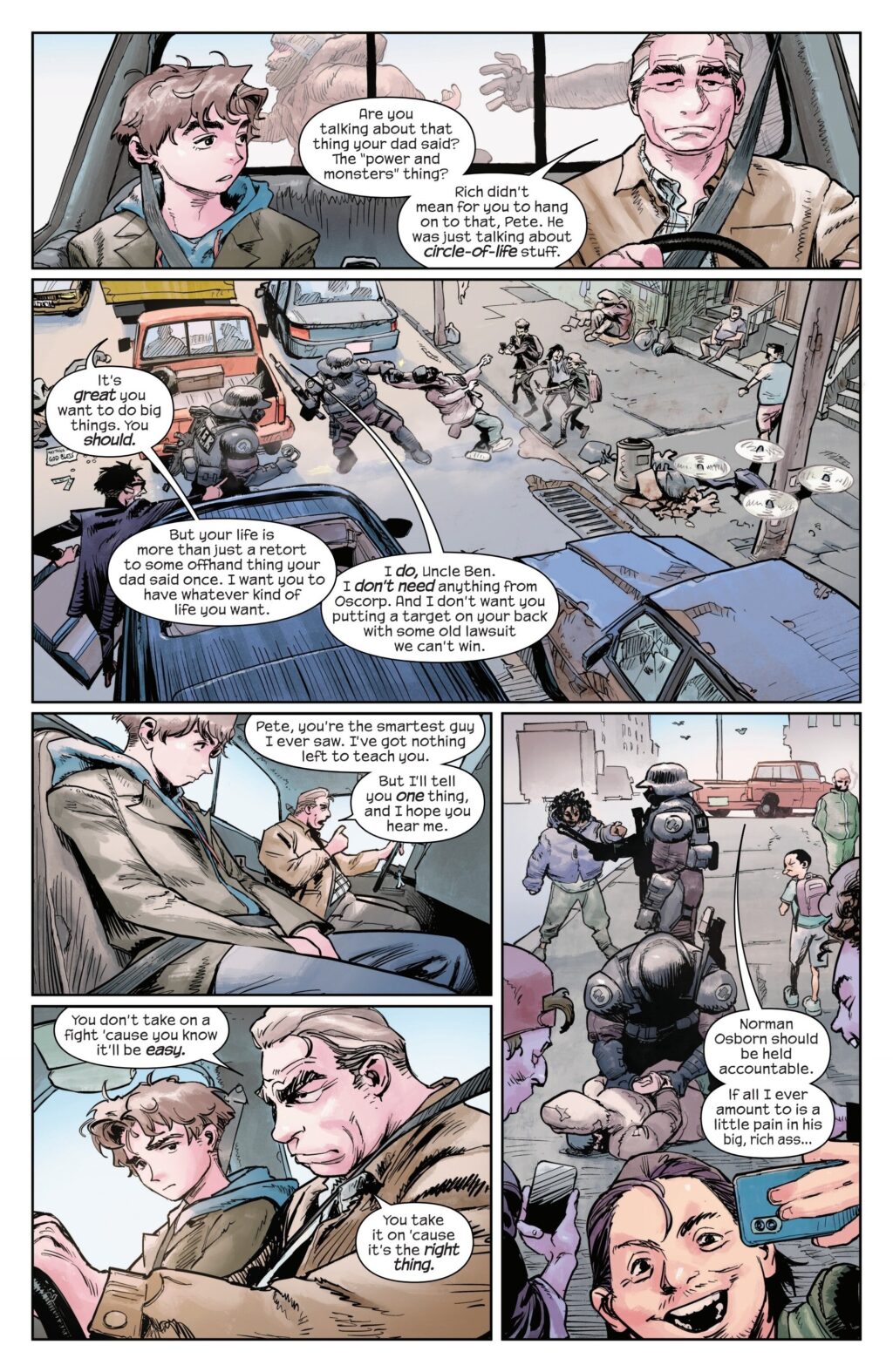
VC’s Joe Caramagna handles the lettering, and there’s a lot of conversational material to juggle here. Johnson enjoys letting characters explain themselves, occasionally at considerable length, so the lettering has to maintain a comfortable reading rhythm without swallowing the artwork. Caramagna keeps the balloons organized and the dialogue readable, while the creature sequences get the appropriately nasty sound effects. There’s a particular pleasure in watching a seemingly normal conversation suddenly get interrupted by something tearing, snapping, or making a noise no human body should ever produce. That’s comic book horror doing its job, baby.
Now, here’s where I gotta give this issue a little Brooklyn side-eye. For all the wild biological horror, the central story takes its sweet time getting everybody into position. There’s plenty of setup involving the institutions, personalities, and mysterious forces surrounding Peter, and some conversations run longer than they need to. I understand we’re establishing a new continuity, but there are moments when the book feels more interested in explaining the machinery than letting the characters experience its consequences. The opening horror material comes out swinging, while the middle section occasionally slows things down enough that you start wondering when the next nightmare is showing up.
Still, Johnson is playing with an interesting twist on Spider-Man’s oldest themes. Peter Parker has always been a character defined by responsibility, scientific curiosity, and the consequences of power falling into the wrong hands. Here, those ideas become considerably uglier. Science isn’t merely the source of superhero abilities. It’s an industry capable of turning living beings into commodities, experiments, and disposable mistakes. The familiar tension between personal responsibility and institutional corruption gives the horror some actual substance beyond watching another monster burst through somebody’s chest.
By the final stretch, Midnight Spider-Man #1 has planted enough disturbing ideas to make me curious about where this version of Peter Parker is headed. The pacing could use a little tightening, and I’d love to see Johnson trust the visual storytelling more instead of explaining so much of the world through dialogue. Still, SciETronc and Menon deliver some beautifully grotesque imagery, and the premise has enough personality to stand apart from another routine Spider-Man relaunch. This isn’t the Peter Parker you invite over for Sunday dinner unless you’re prepared to explain the screaming coming from the basement. WEPAAAA! The neighborhood just got a whole lot darker, familia. The Crusade Never Ends!
CRUSADERS SCORE: 4/5
Book Credits: Publisher: Marvel Comics. Writer: Phillip Kennedy Johnson. Artist: SciETronc. Colorist: Neeraj Menon. Letterer: VC’s Joe Caramagna. Cover Artist: Steve Beach. Design: Jay Bowen. Assistant Editor: Kaeden McGahey. Editor: Jordan D. White. Executive Editor: Dan Buckley. Editor-in-Chief: Stephen Wacker. Spider-Man Created By: Stan Lee and Steve Ditko. Release: 2026.

Leave a Reply
You must be logged in to post a comment.