
The Adventures of Odysseus Review: Homer’s Greatest Road Trip Hits the Gas
·Al Mega
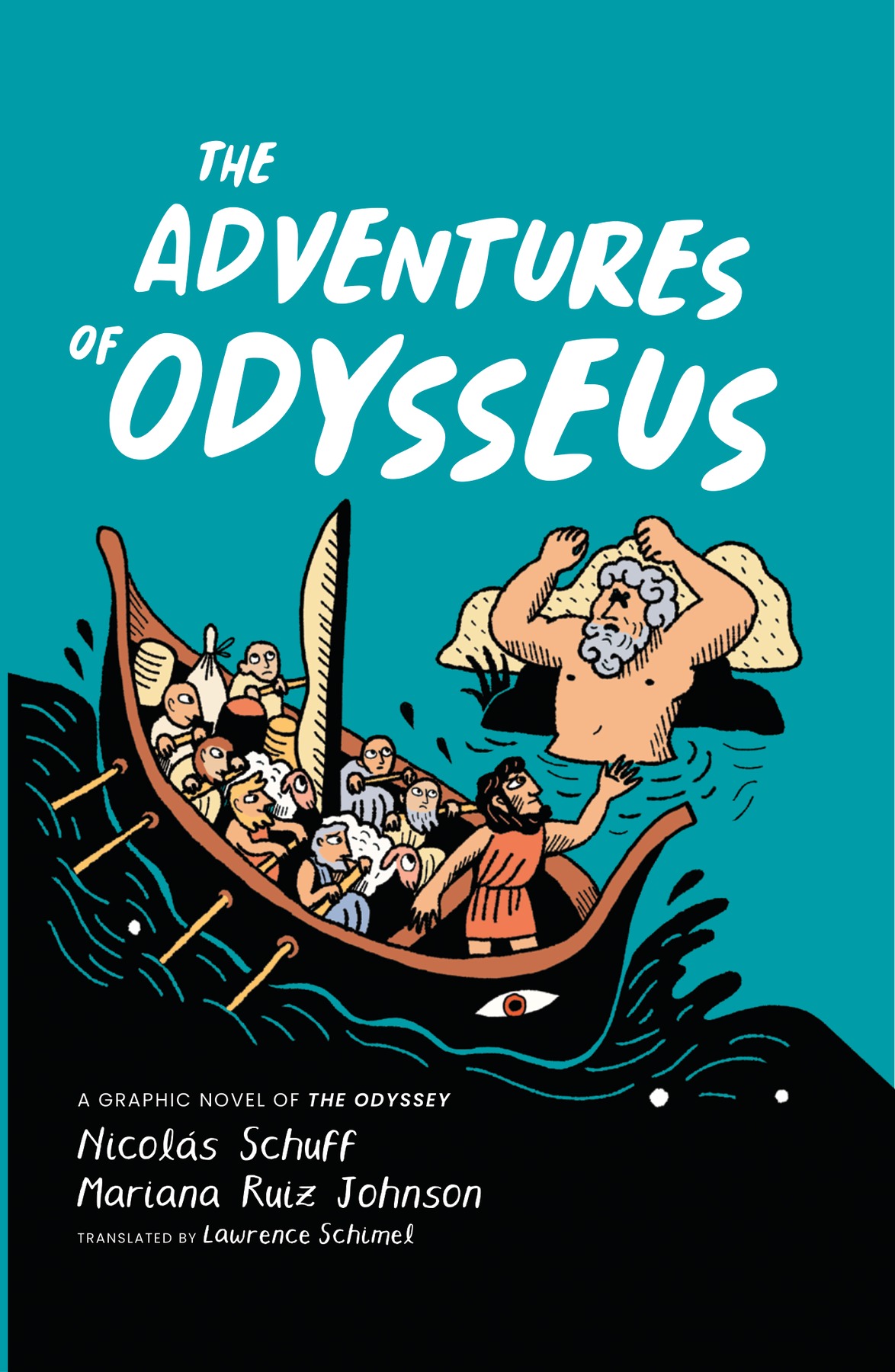
WEPA! Somebody tell Homer to buckle up, because The Adventures of Odysseus takes a nearly 3,000-year-old epic, drops it into a bright, fast-moving graphic novel chassis, and launches across the Mediterranean like Poseidon just greenlit a mythological demolition derby. Nicolás Schuff, Mariana Ruiz Johnson, and translator Lawrence Schimel do not handle The Odyssey like sacred homework wrapped in dust and guarded by a professor wearing elbow patches. They recognize what the story has always been: a savage survival adventure packed with monsters, divine grudges, tempting detours, brutal mistakes, shattered friendships, and one exhausted king trying desperately to get back to his family. For middle-grade readers who hear “classic literature” and immediately start looking for the nearest emergency exit, this adaptation keeps the engine loud, the route clear, and the entertainment flowing.
The book opens with exactly the kind of groundwork young readers need without parking the story on the shoulder for twenty pages. There is a character guide, a map tracing Odysseus’s ridiculous itinerary across the “wine-colored sea,” and a brisk explanation of the Trojan War, the Greek gods, Ithaca, Penelope, and Telemachus. Schuff understands that readers should not need a mythology degree to enter the building. Once Odysseus sets sail, the journey operates like the worst family road trip ever conceived, except every missed exit leads to cannibals, enchanted fruit, murderous giants, seductive immortals, screaming ghosts, or ocean monsters with enough teeth to make a shark reconsider its career choices.
Odysseus remains the reason this ancient machine still runs. He is brilliant, brave, loving, manipulative, stubborn, emotionally wrecked, and occasionally responsible for his own suffering. The adaptation does not sand him down into some spotless children’s-book superhero. He survives Polyphemus through strategy, teamwork, and one of mythology’s greatest fake-name scams, then nearly ruins everything because his pride demands a victory lap. After escaping, he shouts his real identity back at the Cyclops, basically handing Poseidon his license plate, home address, and forwarding information. My guy, you were free. Keep rowing! That combination of ingenuity and reckless ego gives the adventure its dramatic fuel because Odysseus is never merely fighting monsters. Half the time, he is wrestling with the consequences of being Odysseus.

Schuff’s adaptation moves through seventeen chapters with impressive control, balancing the episodic flavor of the original with a clear emotional destination. The Lotus-Eaters, Polyphemus, Aeolus, Circe, Hades, the Sirens, Scylla and Charybdis, Helios’s cattle, Calypso, Nausicaa, and the return to Ithaca all receive enough space to feel meaningful. The transitions are clean, the stakes remain understandable, and each encounter either tests Odysseus’s intelligence or exposes another weakness within his crew. The narrative keeps reminding readers that survival is not only about overpowering an enemy. It requires patience, restraint, loyalty, and the ability to follow instructions when somebody specifically tells you not to slaughter a god’s sacred livestock. Naturally, somebody always has to touch the shiny red button.
A few portions hit the accelerator harder than others. The Laestrygonians, for example, receive a quick summary even though their attack destroys nearly the entire fleet. Some younger readers may also need a little patience with pages carrying heavier narration, particularly during the historical setup and the descent into the Kingdom of the Dead. Those moments never derail the ride, but they reveal the challenge of compressing an enormous epic into 196 pages while keeping it accessible. Schuff generally makes the right call, prioritizing the emotional spine of the journey over cataloging every ancient detail. This is an adaptation, not Homer’s unabridged director’s cut with seventeen hours of bonus footage.
Mariana Ruiz Johnson’s artwork is where the book becomes something more than a competent introduction to Greek mythology. Her illustrations use India ink, brushwork, and digital color to create pages that feel ancient and modern at the same time. There are echoes of Greek pottery, woodcut prints, children’s illustration, underground comics, and bold editorial design, yet the final result belongs entirely to her. Thick black shapes anchor the pages, while coral reds, mustard yellows, turquoise blues, dusty pinks, and pale grays create a palette that is inviting without making the danger feel harmless. This book is colorful, but it never looks sugary.

Ruiz Johnson also knows when to let one image hijack the entire spread. The Sirens surrounding Odysseus’s ship feel theatrical and threatening, filling the sky like predatory performers who know they already own the crowd. The storms bend ships and waves into violent graphic patterns. Circe’s home initially appears warm and hospitable, while the enchanted animals quietly advertise that something in the kitchen is extremely crooked. Hades becomes a submerged nightmare of elongated spirits, empty eyes, grasping hands, and dead warriors drifting through blue-gray darkness. The imagery remains suitable for middle-grade readers, but it does not duck the story’s eerie atmosphere or its body count.
The character designs deserve their flowers too. Odysseus is immediately recognizable through every disguise, whether he appears as a confident king, a battered castaway, or an elderly beggar. Athena carries authority and mischief in equal measure. Poseidon looks like the sea itself woke up angry, grabbed a trident, and decided everybody was about to have a terrible afternoon. Polyphemus is massive and grotesque without becoming visually unbearable, while Circe, Calypso, Penelope, Nausicaa, and Arete each possess distinct silhouettes, expressions, and presence. Even the gods introduced through informational side panels feel like active personalities instead of vocabulary words waiting for a quiz.
Lawrence Schimel’s translation keeps the language approachable while preserving the story’s dignity. Characters speak clearly, but they do not sound like marble statues filing taxes. Odysseus can be formal when requesting hospitality, tender when discussing Penelope, furious when confronting betrayal, and cunning when inventing another ridiculously detailed false identity. The dialogue carries enough grandeur to maintain the mythic atmosphere without burying young readers beneath archaic phrasing. The lettering works alongside that translation, with irregular balloons, handwritten narration, oversized cries, and playful visual emphasis giving the language a physical rhythm across the page.

The emotional material lands harder than expected because the creators never lose sight of home. Monsters may dominate the marketing, but longing powers the book. Odysseus repeatedly receives opportunities to remain somewhere comfortable, safe, or even immortal, yet none of those offers can replace Ithaca. His encounters in the underworld bring grief rushing into the adventure, while his eventual meetings with Telemachus and Penelope are built on uncertainty, caution, and years of pain rather than instant storybook happiness. Penelope is especially well handled. She is not just waiting beside a window while men decide her future. She lies, delays, tests, studies, and protects what remains of her household with intelligence worthy of Odysseus himself.
Parents, teachers, librarians, and young mythology fans are going to find plenty to work with here. The book invites discussions about leadership, pride, temptation, hospitality, grief, loyalty, consequences, and the difference between cleverness and wisdom. More importantly, it never feels like educational medicine disguised with pictures. Kids are getting shipwrecks, witches, Cyclopes, ghosts, transformations, gods behaving badly, and a final confrontation that proves patience can be more dangerous than brute strength. The learning sneaks aboard while the adventure is busy making noise.
The Adventures of Odysseus respects Homer without treating him like untouchable museum property. It condenses an intimidating epic into a spirited, visually distinctive graphic novel that understands exactly who it is serving. A few episodes could have used additional breathing room, but the overall journey remains cohesive, emotionally satisfying, and ridiculously readable. With The Trojan War scheduled to follow in Spring 2027, Schuff, Ruiz Johnson, and Schimel have built a runway broad enough for an entire mythology line. Ancient Greece just got a fresh coat of paint, a full tank, and permission to floor it.
CRUSADERS SCORE:
4.5/5

Written by: Nicolás Schuff
Illustrated by: Mariana Ruiz Johnson
Translated by: Lawrence Schimel
Publisher: Eerdmans Books for Young Readers
Release Date: October 27, 2026
Leave a Reply
You must be logged in to post a comment.