
The Golem Review: TCM Press Delivers a Brutal, Beautiful Horror One-Shot
·Al Mega
WEEEPAAAA! Now this right here? This is horror with a heavy heart and a clenched fist. The Golem from TCM Press is not the kind of comic that strolls into the room politely, asks for a chair, and waits its turn. Nah peeps, this thing kicks the door open wearing grief like armor, carrying old-world terror in one hand and righteous fury in the other. Dolan Waddick and Aaron Sparrow deliver a tight, brutal, emotionally loaded one-shot that takes the classic golem legend and drops it into one of humanity’s darkest historical nightmares, creating a short comic that hits fast, hits hard, and leaves the reader sitting there like, “Damn… okay… I need a minute.”
The story opens with a wonderfully creepy horror-host vibe, complete with a vampire narrator and raven energy that feels ripped from the DNA of classic macabre anthology comics. That framing device gives the book a pulpy, late-night creature-feature flavor, but once the tale begins, the mood shifts into something much heavier. We are brought into 1944, inside the fictional Bredenau concentration camp in Germany, where Jerome Abrams, a Jewish pianist, is forced to perform for Nazi officers. Right away, the creative team understands the assignment: horror is not just monsters, teeth, claws, and shadows. Real horror is humiliation. Separation. Powerlessness. A father trying to survive one more day because his child still exists somewhere in the world.
Jerome’s relationship with his son Adam is the soul of this comic. In just a handful of pages, Waddick and Sparrow build a bond that feels tender, painful, and tragically fragile. That is no small feat. A lesser script would rush straight to the monster mayhem and let the creature carry the whole thing on muscle and myth. Here, the emotional foundation comes first. The chocolate bar. The birthday. The small moments of love smuggled into a place built to erase humanity. Those details matter. They are the quiet little matches struck in a pitch-black room. And when the story turns cruel, as we know it must, that earlier warmth makes the blow land with real weight.
The pacing is lean, almost viciously so. This is a short-form horror tale, and it moves with the efficiency of a sharpened blade. There is not a lot of extra room to wander, but the story uses that compression to its advantage. Each page feels like another step toward the inevitable. The piano performance becomes a pressure cooker. Jerome’s fear becomes suffocating. General Schneider and the Nazi officers are presented with the exact kind of cold arrogance that makes your blood pressure spike. They are not cartoonishly evil in a goofy way; they are bureaucratic, entitled, and smug, which honestly makes them even more disgusting. You want the hammer to fall. And oh, mi gente, when it falls? It falls like Brooklyn concrete from a rooftop.
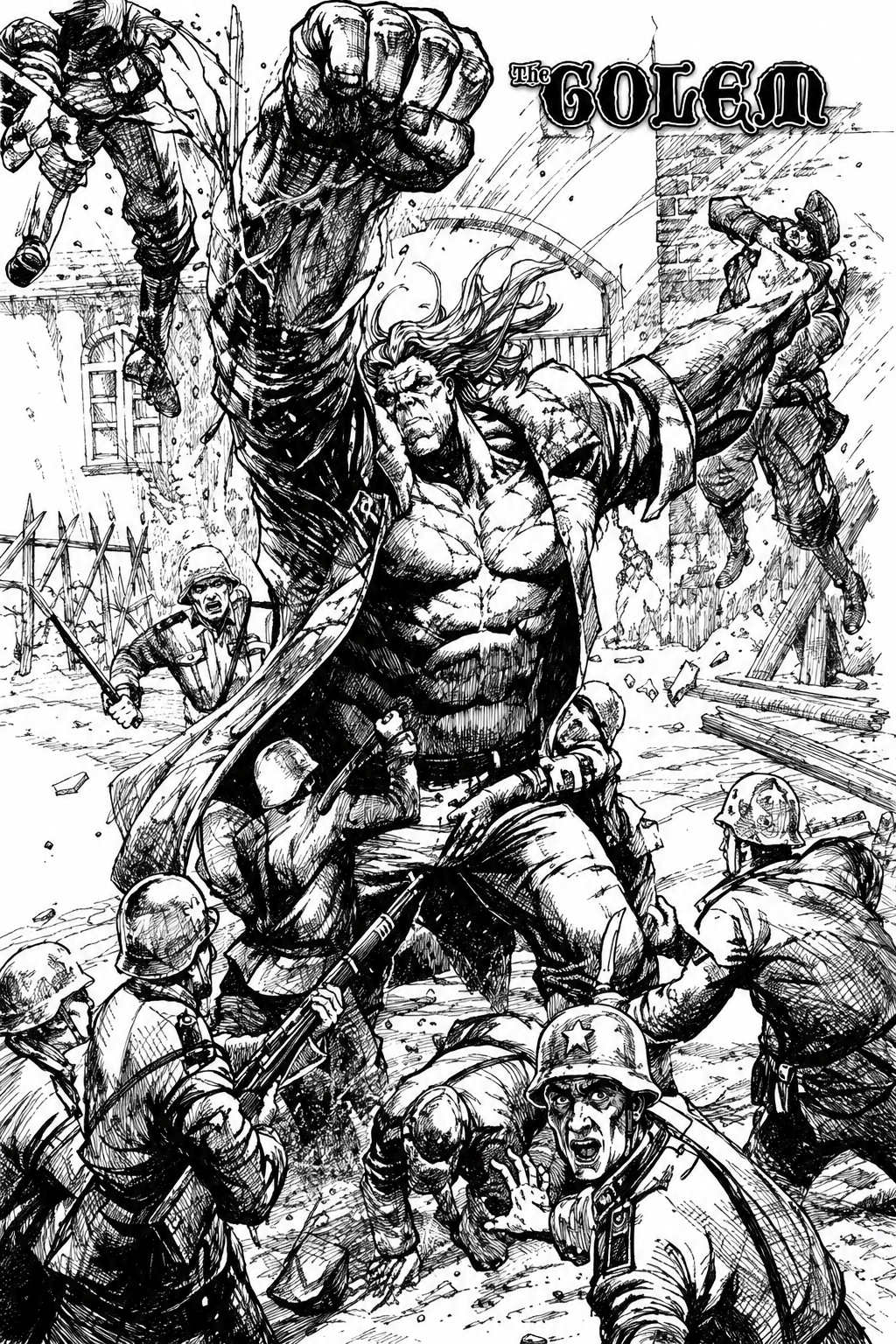
The golem’s arrival is the book’s thunderclap. Vu Dahn makes that emergence feel mythic, grotesque, and almost biblical. The creature does not just appear; it erupts. The page where the golem bursts into the story is pure monster-comic money, the kind of visual moment that makes you hear the sound effect in your chest. Dahn’s black-and-white artwork gives this book its grimy, haunted texture. The linework is scratchy, expressive, and loaded with heavy shadows. Faces look exhausted. Buildings look diseased. Smoke curls like the world itself is choking. The camp never feels like a backdrop; it feels like a wound.
And let’s talk about that black-and-white presentation, because that choice is doing serious work. Color might have made the gore louder, but black and white makes the sorrow deeper. It gives the pages an archival quality, like we are looking at something unearthed from a cursed folio. Dahn’s cross-hatching and ink-heavy compositions bring a raw handmade energy that fits the material beautifully. This is not polished superhero gloss. This is rough stone, ash, splintered wood, torn cloth, and rage. The art feels like it was carved instead of drawn.
The book also understands the golem not merely as a monster, but as a response. That is the power of this legend. A golem is not Dracula sliding out of a coffin for vibes. It is not a werewolf losing control under a full moon. The golem is born from need, protection, desperation, and command. In this story, the golem becomes the shape grief takes when grief has had enough. The creature’s violence is not framed as random chaos; it is retribution. It is the scream that history often swallows. That makes the rampage feel cathartic without ever turning the tragedy into cheap spectacle.
That balance is where The Golem succeeds most. It walks a dangerous line. Any horror story that uses Holocaust imagery has to tread carefully, because exploitation is always lurking in the alley wearing a fake mustache. Thankfully, this comic does not treat suffering as decoration. It uses genre to sharpen the emotional truth. The revenge is fantastical, but the pain underneath it feels grounded. The monster may be supernatural, but the rage behind it is painfully human.
The ending adds a wicked little twist that brings the horror-host framing full circle, and it works. It gives the story that old-school anthology snap, that final-page “aha!” that makes the whole thing feel like something you’d discover in a forbidden back issue under the counter at some dusty comic shop. The narrator is not just a gimmick; he gives the story a grim campfire quality. You can almost hear him grinning through the shadows.
If there is one place where the book could have used a little more breathing room, it is in the emotional transition between Jerome’s breaking point and the supernatural turn. The story is so condensed that a few moments hit like a hard cut instead of a slow stab. One extra page of silence, dread, or ritual escalation could have made the transformation even more devastating. Also, because Dahn’s pages are packed with texture, sound effects, and intense linework, a few panels can feel visually dense on first read. But honestly? That density also adds to the claustrophobia. The book wants you trapped in the moment, and it succeeds.
The Golem is a strong, savage, soulful one-shot. It is not here to be comfortable. It is here to remind you that folklore survives because people need stories powerful enough to carry pain that ordinary language cannot hold. Waddick and Sparrow bring the emotional blade. Vu Dahn brings the visual sledgehammer. Together, they create a compact horror comic with bite, sorrow, and a final roar that echoes after the last page.
This is the kind of indie horror short that proves you do not need fifty pages to leave a mark. Sometimes ten pages and the right monster are enough to put your whole spirit in a headlock. WEPA!
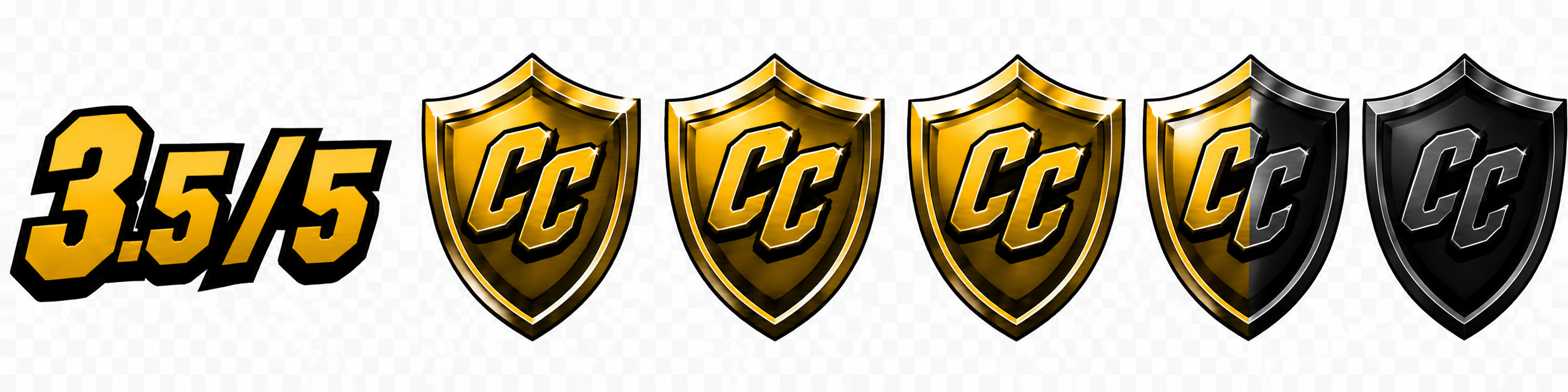
CRUSADERS SCORE:
3.5/5
Writers: Dolan Waddick & Aaron Sparrow
Artist: Vu Dahn
Cover Art: Vu Dahn
Publisher: TCM Press

Leave a Reply
You must be logged in to post a comment.