

Winnie-the-Pooh: The Graphic Novel Review – A Beautiful Return to the Hundred Acre Wood
·Al Mega
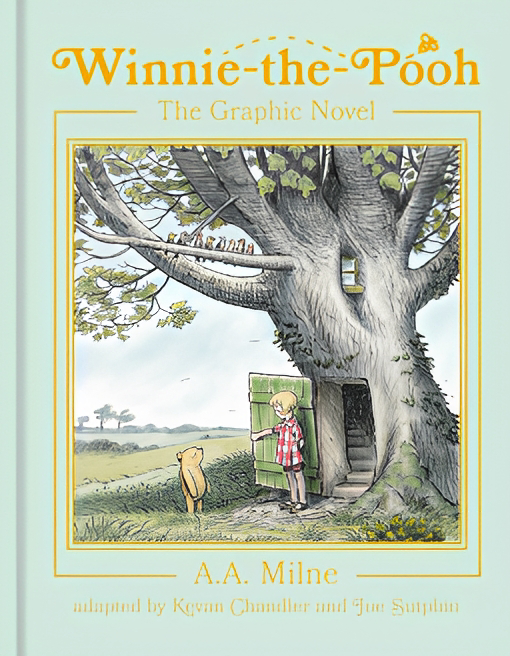
Every once in a while, a book slides across the review desk so smooth, so warm, so sneaky-powerful, that you gotta stop acting tough and let the little kid inside you pull up a chair. WINNIE-THE-POOH: THE GRAPHIC NOVEL is one of those books, fam. No capes. No cosmic doom. No villain yelling about destiny like he missed breakfast. Just a bear with a honey problem, a crew full of lovable weirdos, and enough heart to make your grown self blink twice and say, “Nah, I’m not crying, it’s allergies.” WEPA! Adapted from A.A. Milne by Kevan Chandler and Joe Sutphin for Ten Speed Young Readers, this graphic novel doesn’t come in trying to reinvent Pooh like some Hollywood reboot with sunglasses and attitude. Thank God. Instead, it walks into the Hundred Acre Wood with respect, love, and craftsmanship, like it knows it’s stepping into sacred childhood territory. And trust me, it does. This thing is sweet, smart, gorgeous, and quietly powerful, the kind of book that reminds you innocence ain’t weakness. Sometimes it’s the strongest magic in the room.
Taking on Winnie-the-Pooh is dangerous business, believe it or not. People think adapting something gentle is easy. Wrong. That is where the trap is, papo. Because Pooh is not loud. Pooh is not built on spectacle. Pooh is built on rhythm, innocence, wordplay, friendship, small confusions, big feelings hiding inside tiny adventures, and that very particular childhood logic where everything makes sense until an adult starts asking too many questions. You mess with that balance too much and suddenly Pooh becomes a brand mascot doing jazz hands. You play it too safe and the book turns into museum glass. Chandler and Sutphin walk that tightrope with grace, warmth, and just enough comic timing to keep the Hundred Acre Wood breathing on the page.
The smartest thing this adaptation does is trust the source without embalming it. The ten original stories are here, and the book moves through them with a steady, cozy confidence. Pooh gets introduced. Pooh visits Rabbit and gets stuck because honey is undefeated. Pooh and Piglet chase the mysterious Woozle. Eeyore loses his tail, then later suffers through the greatest birthday gift confusion in woodland history. Piglet and Pooh try to catch a Heffalump. Kanga and Roo shake up the neighborhood. Christopher Robin leads an expedition to the North Pole. Piglet gets surrounded by water. And eventually, the story lands on that soft, bittersweet edge where childhood knows something is changing even before it has the words for it. That is heavy stuff wrapped in a plush bear body, and yes, I said what I said.
Kevan Chandler’s adaptation respects Milne’s voice while making the material flow naturally as comics. That matters. Some adaptations just dump the original text into captions and call it a day. That is not comics, that is a hostage situation with panels. Here, the dialogue breathes. The narration is present but not suffocating. The humor lands because the visual beat is allowed to do its job. Pooh bumping around, puzzling through things with that legendary “I am trying very hard with the brain I was issued” energy, becomes pure sequential comedy. The timing is clean. The pauses work. The page turns have purpose. It feels designed, not merely transferred.
And Joe Sutphin? Mi gente, the man brought the soft lightning. His artwork is tender without being syrupy, detailed without showing off, classic without feeling stiff. The Hundred Acre Wood feels like a real place you could wander into, lose your phone signal, and somehow become emotionally healthier. The trees have weight. The grass has movement. The little homes feel lived in. Rabbit’s house looks like a place where someone absolutely has opinions about pantry organization. Owl’s place has that “I own too many books and will correct your pronunciation” energy. Eeyore’s gloomy corner has personality before he even opens his mouth. That is visual storytelling doing push-ups in the corner while everybody else is talking.
The colors deserve their own applause, because this book lives in a palette that feels like memory. Soft greens, misty blues, warm yellows, gentle browns, and autumnal touches move across the pages like somebody cracked open an old storybook and let fresh air in. Nothing screams. Nothing assaults the eyeballs. It invites you. Big difference. In a comic market where half the books look like the colorist fought a neon sign and lost, this thing has restraint. Beautiful restraint. The kind that says, “Relax, we got you, son”
The character acting is where the book really earns its honey. Pooh is adorable, yes, but not reduced to cuteness. His posture, his little thinking poses, his round-bellied determination, his low-key bafflement, all of it makes him funny and lovable without turning him into a gag machine. Piglet’s anxiety is wonderfully expressive, but never mocked cruelly. Eeyore’s sadness remains that perfect deadpan gloom that somehow makes you laugh and want to check on him at the same time. Rabbit is fussy in the best neighborhood-committee way. Owl is grand and ridiculous. Kanga is calm competence. Roo is pure bounce. Christopher Robin feels like the emotional anchor, not because he dominates the story, but because his presence reminds you that this whole world exists inside the sacred, wild architecture of childhood imagination.
What really got me, and I mean got me in that sneaky little corner of the chest where nostalgia keeps receipts, is how this graphic novel makes Pooh feel accessible without sanding off the magic. That ain’t easy, fam. For young readers who might look at the original prose and think, “Nah, I’m good,” this version opens the door, turns on the warm light, and says, “Pull up, meet the crew.” For longtime fans, it doesn’t try to replace Milne, because that would be wild disrespectful, like putting ketchup on arroz con gandules. Instead, it gives you another path back into the Hundred Acre Wood, and that’s the beauty of it. A kid can discover Pooh here for the first time. A parent can read it out loud and suddenly remember what quiet joy feels like. A teacher can slide it onto a classroom shelf and know some child is about to find a friend in these pages. And then there’s the grown reader, acting all casual like, “I’m just checking this out,” until boom, ambushed by a bear with very little brain, too much honey on his mind, and a soul bigger than half the superheroes on the rack. It happens. Don’t front. WEPA.
Let’s keep it a buck though, because around here we don’t do fake hype with sprinkles on top. If you’re coming into this book looking for some wild, edgy, “Pooh but make it gritty” remix, you might think this adaptation plays it a little too respectful. But honestly? Good. Not everything needs to show up wearing a leather jacket and trauma, fam. This book is not trying to turn Pooh into some snarky reboot with side-eye panels and wink-wink nonsense. Nah. It comes in clean, classic, and full of heart. Some pages take their sweet time, and a few moments lean into that old-school storybook repetition like your abuela telling the same story for the tenth time but somehow it still hits. That’s the point. This ain’t a book trying to sprint past you like it’s late for the L train. It’s taking you by the hand and walking you through the woods. Slow. Warm. Real. And if you’re moving too fast to hear the leaves crunch under your feet, that’s not on Pooh, boss. That’s on you!
The graphic novel format also reveals something beautiful about Pooh that sometimes people forget about: these are tiny adventures with huge emotional intelligence. Finding a tail, giving a present, being afraid, pretending to know what you are doing, helping a friend, misunderstanding everything with confidence, these are kid-sized stories that speak grown-up truths. WEPA, that is the good stuff. That is why Pooh lasts. Not because he is cute. Because he is true.
This GN is a gorgeous, heartfelt, respectful, and genuinely delightful adaptation that brings the Hundred Acre Wood to comics with care, warmth, and top-tier craft. Kevan Chandler and Joe Sutphin do not try to outsmart Milne. They listen. They translate. They honor. And in doing so, they create a book that feels both old and new, like finding a beloved childhood toy in a box and realizing it still has stories left to tell. This is comfort reading with craft behind it. Sweet, funny, gentle, and sneaky powerful. Pooh came for the honey, but he stayed for your feelings. Classic move.
CRUSADERS SCORE:
4.5/5

Original Author: A.A. Milne
Adapted by: Kevan Chandler and Joe Sutphin
Illustrator: Joe Sutphin
Editor: Kimmy Tejasindhu
Colorists: Joe Hox and Joe Sutphin
Studio Assistant: Gina Sutphin
Letterers: Joe Sutphin and AndWorld Design
Publisher: Ten Speed Young Readers / Ten Speed Graphic / Penguin Random House
Leave a Reply
You must be logged in to post a comment.