
Dog Tag #1 Review: Mark Russell and PJ Holden Deliver a Brutal, Human WWII Gut-Punch
·Al Mega
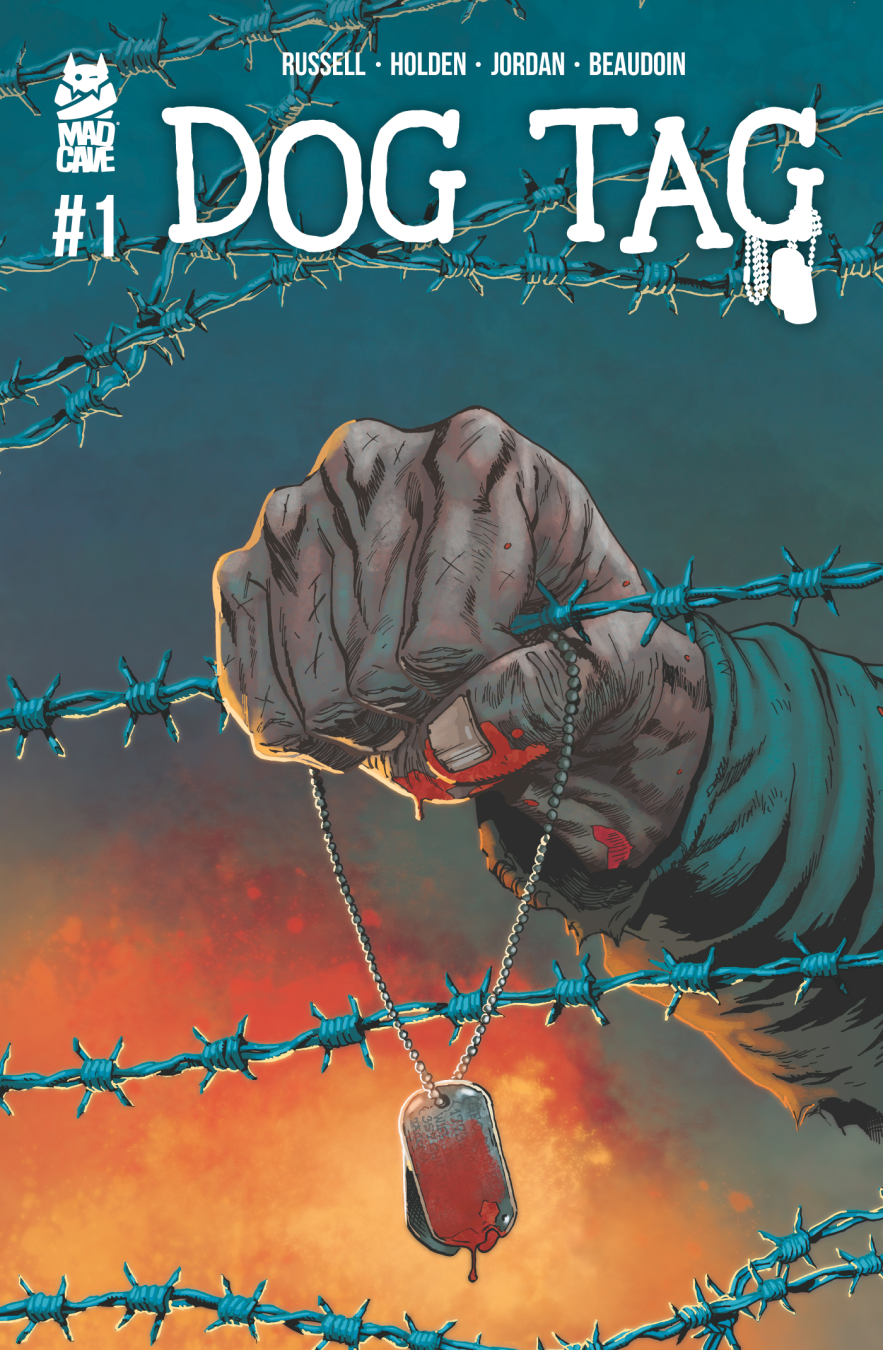
 WEPAAAAA… now THIS is how you launch a war comic with brains, bruises, and a whole lot of soul. Dog Tag #1 from Mad Cave Studios is not your typical “rah-rah, explosions everywhere, cue the heroic trumpet” World War II story. Nah, familia, this one walks in wearing muddy boots, blood on its sleeve, and a notebook full of truths nobody in command really wants written down. Writer Mark Russell, artist PJ Holden, colorist JP Jordan, and letterer Buddy Beaudoin come together like a creative platoon with a mission: remind readers that war is not just fought by legends, generals, and marble-statue heroes. It is endured by frightened, tired, funny, broken, ordinary people trying to survive history while history is busy chewing through them.
The story follows Corporal Tom Fuller, a soldier-journalist/cartoonist whose job is basically to turn war into something palatable enough for the folks back home. He writes, he observes, he jokes, he softens the edges. But this issue slowly makes it clear that the edges of war do not stay soft for long. Russell does what Russell does best: he slips satire into the room wearing a helmet, lets it crack a joke, then suddenly punches you in the chest with a truth you were not ready for. Tom’s perspective gives the book its emotional anchor, because he is not a standard battlefield protagonist charging into gunfire with a patriotic snarl. He is a witness. He is a writer. He is a man being asked to make horror readable, useful, even cheerful. That idea alone is powerful enough to carry the series, but Russell layers it with guilt, absurdity, propaganda, survival, and the nauseating distance between what war looks like on paper and what it smells like when bodies are being carried off the beach.
What really makes Dog Tag #1 hit hard is how it understands the strange machinery around war. The first part of the issue deals heavily with offices, briefings, messaging, morale, and the bizarre theater of controlled information. Tom is told, in so many ways, that his job is not simply to report the truth, but to package the truth so it does not bite anyone too hard. That is where the book finds its sharpest teeth. Russell is not just writing about World War II as an event; he is writing about the stories nations tell themselves while young people are being sent into nightmares. That gives the issue a powerful modern echo without ever feeling preachy or cheap. It trusts the reader. Big respect for that.
PJ Holden’s art is gritty, expressive, and emotionally disciplined. He does not over-romanticize the war imagery, and thank goodness for that. The faces carry the weight here. Tom often looks like a man whose brain is trying to process too many horrors at once while his body is still standing at attention. The military spaces feel stiff and controlled, while the battlefield aftermath has a horrible looseness to it, like the world has come undone and nobody knows where to put the pieces. When the issue shifts toward D-Day and its consequences, the artwork becomes grim without turning exploitative. The wounded soldiers, the blood-stained medic, the bodies, the pier, the boats, the silence between panels all of it lands with a kind of awful restraint. Holden knows when to show the nightmare and when to let the reader’s imagination finish the job. That is veteran-level storytelling right there.
 JP Jordan’s colors deserve a serious salute. The palette has that historical-war-comic texture, but it never feels dusty or lifeless. The blues of the coastline, the greens and browns of military uniforms, the sickly reds of blood and sunset it all works together to create a mood that feels both period-authentic and emotionally immediate. The colors do not scream for attention. They creep under your skin. That is exactly what this story needs. Buddy Beaudoin’s lettering also has a lot to juggle here, between dialogue, captions, diary-style narration, newspaper-strip energy, and moments where the words need to feel like they are coming from a man trying not to fall apart. The lettering keeps the reading flow steady, especially in a book that shifts between satire, military conversation, internal reflection, and traumatic witness.
What I admire most is that Dog Tag #1 does not treat survival like a clean victory. Survival here feels complicated. Heavy. Almost suspicious. Tom is surrounded by systems that want him to turn chaos into morale, but the deeper he gets, the more impossible that job becomes. There is a moment later in the issue where the reality of wounded men waiting, suffering, and being handled like part of an endless queue of damage just completely changes the temperature of the book. It is brutal. Not “shock value” brutal. Human brutal. The kind that makes you put the comic down for a second and go, “Damn.” That is the good stuff, even when it hurts.
Mad Cave Studios has been building a strong reputation for giving creators room to swing big, and Dog Tag #1 is another example of that creative ambition. This issue feels like the beginning of something that wants to be remembered, not just read. It has the moral unease of classic anti-war literature, the visual grit of old-school war comics, and the emotional intelligence of a creator team that understands respect does not mean sanitizing the horror. Sometimes honoring the people who served means telling the truth about what service cost them.
Dog Tag #1 is thoughtful, haunting, occasionally darkly funny, and deeply human. It is not here to sell you a toy-soldier fantasy. It is here to sit you beside a man with a pen, a uniform, and a cracking conscience while the world burns around him. That is powerful storytelling, mi gente. WEPA with a lump in the throat 😥 . This is a strong, sobering debut from Mad Cave Studios, and if the rest of the six-issue series keeps this level of emotional honesty, Dog Tag could become one of the standout war comics of the year.
CRUSADERS SCORE:
4.5/5
Writer: Mark Russell
Artist / Pencils & Inks: PJ Holden
Colors: JP Jordan
Letterer: Buddy Beaudoin
Cover A: PJ Holden & JP Jordan
Cover B: Sebastián Píriz
Cover C: Erica Henderson
Editor: Jon Moisan
Publisher: Mad Cave Studios
IN SHOPS NOW!
Leave a Reply
You must be logged in to post a comment.