
Family & Honour Review: Medieval Drama with Heart, Duty, and Big Indie Power
·Al Mega
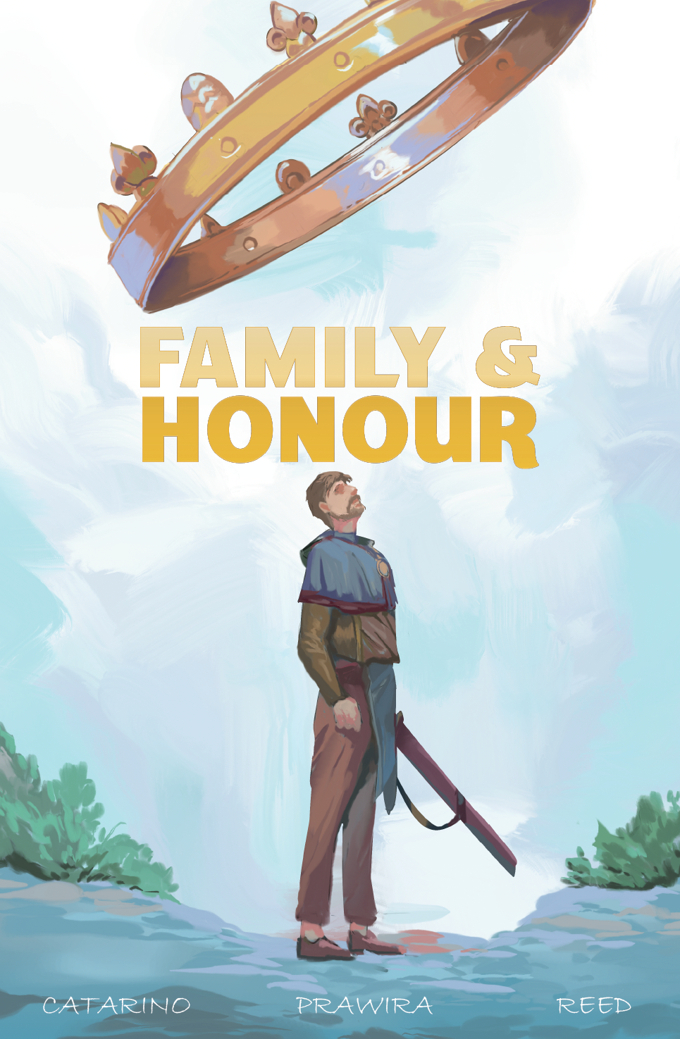
 WEPA! Now this is the kind of indie comic that walks into the room wearing chainmail, carrying emotional baggage, and politely asking your moral compass to fight for its life. Family & Honour by Bruno Catarino is not trying to overwhelm readers with dragons, magic swords, or medieval spectacle for spectacle’s sake. Nah, this one comes in sharper than a dagger under the banquet table. It’s a 12th-century historical drama built around loyalty, blood, betrayal, and the nasty little truth that “doing the right thing” gets real complicated when crowns, castles, and family names start breathing down your neck. The Kickstarter campaign frames it as a 35-page one-shot set during the conflict between King Henry II and Richard “Lionheart,” and that historical tension gives the story a heavy, dangerous pulse right from the jump.
The story follows a young baron loyal to King Henry II, trapped in the kind of political mess where every decision feels like it was designed by somebody who hates sleep. Surrounded by traitors, facing an imminent attack on his castle, and forced into a dilemma involving duty to his king versus the life of an innocent victim of war, this is medieval drama with a human heartbeat. Bruno Catarino wisely keeps the focus tight. Instead of turning the book into a dusty history lesson with helmets, he locks us inside the emotional furnace of one man’s impossible choice. That’s where the book shines. The stakes are political, yes, but the pain is personal. That’s the sauce. That’s the WEPA.
What really works here is how Family & Honour understands that honor is not a shiny word. It’s a burden. It sounds heroic when sung by bards and carved into castle walls, but when it lands in someone’s hands, it can feel like a curse wrapped in velvet. The young baron’s loyalty is tested not in a loud, cinematic battlefield moment, but through conversations, accusations, family wounds, and quiet pressure from people who all believe they understand what must be done. The book gives us strategy, suspicion, and moral dread without losing the emotional clarity that keeps readers invested. You are not just asking, “Will the castle fall?” You are asking, “What kind of man survives making this choice?”
Bruno Catarino’s writing has a clean, theatrical confidence to it. You can feel the story’s roots in tense drama: characters enter scenes with purpose, dialogue carries weight, and each exchange feels like another stone being added to the baron’s chest. There is a strong sense of control in the pacing. The book does not waste time. It moves like a blade being drawn slowly from its sheath. The political intrigue is easy to follow, but never dumbed down. That matters. Historical fiction can sometimes become a parade of names, titles, and “please consult the family tree on page 97” energy. Not here. Catarino gives readers enough context to understand the conflict, then lets the characters’ choices do the heavy lifting.
 Jaka Prawira’s artwork gives the story a grounded, expressive atmosphere that fits the material beautifully. The castle interiors feel lived-in, not like generic stone boxes copy-pasted from a medieval wallpaper pack. The shadows matter. The rooms feel cold. The walls feel like they are listening. Character expressions carry a lot of the storytelling, especially in the quieter moments where duty and fear sit across from each other like two old enemies sharing wine. There’s a softness to some of the faces that contrasts nicely with the brutality of the setting, making the emotional turns feel more intimate. When the book leans into tension, Prawira knows how to frame a stare, a pause, a doorway, or a looming figure so the pressure builds without needing to scream at the reader.
The coloring gives the book that moody, torchlit medieval flavor without drowning the pages in mud. There are blues, browns, golds, and candle-warm tones that create a visual rhythm between public duty and private vulnerability. The art does a strong job separating the coldness of castle politics from the warmer, more painful family moments. Jaymes Reed’s lettering and logo work also deserve love here, because a story like this lives or dies by readability. When you’ve got medieval names, political pressure, and emotionally loaded dialogue moving through the panels, the lettering has to guide the reader without becoming intrusive. Reed keeps it clean and functional, letting the performances breathe. The attached preview PDF credits Bruno Catarino with writing and design, Jaka Prawira with art and main cover, and Jaymes Reed with lettering and logo, with variant cover credits for Erwin J. Arroza, Gabriel Caitano dos Santos, and Matheus Huve on color.
What makes Family & Honour stand tall is that it treats war as more than banners and blades. War here is emotional theft. It steals choices. It turns children into leverage, family into liability, and loyalty into a courtroom where nobody is truly innocent. The strongest material in the book comes from how it explores the difference between obedience and conscience. A baron can serve his king, but what happens when service demands something that stains the soul? That question gives the comic its bite. And yes, for a 35-page one-shot, it manages to feel surprisingly rich without becoming bloated. That’s not easy. Plenty of comics with double the page count still can’t find the point without a GPS and three side quests.
The only area where some readers may want a little more breathing room is in the larger political backdrop. The book gives enough to understand the Henry II/Richard conflict, but because the central story is so personal, those hungry for a more sprawling historical tapestry may want just a touch more world context. That said, this is not a flaw that hurts the book. It’s more like finishing a great appetizer and immediately side-eyeing the kitchen because you want the whole feast. The one-shot format works because it keeps the emotional blade pointed directly at the heart.
Family & Honour is a strong indie historical drama that respects both history and humanity. It gives readers castle intrigue, family tension, moral conflict, and a lead character forced to weigh legacy against mercy. Bruno Catarino and the creative team deliver a polished, thoughtful, and emotionally charged comic that proves you don’t need dragons to make medieval drama dangerous. Sometimes all you need is a crown, a castle, a family secret, and one impossible decision. WEPA-worthy? Absolutely. This is one for readers who enjoy political intrigue, grounded medieval storytelling, character-driven drama, and indie comics with real craftsmanship behind them.
Final Verdict: Family & Honour is a sharp, heartfelt, and compelling historical one-shot that turns medieval loyalty into an emotional battlefield. Strong writing, expressive art, and a powerful moral dilemma make this a Kickstarter worth keeping on the radar.
CRUSADERS SCORE:
4/5
Writer & Design: Bruno Catarino
Art & Main Cover: Jaka Prawira
Lettering & Logo: Jaymes Reed
Variant Cover B: Erwin J. Arroza
Variant Cover C: Gabriel Caitano dos Santos
Variant Cover C Color: Matheus Huve
Publisher/Campaign: Red Wulf Comics / Kickstarter
Leave a Reply
You must be logged in to post a comment.