
The Last Driver #1 Review: Sean Murphy & Simon Gough Burn Rubber Into Cyberpunk Chaos
·Al Mega
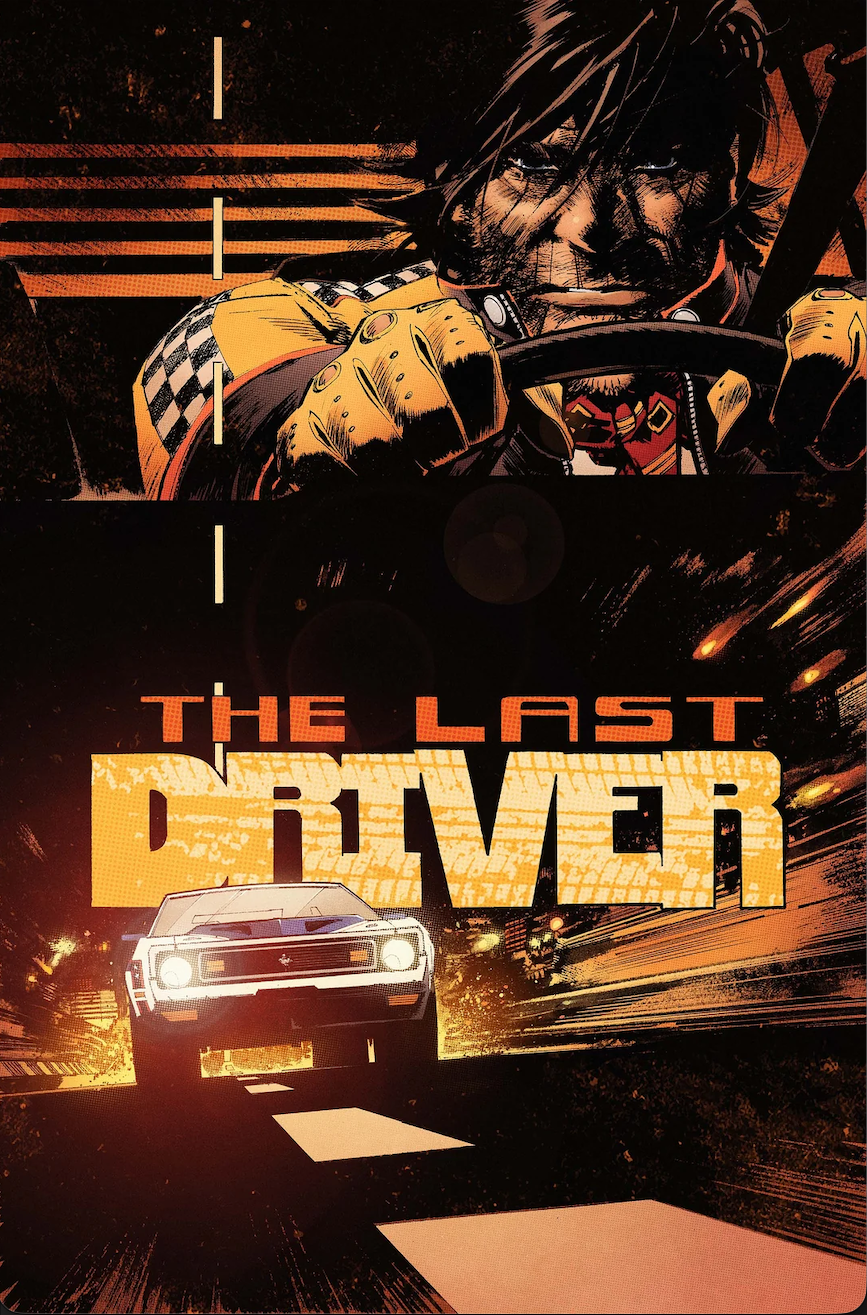
THE LAST DRIVER #1 comes screaming off the line like a yellow Stingray with something to prove and the future eating dust in the rearview. Sean Murphy and Simon Gough throw us into an America where nobody drives anymore, not because humanity evolved past the wheel, but because convenience did what convenience always does when nobody checks it: it got greedy, got cozy with power, and turned into a cage with cupholders. WEPA, this book has fuel in its veins. It is cyberpunk, car culture, dystopian rebellion, family drama, and old-school outlaw myth all burning rubber in the same lane.
The opening sets the table with teeth. America is framed as a country built on freedom, then fractured by wars, inequality, online division, algorithms, artificial intelligence, and rich barons who figured out how to weaponize comfort. That is not subtle, but subtle is not what this comic is trying to be. This is a blown engine sermon about control. The GRID, an automated transportation system sold as safe, reliable, and convenient, is about to give the wealthy complete command of the cities while locking out the people forced into the deserts. In other words, the future did not arrive wearing chrome. It rolled in wearing a corporate smile and a police badge.

Then we meet Clutch, the last man who remembers what it means to drive. Not ride. Not commute. Drive. Big difference, fam. Clutch is part legend, part outlaw, part broken grandfather, and part road-warrior fossil who still has enough thunder in his bones to make the whole system nervous. His speeches about driving could have gone corny real fast, but the book gives them just enough grit to work. He talks about the road as a shared space, a place where people had to deal with each other, respect lanes, read situations, help strangers, and live with risk. Was it messy? Absolutely. Traffic, smog, drunk drivers, lane hogs, and every clown who thinks a turn signal is optional. Still, compared to a future where the GRID makes every choice, the old road starts looking like freedom with potholes.
The heart of the issue is Clutch and Cuda. That grandfather-granddaughter dynamic keeps the book from becoming just chrome, sirens, and speeches about America. Cuda has never been inside a real car before, so the simple stuff hits beautifully: opening a door, hearing an engine roar, learning what a seat belt is, discovering radio, and reacting to a cassette like she just found ancient wizard technology. It is funny, sweet, and sneaky emotional. Underneath all that, she is sick and waiting on a heart transplant that outlaws like them are not supposed to get. That gives the chase real stakes. This is not just one old driver trying to prove he still has it. This is family. This is guilt. This is one last run through hell because sitting still means watching Cuda die.

Visually, this thing cooks. The early pages use heavy black space, red accents, historical imagery, circuitry, and divided-color compositions to make the backstory feel like propaganda scraped off a burning wall. The city pages have that dense, vertical, mechanical pressure where everything feels too tall, too monitored, too designed by people who never had to walk anywhere. Then the car shows up, and boom, the whole visual language changes. That yellow Stingray is not just transportation. That thing is a declaration of war with headlights. It slices through the sterile automated world like an old rock song blasting through a funeral lobby.
Murphy and Gough make the action feel loud without turning the pages into visual soup. The eCops, pods, police transfers, perimeter roads, and news-broadcast panels create constant motion, but the storytelling remains readable. The chase scenes have snap. The city drops away in sharp angles. The car feels physical. You can practically hear the tires crying for help. There is a strong contrast between the GRID’s smooth, lifeless automation and Clutch’s rough, dangerous, human control. Machines follow routes. Clutch makes decisions. That right there is the whole book in one lane change.

The villain setup with Kowalski gives the issue its nasty little hook. He is the kind of slick operator who talks about “the future” like he is selling salvation, while the floor beneath him is covered in bodies and unpaid debts. His offer is simple and dirty: get Cuda across the city in under four hours, and she gets the heart transplant. Of course there is an angle. There is always an angle with a guy like that. But Clutch does not have the luxury of purity. When your granddaughter is coughing and the clock is punching you in the face, you take the keys and pray the devil keeps his receipt.
The only speed bump is that the issue comes in swinging big with its themes. Freedom, class control, AI outrage, police automation, lost American identity, corporate power, all of it is right there on the hood. Some readers may feel the message before they fully settle into the characters. But honestly, this is a high-octane dystopian chase comic, not a whispery indie drama about sad people staring out windows. It is supposed to roar. The book knows what it is, commits hard, and backs that commitment with character, momentum, and killer visual identity.
THE LAST DRIVER #1 is a strong, stylish, creator-owned debut with a real engine under the hood. It is built for fans of cyberpunk grit, car-culture chaos, outlaw heroes, broken futures, and stories where the chase is not just about getting away, but about getting back something humanity let slip through its fingers. Murphy and Gough deliver a first issue with speed, attitude, heart, and enough road-rage rebellion to make this ongoing series feel like it has a long, dangerous highway ahead.
Nobody drives anymore. Except Clutch. And based on this first issue, mi gente, the future better move out the way.
CRUSADERS SCORE::
4.5/5

Story: Sean Murphy & Simon Gough
Art: Sean Murphy & Simon Gough
Publisher: Image Comics
Release Date: August 19, 2026
Leave a Reply
You must be logged in to post a comment.