
RIC FLAIR FILES $10 MILLION LAWSUIT, CLAIMING A DIGITAL AGENCY TOOK CONTROL OF THE NATURE BOY’S IDENTITY!
·Daniel Black
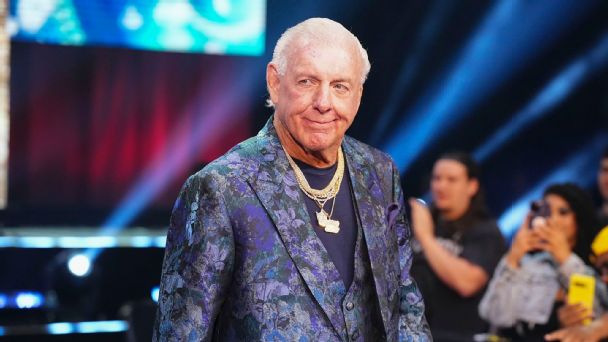
The wrestling legend alleges FAM Networks secured perpetual rights to his name, likeness and social accounts while failing to deliver the income it promised.
Ric Flair has spent more than four decades turning a wrestling character into one of the most recognizable identities in popular culture. Now, the two-time WWE Hall of Famer is fighting over who has the right to control that identity online.
Flair, whose legal name is Richard Fliehr, has filed a civil lawsuit against digital talent agency FAM Networks seeking at least $10 million. He alleges that the company misled him into signing an agreement containing extensive rights to his name, likeness, voice, social-media accounts and broader commercial identity.
According to The Independent, which obtained the complaint, Flair received the contract by email on December 5, 2025. The filing says he opened it at 5:57 p.m. and signed at 6:11 p.m., giving him approximately 14 minutes to review the agreement.
The complaint alleges that the contract inaccurately represented that it had been negotiated with legal counsel even though Flair did not have an attorney reviewing the deal. It further describes the license granted to FAM as irrevocable, perpetual, worldwide and sublicensable.
Those descriptions come from Flair’s lawsuit and have not been tested in court. FAM Networks had not issued a public response at the time of verification, so the agency’s interpretation of the agreement remains unknown.
Flair says he approached the company for help restoring and monetizing his digital presence, including a Facebook page that had reportedly been hacked or demonetized. According to the complaint, FAM promised that the page could eventually generate six figures each month while also securing appearances, speaking engagements and collaborative projects.
The proposed revenue structure reportedly gave Flair 90 percent of income from personal projects, 50 percent from collaborations and 10 percent from passive content. Flair alleges those opportunities never materialized as promised.
Instead, the lawsuit claims FAM transferred operational control of Flair’s Facebook page to itself, locked out members of his existing team and generated as much as $20,000 per month while paying him little or nothing. Flair told The Independent that he believes he has already lost approximately $250,000 in potential income.
The complaint seeks at least $5 million for alleged breach of contract and another $5 million for alleged fraudulent inducement. Flair is also requesting additional damages, an accounting of revenue connected to his identity, restoration of control over his Facebook page and a ruling that FAM possesses no continuing rights to his name, image or likeness.
The New York Post reported that requests for comment sent to FAM Networks received no immediate response. That silence does not validate the allegations, but the questions raised by the lawsuit extend far beyond Ric Flair.
Wrestlers increasingly conduct appearances, sponsorships and fan engagement through platforms they do not own. Whoever controls the account credentials, monetization settings and contractual rights can control a significant portion of a performer’s livelihood.
A wrestling name is also more complicated than an ordinary social-media brand. Ric Flair is simultaneously a performer, a character, a collection of trademarks and decades of intellectual property recognized across wrestling, music, sports and fashion. That identity continues generating commercial value long after Flair’s full-time career ended.
The lawsuit therefore strikes at a difficult question facing veteran performers: what happens when somebody needs outside help managing a digital empire built before social media existed? Flair’s complaint argues that FAM exploited that vulnerability, while FAM will have the opportunity to contest those claims, present its interpretation of the agreement and challenge the damages Flair is seeking.
Until then, the responsible conclusion is limited but significant. Ric Flair has asked a court to return control of his digital identity and invalidate a contract he describes as a trap. The Nature Boy’s latest fight will not happen inside a ring. This time, ownership of the “Woo!” could be worth millions.
Editorial disclaimer
This report concerns allegations contained in a civil complaint. The allegations have not been adjudicated, and publication should not be interpreted as a finding that FAM Networks committed fraud, breached a contract or engaged in unlawful conduct. Comic Crusaders will update the article if FAM Networks responds or the court issues a material ruling.

Leave a Reply
You must be logged in to post a comment.