
April Gray Review: Sweet Kid, Bad Day, Body Count on Demon Time
·Al Mega
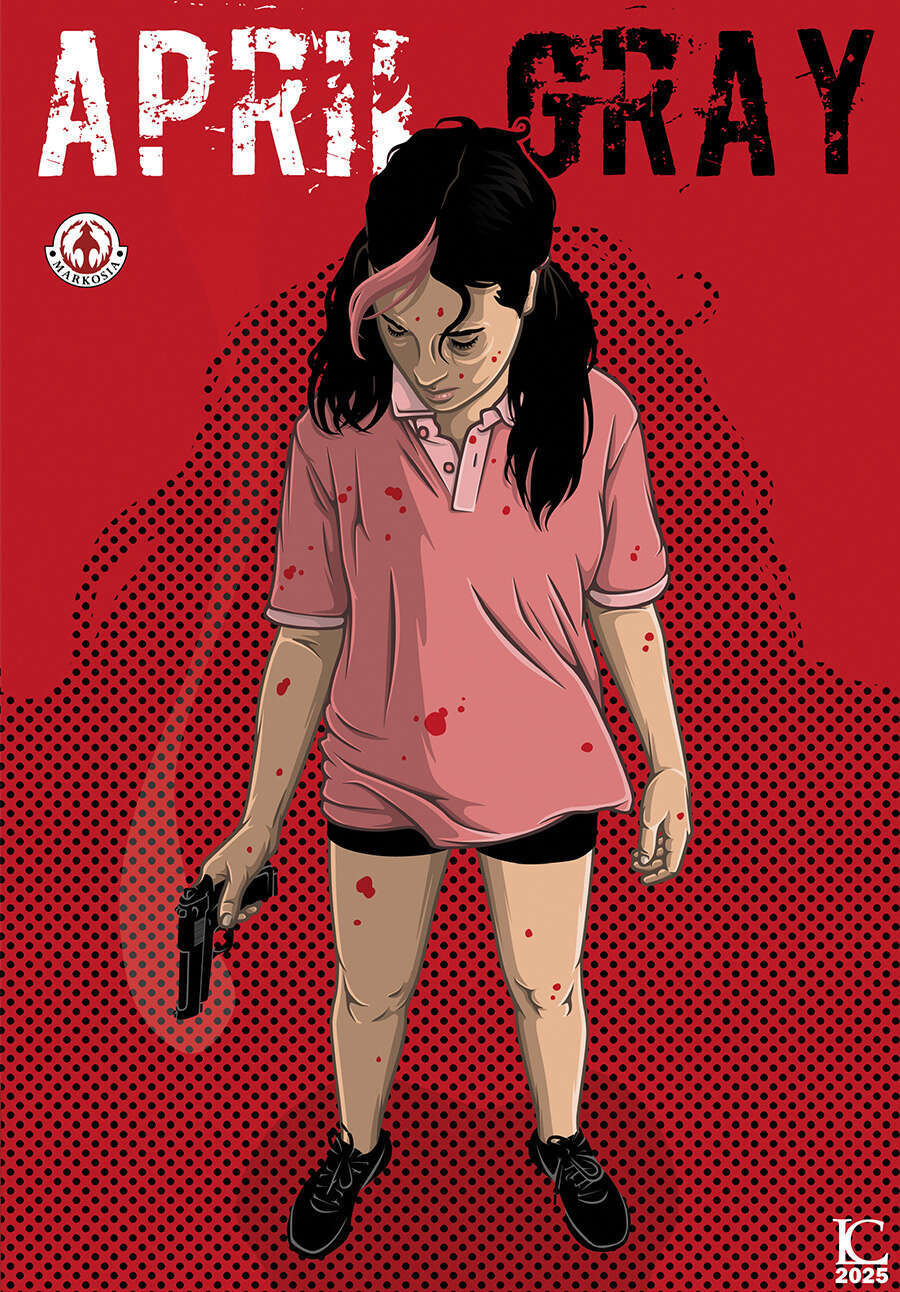
WEPA, mi gente, pull up and lock in, because April Gray from Luke Cooper and Markosia is not walking into the comic shop trying to be cute. Nah. This book comes in with a pink shirt, dead eyes, blood on the floor, and a secret government program hiding in the basement like it owes people money. It starts with Suzy Sweet, a girl so wholesome she practically looks like she was built out of sunshine, school spirit, and “yes ma’am” energy. Then a convenience store hold-up goes sideways, a shotgun gets shoved into her reality, everything goes black, and when the lights come back on, bodies are everywhere. That is not a rough Tuesday. That is a whole “call your therapist, your lawyer, and maybe an exorcist” situation.
What makes April Gray hit is that it understands the power of contrast. Suzy is presented as this clean, kind, almost painfully innocent presence, but Cooper surrounds her with a world that is dirty, paranoid, violent, and morally moldy. The book’s central hook is nasty in the best storytelling way: what happens when trauma is not just something a person survives, but something powerful people try to weaponize? That question gives the story real teeth. Not plastic vampire teeth from the Halloween aisle. Real teeth. Brooklyn pitbull teeth. The kind that leave marks.
Luke Cooper builds this thing like a runaway noir-action fever dream, mixing conspiracy thriller mechanics with blood-soaked identity horror. The pitch of “Jason Bourne meets Becky” is funny because, yeah, that’s in the DNA, but the book has its own grim little heartbeat. This is not just “small girl goes murder mode.” That would have been the lazy version. The dollar-store version. The “we ran out of seasoning” version. Cooper goes deeper into fractured identity, psychological conditioning, buried memory, and the awful reality of adults making monsters out of children, then acting shocked when the monsters bite back. Ay yo, don’t light the fire and complain when the kitchen burns down.

Visually, this book has a mean little swagger. The black, white, gray, and red palette is doing heavy lifting, and I mean heavy like moving furniture up a fifth-floor walk-up in Brooklyn with no elevator. The red is not just blood. It is danger. It is memory. It is alarm. It is Suzy’s hoodie, April’s menace, violence as a visual siren, and emotion screaming from inside a locked room. Cooper’s pages have a stark, punk-noir flavor that keeps the eye moving. The art is clean enough to follow the action, sharp enough to sell the brutality, and expressive enough to make Suzy’s confusion and April’s feral calm feel like two different songs playing through the same busted speaker.
Yo Fam, the action pops off. Cooper clearly loves stylized gunplay, close quarters chaos, sudden violence, and that old-school heroic bloodshed rhythm where every hallway can become a battlefield and every pause feels like somebody is about to get folded like a lawn chair. There are moments where the page practically makes its own sound effects in your head. Bam. Krakk. Thk. That kind of comic book percussion that reminds you why sequential art is still undefeated when it wants to move fast. The choreography is readable, the impacts land, and the violence feels intentionally ugly rather than decorative. Big difference.
The storytelling is also ambitious, sometimes almost too ambitious, but I respect the swing. April Gray jumps through identity, memory, conspiracy, and revelation with a pace that expects the reader to keep up. No hand-holding. No baby food. You want answers? Chase them. That gives the book energy, but it also means some sections get dense. There are moments when the government project material, the shifting identities, and the layered reveals come at you like three trains hitting the same platform. Personally, I dig that kind of madness when the creative vision is strong, and Cooper’s vision is definitely strong. Still, a little more breathing room in future volumes could let the emotional punches land even harder. Because when the book slows down and lets Suzy, April, and the deeper tragedy underneath all that violence sit in the room, that’s when it gets dangerous in a different way.
That’s the sauce right there. Under all the gunfire, blood, and conspiracy nonsense, April Gray is really about damaged children and the adults who failed them. It asks what identity even means when your mind has been shaped by trauma, training, manipulation, and survival. Suzy is not just a victim. April is not just a killer. Sarah is not just another piece on the board. They are pieces of a larger wound, and Cooper seems very aware that the scariest thing in the book is not the weapons, the agents, or the assassins. It is the idea that someone looked at vulnerable kids and saw military potential instead of pain. That is cold. Ice cold. Dead-ass villain behavior.

There is a real bite in the way the book handles institutional rot. The suits talk like every terrible decision can be polished into policy. The agency logic is always the same: secrets protect people, violence is necessary, history can be sanitized, and children can be used if the results are useful enough. Nah, son. That is how monsters get made. The comic understands that evil does not always show up twirling a mustache. Sometimes it shows up with paperwork, security clearance, and a clean tie. That kind of villainy feels uncomfortably real, which makes the pulpy chaos hit with extra weight.
Cooper’s character designs are simple but memorable, especially Suzy/April with that pink streak cutting through the darkness like a warning label. The innocent schoolgirl look contrasted with the dead-eyed assassin energy is strong visual storytelling. The supporting cast also carries that noir ugliness well, from haunted detectives to shady operatives to masked killers who look like they walked out of a government-funded nightmare. The world feels grimy but not cluttered, stylized but not empty. It has a controlled visual identity, and that matters. A lot of indie thrillers try to look gritty by just making everything muddy. April Gray avoids that. It is crisp. Mean, but crisp.
The book is mature, and it earns that label. This is not casual violence. This is trauma violence, identity violence, agency violence, and yes, a whole lot of actual violence too. Readers should know that going in. But the brutality is not there just for cheap shock. It is tied to the theme. That does not make it soft, because this book is absolutely not soft, but it does make it feel purposeful. It wants to entertain you, then bother you a little after. That’s a good combo. Comics should sometimes leave fingerprints on your brain.
What I appreciate most is that the story feels like a creator pushing all his obsessions into one sharp object. You can feel the echoes of identity horror, revenge cinema, action thrillers, outsider stories, and broken-kid tragedy getting melted together into something messy, loud, and alive. Not every edge is sanded down. Good. Let it cut. There is a rawness here that gives the book personality. It is not trying to be some corporate-safe thriller built by committee and focus-tested until all the flavor disappears. This is creator-driven comics with a nasty grin and a loaded magazine.

By the end, the book leaves you with more than a body count. It leaves you with questions about who gets to define a person after the world has already tried to break them. Is Suzy the truth? Is April the weapon? Is Sarah the scar tissue? Or are all of them just survival wearing different outfits? That is the hook that keeps the story from being just another action romp. The mystery is not only “Who is April Gray?” It is “What does a person become when every adult system around them decides they are more useful damaged than healed?” Oof. That one sits heavy.
April Gray is slick, brutal, stylish, and emotionally sharper than its grindhouse surface might suggest. It is not perfect, and the plot can get twistier than a Queens side street when your GPS gives up, but the energy is undeniable. Cooper delivers a graphic novel that feels dangerous, personal, and fully committed to its own madness. For readers who like indie comics with bite, conspiracy thrillers with blood under the fingernails, and action storytelling that actually has something disturbing under the hood, this one is worth pulling up for. April Gray is cute killers on the QT, yeah, but don’t let the pink fool you. This book smiles sweet, then kicks the door off the hinges.
CRUSADERS SCORE:
4/5

Get your copy on DriveThru Comics:
https://www.drivethrucomics.com/en/product/572321/april-gray
By: Luke Cooper
Based on an idea by: Luke Cooper and Alex Dawn
Publisher & Managing Partner: Harry Markos
Special Projects Co-Ordinator: GM Jordan
Creative Consultant: Andy Briggs
Editor In Chief: Ian Sharman
Publisher: Markosia / AAM Markosia
TRAILER:


Leave a Reply
You must be logged in to post a comment.