
Chopper: Song of the Surfer Review | The 2000 AD Classic Still Flies
·Al Mega
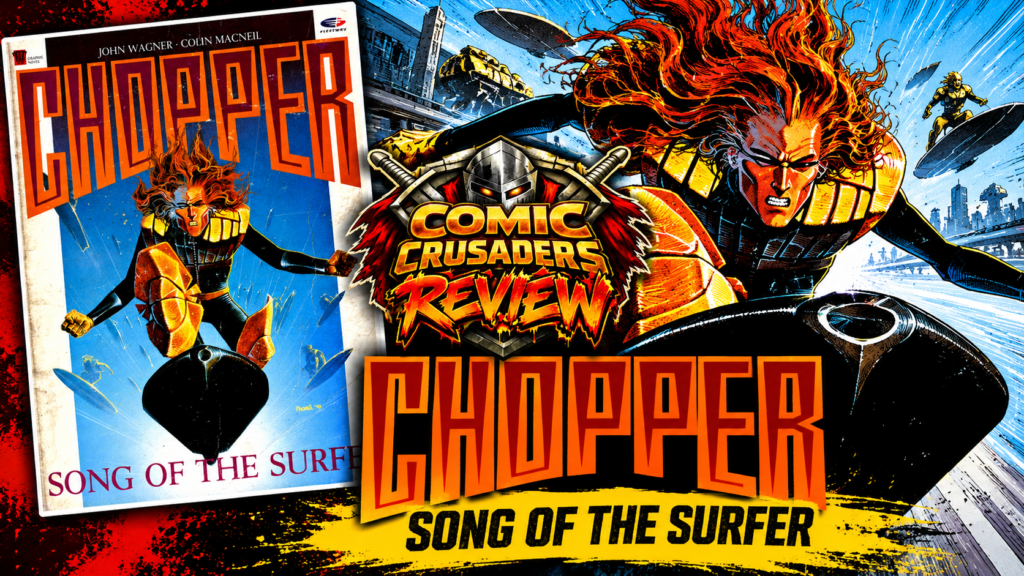
Before every rebellious teenager needed a multiverse, a secret bloodline, and six different costumes, 2000 AD gave us Marlon Shakespeare, better known as Chopper. A kid with a board, a mouth, and absolutely no interest in letting the authorities tell him how to live. Song of the Surfer is John Wagner and Colin MacNeil taking that attitude and pushing it straight toward the edge of a cliff. This ain’t some cute little sports comic where everybody learns teamwork and goes home with a trophy. We’re talking illegal speed, corporate spectacle, a world full of spectators hungry for danger, and a young man who seems more comfortable risking his neck than sitting still. Coño, this book MOVES!
The Fleetway graphic novel drops us back into the future of Judge Dredd, but the real star here isn’t the Law. It’s the freedom that Chopper feels when he’s riding his powerboard. Wagner knows the history: Marlon started as a graffiti artist, challenged the system, and eventually became a surfing legend. Here, the competition surrounding Supersurf turns that personal obsession into a global circus. Racers, promoters, officials, television crews, and fans all want a piece of the action. Chopper just wants the ride. That tension is the heartbeat of the whole damn thing, because the more the world celebrates him, the harder it becomes to tell whether he’s still chasing freedom or becoming another attraction in somebody else’s show.
What I dig about Wagner’s writing is that he doesn’t turn Chopper into some spotless inspirational poster. This cat is stubborn, cocky, reckless, and sometimes a complete pain in the ass. He’s also impossible not to root for. The people around him see the risks, especially when the racing gets more dangerous and the stakes stop being theoretical. Chopper sees open sky. That difference creates more drama than a dozen speeches about destiny ever could. The story lets the supporting cast, the rival surfers, and the people trying to control the event show us just how much pressure is building. Everybody’s got an opinion about the kid on the board. Naturally, the kid ain’t listening.
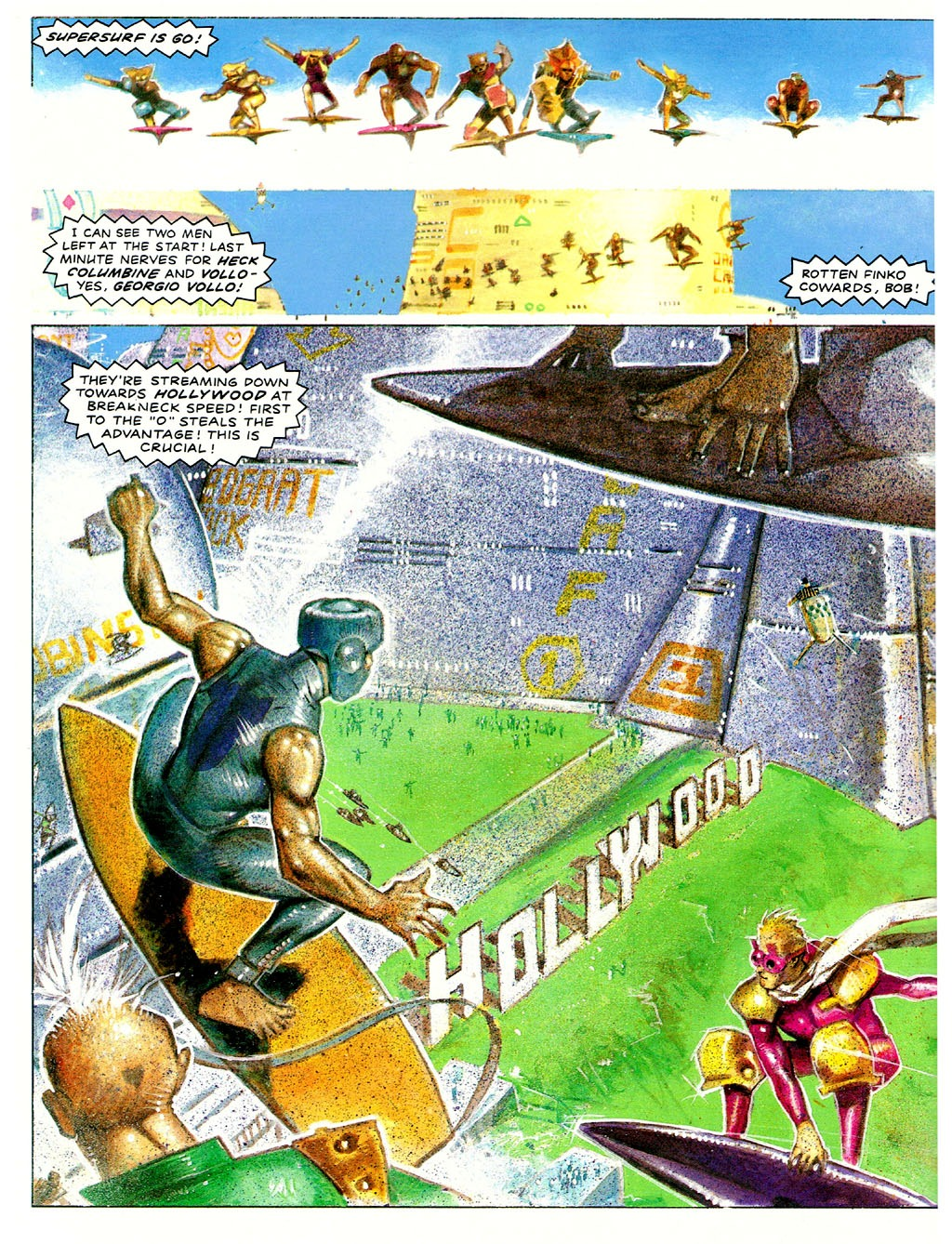
Then Colin MacNeil shows up and reminds everybody why comics are a VISUAL medium. Madre mía, these pages! The sky opens up in electric blues, the boards cut across enormous stretches of empty space, and the cities below look like something you could fall into forever. MacNeil knows exactly when to tighten the panels around a face and when to give a single image enough room to make your stomach drop. His characters look worn down, sweaty, nervous, and alive. Chopper’s wild hair and angular expressions practically vibrate off the page. You can follow the direction of a race, feel the sudden changes in speed, and sense the danger without needing a narrator to yell at you about every turn.
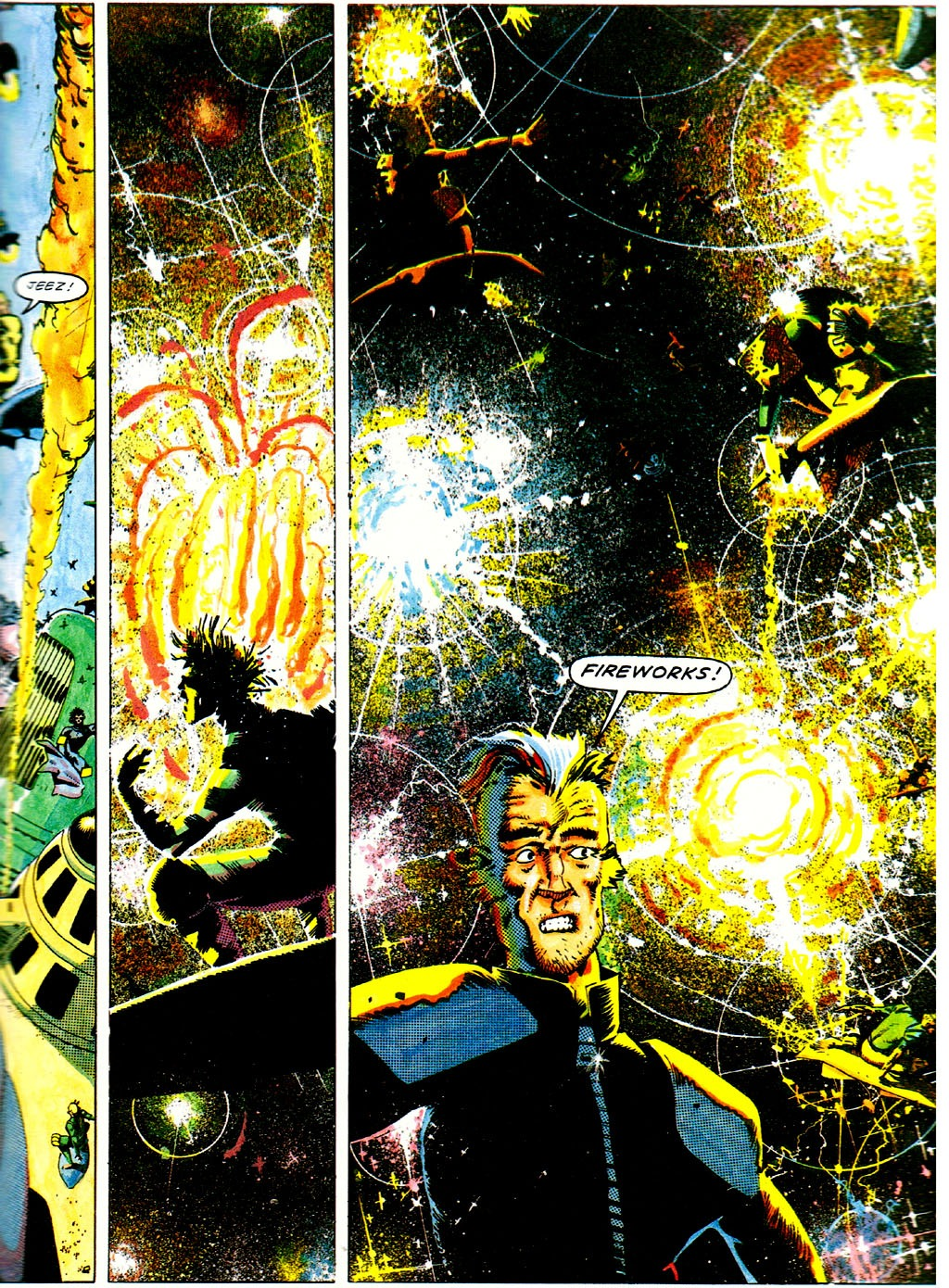
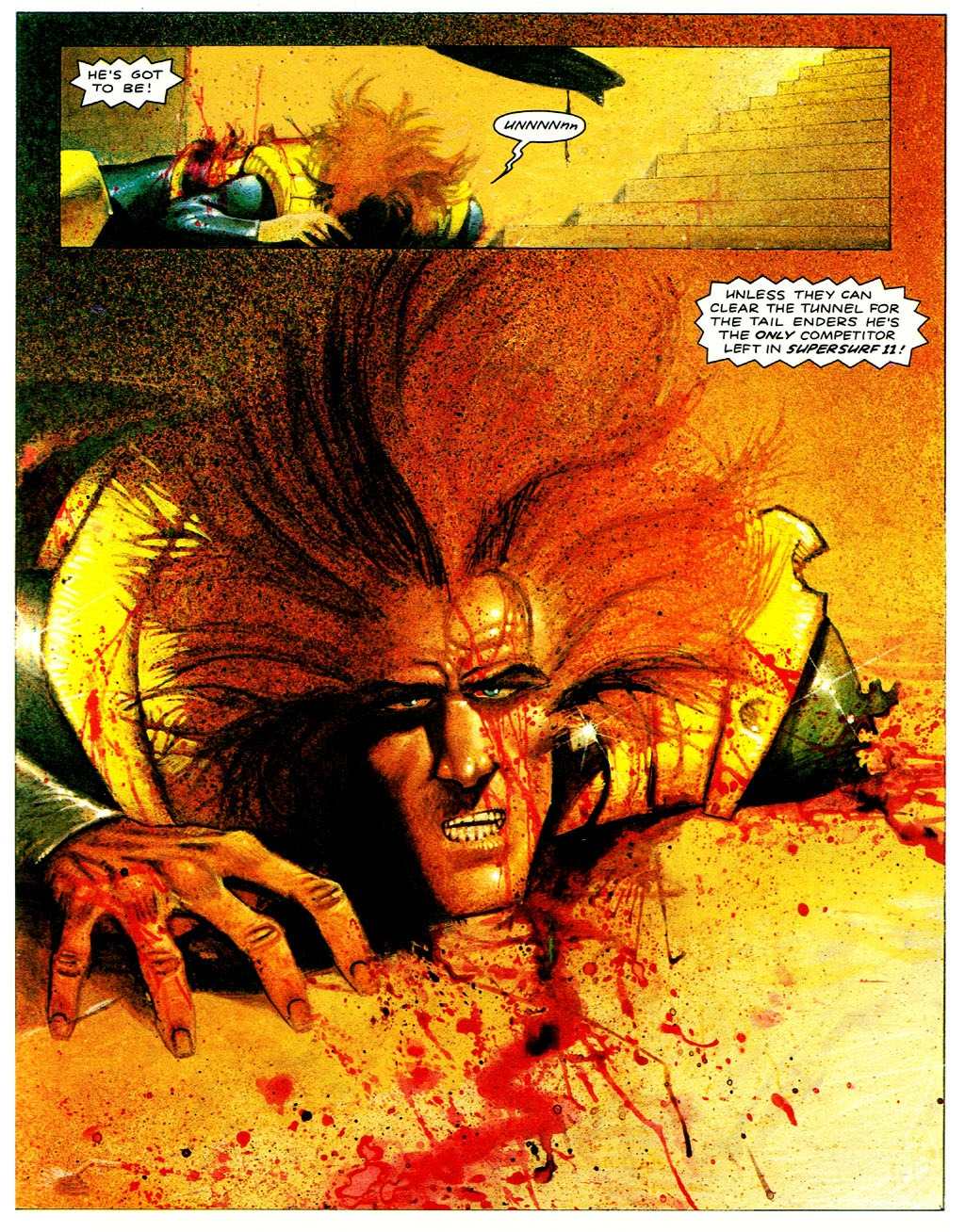
The colors deserve their flowers too, even though the edition doesn’t clearly identify a separate colorist in the front matter. Those blazing yellows, radioactive greens, hot oranges, and deep ocean blues aren’t there just to look pretty. They create heat, distance, and momentum, especially when the competition shifts from bright spectacle into something uglier. There’s a page where the action practically dissolves into an explosion of light, and another where Chopper’s battered face carries more emotion than a full page of dialogue. The lettering stays readable through some busy layouts, with sound effects adding impact rather than burying the art. This is the kind of late-’80s British comic storytelling that still knows how to knock your socks off.
Now, don’t get it twisted, papo. The story isn’t perfect. Some of the event politics and side-character maneuvering can slow the ride, and Wagner occasionally leans on captions to explain things MacNeil has already communicated beautifully. A few shifts between personal drama and the larger race spectacle arrive pretty fast. If you’re coming in cold, the book also assumes you’ll catch up with Chopper’s reputation without a full biography. Thankfully, this 1990 collection includes an introduction that walks readers through his graffiti days, his clashes with authority, and the road that brought him here. It’s useful context, not a substitute for the actual story, which stands on its own once the race gets rolling.
Here’s the part that makes this more than a bunch of beautiful hoverboard panels. Song of the Surfer understands that rebellion comes with a bill, and sooner or later somebody has to pay it. Wagner lets the excitement of competition sit right beside the ugliness of turning human risk into entertainment. The crowds cheer. The sponsors smile. The machinery keeps running. Meanwhile, the people actually riding those boards are putting everything on the line. That’s some sharp satire tucked inside a damn good action story. It also gives Chopper a kind of tragic dignity. He isn’t fighting to rule a city or save the universe. He’s trying to hold on to the one thing that makes him feel alive, even when the world wants to package it and sell it back to him.
Chopper: Song of the Surfer is a beautiful, dangerous piece of 2000 AD history. John Wagner gives us a rebel whose greatest strength and biggest flaw are basically the same thing, while Colin MacNeil turns a futuristic surfing competition into an unforgettable display of speed, color, and emotion. A little exposition and some uneven transitions keep it from perfection, but the emotional punch is real. Fam, this is why I love digging into the classics. No endless crossover checklist, no homework assignment, just creators who understand character, consequences, and the power of one incredible page. Get on the board, hold on tight, and don’t look down.
Crusaders Score:
4.5/5
Writer: John Wagner
Artist: Colin MacNeil
Publisher: Fleetway / 2000 AD
Edition Reviewed: 1990 graphic novel
Introduction: Garth Ennis (March 1990)
Colorist and Letterer: Not separately verified from this edition’s credits
Leave a Reply
You must be logged in to post a comment.