
Land of the Giants: Gold Key Comics #1–5 Collection Review
·Al Mega
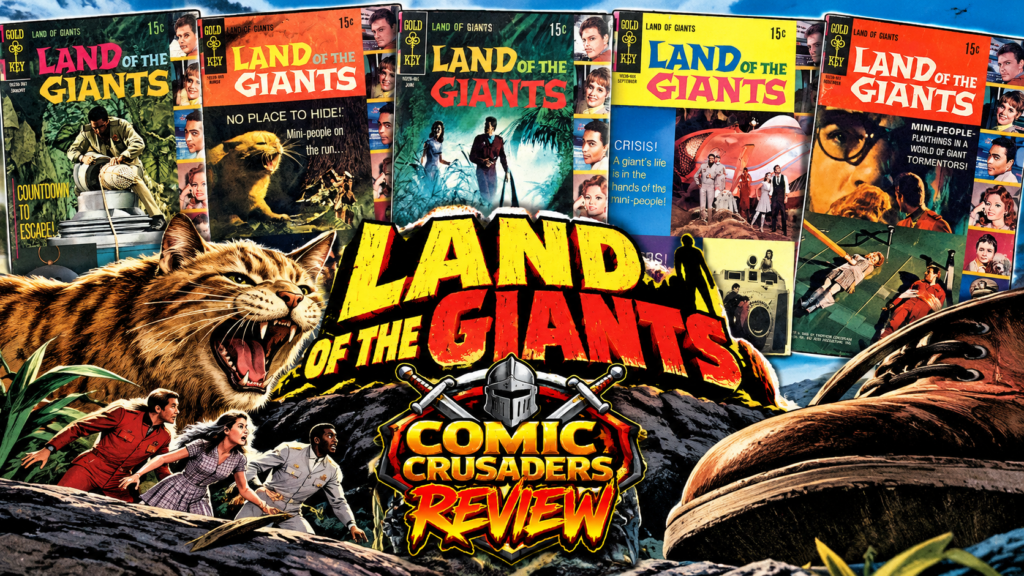
Yo, fam, we’re jumping into the time machine for this one! Before every science-fiction franchise needed twelve streaming spin-offs, three timelines, and a crossover event nobody asked for, there was Land of the Giants. Five Gold Key comics from 1968 and 1969, straight out of the era when a quarter could buy you an afternoon of oversized trouble. I read all five together like a vintage graphic novel, and let me tell you something: these little people got some BIG problems! We’re talking giant birds, enormous rats, deadly household objects, crooked humans, and enough close calls to make you wonder how anybody aboard the Spindrift survived past lunchtime. This is pure Saturday-afternoon adventure, baby, with that wonderfully strange Silver Age flavor.
The whole thing comes from the classic Irwin Allen television series, where the passengers and crew of the Spindrift end up stranded on a world populated by people twelve times their size. Now imagine being a regular-sized New Yorker trying to survive when somebody’s housecat is basically a damn tiger and a kitchen sink might as well be Niagara Falls. Coño! Gold Key understood the appeal immediately. The first issue, The Mini-Criminals, throws our stranded travelers into a dangerous encounter with people who see their small size as an opportunity for exploitation. There’s also a second chapter involving a nasty little troll-like threat. Right out of the gate, the comic establishes that the giants aren’t always the only monsters around. Sometimes the worst danger comes from somebody your own size.
Issue #2, Countdown to Escape, gets particularly entertaining because it takes something as ordinary as a bird of prey and turns it into an airborne nightmare. The giant eagle sequence is exactly the kind of ridiculous, beautiful comic-book spectacle I came here for. You’re watching people scramble for their lives while an animal that wouldn’t think twice about grabbing a mouse suddenly becomes a full-blown prehistoric monster. The follow-up adventure, The Little Buccaneers, shifts the danger again, using a watery setting and oversized wildlife to keep the crew moving. These stories don’t waste time pretending they’re sophisticated psychological thrillers. Somebody’s in trouble, the odds are ridiculous, and everybody better figure something out before they become lunch. Sometimes, fam, that’s all you need!
By the time we reach issue #3, Giant Damsel in Distress, the collection starts showing how versatile this premise really is. The crew gets tangled up in a giant woman’s predicament, and the story plays with the strange relationship between people who can physically crush our heroes and people who might desperately need their help. The second adventure, The Charge of the Light Brigade, brings another dose of human danger and desperate improvisation. There’s a particular charm to watching these tiny survivors use their intelligence instead of brute strength, because let’s face it, ain’t nobody winning a fistfight against a dude whose thumb weighs more than your entire body. The writing is sometimes melodramatic, absolutely, but it understands the assignment. Keep the danger coming, keep the heroes thinking, and don’t let anybody get too comfortable.
Issue #4 might be my favorite example of Gold Key having a blast with the concept. Safari in Giantland gives us a giant rat that looks like it wandered out of somebody’s worst basement nightmare. Bro, I’ve seen some questionable wildlife in New York, but THIS thing would have the entire MTA shutting down service! The follow-up, Babes in Toyland, turns ordinary manufactured objects into dangerous obstacles. That’s where these comics shine. A toy, a household tool, a pet, or a passing vehicle can become a major threat simply because the scale is completely out of whack. The creative team keeps finding new ways to remind you how vulnerable these people are. No cosmic gods required, no universe-ending laser beams. Just one enormous rat and a whole lot of bad luck.
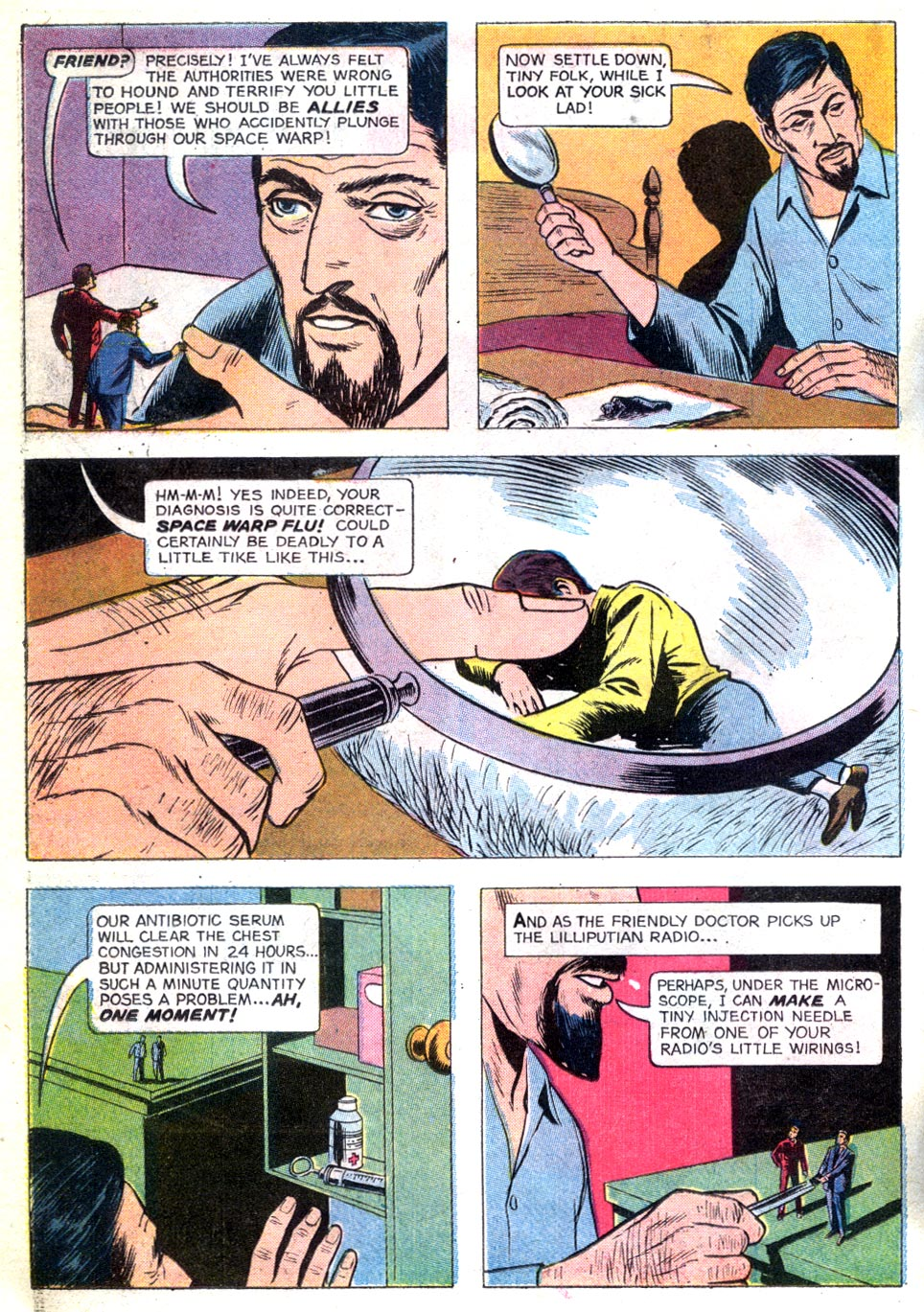
Then issue #5, Operation Mini-Surgeon, comes through with one of the collection’s more inventive premises. The story moves into medical territory, with the tiny travelers caught up in a situation where their unusual size becomes central to a surgical emergency. I dig that because it flips the entire concept around. For most of these adventures, being small is a curse. Here, that same disadvantage creates a possibility nobody else has. The second story, A Life in Their Hands, keeps the tension personal, with the crew navigating another dangerous encounter in a world where survival depends on quick thinking and trust. This final issue doesn’t deliver some grand conclusion to the Spindrift’s predicament, but that’s television tie-in comics for you, papo. The adventure continues, whether you’re ready or not.
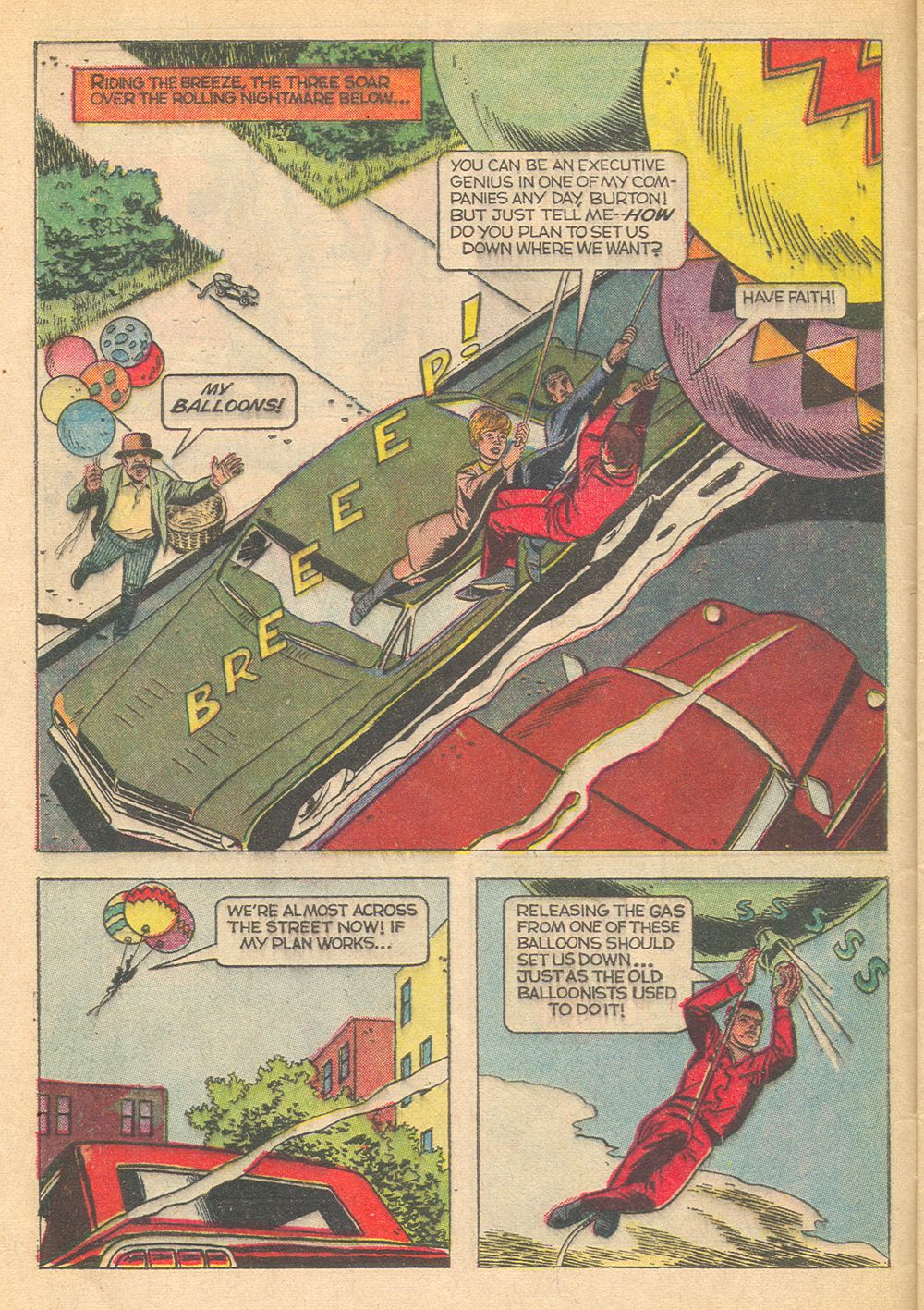
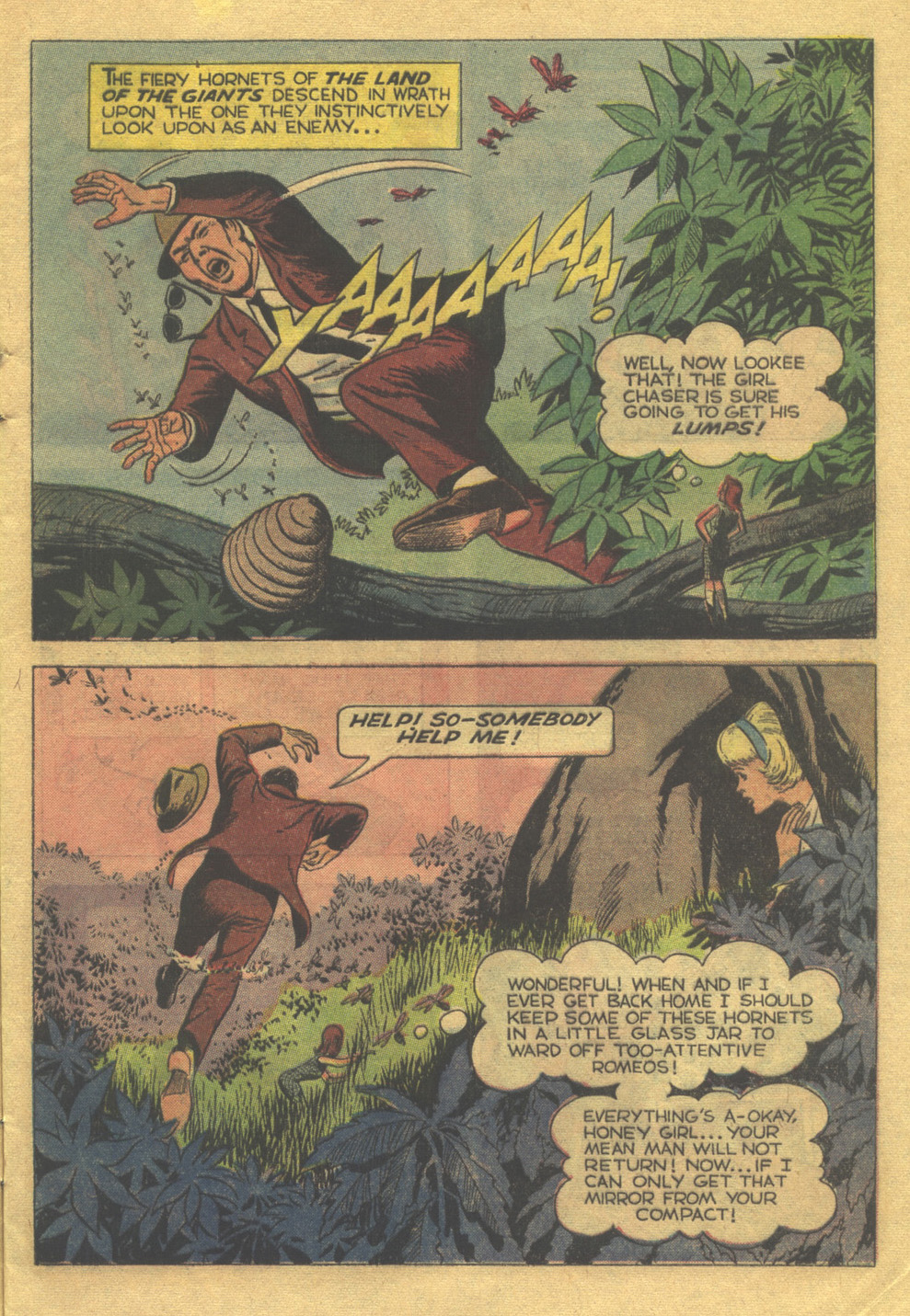
Now let’s talk about the artwork, because these Gold Key pages deserve some respect. The visual storytelling has that unmistakable late-’60s comic-book flavor: sturdy panel grids, expressive faces, dramatic angles, and plenty of oversized props doing the heavy lifting. The artists frequently frame the tiny characters against giant hands, shoes, animals, vehicles, and machinery, which sells the scale without needing a narrator to remind us every five seconds. Some likenesses of the television cast are stronger than others, and a few action sequences feel stiff by today’s standards. The coloring is wonderfully loud, though, with punchy reds, greens, blues, and yellows that make the strange environments pop. The lettering is functional and readable, even when the captions start working overtime. These weren’t luxury art books. They were affordable adventure comics made to grab a kid’s attention at the newsstand, and plenty of those pages still have that magic.
I gotta keep it a buck, though. Reading all five back-to-back exposes some repetition. Somebody gets separated, a giant creature or human becomes a threat, the crew improvises a rescue, and everybody lives to get into another mess. The dialogue can be stiff, the exposition sometimes explains what the artwork already shows, and the characters don’t develop the way they would in a modern long-form graphic novel. The original issues also contain advertisements, editorial features, and little educational extras that interrupt the narrative. Still, I actually enjoyed seeing that stuff because it reminds you these books were products of their time. This is comics history sitting right in your hands, complete with the wonderfully outrageous ads promising kids everything from toy prizes to mail-order miracles.
As a five-issue collected reading experience, Land of the Giants delivers exactly the kind of vintage science-fiction madness I love revisiting. The stories are episodic, the artwork has its rough spots, and the formula occasionally repeats itself, but there’s genuine imagination in the way these comics transform everyday objects into life-threatening obstacles. More importantly, they remind us how much fun comics could have with a simple, irresistible premise. You don’t need a multiverse to make readers feel small. Sometimes all you need is a giant rat, a runaway vehicle, and a bunch of terrified people trying not to get stepped on. For old-school collectors, Irwin Allen fans, and anybody curious about television tie-in comics before the modern licensing machine took over, this collection is a damn enjoyable trip.
CRUSADERS SCORE:
4/5
Original Publisher: Gold Key Comics / Western Publishing
Original Publication: 1968–1969
Issues Reviewed: Land of the Giants #1–5
Based On: The television series created by Irwin Allen
Format Reviewed: Five original comic issues as one collected reading experience
Creative Credits: Individual writer, artist, colorist, and letterer credits are not consistently printed in these issues; unverified attributions are omitted

Leave a Reply
You must be logged in to post a comment.