

QUIET REVIEW – WHEN ANXIETY GETS A ROBOT AND STARTS TALKING BACK
·Al Mega

WEPAAAAA! Quiet comes at anxiety from an angle I did not expect: what if the thing trying to help you cope with it could also make the whole damn situation louder? Kim-Joy drops us into Manchester in 2060, where school already feels overwhelming enough before technology starts getting involved. At the center is Mary, a student who is clearly carrying more social pressure than she knows how to explain, and the book never treats that as a cute personality quirk. It sits with the discomfort.
The smart move here is that Quiet does not turn anxiety into some giant metaphorical villain you can punch in the face and be done with. Mary is still trying to function in class, deal with classmates, handle expectations, and get through ordinary moments that feel ten times bigger inside her head. Then the little robot enters the picture, meant to help regulate and support her, and instead becomes one more presence she has to manage. Fam, anybody who has ever had somebody say “just relax” at exactly the wrong time knows how real that can feel.
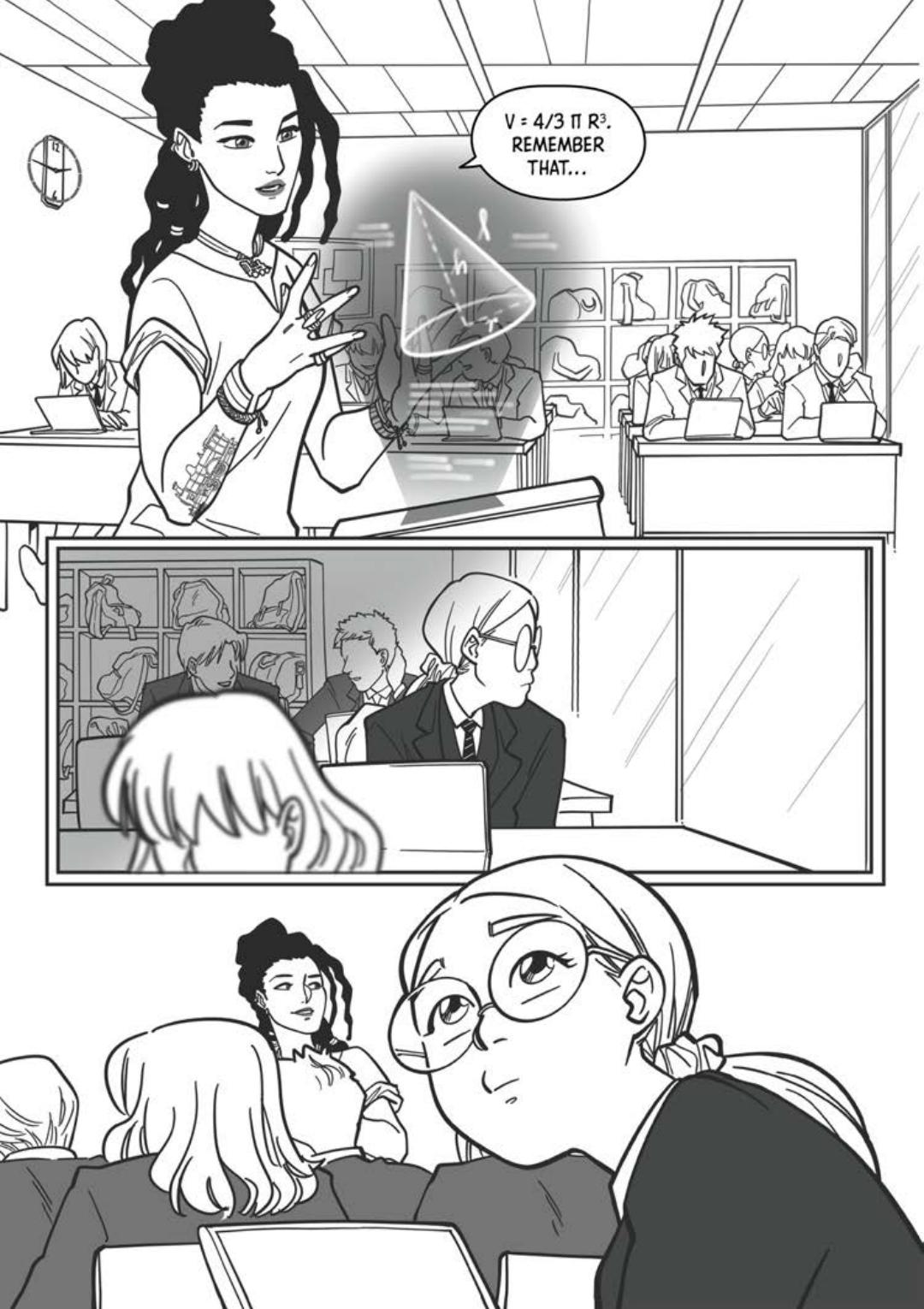
Kim-Joy’s writing is strongest when the book lets Mary’s inner state leak into the page without over-explaining it. The robot becomes part helper, part mirror, and part accidental chaos machine. There are moments where it gives Mary space or practical support, and others where its presence makes her more self-conscious. That push and pull keeps the story from becoming some easy “technology fixes mental health” fantasy. The book is much more interested in the messy process of figuring out what support actually looks like.
Alti Firmansyah’s art is a huge reason this works. The black-and-white pages are clean and expressive, but the real trick is how much of Mary’s anxiety is communicated through posture, eye movement, panel spacing, and the way the page can suddenly feel crowded around her. When the robot is on the page, its rounded shape and simple face contrast with Mary’s more detailed expressions, which makes the emotional gap between “system says progress” and “human still feels awful” land even harder.
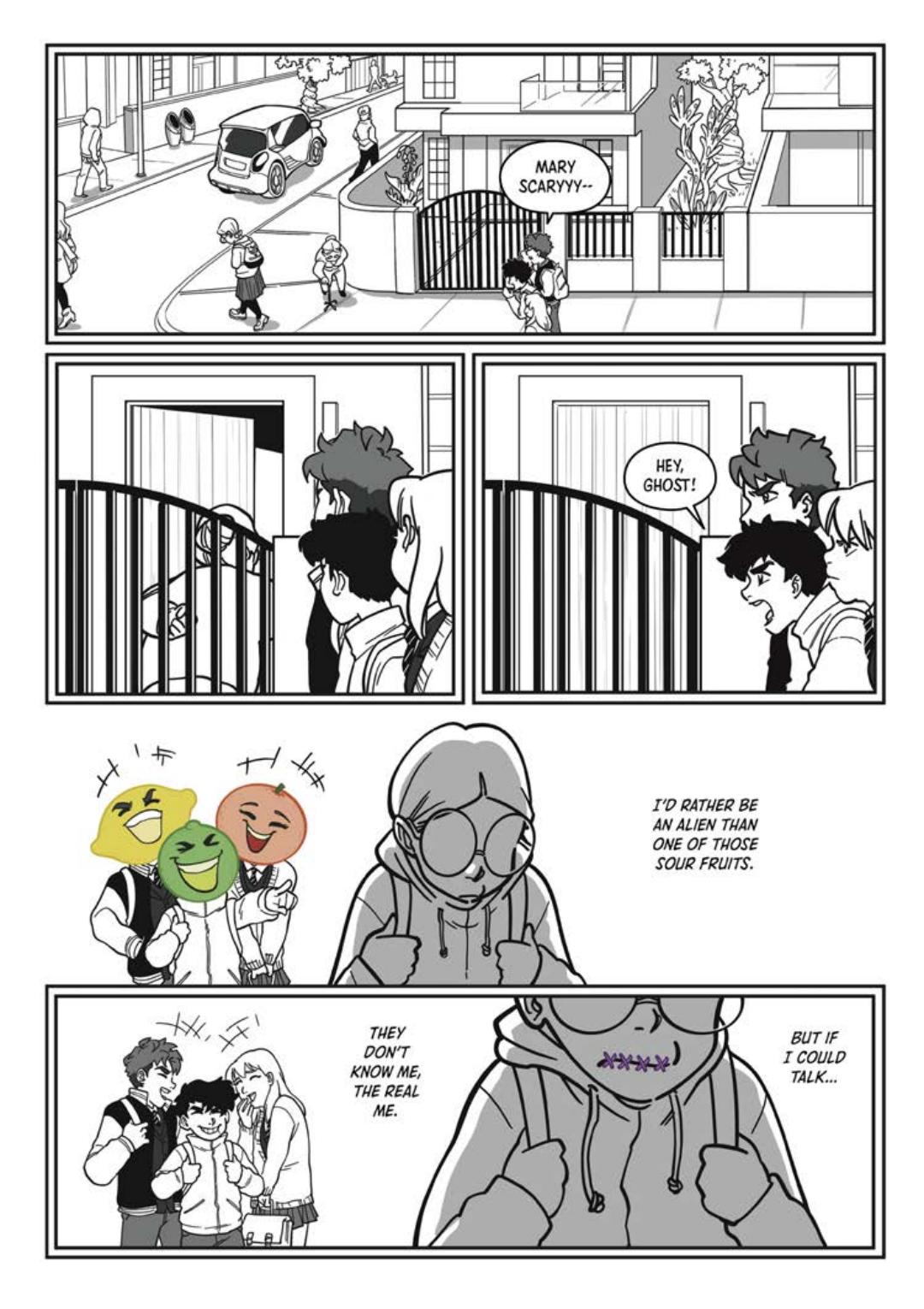
I also dug the school setting because it gives the story a constant social pressure cooker without needing to manufacture giant drama every five pages. A quiz, a group exercise, a hallway interaction, a teacher checking in, or somebody making a dumb joke can all feel like a boss battle when your brain is already running hot. Quiet understands that, and that understanding gives the book more weight than the cute robot design might suggest at first glance.
The pacing is intentionally gentle, and for the most part that works. This is a character story first, not a plot machine. There are points where I wanted a little more bite from the surrounding conflict, because Mary’s internal struggle is so specific that some of the external beats can feel softer by comparison. But the restraint also keeps the book from exploiting her anxiety for cheap drama, and I respect that.
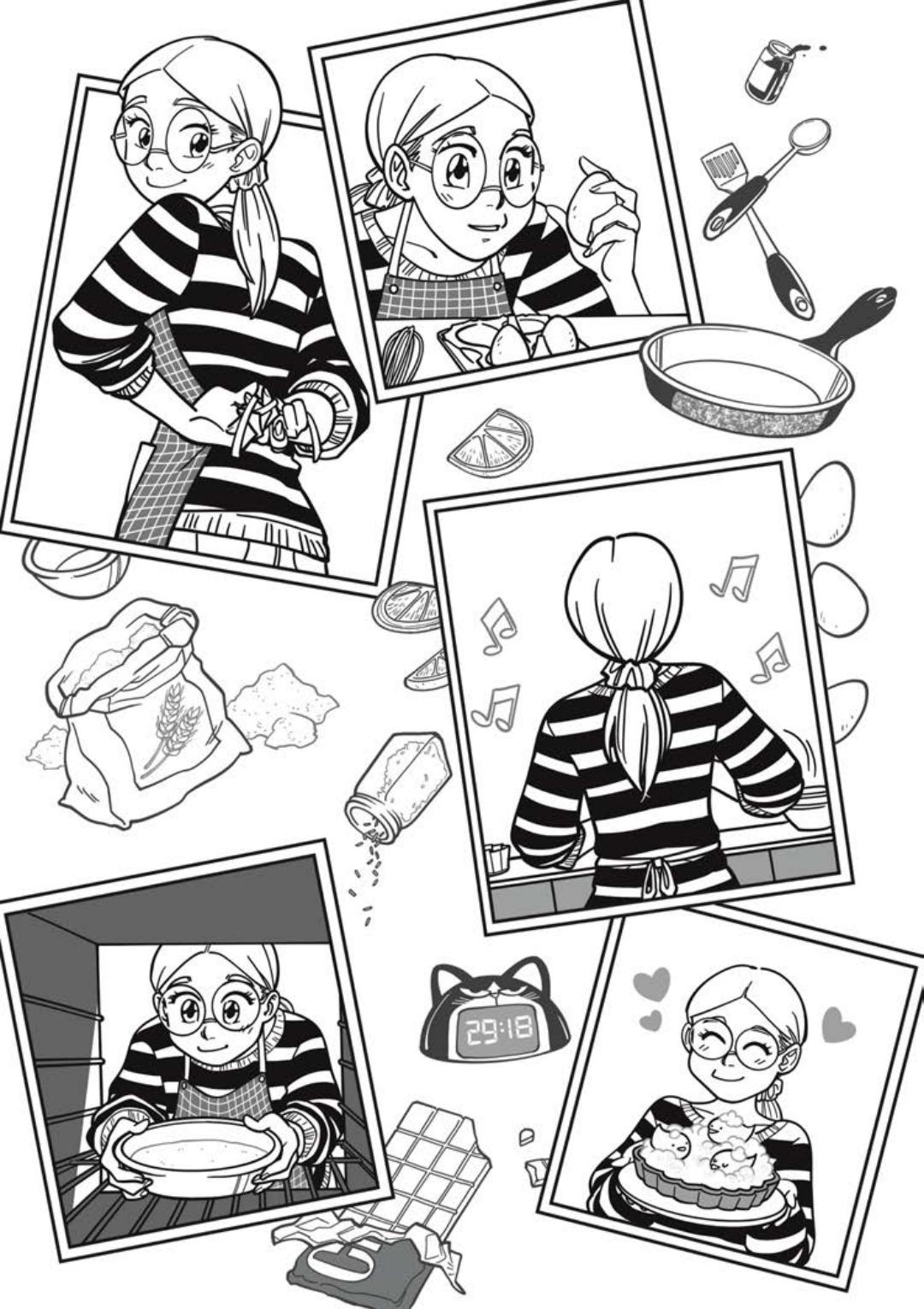
By the time the book starts asking whether Mary is actually improving, avoiding, adapting, or just getting better at hiding what she feels, Quiet has earned the question. This is a warm, smart graphic novel about anxiety, friendship, support systems, and the difference between helping somebody and managing them. The robot is the hook, but Mary is the reason the book works. That is exactly how it should be.
CRUSADERS SCORE:
4.5/5

Writer: Kim-Joy
Artist: Alti Firmansyah
Letters: Sara Linsley
Editor: Allison O’Toole
Graphic Design: Cindy Leong
Publisher: Moley Books
First Printing: September 2026


Leave a Reply
You must be logged in to post a comment.