

Tales of Wonder #1 (of 5) Review: Comic Book History Throws Hands
·Al Mega
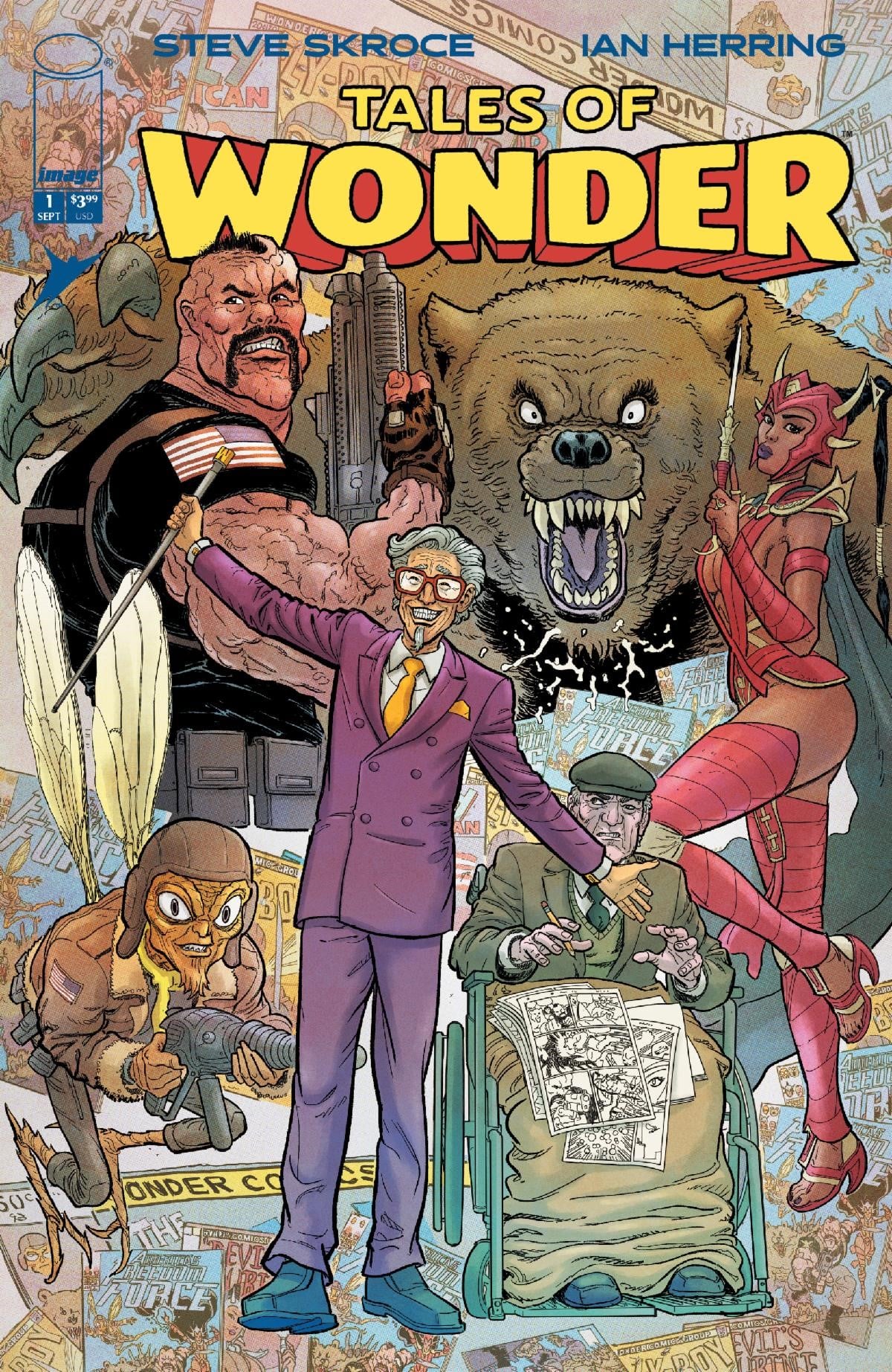
WEPAAAA, fam, Tales of Wonder #1 hits ComicFest carrying a smile, a grudge, and about eighty years of comic-book-industry baggage in the trunk. Steve Skroce could have opened with America’s Freedom Force blasting a monster through a wall, but nah, he does something smarter. He makes us sit with Stu and Jake, two elderly creators whose friendship survived World War II and somehow got smoked by fame, ownership, stolen credit, and the business built around their imagination. Before the capes get real, the resentment already is. The hook works because Skroce gives the superhero madness something personal to crash into, turning what could have been a simple “fiction comes alive” gimmick into a story about old wounds that never stopped itching.
ComicFest is a whole character by itself. Skroce packs the convention floor with cosplay, autograph tables, collector fever, corporate branding, ridiculous merch, fan worship, industry politics, and enough background gags to keep your eyes doing overtime. One full-page convention montage is especially sharp, bouncing between sincere fandom and monetized nostalgia without treating everybody in the room like a sucker. Skroce clearly knows this ecosystem, loves it, and still has enough side-eye left to roast the machinery around it. Yo, that balance matters. The satire hits harder when it comes from somebody who understands why fans line up, spend bread, chase signatures, argue about creators, and treat these fictional people like cousins who somehow never pay rent.
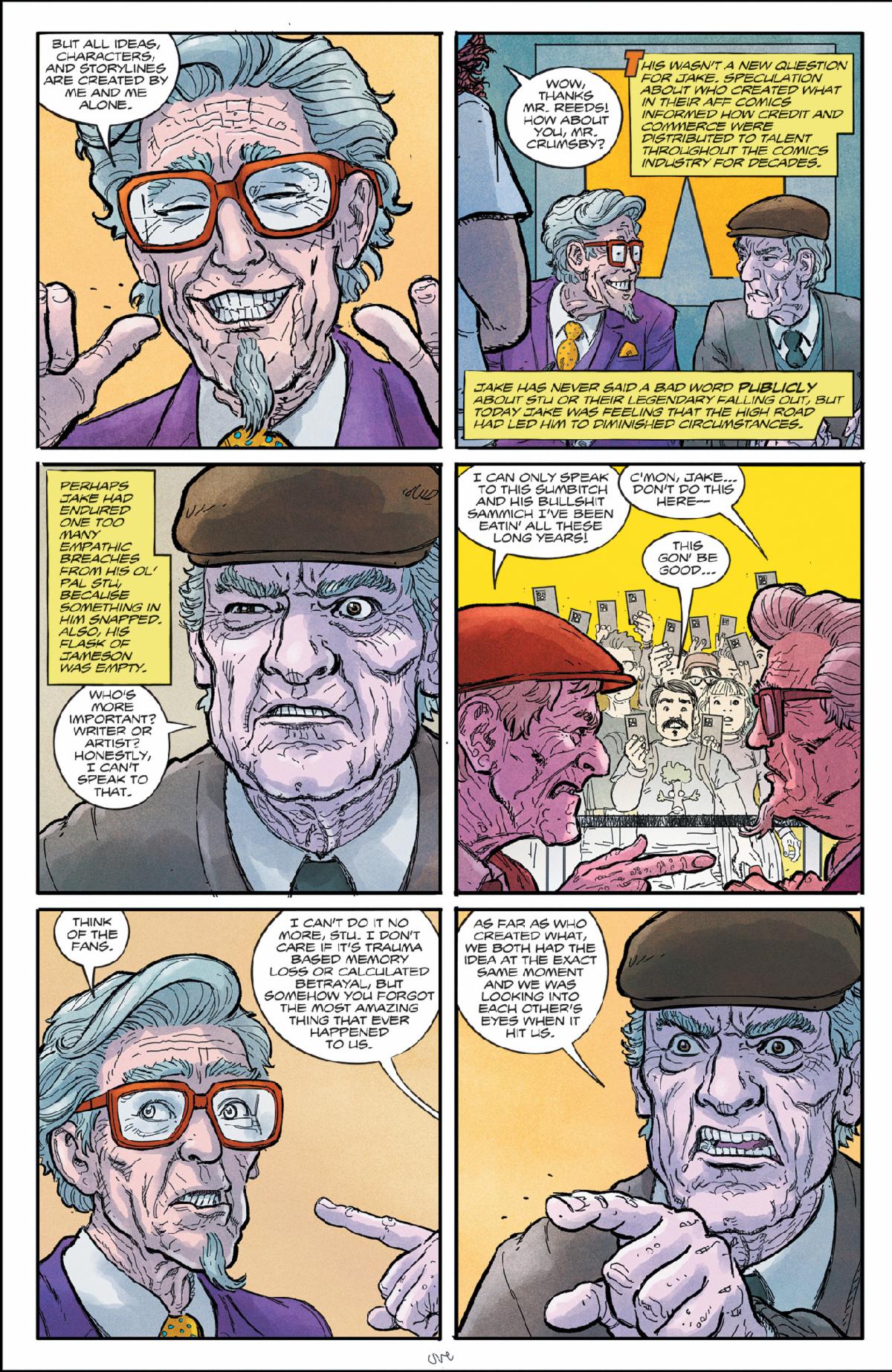
Stu and Jake keep the book grounded because neither man gets reduced to a cardboard saint or villain. Stu is charming, theatrical, shameless, and almost physically incapable of letting a spotlight pass without tackling it. Jake has enough bitterness stored in him to power the Javits Center, but his anger does not feel manufactured for drama. Their reunion at the signing table is funny, uncomfortable, and just petty enough to feel painfully human. A fan eventually asks the ancient comics question about whether the writer or artist matters more, and Stu responds by praising collaborators, assistants, retailers, managers, doctors, nurses, and seemingly half the known universe while Jake sits beside him getting spiritually erased in real time. Bro, I laughed. Then I winced. Skroce understands how to make resentment funny without pretending the wound underneath it is a joke.
The first half runs dialogue-heavy, so readers showing up strictly for superhero demolition may feel the engine idling a little longer than expected. A few balloons get dense, especially once Stu starts performing for the crowd and decades of creative beef crawl back onto the table. The issue never loses me, but it does ask for patience before the monsters, gunfire, and impossible creations start wrecking the room. I can live with that trade because the later chaos has context. Random superheroes appearing at a convention would be spectacle. Stu and Jake watching the characters tied to the best and worst years of their lives suddenly become flesh is a much better problem.
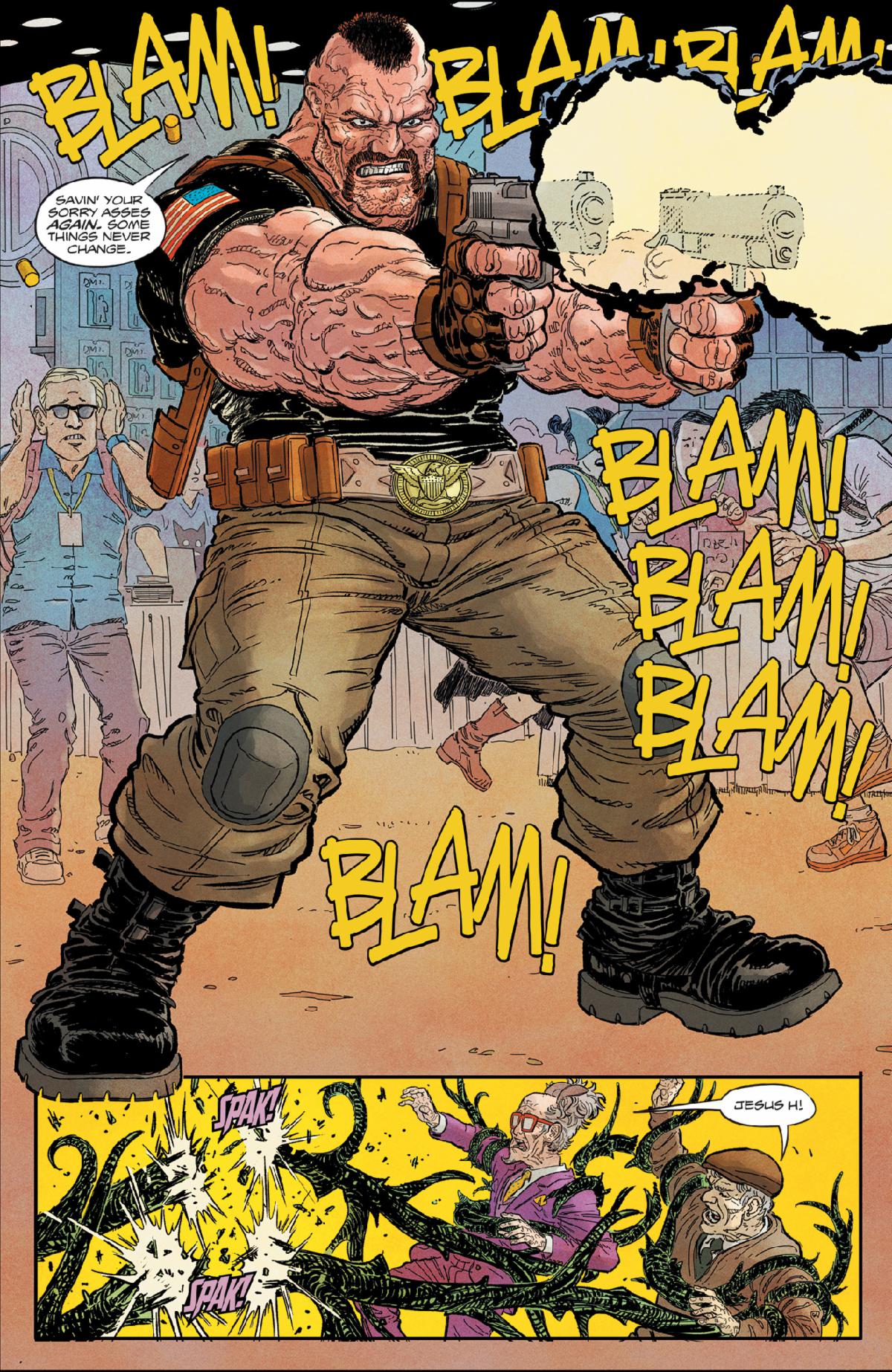
Skroce’s artwork is filthy with personality. Faces wrinkle, sneer, grin, panic, twitch, and contort like every character has a nervous system humming under the ink. Jake looks worn down by years and anger. Stu moves like an old carnival barker who still hears applause even when nobody is clapping. Once the action detonates, Skroce changes gears hard without sacrificing clarity. Tight conversation grids give way to oversized figures, aggressive foreshortening, stretched horizontal beats, and loud splash-page violence. The Ugly American unloading both pistols into the creature invading the convention is beautifully ridiculous, while the wider America’s Freedom Force reveal has the scale and staging of a giant movie money-shot without forgetting it is still a comic page. Skroce’s film-storyboarding instincts are obvious, but he uses page turns, panel size, and controlled visual rhythm instead of simply drawing fake movie stills.
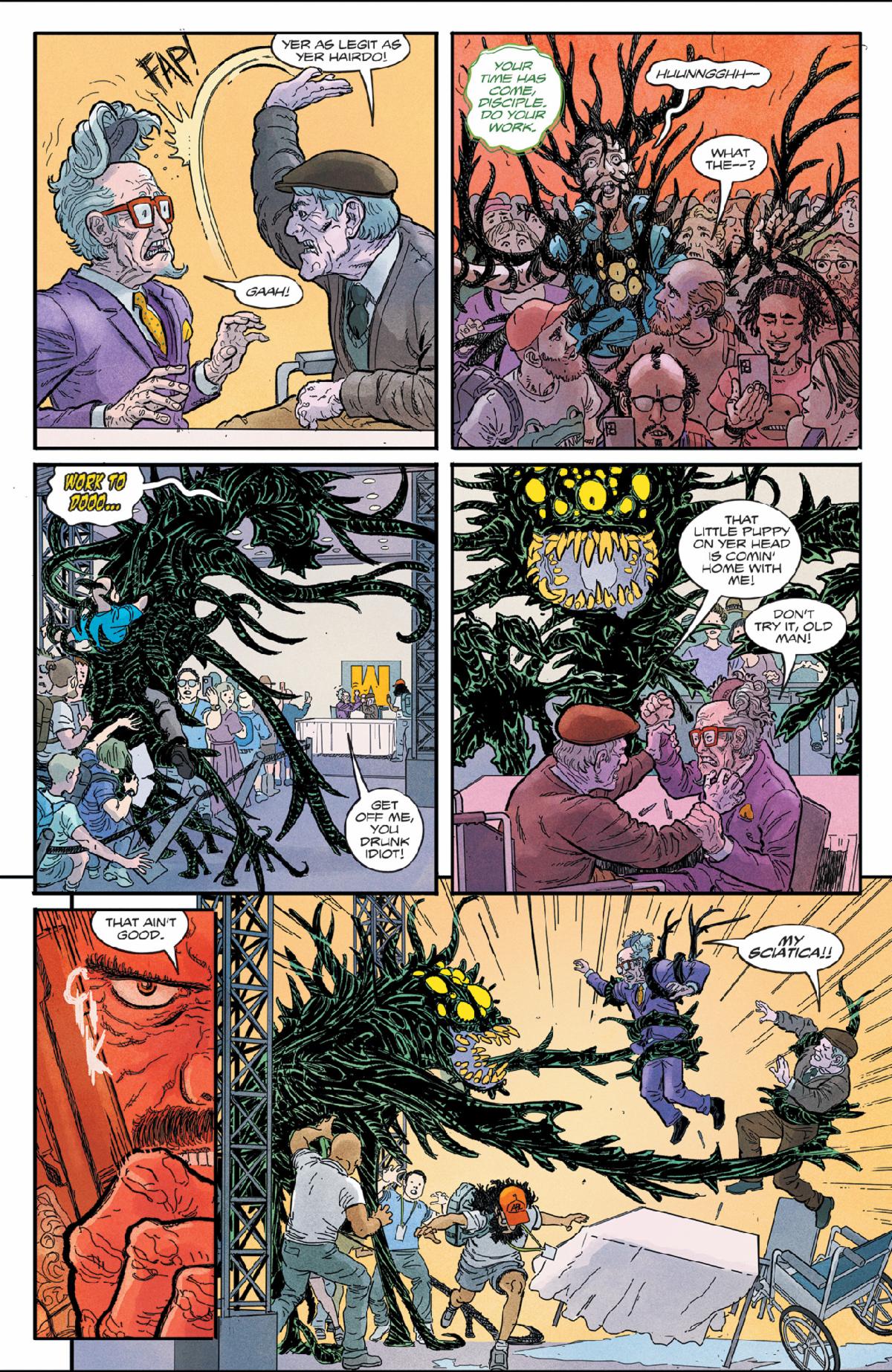
Ian Herring’s colors are doing serious traffic control here. ComicFest is crowded with bodies, signs, props, costumes, speech balloons, and merchandise, yet the pages rarely collapse into visual soup. Cooler backgrounds and softer convention tones let the reds, oranges, yellows, purples, and patriotic costume elements punch forward once fiction starts invading reality. Herring also knows when to make the page ugly on purpose. Sick greens, bruised purples, hot yellows, and sudden red bursts give the creature action a pulpy, toxic kick while preserving Skroce’s linework. Pat Brosseau deserves equal love in the credits box because this thing could have become a lettering pileup real quick. Crowd chatter, announcements, old-man arguments, monster noises, giant BLAMs, and quieter character beats all stay readable, and the sound effects feel built into the action instead of pasted over it like stickers.
Under the superhero fireworks, Tales of Wonder #1 is poking one of the oldest bruises in comics: who created what, who got paid, who got remembered, who controlled the story afterward, and who became a footnote once the characters grew larger than the people who invented them. Skroce never stops the book for a lecture. He lets the idea leak through convention behavior, Stu’s polished mythology about collaboration, Jake’s refusal to swallow it, and the corporate excitement surrounding a cinematic universe built from their life’s work. Longtime comic readers will hear the historical echoes immediately, while anybody coming in cold can still understand two former friends who hurt each other, got old, and never figured out how to put the knives down.
By the final stretch, Skroce has earned the superhero insanity because the spectacle is attached to a relationship instead of replacing one. Tales of Wonder #1 has a few rough edges, mainly the heavy dialogue and a setup that takes its sweet time before smashing the gas, but the payoff is worth the wait. Skroce’s art is ferocious, Herring gives the chaos shape and temperature, Brosseau keeps the page flowing, and the writing finds real sadness hiding underneath some savage comic-industry comedy. WEPAAAA, this joint showed up wearing old-school comics history on its sleeve and then pulled a loaded ray gun from under the signing table. Funny, mean, affectionate, visually bananas, and built around two dudes who desperately need therapy before they save anybody.
Yeah, fam. I’m in!
CRUSADERS SCORE:
4.5 / 5

Story / Art: Steve Skroce
Colors: Ian Herring
Letters: Pat Brosseau
Publisher: Skybound / Image Comics
Leave a Reply
You must be logged in to post a comment.