
The Butcher #1–5 Review: A Forgotten DC Revenge Thriller That Still Cuts Deep
·Al Mega
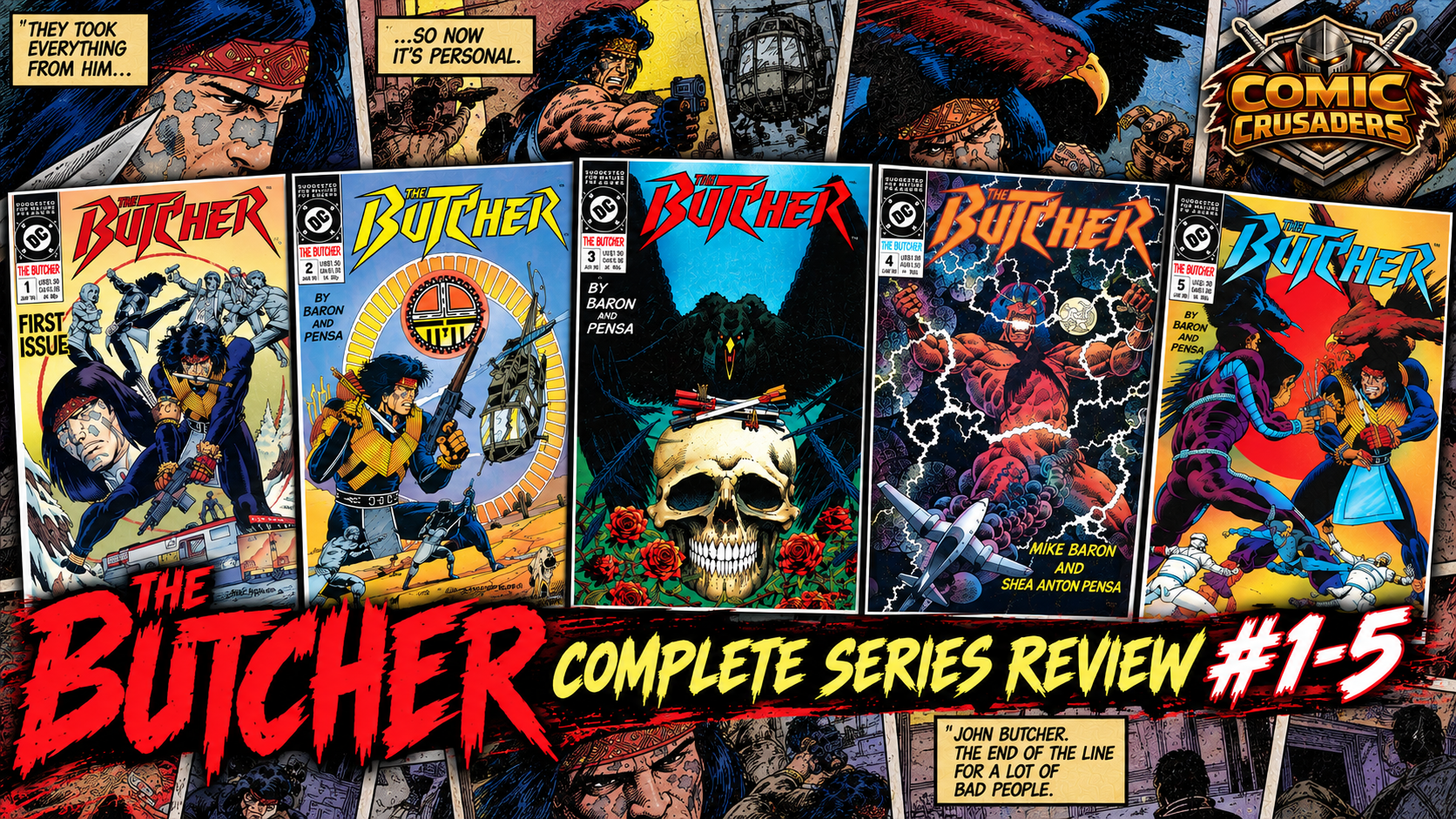
WEPAAAA! Every now and then you crack open an older comic expecting some vintage madness, a few wild outfits, heavy narration, and enough ’90s attitude to fill a subway car. Then the book smacks you upside the head and reminds you why digging through long boxes is still fun. The Butcher #1–5 is one of those joints. Read together as one complete story, Mike Baron and Shea Anton Pensa’s DC miniseries plays like a dirty revenge thriller mixed with martial arts, corporate corruption, family trauma, and just enough superhero flavor to remind you where you are without letting somebody else hijack Butcher’s story.
Baron keeps the main setup simple. John Butcher wants answers, justice, and eventually payback from the people tied to what happened to his family. That could have easily turned into five issues of one angry dude running down a list and beating people up. Thankfully, it does not. Baron keeps widening the circle with allies, victims, old connections, corporate players, and tougher opposition so the story keeps growing without losing focus. You always know what is driving Butcher, but you can also feel this man getting dragged deeper into what he started. That is where the story gets its real juice.

As a character, Butcher works because Baron does not try to make him everybody’s best friend. He is intense, suspicious, disciplined, cold when he needs to be, and sometimes flat-out difficult. Good. That is the character. The book lets you understand him without constantly begging you to like him. When Tsunami, the McLeach family, and eventually Green Arrow come into the mix, they push him from different angles instead of just standing around waiting for him to save the day. Green Arrow is handled especially well. Ollie brings familiar DC energy and a different moral viewpoint, but he never walks into the room and steals the damn book. This stays Butcher’s story.
Now, the writing is not perfect. Baron can get heavy with the exposition, and there are times where Pensa already showed us exactly what happened, then the script comes in like, “Yo, just in case you missed that.” We got it, fam. Some supporting characters are there more to move the story than to become fully developed people, and parts of the corporate villain setup feel familiar. You can also feel that early-1990s storytelling in some of the cultural material. None of that kills the book, but it definitely reminds you what era you are reading.

Reading all five issues together helps a lot, though. The monthly cliffhangers turn into clean chapter breaks, the repeated information feels less annoying, and the whole thing moves with better rhythm. As a collected story, the escalation feels stronger because you can see Butcher getting pulled deeper and deeper without stopping for thirty days between each piece.
Shea Anton Pensa is where this book really starts throwing hands. His artwork has force, speed, and attitude, but more importantly, you can actually follow what the hell is happening. The fights do not turn into a pile of arms, legs, and random impact lines. You know who moved first, where the attack came from, and why somebody ended up on the floor. Pensa understands sequencing. He tightens the panels when things get tense, pulls back when location matters, and gives the bigger hits enough space to land.

The martial-arts scenes feel physical instead of just looking cool. That matters. These characters move through the page like they actually know what they are doing. Pensa’s facial work is strong too. Butcher can look controlled, exhausted, furious, or completely locked in without the book needing three captions to explain it. The environments also feel grounded. Trains, labs, apartments, compounds, aircraft, all of it gives the story enough real-world texture to keep the crazier parts from floating away.
Issue #3 shifts a little with Gary Kwapisz on inks, and you can feel the difference in the line work, but it never feels like somebody dropped a completely different comic in the middle of the run. The visual style stays close enough that the five issues still read like one story.

Julia Lacquement’s colors are loud, bold, and very much of their time, but they help the storytelling. You get heavy reds, greens, blues, yellows, all that good old-school comic color, but it is not random. The palette helps separate locations, gives the action more energy, and keeps Pensa’s heavier pages from becoming mud. Some pages scream 1990. Fine by me. I would rather have personality than everything looking gray and washed out.
Steve Haynie’s lettering also deserves credit because Baron gives him a lot to juggle. There are captions, dialogue, sound effects, tactical information, and plenty of exposition. Haynie keeps the reading order clear and keeps the balloons from crushing Pensa’s artwork. When the script gets too dense, the page can feel crowded, but you never get lost trying to figure out what to read next.

Where The Butcher really comes together is in the final two issues. The story stops feeling like a series of targets and starts feeling like everything is finally crashing together. The revenge, family damage, corporate conspiracy, and martial-arts mythology all start occupying the same space, and that gives the action more meaning. There are real consequences, and by the time you reach the final confrontations, the book has done enough work to make them matter. The ending is not subtle. Good. This is not that kind of comic. Sometimes a revenge story needs to stop talking, hit the gas, and let people catch consequences.
As a complete five-issue story, The Butcher is better than its relative obscurity suggests. It is not some flawless hidden masterpiece, so relax. The exposition gets heavy, some supporting characters needed more development, and parts of the book absolutely show their age. But Baron gives John Butcher a strong reason to keep moving, Pensa gives the book real action and clean storytelling, Lacquement gives the pages personality, and Haynie keeps a busy script readable. This joint has flaws, but it also got character.
If you like revenge stories, martial arts, street-level DC, old-school action comics, or finding forgotten characters who deserved more time, The Butcher #1–5 is worth digging up.
CRUSADERS SCORE:
4/5

Writer: Mike Baron
Art: Shea Anton Pensa
Inks: Shea Anton Pensa (#1, #2, #4, #5); Gary Kwapisz (#3)
Colors: Julia Lacquement
Letters: Steve Haynie
Editors: Mike Gold, Katie Main
Publisher: DC Comics
Leave a Reply
You must be logged in to post a comment.