
VAMPIRE SURVIVORS #1 REVIEW – THE BULLET-HELL MONSTER MADNESS INVADES COMICS!
·Al Mega
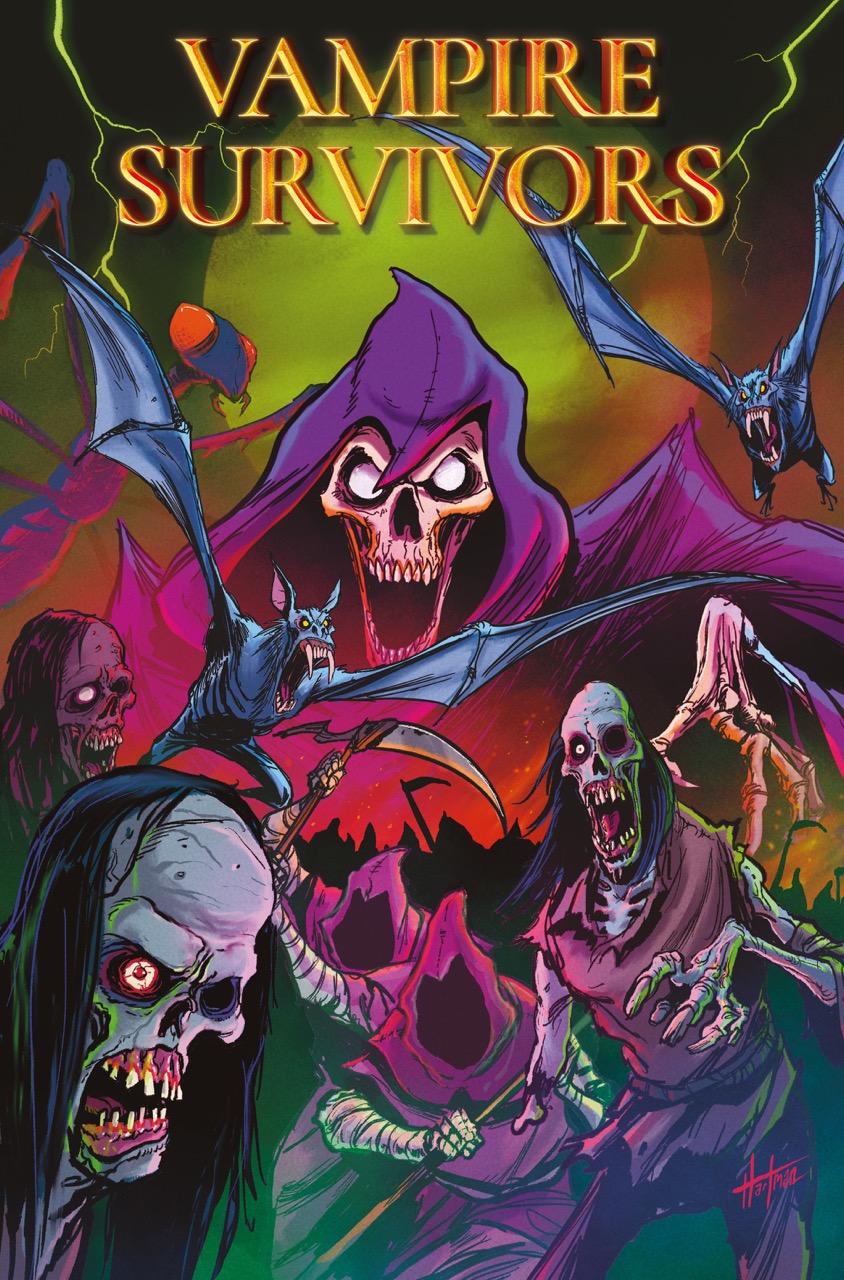
Turning Vampire Survivors into a comic sounds simple until you actually think about it. The game is basically a beautiful panic attack where the screen fills with monsters, numbers, weapons, garlic, explosions, treasure, and whatever else you grabbed before the swarm decided your evening was over. Comics need character, timing, readable action, and some reason to turn the page besides “more skeletons incoming.” David Hazan and company somehow look at that problem and say, “Cool, let’s make the chaos the storytelling language.”
The first issue introduces the Belpaese siblings as monster hunters with enough history between them to make every assignment feel like family dinner with weapons. Antonio, Gennaro, Imelda, and the rest of the crew do not arrive as silent game avatars waiting for the player to move them around. Hazan gives them friction, affection, rivalry, and jokes, then throws them into supernatural trouble before anybody can get too comfortable. The key piece is Imelda’s encounter with the Trickster, something the others cannot fully perceive, which gives the comic a psychological hook beyond the expected monster-swarm mayhem.
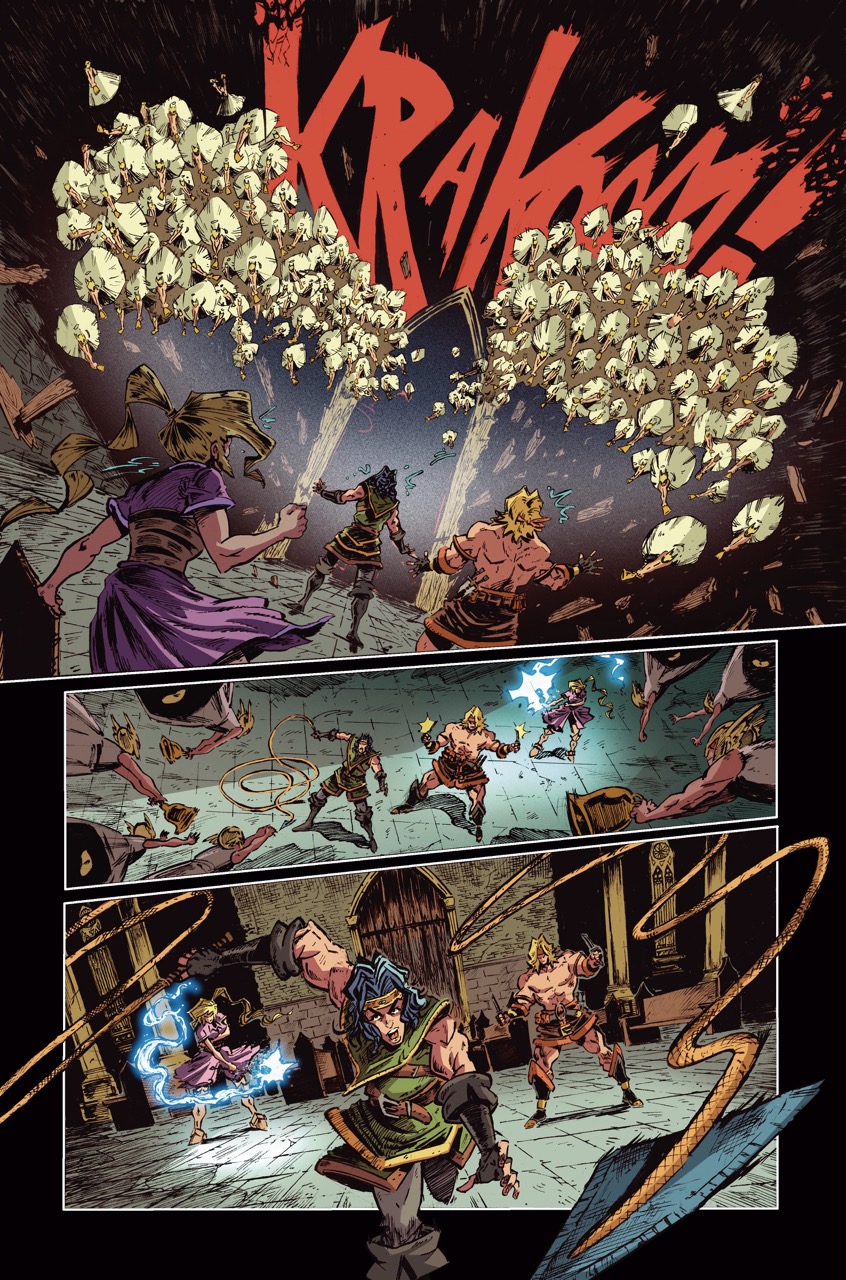
That is the smartest adaptation choice in the issue. Hazan keeps the recognizable gameplay DNA, escalating enemies, absurd weapon combinations, constant movement, but gives Imelda a problem that cannot simply be solved by filling another corner of the page with fire. Suddenly the question is not only whether the family can kill enough creatures. It is whether Imelda can trust what she sees while everybody around her is busy surviving the obvious threats.
Jimmy Kucaj’s artwork has the right kind of rough-edged aggression for this world. The linework feels scratched, carved, and a little nasty, which keeps the fantasy from turning into polished video-game concept art. Monsters arrive in masses, but Kucaj uses silhouettes, directional motion, and large impact shapes to keep the pages readable. When the action gets crowded, it is intentionally crowded. You feel the pressure without completely losing the characters inside it.
Jao Canola’s color work is where the pages really start screaming. Electric blues, infernal oranges, sick greens, purple magic, blood reds, and dirty stone textures all fight for space, but the color is organized around the action rather than dumped onto it. Magic attacks have identifiable visual signatures, characters separate from the horde, and the supernatural effects make the issue feel appropriately excessive. This is one of those books where subtle coloring would almost be dishonest. Vampire Survivors is not a beige experience.
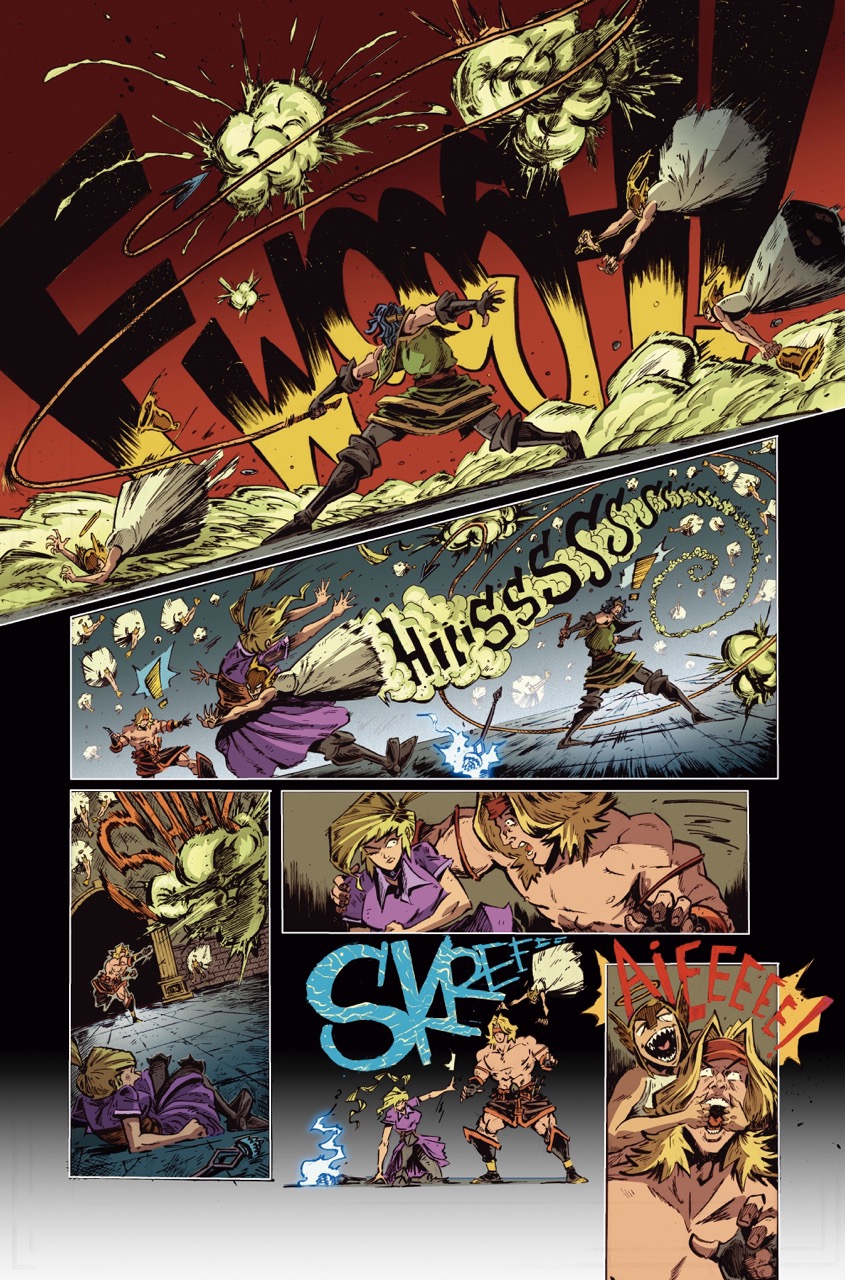
The lettering by Chas! Pangburn has to deal with a ridiculous amount of noise, including banter, spell names, screams, sound effects, and battle beats, and it embraces the volume without losing basic reading order. Big effects become part of the collision, while quieter exchanges are allowed to sit inside smaller panels. That contrast matters because if every panel screams at the same level, eventually the reader stops hearing anything.
There are moments where the density works against the issue. Some pages are so committed to replicating the game’s overwhelming energy that character beats can get swallowed between attacks, and readers who have zero relationship with Vampire Survivors may need a few pages to understand what rules matter and which weird object is just part of the joke. Hazan does not hold your hand much, which I respect, but the issue occasionally moves from “delightfully frantic” to “yo, give my eyeballs a second.”
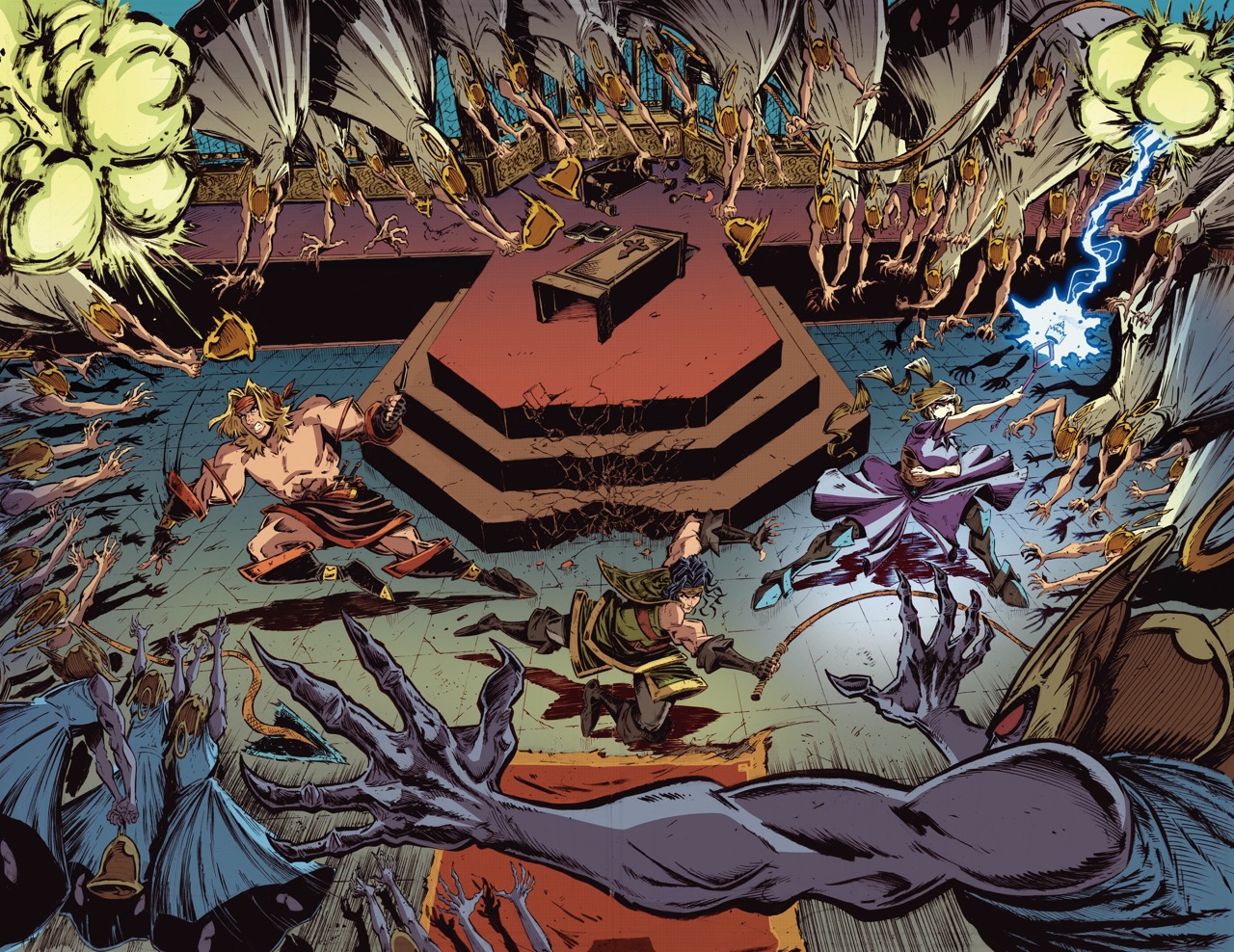
Still, I would much rather see an adaptation take a swing at the source material’s actual personality than flatten it into a generic fantasy comic. Vampire Survivors #1 is loud, messy on purpose, funny, and full of monsters getting absolutely violated by improvised supernatural nonsense. Under all that, though, the Belpaese family gives the book a center, and Imelda’s growing problem with the Trickster gives the series somewhere more interesting to go than simply doubling the enemy count every month.
Fans of the game are going to recognize the rhythm immediately, but the comic does enough character work to justify existing on paper. That is the win. It does not ask, “How do we recreate gameplay panel by panel?” It asks, “What does that gameplay FEEL like, and how do we make a story move with the same pulse?” For a first issue, that answer works pretty damn well.
CRUSADERS SCORE:
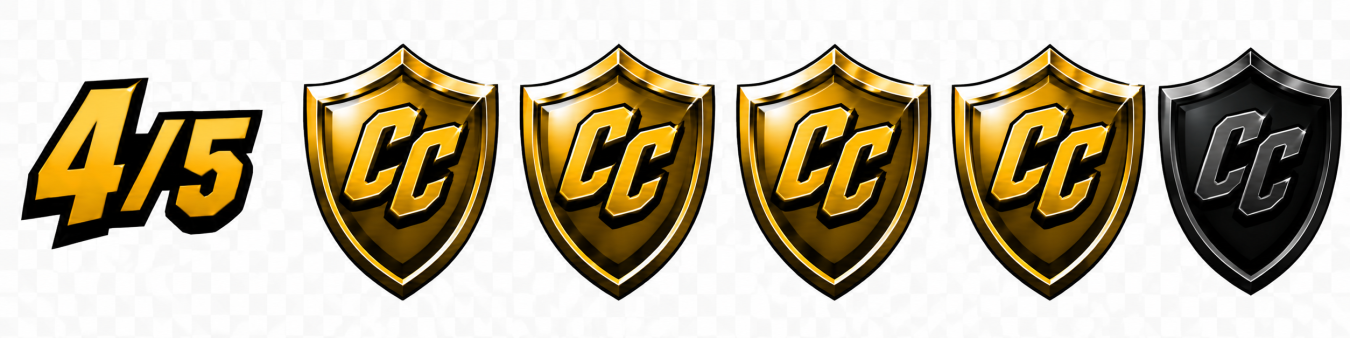
4/5
Writer: David Hazan
Artist: Jimmy Kucaj
Colorist: Jao Canola
Letterer: Chas! Pangburn
Editor: Ibraheem Kazi
Cover Artist: Jimmy Kucaj
Publisher: Titan Comics
Keep Reading: Explore more Comic Crusaders comic reviews, catch the weekly HOT List, or work with Comic Crusaders for review submissions, podcast guest requests, advertising and partnerships.
Leave a Reply
You must be logged in to post a comment.