
I AM THE NIGHT: The Ultimate Unauthorized History of Batman: The Animated Series
·Al Mega
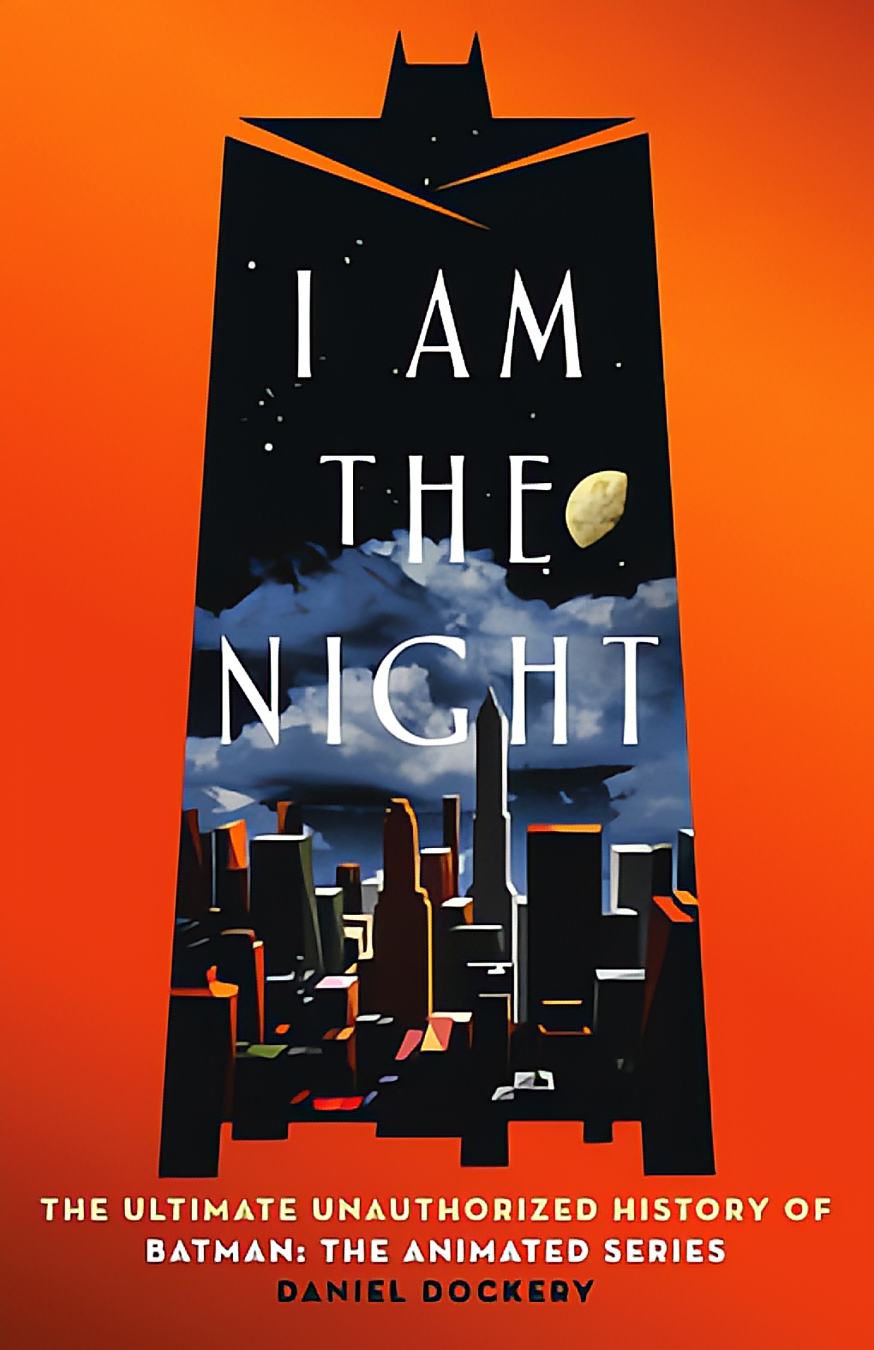
WEPA! Let’s step into the shadows, because I AM THE NIGHT: The Ultimate Unauthorized History of Batman: The Animated Series by Daniel Dockery is not just a book about a cartoon. Nah, familia, this is a Bat-Signal blasted across the history of animation, superhero storytelling, fandom, studio politics, artistic obsession, and the beautiful madness that happens when the right creators get handed the keys to Gotham and decide, “Yeah, we’re not making kiddie fluff. We’re making mythology.”
From the jump, Dockery understands something very important: Batman: The Animated Series was never “just” a show. For an entire generation, it was the first time Batman felt ancient, wounded, cinematic, stylish, scary, noble, tragic, and somehow still accessible while you were sitting there after school with cereal dust on your fingers. That opening sequence alone? Come on now. Police blimps, blood-red skies, art deco towers, criminals running scared, that Batmobile roaring like it owed Gotham money, and Batman standing in silhouette like he just stepped out of a nightmare with a cape budget. That was not a theme song. That was a declaration of war on lazy superhero cartoons.
Dockery takes that feeling and builds a full historical machine around it. What makes I AM THE NIGHT work so well is that it does not simply worship the series from afar like a fan staring at a collectible behind glass. It gets into the gears. It shows us the animation landscape before BTAS arrived, when superhero cartoons were often treated like toy commercials with capes attached. It digs into the world of Warner Bros. Animation, the aftershocks of Batmania, the rise of Fox Kids, the legacy of Looney Tunes, the influence of Fleischer Superman, the Disney Renaissance, Spielberg’s role in energizing Warner animation, and the creative conditions that made this show feel like lightning trapped in a bottle.
And let me tell you, this book has receipts. Dockery clearly came prepared like Batman entering a warehouse full of goons: cape pressed, utility belt packed, emotional trauma fully charged. The book moves through the people behind the legend with care and clarity: Bruce Timm, Eric Radomski, Alan Burnett, Paul Dini, Andrea Romano, Shirley Walker, Kevin Conroy, Mark Hamill, Jean MacCurdy, and so many artists, writers, directors, producers, composers, executives, and voice actors who helped turn a corporate licensing opportunity into one of the most influential superhero adaptations ever made. That’s the magic trick here. Dockery shows how something that could have been a cynical cash grab became a masterpiece because actual creators were allowed to create. Imagine that. Hollywood, take notes. Again. Please. We’ve been leaving the sticky note on your fridge for decades.
One of the book’s biggest strengths is how it gives space to the production struggles without turning them into dry industry jargon. This is where Dockery shines. He makes animation development feel alive. You feel the tension of artists trying to push mood, shadow, silence, and sophistication into a medium too often underestimated. You feel the nervousness of making Batman dark, but not inaccessible; mature, but still broadcast-friendly; stylish, but still producible on a television schedule. You feel the battles over scripts, tone, censors, visuals, overseas animation studios, music, celebrity voices, and the nightmare math of trying to make something look timeless while everybody upstairs still wants a hit.
The passages about the show’s visual identity are especially strong. The book gets why the look of BTAS mattered. That black-paper background approach, that old-world Gotham, those simplified yet powerful character designs, that marriage of noir, pulp, art deco, and comic-book myth Dockery treats it not as trivia but as philosophy. Gotham was not a backdrop. Gotham was the co-star. It was a city that looked like jazz sounded if jazz had a criminal record and a storm cloud permanently parked above it. WEPA, that’s a visual identity.
Dockery also nails the emotional importance of the voice cast. Kevin Conroy’s Batman is given the reverence he deserves, not merely as “the voice” but as a performer whose own life, pain, discipline, and theatrical training helped define the inner architecture of Bruce Wayne. The book understands that Conroy didn’t just deepen Batman’s voice; he deepened Batman’s soul. Mark Hamill’s Joker also gets the spotlight as a career-altering, character-defining explosion of controlled chaos. The way Dockery frames Hamill’s transition from Luke Skywalker’s shadow into the Joker’s maniacal spotlight is one of the book’s most entertaining and satisfying threads. It reminds you that casting is not just about matching a voice to a character. Sometimes it is about unlocking a whole new chamber inside an actor.
The Shirley Walker material also deserves a standing ovation. Too often, fans talk about the visuals and voices of BTAS but forget that the music was doing superhero surgery on our emotions every episode. Walker’s work gave Batman grandeur, grief, movement, menace, and heartbeat. Dockery gives the music department real respect, and that matters because BTAS without that score would still be great, but it would not have haunted us the same way. That theme was not background noise. That was Gotham breathing down your neck.
Now, for longtime fans, the book delivers plenty of “oh wow, I didn’t know that” moments, especially when it gets into the creation and evolution of major characters and episodes. The Harley Quinn material is a joy because the book captures the miracle of a character who could have been a one-off gag but became one of DC’s most important modern creations. The Mr. Freeze discussion around “Heart of Ice” is another highlight, because that episode is still one of the great examples of superhero storytelling taking a silly concept and finding the broken human being inside it. That is the BTAS superpower: it made villains tragic without sanding down their danger.
The Mask of the Phantasm section hits with extra weight. Dockery treats the film like what it is: a beautiful, wounded, underappreciated masterpiece that somehow became more powerful with age. The book makes clear how chaotic, ambitious, and unlikely that movie was, and why its reputation kept growing even after its theatrical run failed to match its quality. That’s an important distinction. Sometimes the world does not catch greatness on the first throw. Sometimes greatness has to hit VHS, DVD, streaming, conventions, fandom memory, and thirty years of “Wait, this might be the best Batman movie” conversations before everybody finally stops acting brand new.
The book is also smart enough to widen the lens beyond Batman. It looks at the broader animated ecosystem of the era, including the creative energy surrounding shows like X-Men and Gargoyles, and how BTAS helped prove that action animation could be intelligent, emotional, and cinematic without talking down to kids. That’s one of Dockery’s strongest arguments: the show did not succeed because it was dark. It succeeded because it was sincere. Darkness alone is easy. Turn the lights off, add a growl, call it prestige. Big deal. BTAS had empathy in the shadows. That is the difference.
Now, readers should know what kind of book they are getting. I AM THE NIGHT is not a coffee-table art book. It is not a light episode guide. It is not just a nostalgia buffet where every chapter says, “Remember this? Wasn’t it awesome?” and then hands you a Bat-cookie. This is a dense, deeply researched production history. That means there are a lot of names, timelines, industry pivots, studio details, and creative handoffs. Personally, I love that because I’m a behind-the-scenes goblin when it comes to this stuff. Feed me the chaos. But casual fans who just want a breezy celebration may need a minute to adjust. The first stretch spends a good amount of time building the animation-world context before the series fully takes flight, and while that foundation is valuable, some readers may be itching to get to Conroy, Hamill, Harley, Freeze, and Phantasm faster. The book asks you to care about the ecosystem, not just the icon. That is the correct move, but it does make the ride more documentary than popcorn recap.
There is also the “unauthorized” factor. Readers expecting official vault access, glossy production art, or a licensed scrapbook vibe may have to recalibrate. What Dockery gives instead is narrative momentum, interview-driven insight, and historical framing. It is less “look at this beautiful model sheet” and more “here is how impossible it was that this model sheet ever existed.” That approach works, but the mega-visual fans may still wish for more imagery to sit alongside the storytelling.
What impressed me most is that Dockery never loses sight of the people. This could have become a book about a brand. Instead, it becomes a book about artists, actors, writers, musicians, directors, executives, and craftspeople trying to make something better than the system required them to make. That’s the soul of I AM THE NIGHT. It reminds us that legendary pop culture does not arrive from a boardroom fully formed. It gets argued over. It gets redrawn. It gets rewritten. It gets scored at the last minute. It gets saved by stubbornness, taste, exhaustion, accidents, timing, and the occasional genius who says, “No, the background should be black.”
By the end, I AM THE NIGHT feels like a love letter, an autopsy, a history lesson, and a cape-swooping celebration all at once. Dockery respects Batman, but he respects the workers behind Batman even more. That is why the book lands. It does not just tell us that Batman: The Animated Series was great. We already knew that. It explains why greatness happened, why it lasted, and why so many modern superhero projects still walk through the doors this show kicked open.
For fans of BTAS, animation history, DC Comics, voice acting, superhero media, or anyone who believes “kids’ entertainment” can be profound without becoming pretentious, this is a must-read. It is packed, passionate, thoughtful, funny, occasionally heartbreaking, and loaded with the kind of behind-the-scenes revelations that make you want to rewatch the entire series with new eyes. Daniel Dockery does not just revisit Gotham. He takes us under the cape, into the studio, behind the microphone, through the writer’s room, across the animation desks, and straight into the creative storm that gave us one of the greatest superhero adaptations ever made.
Final verdict? I AM THE NIGHT is essential Bat-reading. It is not just for the fan who can quote “I am vengeance.” It is for the fan who wants to understand why that line still gives people chills decades later. The shadows are deep, the history is rich, and the legacy is undeniable. The Bat still flies, baby. WEPA!
CRUSADERS SCORE:
4.5 / 5
Author: Daniel Dockery
Publisher: St. Martin’s Press
Publication Date: September 1
ISBN: 978-1-250-40965-2


Leave a Reply
You must be logged in to post a comment.