
SOFT TARGETS Review: Camila Kerwin Turns America’s Gun Crisis Into Powerful, Unforgettable Graphic Journalism
·Al Mega
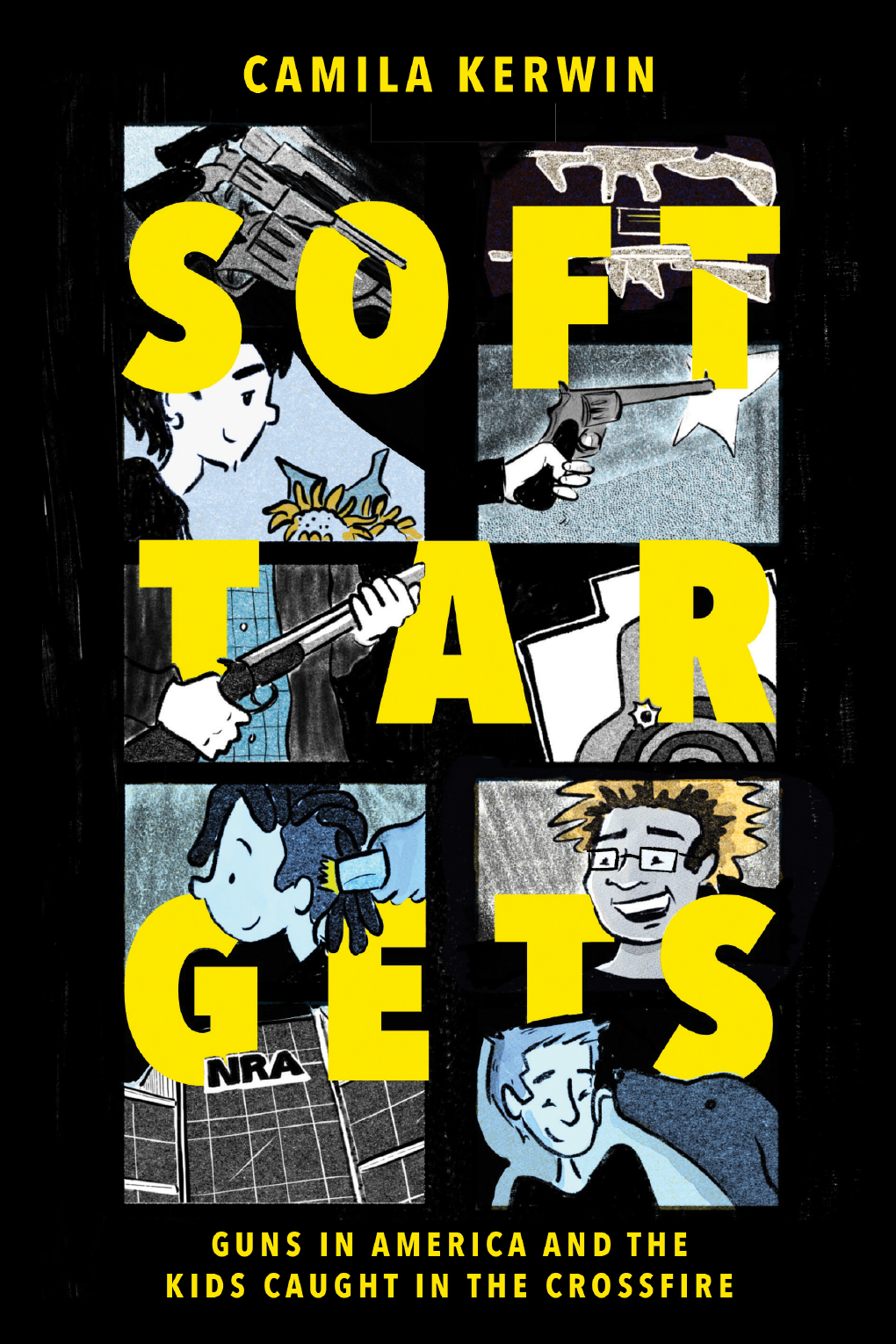
WEPA, Crusaders! Soft Targets: Guns in America and the Kids Caught in the Crossfire is one of those graphic novels that grabs you quietly, lets you get comfortable for about five minutes, then starts tightening the screws. Camila Kerwin does not come at the reader screaming, preaching, or waving a giant moral sign over every panel. She lets the people, the conversations, and especially the kids carry the weight, and man, that choice makes this thing hit harder than any wall of statistics ever could.
What immediately worked for me is how personal the book feels. Kerwin’s artwork has this loose, almost diary-like quality that fits the material perfectly. The faces are simple but expressive, the body language does a ton of emotional lifting, and the limited black, gray, white, and warm yellow-orange palette gives the book a visual identity without getting cute with a subject that absolutely does not need cute. There are moments where she gives you a crowded page packed with information, then suddenly opens everything up and lets one image breathe. Those pauses? Yeah, those are the panels that stick with you.

The kids at the center of the story feel like kids. That sounds obvious, but trust me, it matters. They are funny, stubborn, loving, annoying, curious, rebellious, thoughtful, and still figuring themselves out. Kerwin does not turn them into symbols for a cause and stick halos over their heads. She gives them personality first. Because of that, when the darker parts arrive, you are not reacting to a headline. You are reacting to somebody you just spent time with.
That human focus is easily the strongest thing about the book. Every time Soft Targets threatens to get buried under the weight of research, policy, history, or numbers, Kerwin brings it back to people. That saves the pacing more than once. There is a LOT packed into this graphic novel, and I mean a lot. Sometimes the information density gets heavy enough that you can feel the brakes tap. A few stretches read slower than others, especially when the political and historical material starts stacking up. I had moments where I thought, okay, we are cruising, cruising, cruising, and now we just hit traffic on the BQE. Not dead stop traffic, but you feel it.
Still, Kerwin’s page layouts keep those dense sections from turning into straight-up homework. She mixes archival imagery, maps, visual metaphors, recreated moments, handwritten elements, dialogue, and documentary-style sequences so the eye always has somewhere to go. That matters because a lesser cartoonist would have drowned this thing in caption boxes. Kerwin rarely lets that happen.

I also appreciated how she handles people she clearly does not agree with. She lets gun owners talk. She lets them explain what firearms mean to them. Family. Protection. Heritage. Freedom. Hunting. Memory. Identity. She does not have to endorse those answers to present them honestly, and that gives the book more credibility. It would have been real easy to draw everybody on one side like a bunch of cartoon villains with smoke coming out their ears. Kerwin does not take the cheap shot.
Her artwork shines most when emotion starts getting complicated. Grief here is not always somebody crying in close-up. Sometimes it is posture. Sometimes it is distance between two people in a room. Sometimes it is an object sitting where somebody used to be. Sometimes it is a page that suddenly feels way too empty. Kerwin trusts the reader enough to pick up on that stuff, and I respect the hell out of it.
The lettering and design work also fit the handmade feel of the book. Nothing feels slick for the sake of looking slick. Everything has that tactile, lived-in quality, almost like notes, memories, interviews, clippings, and family photographs were gathered onto one giant table and slowly turned into comics. Sofia Warren’s editing deserves credit because keeping this much material readable without the whole machine flying apart had to be a mission. Dev Kamath’s design and production support also helps the visual flow stay clean even when Kerwin is juggling a ridiculous amount of information.

Where the book hit me hardest was not with the biggest statistics or the most politically charged pages. It was the little stuff. Family jokes. A kid wanting a certain hairstyle. Somebody remembering clothes. Music. Basketball. A parent correcting a tiny detail because, yo, that detail matters when it belongs to your child. That is the kind of emotional ammunition this book uses best. No manipulation needed. Just memory.
I give Kerwin serious credit for not ending the book in a giant black hole of hopelessness. She does not pretend everything is solved. She does not give you some Hallmark ending where everybody hugs and America suddenly figures itself out by page 250. C’mon now. What she does give the reader is movement. The sense that conversation, policy, research, storage laws, intervention, and community work are not meaningless just because the problem is enormous. That keeps the ending from feeling emotionally dishonest.
Is Soft Targets an easy read? Hell no. Nor should it be. This is not something you speed through on the train while half-watching TikTok over somebody’s shoulder. It asks for your attention. Sometimes it asks for patience. Occasionally it slows down under the weight of its own research, and I would be lying if I said every historical passage moves with the same emotional horsepower as the family material. But when the book is firing on all cylinders, especially in those intimate character-driven moments, it is powerful as hell.
Camila Kerwin delivers a debut that understands exactly why comics can work so well for journalism. The words give you the facts, but the pictures make you sit with them. The research gives you context, but the people give you a reason to care. And when Soft Targets is at its best, those two things lock together like gears.
This one stays with you!
CRUSADERS SCORE:
4.5/5

Creator, Writer & Artist: Camila Kerwin
Editor: Sofia Warren
Design & Production Assistance: Dev Kamath
Cover Design: Juliana Castro Varón
Publisher: Street Noise Books
Release Date:
October 27, 2026

Leave a Reply
You must be logged in to post a comment.