
THE HUMAN REMAINS Review: Nathan Gray Dissects What Medicine Can Take From the People Who Practice It
·Al Mega
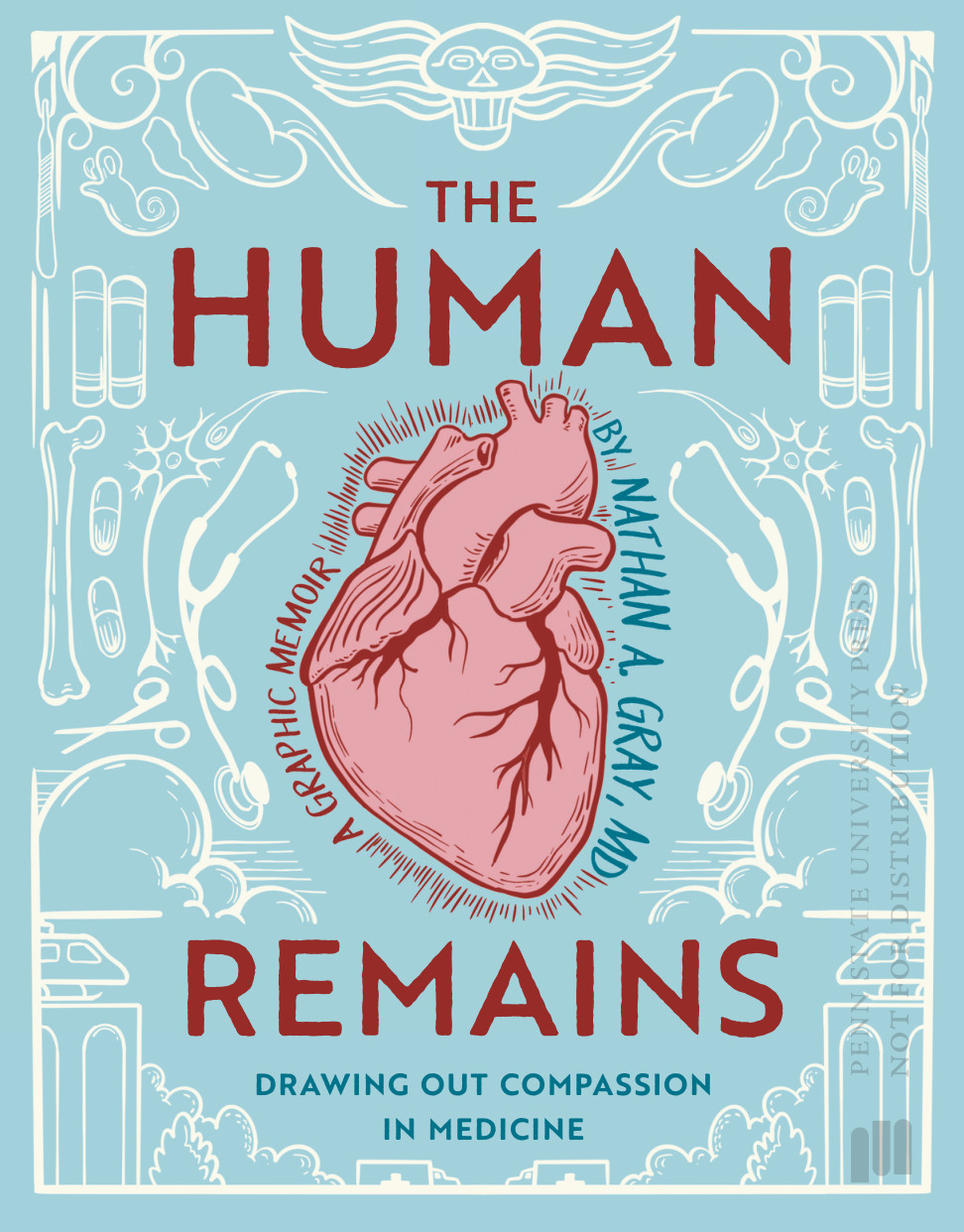
Yo, I knew pretty damn quick that The Human Remains: Drawing Out Compassion in Medicine was not gonna be some shiny doctor victory lap where everybody puts on a white coat, inspirational music starts playing, and somebody whispers, “I just want to help people.” Nah, son. Nathan A. Gray comes through the door carrying a scalpel in one hand and a mirror in the other, then spends the entire graphic memoir asking a nastier question: what happens to the human being inside the doctor while everybody is busy teaching him how to become one? That question gives this book its heartbeat. Gray starts as the wide-eyed kid who once wanted to be Batman, then a cartoonist, then a physician because healing people sounded like a noble way to spend a life. Medicine runs deep in his family. The dream is real. So is the cost. Medical school, anatomy lab, clinical rotations, residency, exhaustion, responsibility, mistakes, emotional calluses, death, marriage, friendship, guilt, ambition and eventually palliative medicine all start piling onto that dream until you can practically hear the suspension creaking. And fam, the title is slicker than it first looks. “Human remains” means the bodies left behind after death, sure, but Gray keeps pushing another meaning: after this system gets through training a doctor, how much of the human remains? Oof. There’s your book right there.
Gray gets his hooks in early with one of the strangest and strongest choices in the entire memoir: dancing. While learning human anatomy, he begins dreaming about dancing with the dead. By day, he can dissect a body with surprising calm. At night, his subconscious is apparently like, “Nah, papi, we need to discuss some things.” Those dreams are funny, eerie, intimate and uncomfortable without Gray forcing them into some giant symbolic speech. He simply lets them hang around. Then we meet the donor his anatomy group eventually calls “Opal,” and you can watch something fascinating happen in almost real time. Four nervous students begin by worrying about how to refer to a dead woman respectfully. Soon they are cutting, labeling, joking, eating after lab and adapting to an experience that initially seemed impossible. Gray does not wag his finger at anybody. He includes himself. That is crucial. The memoir is strongest when he admits that emotional distance can protect caregivers while quietly mutating into depersonalization. One page lays out the psychological tools he collects alongside the physical instruments of anatomy: repression, depersonalization, intellectualization, humor and bravado. Man, that page hits. Not because Gray says doctors are cold, but because he shows you how somebody learns to become cold enough to function and how frighteningly useful that skill can become later. The author’s note makes the purpose explicit too: patients and identifying details are altered for confidentiality, and Gray is examining systems and habits rather than hunting individual villains.

I really dug the way Gray structures the whole ride because the chapter titles themselves start doing narrative work: Drawn. Joined. Stained. Transformed. Arrived. Swallowed. Split. Replaced. Forgotten. Retrained. Oriented. Tested. Look at those words. They sound like procedures somebody might perform on a body, except the patient on the table is Nathan. Clever? Absolutely. More importantly, Gray earns it. Each stage changes him. Anatomy stains the scrubs and the psyche. Training transforms curiosity into routine. Residency swallows time. Professional identity splits the doctor from the person. Protocol begins replacing instinctive human connection. Certain ideals get forgotten because survival takes priority. Then comes the possibility of being retrained. This keeps the memoir from reading like “and then I went here, and then I did this, and then I learned that,” which is where autobiographical books can catch a flat tire fast. There is forward motion. You feel one version of Nathan disappearing while another gets assembled. Sometimes the changes are so gradual he barely recognizes them himself, which is exactly why they land. Nobody wakes up Tuesday morning and announces, “Excellent, today I shall become emotionally detached.” It happens one compromise, one sleepless night, one checklist, one impossible workload and one coping mechanism at a time.
Residency is where Gray drops the nice medical-school brochure in the trash and the book starts chewing harder. The hospital becomes less a place than a creature. At one point its entrance is literally visualized like a mouth waiting to consume him, and that image is dead-on because the surrounding pages make time feel carnivorous. Calls stretch beyond thirty hours. Eating, drinking, sleeping and even taking a bathroom break turn into luxuries competing with somebody else’s emergency. Faces become cases. Human stories become data. Gray’s visual metaphor of moving from “actor” to machine might be my favorite sequence in the book. Earlier, standardized patient encounters teach him scripts, protocols and professionally acceptable choreography. With enough repetition, he no longer needs the script. Great, right? Except the image tells another story. Efficiency has begun replacing encounter. The physician can execute the task while a chunk of the person disappears behind the machinery. Later, Gray draws himself almost bisected between doctor and anatomical specimen, his identity looking dissected right alongside the bodies he once studied. Yo, that visual is nasty in the best possible way. This is where the memoir earns its criticism of medical culture because Gray refuses to stand outside the blast radius acting superior. He admits resentment. He admits survival sometimes mattered more than suffering. He admits evaluations could describe him as caring while internally he felt hollowed out. That self-incrimination gives the whole thing credibility. He is not selling us Saint Nathan Against The Evil Hospital System. He is saying, “I became part of this, too.” Big difference.
Visually, The Human Remains ain’t chasing superhero gloss, and thank goodness for that. Gray’s drawing is economical, expressive and deceptively simple, built for memory rather than spectacle. Faces do not need fifteen pounds of crosshatching to communicate dread. A hunched shoulder, a stare, a hand hovering near a patient or a body can carry the panel. Better yet, Gray understands that comics let reality and metaphor sit at the same table without anybody needing to explain themselves. Textbooks become mountains swallowing students. Hospitals grow teeth. Bodies fragment. A doctor becomes machinery. Dreams turn anatomy into dance. Negative space can make one person feel microscopic against the institution around them. The palettes shift with the stages of his life, moving through dusty pinks, institutional greens, clinical blues, heavy blacks, bruised reds and eventually warmer autumnal tones as his relationship to medicine changes. Those colors are storytelling, not wallpaper. Even the narration boxes feel handmade, almost like pieces of memory taped onto the page. Panel grids tighten when routine closes in, while larger metaphorical compositions suddenly crack the book open when Gray needs emotion to outrun literal reality. Some of his most effective pages barely need dialogue. That, right there, is why this works as a graphic memoir, not prose chopped into rectangles with illustrations parked beside it.

Then palliative medicine enters the picture, and no, Gray does not suddenly discover a magic compassion DLC that repairs eight years of accumulated damage. Thank God. That would have been corny as hell. What changes is his orientation. Instead of medicine being organized exclusively around fixing, winning, correcting and defeating disease, palliative care asks him to spend time with meaning, suffering, family, mortality, uncertainty and what the human being in front of him actually values. Gray describes entering fellowship looking for deliberate recovery of ideals he knew he had lost. The visual atmosphere starts breathing differently, too. Pages gain space. Nature creeps back in. Walking, listening and sitting become as important as procedures. Warmer colors arrive. The pace loosens. We are still talking about illness and death, yet the book somehow becomes less morbid because death is no longer treated as medicine’s embarrassing defeat hiding at the edge of the room. Gray finds a version of doctoring where acknowledging mortality does not cancel care. It can deepen it. The publisher summarizes palliative care as the place where Gray reconnects medical science with individual patient stories, and after seeing how methodically the first two-thirds of the memoir dismantle his original ideals, that turn feels earned instead of manufactured.
Now, is every page firing at the same RPM? No. There are stretches, especially when Gray explains curriculum, anatomy terminology, standardized patient training and the machinery of medical education, where the information load gets chunky. A few sequences can feel like you accidentally enrolled in orientation with him. But here’s the thing: I would rather have that density than a memoir that skips from dramatic moment to dramatic moment and pretends the erosion happened by magic. The repetition is part of the experience. Medical training grinds because it repeats. Residency exhausts because there is always another patient, another call, another task, another night. Gray occasionally makes us feel that accumulation. Could several passages lose a caption or two and still communicate the point? Yup. I think so. But the book keeps finding a visual jab, an awkward joke, an unsettling admission or a page turn strong enough to restart the rhythm. And Gray’s humor helps tremendously. Gallows humor appears because, just like he explains in the anatomy section, sometimes you either laugh or you drown. The jokes never ridicule dying patients. Most of the time Nathan is roasting himself, his friends are breaking tension, or medical absurdity is doing all the comedic heavy lifting. That balance is tough. He handles it.

By the time Gray circles toward the epilogue, imagery planted way back in the anatomy-lab opening begins echoing differently. I ain’t spoiling how, because this is one of those books where the destination matters less than recognizing the person who finally reaches it. What impressed me most is that The Human Remains never argues compassion is a personality trait good doctors either possess or don’t. Gray treats compassion like something vulnerable to conditions. It can be trained, injured, suppressed, forgotten, rediscovered and practiced again. That’s a far more interesting idea, and frankly a more hopeful one. Doctors are not machines. Patients are not problems. Death is not necessarily defeat. And kindness is not some cute bonus stat you add after mastering the “real” medicine. Gray’s debut graphic novel gets there without preaching from a mountaintop or pretending he cracked the code to American healthcare. He draws the bruises. He admits where he helped create some of them. Then he asks whether another way of practicing might still be possible. WEPA, mi gente, that stayed with me. The Human Remains is smart, vulnerable, darkly funny, occasionally uncomfortable and built around a visual language that gets stronger the deeper Gray digs into himself. Comic readers who love memoir, healthcare workers who have ever felt themselves going emotionally numb, medical students wondering what lies beyond the white-coat ceremony, and anybody fascinated by what institutions do to human beings should put this on the radar. Graphic medicine has produced plenty of examinations of illness and mortality, but Gray gives us a potent view from inside the person expected to remain composed while standing beside both. The final prognosis from this Crusader? Powerful work. Human work. And yeah, Doc, the pulse is strong.
CRUSADERS SCORE:
4.5/5

Creator / Writer / Artist / Visual Narrator: Nathan A. Gray, MD
Editorial guidance: Kendra Boileau, Penn State University Press / Graphic Mundi
Publisher: Graphic Mundi, an imprint of The Pennsylvania State University Press
On sale:
November 10, 2026

Leave a Reply
You must be logged in to post a comment.