
X-Men: Outback #1 Review: Claws, Thunder, Ghosts, and a Mutant Family Ready to Crack
·Al Mega
WEPAAAA! Now this is how you step into the dusty backroads of X-Men history without making it feel like somebody dragged an old longbox out the closet just to flex. X-Men: Outback #1 takes one of the strangest, moodiest, most beloved eras in mutant history and says, “Nah, we’re not just visiting. We’re unpacking the emotional luggage.” And trust me, this team has baggage. Big Samsonite energy. Airport carousel from hell.
Steve Orlando and Stephen Segovia are not playing museum tour guide here. They are not just pointing at the Australian era like, “Remember this? Wasn’t that cool?” They dig into why this period mattered. The X-Men are believed dead by the world, living out of sight, running missions from the shadows, trying to protect humanity while barely holding themselves together. That is a very X-Men situation, by the way. Save everybody. Tell nobody. Bleed privately. Smile when necessary. Classic mutant nonsense, but beautiful nonsense.
The issue opens with a slick bit of recap that uses the chaos of the team’s recent past without drowning new readers in continuity quicksand. Mojo, the Adversary, Forge, the world thinking the X-Men are gone, it all gets framed with enough style and momentum that longtime fans get their nostalgia snack while newer readers are not left standing outside the club in the rain. The book understands that the Outback era was not just about location. It was about disappearance. Reinvention. Trauma. Freedom. Paranoia. Family members pretending they are fine while the walls are one bad conversation away from catching hands.

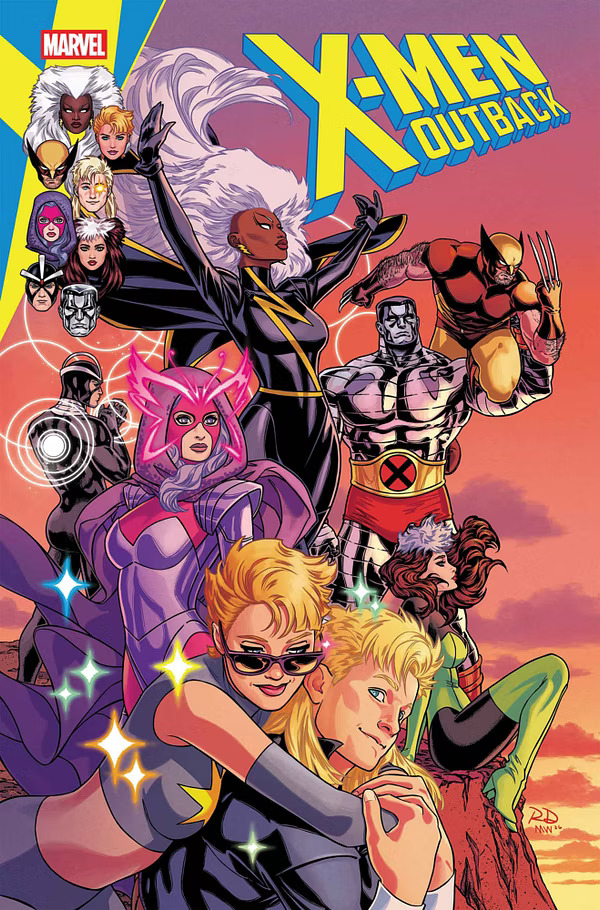
Orlando’s script has a strong grip on the interpersonal static inside this lineup. Storm is trying to lead after returning to life and purpose, but she is not simply presented as “Storm, perfect goddess, end of conversation.” She doubts. She listens. She studies the land and the people around her, especially through her exchanges with Gateway, and that gives the issue its soul. Wolverine is off in his own grief-soaked, blood-scented corner, haunted by Sabretooth and the old animal-versus-man argument that follows him like a bad smell in a subway car during August. Colossus is inward, heavy with the fake death of the team and what that means emotionally. Dazzler wants oxygen, attention, a life beyond hiding. Longshot brings charm and weird optimism. Rogue is sharp, protective, and impatient. Psylocke is calm steel in lavender. Havok is trying to keep the room from exploding while secretly being part of the combustible material. That is some good stuff. The team does not feel like a board game roster. They feel like people trapped in a pressure cooker with superpowers and unresolved conversations. You know, family.
The big hook comes through Sabretooth, and Orlando uses him smartly. He is not just here to growl, bleed, and remind Logan that their feud is nastier than a bodega coffee at 2 a.m. Sabretooth brings a pack of fear-feeding dogs, mutant-hunting nightmares born from Mr. Sinister’s genetic leftovers, and suddenly the issue becomes more than a birthday brawl gone left. The monsters feed on fear, which is a clean and nasty metaphor for where this team lives mentally. They are hiding. They are afraid of being seen. They are afraid of losing themselves. They are afraid their second chance might become another trap. So when these creatures start snapping jaws, the action lands with thematic teeth. That is not just comic book mayhem. That is the story biting back.

Then there is Storm. Madre mía. When Ororo steps into the center of this fight, the issue wakes up like thunder heard its name across the room. Her sequence is the kind of classic X-Men power flex that makes you sit up and go, “Oh yeah, that is why she is HER.” But it is not empty spectacle. Storm does not defeat fear by pretending it does not exist. She commands the room because she understands what fear is doing to everyone in it. The issue’s best moments come when Storm realizes leadership is not about barking the loudest. It is about seeing clearly when everybody else is reacting from wounds. That is a grown-up read on Ororo, and it works.
Stephen Segovia’s art brings serious muscle to the book. The pages have that glossy, high-impact Marvel energy, but the storytelling stays clear even when claws, lightning, optic-style blasts, telepathy, teeth, and psychic panic are flying all over the place like somebody knocked over the whole action figure shelf. Segovia draws Sabretooth like a nightmare that learned how to enjoy cardio. He is huge, ugly, vicious, and disturbingly alive on the page. Wolverine feels compact and dangerous, all coiled violence and stubborn hurt. Storm is statuesque without becoming stiff, regal without losing emotion. Dazzler pops. Rogue has attitude in every line of posture. Psylocke’s calm intensity cuts through panels like a blade wrapped in silk.

The action choreography is especially strong once the team joins the fight. Every character gets a little room to show who they are through motion. Colossus charges like a tank with a conscience. Dazzler turns performance into weaponry. Psylocke’s telepathic work feels precise and invasive, not just “pink power effect go brrrr.” Storm’s lightning is staged like judgment from the sky. Wolverine and Sabretooth? That fight is ugly in the right way. It is not elegant. It is not clean. It is two old wounds trying to kill each other in public.
Alex Sinclair’s colors do heavy lifting throughout. The warm Outback oranges and dusty sunset tones give the early pages a strange calm, like the land itself is watching the X-Men decide whether they deserve peace. Then the action flips into cooler blues, harsh whites, violent reds, and electric psychic pinks. It creates a visual rhythm that mirrors the story: temporary calm, emotional spark, full mutant combustion. The book looks polished, but it also has bite. That balance matters.
Joe Sabino brings the noise without letting the page become a carnival of unreadable sound. The sound effects have that big comic-book punch, especially when Storm cuts loose or the beasts come crashing through the action, but the lettering keeps the characters’ voices distinct. That matters in an issue with this many personalities fighting for oxygen. Nobody sounds like a generic superhero placeholder. Even the quiet moments land.
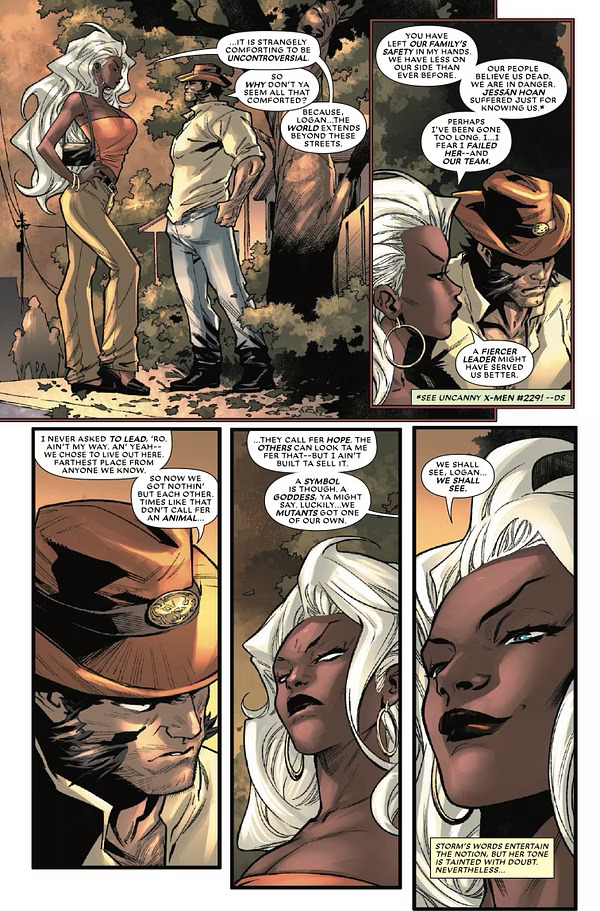
The cover by Russell Dauterman and Matthew Wilson is a whole snack platter of X-Men iconography. It has that bright, stylish, character-forward energy that makes you want the poster, the shirt, the trading card, the lunchbox, and maybe a matching pair of sneakers if Marvel ever gets wild. It captures the team as mythic and messy at the same time, which is exactly what this issue is selling.
Now, if there is a little sand in the boot, it is this: X-Men: Outback #1 has a lot of emotional furniture to move in one issue. Some characters get deeper attention than others, and the Warmun/Gateway material, while meaningful and respectful in tone, feels like it could use even more breathing room as the story continues. There is something powerful sitting there about land, community, anonymity, and whether being unseen can be sanctuary instead of prison. I hope future chapters lean even harder into that, because the setup deserves room to stretch its legs.

As a first issue, this thing cooks. It respects the old-school Outback flavor while giving it a modern pulse. It understands that nostalgia without purpose is just cosplay, and this book is not cosplaying. It is asking why this era still matters. Why these X-Men needed to disappear. Why being dead to the world might feel like freedom until the silence starts eating you. Why leadership gets complicated when everybody on the team is carrying hurt in a different pocket.
X-Men: Outback #1 is loud when it needs to be, reflective when it counts, and packed with enough mutant drama to make your pull list sit up straight. Orlando brings the emotional pressure. Segovia brings the visual impact. Sinclair gives it heat and thunder. Sabino makes the whole thing roar. And the final tease, with the Reavers waiting in the dust, tells us the party is just getting started.

This is not just a trip back to Australia. Nah, fam. This is the X-Men walking into the desert, looking at their own ghosts, and realizing the real fight is not only against enemies with claws and cybernetics. Sometimes the fight is against fear, grief, ego, and the lie that hiding is the same thing as healing.
CRUSADERS SCORE:
4/5

Writer: Steve Orlando
Artist: Stephen Segovia
Color Artist: Alex Sinclair
Letterer: VC’s Joe Sabino
Cover Artists: Russell Dauterman & Matthew Wilson
Variant Cover Artists: AKA, Kaare Andrews, Kris Anka, Pablo Villalobos
Editor: Darren Shan
Conductor of X: Tom Brevoort
Editor in Chief: C.B. Cebulski
X-Men Created By: Stan Lee & Jack Kirby
Leave a Reply
You must be logged in to post a comment.