
DC Is Beating Marvel Right Now, But the Real Story Is Why Readers Are Moving!
·Al Mega
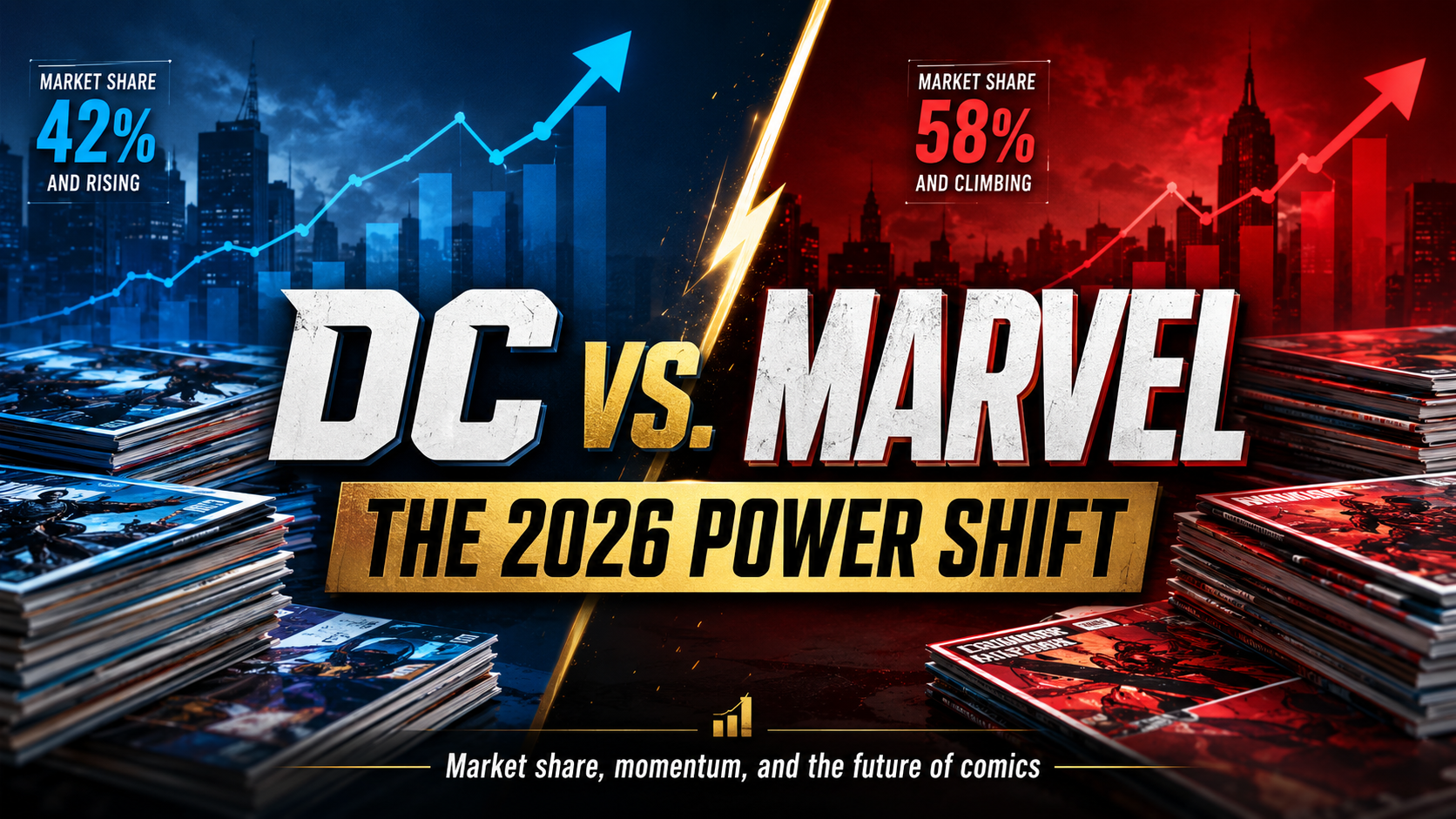
There is a sound the comic book industry makes when the ground starts shifting. It is not always loud at first. Sometimes it sounds like a retailer raising an eyebrow at the weekly numbers. Sometimes it sounds like fans arguing in the comments. Sometimes it sounds like somebody at Marvel pretending not to notice that DC just walked into the room with its chest out. Right now, that sound is getting louder. According to ICv2, DC held 34.7% of the direct market in Q1 2026, expanding its lead over Marvel, which held 29.4% during the same period. Comics Bulletin reported the same Q1 2026 split, framing DC’s rise as one of the clearest Big Two market shifts in recent memory.
Now, before anybody starts throwing long boxes in the shop like this is a Royal Rumble with pull lists, let’s keep it honest. Marvel is not dead. Marvel is not finished. Marvel is not suddenly some tired old champ sitting outside the bodega saying, “Back in my day, I had hands.” This is still Marvel. This is Spider-Man, X-Men, Avengers, Fantastic Four, Wolverine, Miles Morales, Doctor Doom, Deadpool, Venom, and a mountain of characters that still move culture. But right now, DC has something Marvel does not. DC has momentum. And momentum in comics is not just math. It is mood. It is temperature. It is the feeling at the comic shop counter when readers ask, “What should I be reading?” It is the book people are talking about before Wednesday even hits. It is the title that feels easy to recommend, easy to jump into, and exciting enough that fans do not feel like they need a continuity lawyer just to understand issue one. That is where DC is landing punches.
For years, the Marvel versus DC conversation has been treated like old-school fanboy warfare. Batman versus Spider-Man. Superman versus Thor. Justice League versus Avengers. The kind of argument that starts with sales numbers and somehow ends with somebody yelling about who wins in a fight at full power. That is fun, sure. But this moment is bigger than fan debate. This is not just a scoreboard. This is a signal. Readers are telling the industry something. They are choosing clarity over clutter. They are choosing confidence over confusion. They are choosing books that feel like an invitation instead of a homework assignment. That last part matters because comics has a bad habit of confusing depth with complexity. Depth makes readers care. Complexity makes readers open six browser tabs to figure out what they missed. One builds loyalty. The other builds exhaustion.
Marvel’s biggest challenge right now is not that people stopped loving Marvel. They did not. Fans still love these characters deeply. Sometimes too deeply. Marvel fans will defend their favorites like somebody insulted their mother’s cooking and stepped on their fresh sneakers at the same time. But love does not automatically equal buying confidence. A reader can love Spider-Man and still feel overwhelmed by the number of Spider-Man books. A reader can love the X-Men and still feel like the door into that world keeps moving every few months. A reader can love the Marvel Universe and still feel tired by the constant relaunches, events, resets, tie-ins, and announcements that promise everything will change until the next thing changes everything again. That is not a character problem. That is an access problem.
DC, at this exact moment, appears to be doing a better job giving readers clean doors. The company’s current publishing energy feels more direct, more confident, and more willing to let big characters feel big without making the experience feel like paperwork. That does not mean DC is perfect. Please. This is comics. Perfection left the building around the third crisis, came back during a reboot, and got retconned by lunch. But DC feels focused. And focus sells.
The bigger story, though, is not just DC gaining on Marvel. It is where that market share appears to be coming from. ICv2 noted that DC’s increase seemed to come largely from the “non-top 10 publishers” category, which shrank from 9.3% in Q4 2025 to 8.5% in Q1 2026. That is the part everybody should be watching. Because if DC’s rise is coming at the expense of smaller publishers, then this is not only a Big Two boxing match. This is an ecosystem warning. The industry can celebrate DC’s momentum and still ask whether the rest of the field is getting squeezed. Comic shops need big sellers. Nobody should act like Batman and Spider-Man do not keep lights on. They do. Those icons are rent-paying superheroes at this point. But the future of comics cannot be built only on the same giants swinging harder.
A healthy industry needs DC and Marvel strong, absolutely. But it also needs Image, Dark Horse, IDW, Boom, Oni, Mad Cave, Dynamite, Vault, Massive, Scout, indie publishers, crowdfunded creators, small press weirdos, convention table warriors, and every creator trying to turn a wild idea into a book people can hold. Without that diversity, the market gets louder but smaller. Bigger brands, fewer risks. More nostalgia, less discovery. That is not growth. That is a cape-covered bottleneck. And yet, DC deserves credit for this moment. It has made itself feel alive. It has made readers feel like something is happening. It has created enough heat that social platforms and fan communities are already chewing over the numbers, with Reddit discussions reacting to ICv2’s report that DC expanded its lead over Marvel for the second consecutive quarter.
That is how you know a market story has crossed into culture. Sales numbers are not just business data anymore. They are fandom ammunition. They become memes. They become arguments. They become proof that somebody’s team is winning and somebody else’s team needs to “hold that L.” Welcome to comics in 2026, where a percentage point can start a street fight in the comments section. But serious analysis requires more than victory laps. DC is winning right now because it seems to understand the emotional economy of comics. Readers do not only buy what is famous. They buy what feels necessary. They buy what feels alive. They buy what feels like it has a direction.
Marvel, on the other hand, sometimes feels like it is managing an empire rather than launching a charge. That is the difference between power and momentum. Marvel has power. Massive power. Cultural power. Publishing power. IP power. But power can get heavy. Power can become habit. Power can make a company assume readers will keep showing up because they always have. That is dangerous.
The modern reader has too many choices. Comics are not just competing with other comics. They are competing with manga, anime, video games, streaming shows, YouTube, TikTok, podcasts, collectibles, live events, crowdfunding campaigns, and a thousand other things grabbing people by the eyeballs every five seconds. If a book feels confusing, readers move on. If a line feels exhausting, readers wait. If a story feels like it requires too much setup, readers spend that money somewhere else.
The old model of “they will buy it because of the logo” is not bulletproof anymore. Brand loyalty still matters. But friction kills sales. Every confusing entry point is friction. Every overstuffed event is friction. Every relaunch that feels like a marketing cycle instead of a creative necessity is friction. Every title that asks readers to care without giving them a clean reason is friction.
DC, right now, has reduced some of that friction. Marvel needs to study that without panicking. Because panic would be the wrong move. Marvel does not need to become DC. That would be foolish. Marvel’s strength has always been different. DC is mythology with boots on the ground. Marvel is the person on your block who accidentally became responsible for saving the universe while still dealing with rent, grief, guilt, family, ego, trauma, and bad timing. DC is gods trying to be human. Marvel is humans trying to survive being gods. That formula still works. It will always work when done right.
But Marvel has to make it feel accessible again. Not smaller. Not weaker. Not safer. Just clearer. Give readers a reason to walk in without feeling lost. Give retailers books they can hand-sell without needing a flowchart. Give longtime fans emotional payoff without making new fans feel punished for arriving late. That is how Marvel answers. Not with louder announcements. Not with another “this changes everything” slogan. With clarity. With purpose. With stories that feel urgent because they are emotionally sharp, not because the marketing department put lightning bolts around the press release.
DC also has to be careful. Momentum can turn into overconfidence fast. If DC decides the lesson is simply “more Batman, more events, more variants, more alternate universes,” then this victory can become tomorrow’s fatigue. Comics history is full of companies discovering a winning formula and then beating it until the formula files a workers’ comp claim. Winning the quarter is not winning forever. Context matters too. Other market discussions have noted that Marvel has historically held strong sales positions in specialty comic shops, and broader comparisons between the two companies can shift depending on timeframe, category, and methodology. Bleeding Cool has also pointed to the need for caution in framing DC’s sales surge, noting that some reporting may omit context around how Marvel is still performing in comic shops.
That is important because this is not about declaring a permanent king. Comic book markets swing. Fans move. Retail trends change. Events hit. Creative teams shift. One hot line can change a quarter. One messy publishing year can cool a brand. But this DC lead cannot be dismissed either. It means something. It means readers are responding to what DC is putting out. It means the competition at the top is alive. It means Marvel has a real reason to sharpen the blade. It means the direct market, for all its problems, can still surprise people. And it means the industry should pay attention to what the numbers are really saying beneath the noise. The real story is not “DC good, Marvel bad.” That is lazy. The real story is that readers are rewarding direction. They are rewarding energy. They are rewarding books that feel like they matter now.
That is the lesson every publisher should take from this moment, from the Big Two to the smallest indie outfit trying to sell books from a folding table at a convention. Make the reader care. Make the door clear. Make the story feel alive. Respect the audience’s time, money, and emotional bandwidth. Because comics is not dying. Comics is changing. The audience is more selective, more vocal, more informed, and more willing to walk away from confusion. That is not a threat. That is a challenge.
DC is meeting that challenge better than Marvel right now. Marvel can answer. The indie market can answer. The whole industry can answer. But the answer cannot be business as usual with a fresh coat of foil. It has to be sharper than that. It has to be braver. It has to remember that readers do not owe publishers loyalty. Publishers earn it, issue by issue, story by story, Wednesday by Wednesday. Right now, DC is earning the conversation. Marvel still has the weapons to take it back.
And the rest of comics better make some noise too, because in a market this competitive, silence is not strategy.
It is surrender.
The Crusade Never Ends.
Image Disclosure: This visual may include AI-generated or AI-assisted elements created for editorial, promotional, or illustrative use.
Leave a Reply
You must be logged in to post a comment.