
Boycott Less, Build More: The DC Blackout Debate and the Future of Black-Led Comics
·Al Mega

A new boycott campaign aimed at DC Comics has kicked open one of the most exhausting, emotional, and often badly argued debates in modern pop culture: who gets represented, who gets ignored, who gets promoted, and who gets to decide what fans should support. The frustration behind the campaign is real. The conversation deserves to happen. But the method? That’s where things start getting messy like a subway platform argument at 2 a.m. loud, passionate, and not always headed in the right direction.
The latest push, known as #DCBlackout, has been tied to the broader #DCSoWhite conversation and centers on the claim that DC has gone more than 1,200 days without an ongoing DC Universe comic led by a Black character. Bleeding Cool reported that the boycott campaign gained steam after that 1,200-day mark, with organizers urging fans to withhold financial support from DC Comics until the publisher commits to more meaningful representation in its mainline publishing line.
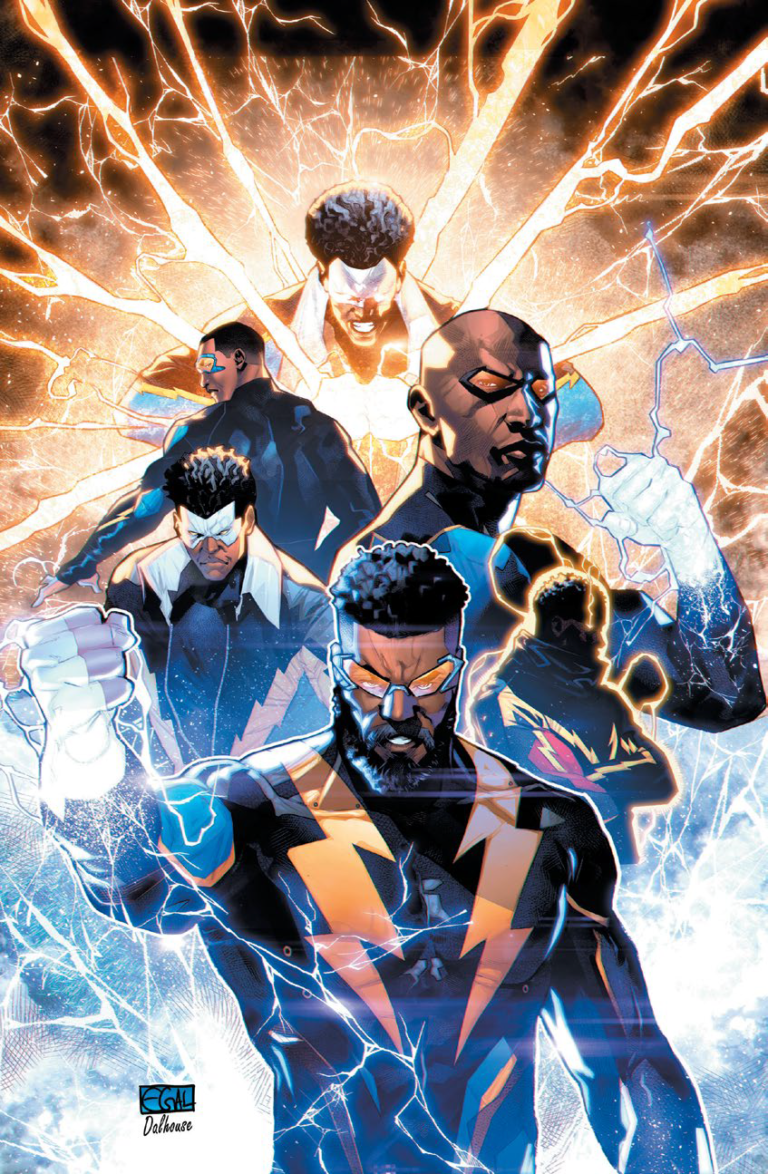
Now let’s keep it all the way Brooklyn honest: wanting more Black-led comics is not the problem. Wanting more investment in characters like John Stewart, Vixen, Black Lightning, Static, Steel, Nubia, Mister Terrific, and others is not the problem. Wanting DC to stop treating certain heroes like they only matter during special initiatives, anniversary moments, or heritage-month spotlight campaigns is absolutely a fair conversation.
But trying to force the culture through boycott pressure? That’s where I pump the brakes. Because there is a difference between demanding better and demanding obedience. And comics, at their best, have never been about obedience. Comics are rebellion. Comics are imagination. Comics are the little kid at the kitchen table with a pencil, a dream, and zero permission from the world. Comics are Jack Kirby energy. Dwayne McDuffie energy. Milestone energy. Indie creator energy. Basement studio, late-night lettering, Kickstarter stress, “I got 40 tabs open and still believe in this story” energy. So when the answer becomes, “Everybody stop buying DC until they give us what we want,” I have to ask: is that really building culture? Or is that just another version of gatekeeping with better branding?
Let’s be clear: representation matters. Anyone pretending it does not is either not paying attention or is way too comfortable in a world that already reflects them. Seeing yourself in stories matters. Seeing your people as heroes, thinkers, leaders, lovers, warriors, geniuses, survivors, and universe-savers matters. A kid seeing John Stewart carry the weight of the Green Lantern mythos matters. A young reader seeing Static treated like a top-tier hero matters. Black Lightning being handled like a major DC pillar matters. But representation cannot begin and end with corporate pressure. If we only fight when something is missing, but do not show up when something exists, then we are not building a movement. We are building a complaint department. And fam, complaint departments do not create classics.
The boycott campaign’s central claim is specific: DC has not had an ongoing mainline DC Universe comic led by a Black character in more than 1,200 days. That is the point being circulated by Bleeding Cool, Reddit threads, and social media posts connected to the debate. That distinction is important. This is not the same as saying DC has no Black characters. That would be false. It is not the same as saying DC has no Black creators. Also false. The argument is about ongoing mainline commitment not a mini-series, not a limited event, not a side project, not a “here you go, now please clap” publishing gesture. The demand is for a sustained Black-led ongoing book that gets the same kind of oxygen, marketing, and faith that DC gives its most protected brands. That is a serious point. But here is where the conversation needs to grow up and put on grown-folk shoes: if the goal is long-term support, then the strategy has to be long-term too.
Boycotts are blunt instruments. Sometimes they work. Sometimes they make noise. Sometimes they create headlines. But comics is not a giant fast-food chain where a national boycott can instantly reshape the menu. Comics is a fragile ecosystem of publishers, retailers, distributors, creators, reviewers, podcasters, YouTubers, journalists, librarians, educators, collectors, and fans. Pull one thread too hard and you might not just hurt the company you are targeting. You might hurt the shop trying to survive. You might hurt the creator whose book needed preorders. You might hurt the very characters you claim you want to protect.
That’s the part nobody wants to talk about because it does not fit nicely on a hashtag. A boycott says, “We withhold power.” A movement says, “We build power.” That is the difference. If fans want DC to believe Black-led books can sell, then the real mission should be organized demand. Not just outrage after the fact. Not just screenshots. Not just quote tweets. Not just “DC, do better” while the actual books sit on shelves untouched.
The mission should be:
Preorder the books.
Review the books.
Interview the creators.
Push the characters.
Make reading guides.
Get comic shops involved.
Get libraries involved.
Get schools involved.
Get influencers promoting the books before issue #1 drops, not after issue #6 gets canceled and everybody suddenly becomes a publishing expert.
Because let’s keep it a buck: too many people show up to mourn books they never helped live. That is not activism. That is fandom funeral attendance. And I say that with love, but also with the chancleta of truth.
The Reddit discussions around the boycott show that fans are already divided on the strategy. Some support the boycott’s goal, while others argue that promoting and buying existing Black-led or Black-created comics would be more effective than asking readers to stop supporting DC entirely.
That criticism deserves attention. Because if the answer to underrepresentation is only “stop buying,” then where does that leave the creators already doing the work? Where does that leave indie Black creators? Where does that leave small presses? Where does that leave crowdfunding campaigns? Where does that leave the kid drawing their own superhero because they do not see enough of themselves in the mainstream?
If the table does not have a seat for you, you do not spend your whole life begging for a folding chair in the corner. You build a bigger table. You season the food right. You invite the people. You turn the music up. You make the room so alive that the old gatekeepers start asking why everybody left their party. That is how culture moves. Not by waiting for permission. By creating so loudly that permission becomes irrelevant.
Now, let’s also be fair to the boycott organizers. The anger did not appear out of nowhere. For decades, mainstream comics have often celebrated diversity in press releases while hesitating to give characters of color the same sustained editorial protection as Batman, Superman, Wonder Woman, Spider-Man, Wolverine, or the other sacred cows of the spinner rack temple. Big publishers know how to launch a title when they truly believe in it. They know how to flood social media. They know how to push variants. They know how to get interviews placed. They know how to make retailers feel like a book matters.
So if DC wants Black-led books to succeed, DC cannot just toss a title into the market with a prayer, three variant covers, and vibes. That is not support. That is publishing a book and hoping the algorithm raises it. If DC believes in these characters, then prove it. Put major creative teams on them. Promote them like A-list books. Give retailers tools. Give fans a reason to preorder. Build storylines that matter. Make the characters central to the universe instead of decorative. Let them affect continuity. Let them lead events. Let them be messy, powerful, funny, flawed, brilliant, and human. Let them live beyond symbolic usefulness.
But the fans have a responsibility too. And this is the part where some folks may get tight, but that’s alright stretch before reading. You cannot demand a thing exists and then disappear when it arrives. You cannot scream “Where is the Black-led book?” and then not buy, review, share, promote, or gift the Black-led book. You cannot say representation matters and then only show up when the controversy is trending. You cannot demand a movement and act like your only job is to point at the publisher.
If you want the culture, feed the culture. If you want the book, buy the book. If you want the creator to win, talk about the creator. If you want the character to matter, treat the character like they matter before a corporation decides whether they are “market viable.” That is the real work! And no, it is not as sexy as a boycott graphic. It does not get the same instant dopamine as a viral post. But it does something far more important. It builds.
This is where Comic Crusaders should stand: not against representation, not against criticism, not against holding publishers accountable but against lazy outrage that skips the construction phase.
We stand for creators.
We stand for readers.
We stand for indie voices.
We stand for the kid making their own universe because nobody handed them one.
We stand for the shops trying to survive.
We stand for the artists burning midnight oil.
We stand for the writers putting their pain, history, joy, anger, and imagination into panels.
We stand for the idea that if you do not see the story you want, you do not just curse the shelf.
You create the book.
You launch the campaign.
You build the audience.
You make the thing happen.
That is the real “by any means necessary” of comics culture pencils, pages, preorders, podcasts, passion, and people actually showing up.
The counterargument is obvious: “But DC owns iconic characters, and representation inside those worlds matters.”
Yes. Absolutely. No argument there. A Black-led ongoing DC book matters because DC’s universe is part of modern mythology. Mainline continuity carries symbolic weight. These characters are not just products. They are cultural language. So yes, it matters whether Black heroes are treated as temporary features or permanent pillars. But symbolism without support is a poster with no wall.
You can pressure DC into announcing a book. Then what? Does the audience show up? Do retailers feel confident ordering it? Do reviewers cover it weekly? Do YouTubers talk about it beyond the controversy? Do fans recommend it to new readers? Do people buy issue #2, #3, #4, #5, and #6? Or does everyone celebrate the announcement, vanish when the book needs support, and return later to blame the publisher when it gets canceled? That cycle is exhausting.
And it helps nobody. A stronger campaign would not just say, “Boycott DC.” A stronger campaign would say:
“Here are five Black-led DC books to buy now.”
“Here are ten Black-created indie comics to support today.”
“Here is how comic preorders work.”
“Here is a list of shops carrying these books.”
“Here is a library request template.”
“Here is a creator interview series.”
“Here is a retailer education kit.”
“Here is a 30-day challenge to promote Black-led comics every single day.”
“Here is how we prove demand instead of just declaring it.”
That is not just protest. That is infrastructure. And infrastructure wins!
Because the truth is, corporate publishers respond to money, attention, consistency, and pressure. If you only bring pressure, you are giving them one signal. If you bring pressure plus organized buying power, media coverage, creator support, retailer engagement, and fan education, now you are not just yelling outside the building. You are building a whole new block. That’s the move. This is why the “create, don’t coerce” argument matters. If DC is not giving fans what they want, fans have options. Support indie creators. Support Black-owned publishers. Back crowdfunding campaigns. Share small-press books. Interview creators. Review their work. Create your own comic. Build your own universe.
Stop treating corporate validation like the final boss of representation. Because sometimes the revolution is not asking the castle to open the gate. Sometimes the revolution is building your own city. And let’s say this with love but no sugar-coating: comics fans need to stop acting like corporations are parents. DC is not your father. Marvel is not your mother. They are companies. They make decisions based on brand, sales, strategy, risk, licensing, and market perception. You can criticize them. You should criticize them. But do not hand them all the power to define what representation means.
The people have power too. Creators have power. Readers have power. Shops have power. Media platforms have power. Comic Crusaders has power. Every time we review a book, interview a creator, share a campaign, spotlight an indie project, or tell readers where to spend their money, we are shaping culture. That is not small. That is not passive. That is the work. So yes, DC should do better. But fans should build better. Both truths can stand in the same room without throwing chairs.
The real challenge to DC is simple: stop treating Black-led books like experiments. If you believe in these characters, invest like you mean it. Give them time. Give them marketing. Give them meaningful creative teams. Give them universe-level importance. Stop launching books like you are already preparing the cancellation statement.
The real challenge to fans is just as simple: stop waiting for corporations to prove your values. Buy what you want to survive. Promote what you want to grow. Create what you do not see. If the shelf is missing your story, do not just yell at the shelf. Build a new shelf. Fill it. Light it up. Make people come look. That is the Comic Crusaders way.
We are not here to tell fans what they are allowed to love. We are not here to shame people for reading Batman, Superman, Wonder Woman, or anything else. We are not here to pretend representation does not matter. It does. Deeply. But we are also not here for performative pressure campaigns that make fans feel guilty instead of making books stronger. Comics should not become a courtroom every Wednesday. Comics should be a battlefield of imagination. And if you want more heroes?
Make them.
Support them.
Fund them.
Read them.
Talk about them.
Do not just cancel the room.
Build a louder one.
That is the real power move.
Not “cancel everything.”
Create everything. Build louder than they ignore. And if the gatekeepers still do not open the door? Cool! We brought tools. We’ll build our own!
Leave a Reply
You must be logged in to post a comment.