

Is the Indie Comic Market Being Manipulated? The Dangerous Rise of Week-One Speculation
·Al Mega
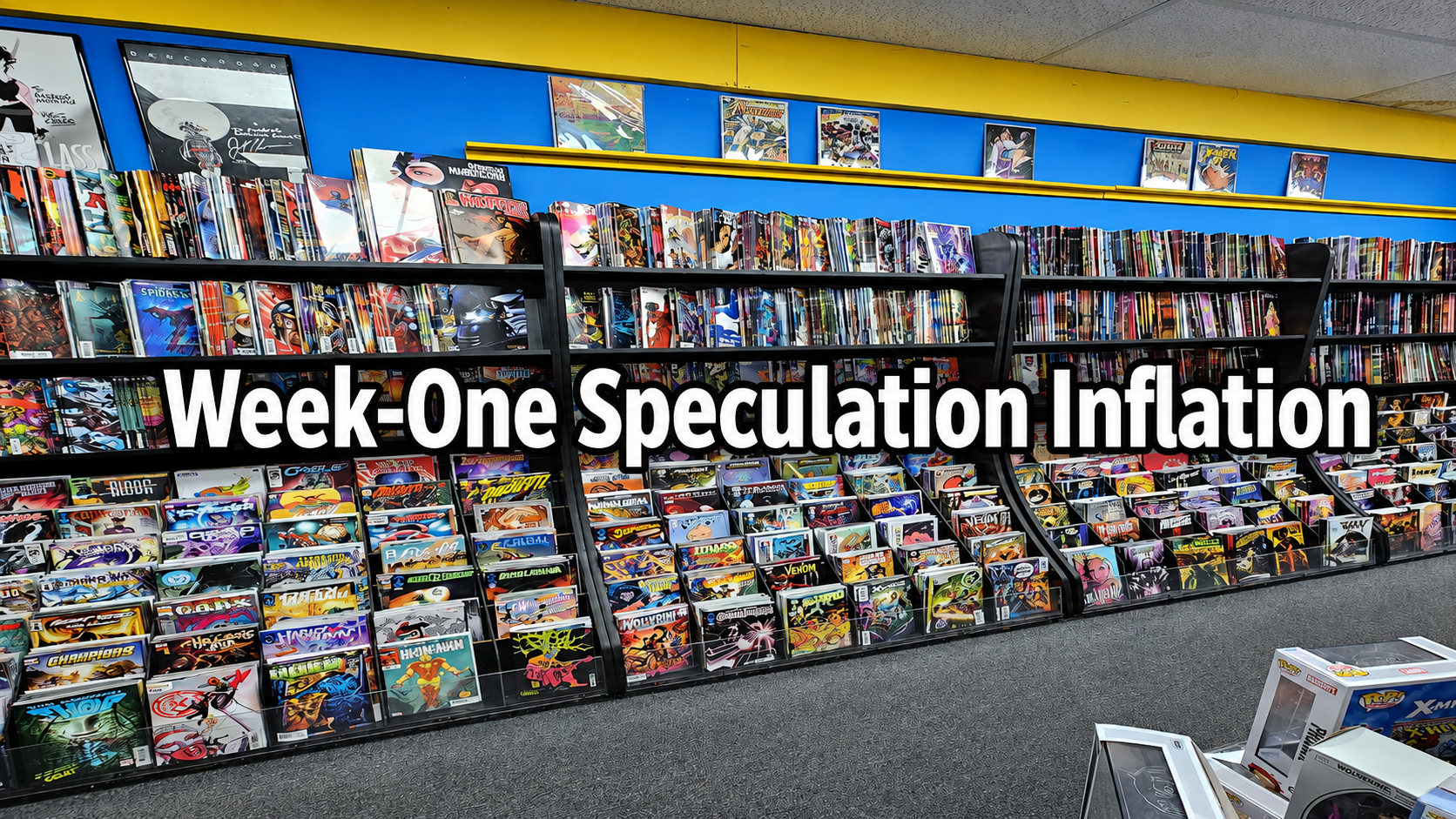
Brand-new indie comics are selling out before many readers ever see them, then appearing online for triple cover price by release week. Is this healthy demand or is the comic market turning fresh stories into disposable stock-market chips?
A COMIC BOOK SHOULD NOT FEEL LIKE A HOSTAGE SITUATION
That may sound dramatic, but walk into enough shops on New Comic Book Day lately and you can feel the tension. A new indie title drops. Maybe it has a killer concept. Maybe the creative team has heat. Maybe TikTok, YouTube, Instagram, Whatnot, Reddit, or some loudmouth with a ring light and a wall of slabs starts yelling “sleeper hit” before most readers have even opened page one. Then boom distributor sellout, second printing announced, eBay listings popping up like mushrooms after a dirty rainstorm, and suddenly a $3.99 or $4.99 comic is being treated like beachfront property in Malibu.
And here’s the part that should make everybody in comics pause: a lot of the people being priced out are not tourists. They are readers. The lifeblood. The people who actually keep a series alive after the first-week circus packs up and moves on to the next shiny object.
This week’s hot-button issue is not whether indie comics are finally getting attention. That part is beautiful. We should celebrate it. Independent comics deserve eyeballs, conversation, coverage, and serious collector interest. The issue is whether the market around some new indie releases has become so overheated, so fast, and so algorithmically juiced that it is starting to punish the exact audience the industry claims it wants to grow.
Recent examples show why this debate has exploded. Image Comics announced that White Sky #1 sold out at the distributor level on release day and was receiving a second printing. The publisher also announced that Narco #1 was rushed back to print after its debut sold out, with the second printing scheduled for April 1, 2026. Comics Beat described Narco #1 as arriving during “a wave of speculation on new titles,” while Bleeding Cool reported release-window aftermarket spikes on books including White Sky, D’Orc, Nectar, and Narco.
Now, let’s be fair before we start throwing longboxes across the room. A distributor-level sellout is not automatically proof of manipulation. A second printing is not a scam. A publisher reprinting a sold-out book is usually exactly what we want them to do it gets more copies into stores, helps retailers, helps creators, and gives readers another chance. In a business where small publishers and creator-owned books often live paycheck to paycheck, strong demand can be a genuine blessing.
The larger market is also not collapsing. Quite the opposite. ICv2 reported that North American comics and graphic novel sales reached an estimated $2.2 billion in 2025, with direct market sales up nearly 30% and comic shop sales nearing $1 billion. That is not a dead industry. That is a market with real oxygen in its lungs. But growth can still get ugly when the incentives are crooked.
The modern direct market is built around preorders, final order cutoffs, retailer risk, and limited print decisions. Shops do not have unlimited money to gamble on every new #1. Publishers do not want to overprint and eat losses. Retailers must guess demand before word-of-mouth truly forms. That creates a real supply problem. Sometimes a book is not “artificially scarce.” Sometimes nobody ordered enough because nobody knew the book would hit. That is the honest defense.
But here is the honest indictment: when standard covers are disappearing instantly and flipping for three, five, ten, or even twenty times cover price before most readers can react, the system is failing the reader. Maybe not by conspiracy. Maybe not by design. But by outcome. And outcomes matter.
If a new reader hears about an indie comic on Wednesday afternoon, checks their local shop on Thursday, and finds nothing but a $25 aftermarket listing for a regular first print, what message does that send? It says comics are not stories comics are lottery tickets. It says you did not arrive early enough, you did not watch enough FOC videos, you did not follow enough spec accounts, you did not play the game, so now you pay the tax. Nah. That’s not fandom. That’s velvet-rope nonsense in a paper bag and board.
The incentive variant economy adds fuel to the fire. Ratio variants 1:10, 1:25, 1:50, 1:100 are designed to reward retailer ordering thresholds, but they also create built-in scarcity that can turn a new release into a chase before anyone knows whether the story is actually good. CovrPrice notes that common incentive ratios include 1:5, 1:10, 1:25, 1:50, and 1:100, and that there is no easy way for collectors to determine the true print run of many incentive variants.
That uncertainty is gasoline. Speculators love uncertainty. Algorithms love urgency. Sellers love phrases like “sold out everywhere,” “first appearance,” “low print run,” “underordered,” and “option potential.” The story itself can become almost secondary. The comic becomes a ticker symbol. Buy low on Wednesday morning. Flip high by dinner. Cash out before the second printing lands. That may be legal. It may even be predictable. But is it healthy? Not if we care about long-term readership!
The most dangerous part of week-one speculation inflation is not that some collector overpays. Adults can spend their money however they want buy the shiny dragon cover, live your truth. The problem is that the hype cycle trains the market to reward speed over reading, scarcity over storytelling, and resale value over creative value. That is how you build a bubble. And bubbles do what bubbles do: they pop. Then everybody acts shocked, as if they weren’t standing there blowing into the balloon with both lungs.
We have seen this movie before. Comics has a long memory, even when the market pretends it doesn’t. The 1990s speculation boom taught the industry what happens when collector frenzy outruns reader loyalty (trust me, I was there!). Today’s market is different, yes print runs are smaller, data moves faster, and social media creates instant discovery. But human behavior has not changed that much. When people start buying five copies of something they have not read because somebody told them it might “go nuclear,” we are not in a literary renaissance. We are in a casino with better cover art. And let’s talk about the phrase everyone keeps throwing around: artificial scarcity.
That term gets abused. Real artificial scarcity would mean a publisher or retailer intentionally choking supply to create inflated demand while pretending the shortage is organic. That is a serious accusation, and it should not be tossed around casually without evidence. But readers do not need a smoking gun to recognize a broken experience.
When a book is “sold out” before most casual readers can buy it, then a second printing is announced almost immediately, then variants and later printings become part of the marketing heat the reader sees a machine that benefits from urgency. Maybe every individual player is acting rationally. The publisher wants momentum. The retailer wants survival. The collector wants value. The influencer wants clicks. The flipper wants margin. But put all those rational behaviors together and the reader gets squeezed like an empanada in a backpack. That is the issue. Not one villain. A system of incentives that keeps rewarding the wrong behavior.
The counterargument deserves space. Publishers need sellouts a sellout headline can save a book. A second printing can prove that demand is real. Retailers who took a risk deserve to make money. Collectors who spotted something early are not automatically bad actors. And indie comics, after years of fighting for attention against corporate superhero machines, should not be shamed for finally becoming hot.
All true.
But a healthy market does not make entry feel punitive. A healthy market lets collectors collect and readers read. A healthy market does not turn every new indie #1 into a panic purchase. A healthy market does not need every debut to feel like sneaker drops, concert tickets, crypto pumps, and Wall Street day trading had a baby in a comic shop.
So what can be done?
Publishers should keep reprints fast, clear, and reader-friendly. Do not make the second printing feel like punishment or a consolation prize. Make it accessible. Make it attractive. Put the story first. If the first print becomes collectible, fine let collectors chase that. But the reading copy should stay available without making fans feel like they missed the last helicopter out of Gotham.
Retailers should consider release-week limits on hot new books, especially standard covers. One or two per customer on the first day is not anti-capitalism it is community protection. Shops are not just retail counters; they are cultural hubs. The best shops already know this. They protect regulars, guide new readers, and try to keep books in human hands instead of feeding the flip machine by noon.
Collectors should ask themselves one simple question before jumping into the hype: do I want this comic because I believe in the book, or because I believe someone else will pay more tomorrow? There is nothing wrong with collecting for value. But when speculation becomes the only conversation, the art gets buried under receipts.
Influencers and media outlets yes, us too need to be careful with the language. Calling every new book “the next big thing” before anyone has read it is not coverage. It is market-manipulation cosplay. We can spotlight exciting releases without turning every recommendation into a pump alert. We can say “this looks promising” without screaming “retirement fund!” like somebody’s uncle at a flea market.
And readers? Readers need to push back with their wallets and their voices. Do not let FOMO bully you into bad buying decisions. If the first print is gone, buy the second print. Read digital. Support the trade paperback. Ask your shop to preorder. Follow creators, not just spec accounts. The most powerful thing a reader can do is refuse to confuse scarcity with quality.
Because that is the core truth here: a comic is not automatically better because fewer people can get it.
A great indie comic should build a readership, not a toll booth. It should start conversations, not bidding wars. It should make people say, “You have to read this,” not “You should have bought five copies before breakfast.”
The indie market is having a moment. That moment can become a movement if the industry protects trust. But if week-one speculation keeps turning new releases into overpriced trophies, the market risks training readers to walk away before they even start. And once readers leave, good luck selling them the third printing.
Comics does not need less hype. Hype can be beautiful when it comes from genuine excitement. Comics needs better hype! Hype that brings people in instead of pricing them out. Hype that celebrates creators without feeding scalpers. Hype that says, “This story matters,” not “This barcode might spike.”
So let’s keep it real, nobody is wrong for wanting their comic to be valuable. But if the value of a brand-new indie book depends on keeping actual readers from getting it at cover price, then we are not building the future of comics.We are just flipping the welcome mat. And that, my friends, is how you turn a crusade into a clearance bin! Wepaaaaaa….
Leave a Reply
You must be logged in to post a comment.