
Is Marvel Really Looking To Phase Out Print? The Rumor Is Unproven But The Digital Landlord Energy Is Getting LOUD!!
·Al Mega
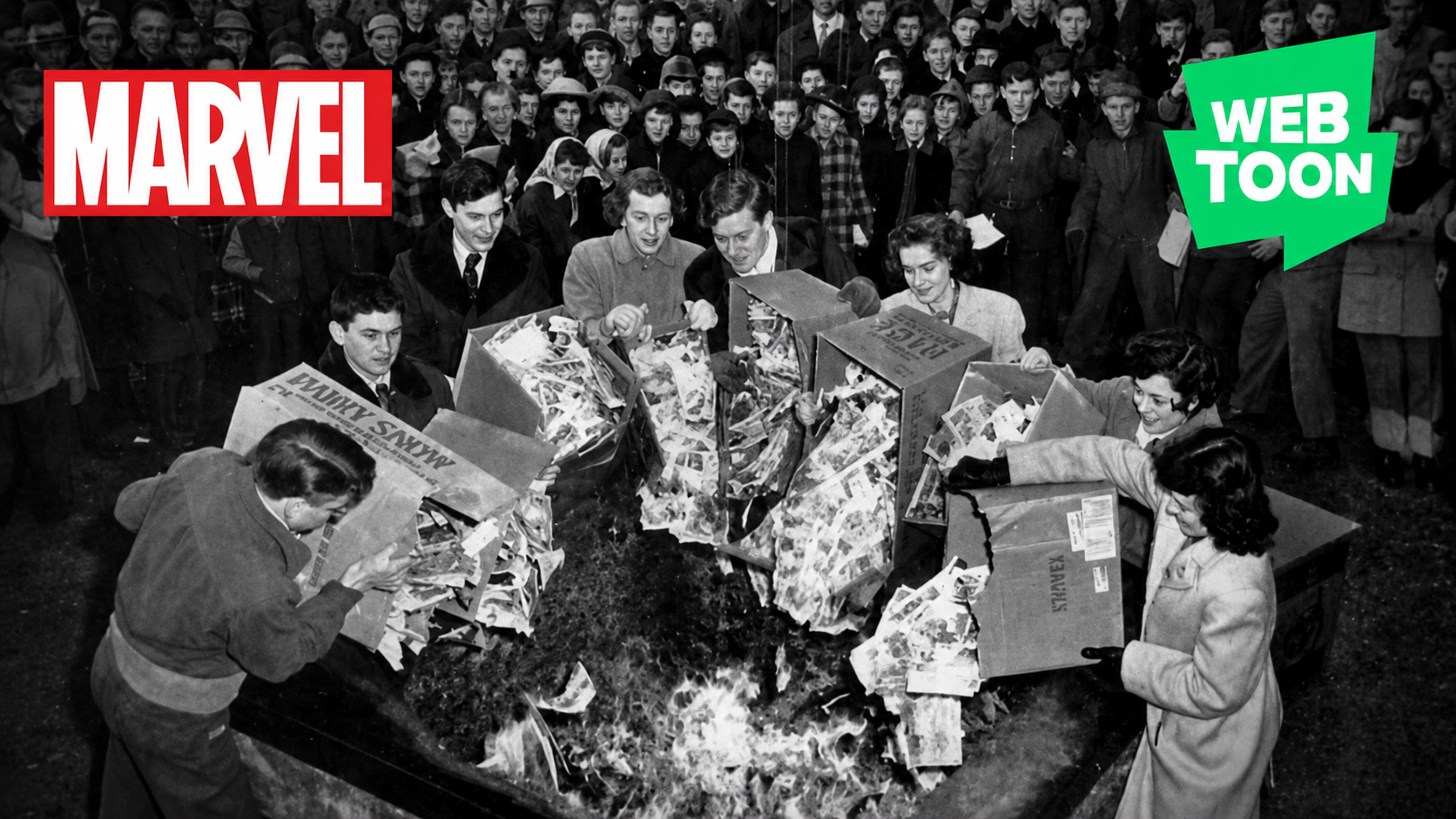
Let’s clear the smoke before somebody starts screaming “breaking news” like they found the Infinity Stones under a YouTube thumbnail: Marvel has NOT officially announced that it is ending print comics, killing the floppy, or moving the whole operation to WEBTOON. That claim, as of right now, lives in rumor territory. The loudest version of it appears to come from Fandom Pulse and was amplified by Cosmic Book News, with the claim that Marvel publishing could be shifted toward WEBTOON by around 2030. That is not the same thing as confirmed reporting from Marvel, Disney, WEBTOON, The Beat, ICv2, Publishers Weekly, or any of the major trade outlets. So, deep breath, fam. Receipts matter. We are not doing drive-by journalism over here. But here is where the story gets real, and this is where the people paying attention should sit up straight.
Disney and WEBTOON have absolutely made a major move. In September 2025, Disney and WEBTOON announced a plan for a new digital comics platform built and operated by WEBTOON Entertainment. The platform is supposed to feature decades of comics from Marvel, Star Wars, 20th Century Studios, and other Disney-owned brands. Not just dusty back-catalog stuff either. The announcement specifically says the platform will include current comic book runs, archived comics, original stories, and both vertical-scroll and traditional comics formats. It is being positioned as an expansion of Marvel Unlimited, not just a random side project.
That means the panic may be ahead of the proof, but the concern is not crazy. There is a difference between “Marvel is definitely ending print” and “Disney is building the infrastructure where print could become less central.” The first one is unverified. The second one is sitting right there in the paperwork, wearing Mickey ears and holding a subscription button. And that is the part that should bother every comic reader, retailer, collector, creator, and Wednesday warrior who still believes comics are more than files sitting behind a login screen. Because once a company moves the center of gravity from the book in your hand to the platform you are allowed to access, the customer’s relationship to the story changes. You are no longer buying culture. You are renting permission. You are not building a collection. You are maintaining access, as long as the license survives, the app survives, the payment clears, and the corporate gods do not wake up one morning and decide your shelf is no longer convenient. Ask PlayStation users how that feels.
Sony announced that physical disc production for new PlayStation games will end in January 2028, with new games available only in digital formats after that date. Sony framed it as adapting to consumer trends. Cool. Corporate-speak with a fresh haircut. But this lands right after Sony notified some PlayStation customers in the United Kingdom that they will lose access to 551 previously purchased StudioCanal movies and shows beginning September 1, 2026, because of licensing agreements. Wired put it plainly: digital purchases are often closer to long-term rentals than ownership. That is the nightmare, mi gente. Not digital itself. Digital is useful. Digital can reach new readers. Digital can help people who do not live near a comic shop. Digital can make archives easier to explore. WEBTOON has opened doors for creators and readers around the world, especially younger mobile-first readers. That part is real, and pretending otherwise is old-man-yells-at-cloud nonsense. The problem is when digital stops being an option and becomes the cage.
A comic shop is not just a checkout counter. It is a discovery engine with humans in it. It is the place where a kid walks in for Spider-Man and walks out with Something Is Killing the Children, Radiant Black, Godzilla, a manga volume, and a conversation with somebody who actually cares. It is where indie books survive because someone behind the counter says, “Yo, try this.” It is where communities happen without an algorithm deciding whether your taste has enough engagement.
You remove print, or even slowly starve it, and you do not just hurt collectors. You hurt the ecosystem. You hurt retailers. You hurt creators who rely on visibility. You hurt conventions. You hurt local discovery. You hurt the ritual. And yes, rituals matter. Wednesday matters. Pull lists matter. Bagging and boarding matters. That smell of ink and paper? That is not nostalgia; that is proof you own something. Marvel knows this. Disney knows this. Everybody knows this. Which is why the current public position is not “print is dead.” Marvel is still releasing new comics every week. Marvel’s own release calendar continues to list physical-style weekly releases, and Penguin Random House Comics Retail still lists Marvel as a publisher with catalogs and ordering infrastructure for retailers. Marvel also has a multi-year direct-market distribution arrangement with Penguin Random House that was publicly framed as support for comic shops and the direct market.
On top of that, the broader North American comics market is not some corpse waiting for a digital funeral. ICv2 reported that comics and graphic novel sales reached a new high in 2025, estimating the U.S. and Canada market at $2.2 billion, with direct-market sales up nearly 30%. Let that breathe for a second. Comic shops were not dead. They were growing. So if a corporation looks at a growing print market and says, “Yeah, but what if we could put everybody in a subscription funnel instead?” that is not innovation. That is control wearing a hoodie and pretending to be the future. And this is where I get harsh, because somebody has to say it: the entertainment industry has developed a nasty little habit of blaming “consumer preference” for decisions that mostly benefit corporate control. They say the audience wants digital. Sure, many do. But audiences also want options. They want fair prices. They want resale. They want lending. They want preservation. They want the right to say, “I bought this, and it is mine.” The problem is not that consumers like convenience. The problem is companies using convenience as a crowbar to pry ownership out of our hands.
That is why Sony’s move matters to comics. It is not a one-to-one comparison, but it is the same disease in a different costume. Games, movies, comics, music — every industry has been pushed toward platforms where the customer pays forever and owns less every year. They sell you access, call it a purchase, then hide behind licensing when the library goes poof. Like magic. Except the rabbit is your money and the hat is a terms-of-service agreement nobody reads because it is longer than Secret Wars.
Could Marvel eventually reduce print? Yes. Any honest observer has to admit that. The infrastructure is being built. WEBTOON is global! Mobile is massive. Disney wants recurring revenue. Marvel Unlimited already trained readers to accept a subscription model. Axios reported that USA Today added 1,000 Marvel digital comics and an exclusive vertical-format Spider-Man series to its USA Today Play platform, another sign that Marvel is aggressively testing comics as digital engagement bait beyond the traditional comic shop audience. But “digital expansion” is not the same as “print extinction.” That distinction matters. A strong Marvel strategy would use WEBTOON and digital platforms to bring in new readers, then direct them toward print, collections, comic shops, conventions, and creator-owned discovery. That would be smart. That would be additive. That would be healthy.
A bad strategy would treat print like an old uncle at Thanksgiving: tolerated, ignored, then quietly left out of next year’s invite, bendito. And if Marvel ever does that? If Disney ever decides the future of Marvel Comics is not the comic shop, not the bookshelf, not the collector, not the retailer, but a scroll-feed subscription platform where stories can be edited, removed, buried, or licensed away? Then yes, that deserves full smoke. Because Marvel was built on paper. Not because paper is magical by itself, but because paper created permanence. It made stories portable, collectible, tradable, loanable, discoverable, and real. It gave kids a universe they could hold. It gave shops a reason to exist. It gave creators a physical artifact of their labor. It gave fans a shelf that said, “This matters to me.” You do not replace that with an app and call it progress. You call it what it is: a trade. And fans have every right to ask who benefits from that trade. Right?
So is Marvel really phasing out print for WEBTOON? Right now, there is no verified proof. But is Disney building a future where Marvel’s digital platform becomes bigger, more centralized, more global, and more subscription-driven? Absolutely. That is the warning shot! And after Sony just showed the world what happens when “purchased” becomes “licensed until further notice,” comic fans should not be mocked for being paranoid. They are not paranoid. They are paying attention.
Digital can be a bridge. It should never become the landlord. Because once the shelf disappears, so does the power of the person who bought the book. And fam, if the future of comics means we own nothing, lend nothing, resell nothing, preserve nothing, and just keep paying rent to read the stories that built our imaginations? Nooooo…. That is not the future! That is a hustle with better Wi-Fi.
WEPAAAAAA…
Editorial Disclaimer
This editorial is based on publicly available reports, official company announcements, comic industry coverage, and current rumor tracking as of July 9, 2026. The claim that Marvel is phasing out print comics in favor of WEBTOON is not confirmed by Marvel, Disney, or WEBTOON. The opinion expressed here focuses on the broader consumer-rights concern around physical media, digital licensing, comic shop survival, and corporate control of access.
Sources/Receipts
- cbr.com – A Controversial Marvel Rumor May See Digital Comics …
- cosmicbook.news – Marvel Comics Moving To Webtoon By 2030? Rob Liefeld
- x.com – “Marvel will be phasing out their publishing to Webtoon …
- reddit.com – Rumor: Disney is phasing out Marvel publishing to webtoon
- fandompulse.com – RUMOR: Disney Is Phasing Out Marvel Comics Publishing
- facebook.com – A rumor says Marvel Comics could phase out its own …
Leave a Reply
You must be logged in to post a comment.