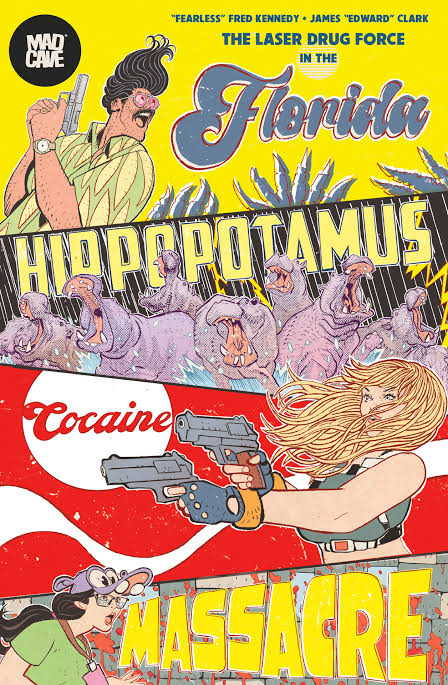
The Florida Hippopotamus Cocaine Massacre Review: Florida Man Energy Meets Four-Color Mayhem
Some comics ease you into their world with atmosphere, careful exposition, and a polite introduction to the cast. The Florida Hippopotamus Cocaine Massacre kicks open the amusement park gates, fires two pistols into the air, releases a herd of chemically enraged hippos, and screams, “Figure it out while running!” WEPA! Fred Kennedy and James Edward Clark know exactly what kind of comic they are making here, and subtlety was apparently left handcuffed inside somebody’s trunk.
Set inside Disco Hippo Wonderland, the number one amusement park in the already suspicious-sounding Flamingo City, this four-issue collection follows federal agent Clarke Nebraska as she attempts to stop corrupt park owner Jans M’jor Discau from distributing Coke45, an obscenely powerful new narcotic. Her undercover operative, Tico Senecoza, has been captured, but before Nebraska can execute a clean rescue, Tico’s hotheaded brother Miquel charges into the park with guns blazing. Discau responds with the kind of crisis management only a lunatic could admire. He dumps the drugs into the hippo enclosure, opens the gates, and runs for the tunnels beneath the park. Then a marijuana-smoke-fueled hurricane floods the entire joint. Because Florida, apparently.
Kennedy’s script thrives on escalation. Every time the situation appears to have reached maximum stupidity, and I mean that lovingly, another bizarre ingredient gets tossed into the gumbo. Federal agents raid the park. Armed employees scramble through collapsing attractions. Hippos crash through walls, rides, and unlucky human beings. Miquel and Nebraska argue while bullets fly. Bernice, a headset-wearing park employee with an endless supply of inconvenient hippo knowledge, somehow becomes one of the funniest and most valuable people in the book. The comic never stops moving long enough to become respectable. Thank goodness.
The heart of the story is the combustible partnership between Nebraska and Miquel. She wants procedure, control, and an actual plan. He treats every obstacle like it personally insulted his mother. Their constant friction gives the chaos a reliable center, even when the plot is sprinting through tunnels, exploding buildings, flooded roller coasters, mutant animal attacks, and a small army of increasingly desperate criminals. Their banter has the aggressive rhythm of a buddy-cop movie in which neither partner agreed to the assignment, and both are considering shooting the paperwork.
Kennedy also understands that a premise this wild cannot survive on random gags alone. The jokes work because the characters commit to the danger. Discau is not winking at the audience about how ridiculous everything is. He genuinely believes he is a criminal mastermind standing on the verge of narcotics immortality. Nebraska remains focused on her mission despite being trapped inside a psychedelic death carnival. Miquel keeps pushing forward because saving Tico matters more than federal authority, common sense, or basic self-preservation. That sincerity allows the absurdity to hit harder.
The pacing is relentless, sometimes almost too relentless. Across four issues, the book frequently moves from argument to gunfight, from gunfight to hippo attack, and from hippo attack to another argument without much breathing room. Certain middle sections begin to feel like variations on the same frantic chase through different sections of the park. A little more quiet time with Nebraska, Miquel, and Tico could have given the eventual emotional beats additional weight. Still, slowing this comic down too much would be like installing speed bumps on a roller coaster. Technically responsible, but nobody paid for that.
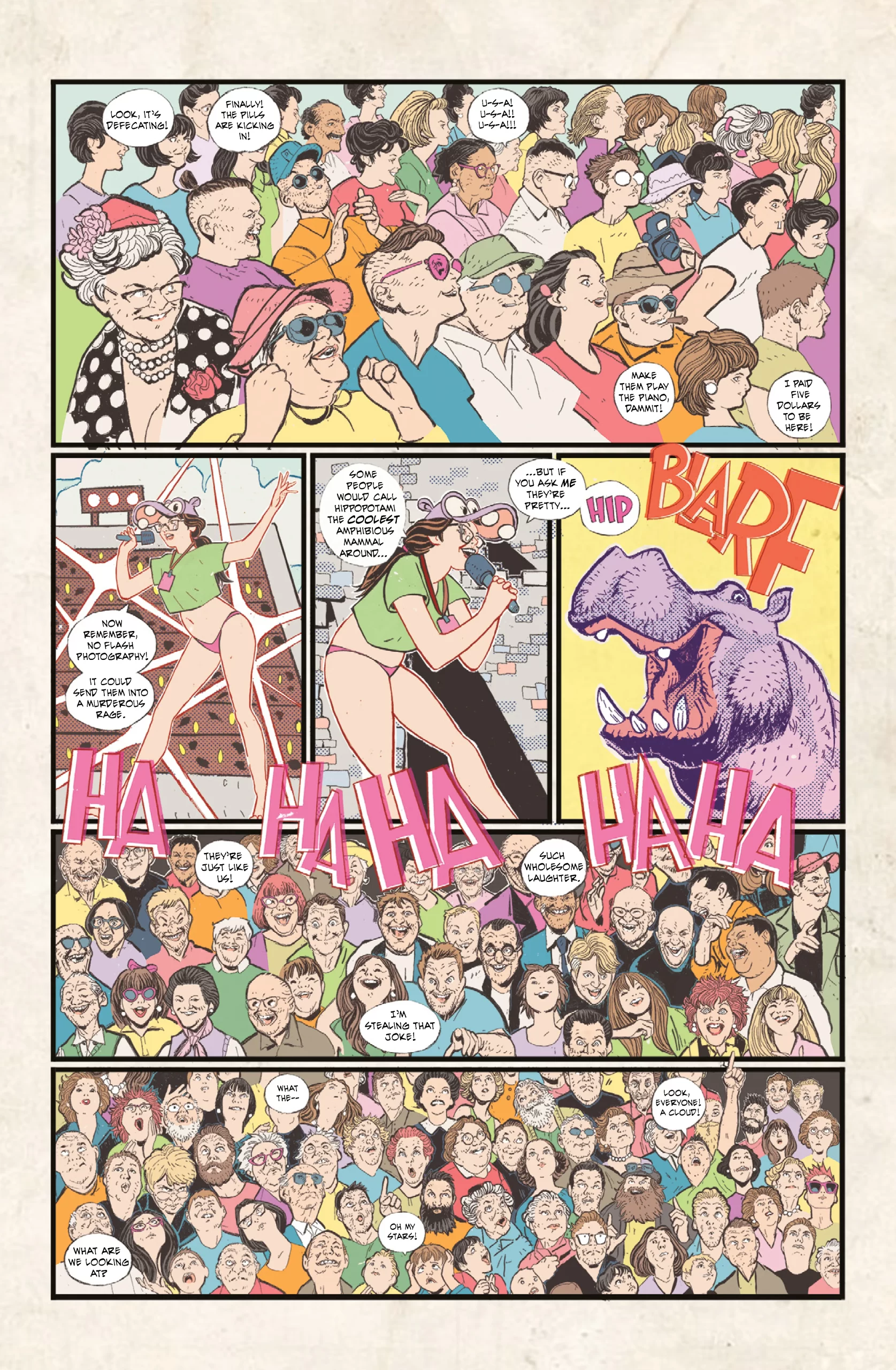
James Edward Clark’s artwork is where the entire production goes from amusingly deranged to genuinely distinctive. Clark draws the book like a lost grindhouse comic discovered underneath a stack of weather-damaged amusement park brochures. The chunky ink lines, faded paper textures, halftone patterns, lurid pastels, and exaggerated facial expressions create a visual language somewhere between underground comix, vintage advertising, pop art, and an animated Saturday morning show that somehow slipped past every network censor.
The visual storytelling has serious hustle. Clark constantly pushes figures through panel borders, turns gunfire into graphic design, and uses gigantic sound effects as physical pieces of the action. BAM, BONK, ROAR, and CHOMP do not merely describe what is happening. They invade the page. Hippos erupt from panels like they are trying to eat the reader, while bodies, vehicles, rubble, and carnival equipment fly in every direction. Even when the layouts become crowded, the momentum remains clear. You always know where the danger is coming from, usually because it has a giant purple mouth and no respect for architecture.
Clark also handles the lettering, and that matters tremendously here. The balloons, captions, sound effects, and explosive typography are knitted directly into the illustrations. This does occasionally create dense pages where dialogue competes with an already busy composition, but the handcrafted quality fits the comic’s sweaty, tactile personality. Becka Kinzie’s color work and flatting help maintain the sun-faded retro palette, giving the violence an almost cheerful brightness. That contrast makes every gruesome gag land with even more wicked charm.
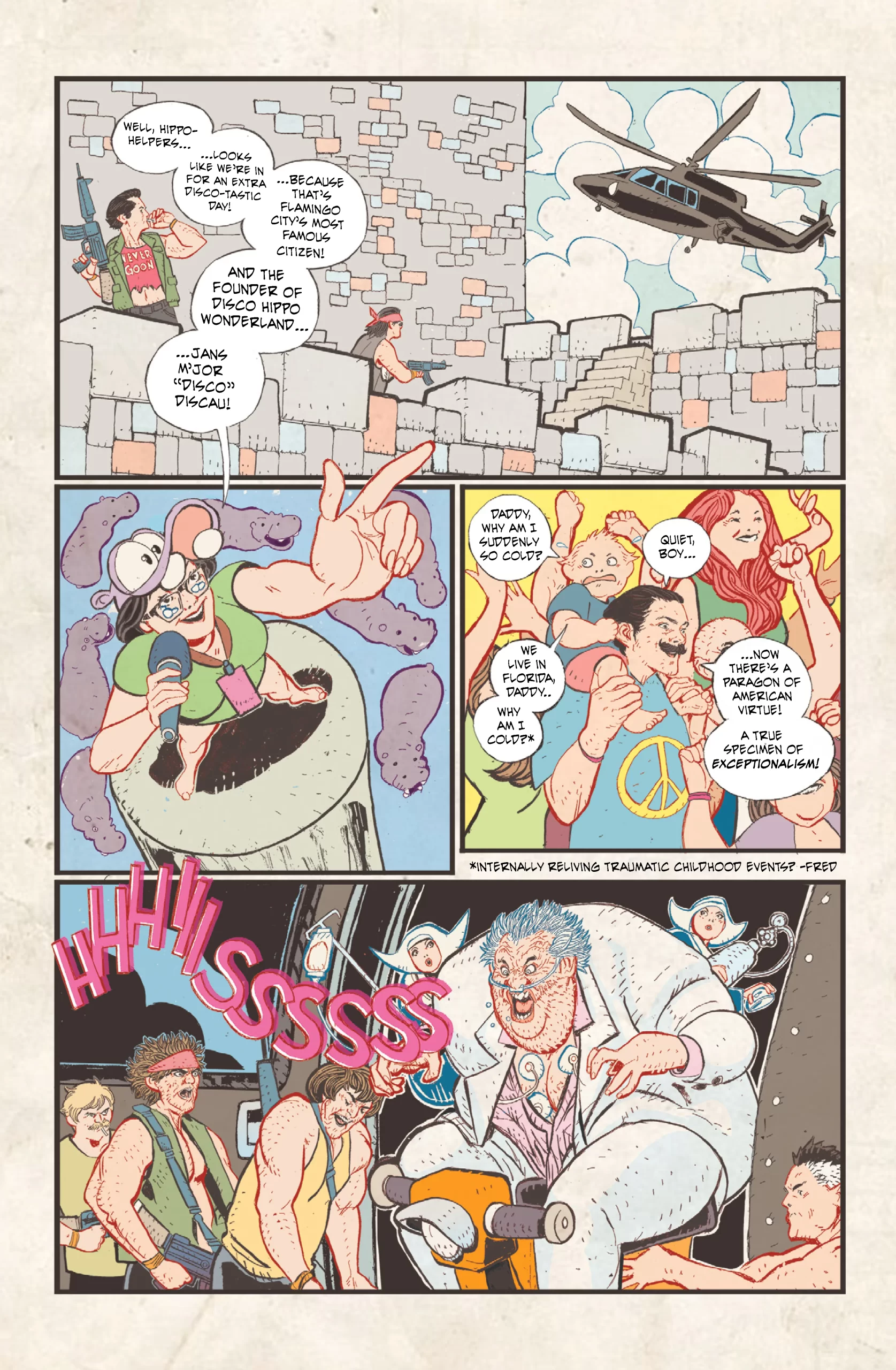
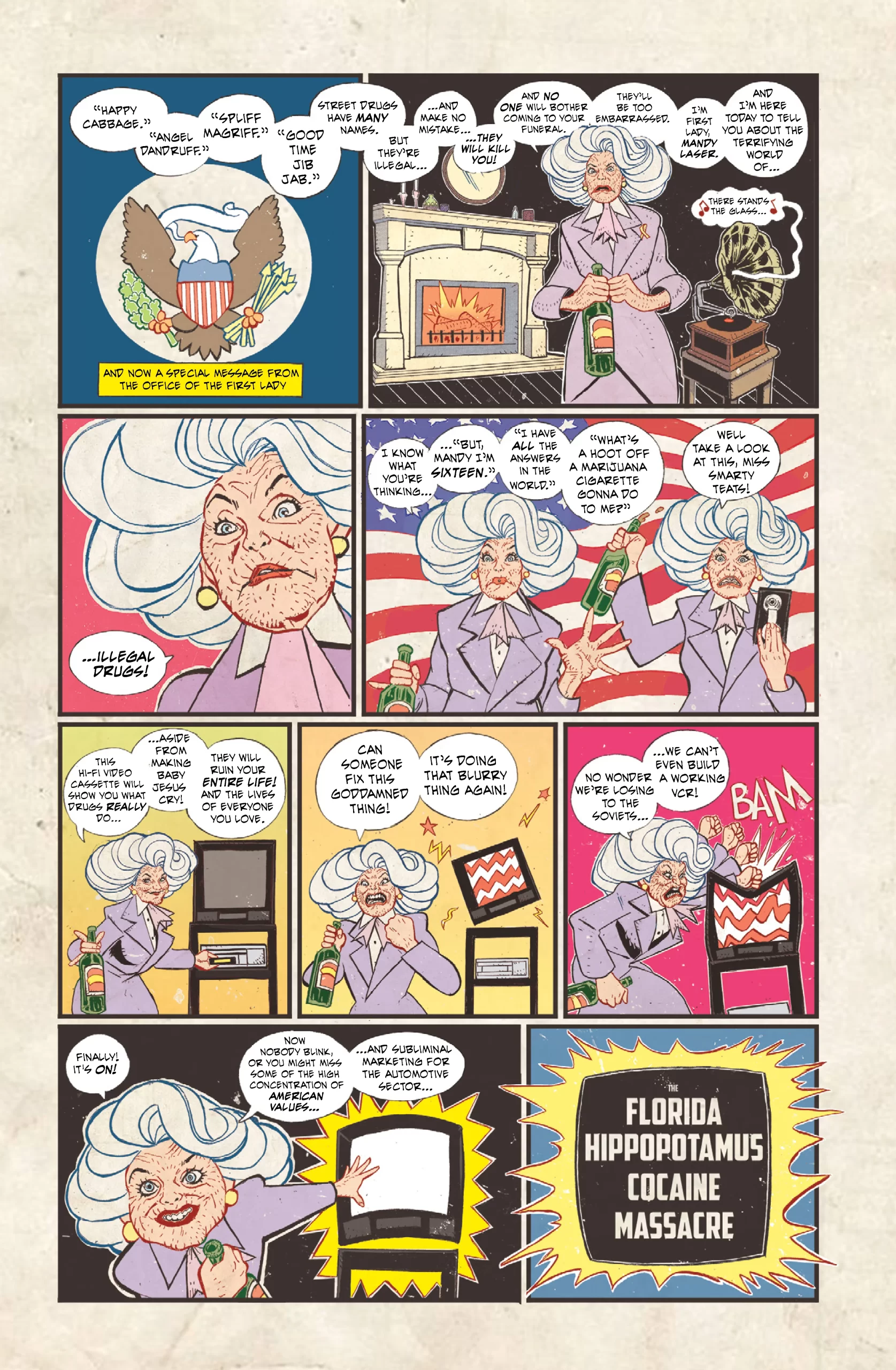
The supporting cast is packed with visual lunatics, from terrified employees and federal troops to armed performers, corrupt scientists, and Discau’s increasingly unstable associates. Even background characters receive memorable reactions, outfits, and miniature comedy beats. The recurring television segments and outraged narration function like a sarcastic Greek chorus, recapping events while mocking sensationalism, censorship, moral panic, and anyone foolish enough to demand dignity from this production.
By the final issue, Kennedy and Clark have thrown nearly every remaining toy into the bathtub. The flooded park becomes a battlefield, family loyalties collide with criminal ambition, and the Coke45 hippos evolve from running gag into full-blown apocalyptic threat. The conclusion provides an actual payoff rather than simply relying on the title’s shock value, while leaving enough wreckage behind for another Laser Drug Force operation. The creative team understands the cardinal rule of exploitation storytelling: deliver what the poster promised, then deliver something even stranger.
The Florida Hippopotamus Cocaine Massacre is loud, crude, violent, knowingly ridiculous, and visually fearless. Readers looking for restrained realism should keep walking. Nothing to see here but narcotics, machine guns, collapsing amusement rides, murderous megafauna, and one of the most gloriously unhinged comic concepts of the year. For everybody else, grab a poncho, secure your valuables, and do not feed the hippos.
CRUSADERS SCORE:
4/5

Writer Fred Kennedy
Artist and Letterer James Edward Clark
Colors and Flatting by Becka Kinzie
Editor James B. Emmett
Logo Design by James Edward Clark and Tim Daniel
Book Design by David Reyes, and book production by Elsy Celis, Juan D. Posada, and Roxana Ayala
Publisher: Mad Cave Studios
Collects: Issues #1 through #4
Author Profile

- I'm Al Mega the CEO of Comic Crusaders, CEO of the Undercover Capes Podcast Network, CEO of Geekery Magazine & Owner of Splintered Press (coming soon). I'm a fan of comics, cartoons and old school video games. Make sure to check out our podcasts/vidcasts and more!
Latest entries
 Comic ReviewsJuly 30, 2026The Florida Hippopotamus Cocaine Massacre Review: Florida Man Energy Meets Four-Color Mayhem
 Al Mega TakesJuly 30, 2026Art the Clown’s Scariest Enemy May Be the Fine Print: Inside the Two Lawsuits Haunting the Terrifier Franchise
 Comic ReviewsJuly 30, 2026Predator vs. the Planet of the Apes #1 Review: Welcome to the Jungle, Damn Dirty Yautja!
- Comic Crusaders PodcastJuly 29, 2026Greg Weisman Returns to Unleash Gargoyles Vol. 2 #1 | Comic Crusaders Podcast #738