

ROM #1 Review: Kirkman Relaunches the Spaceknight
·Al Mega
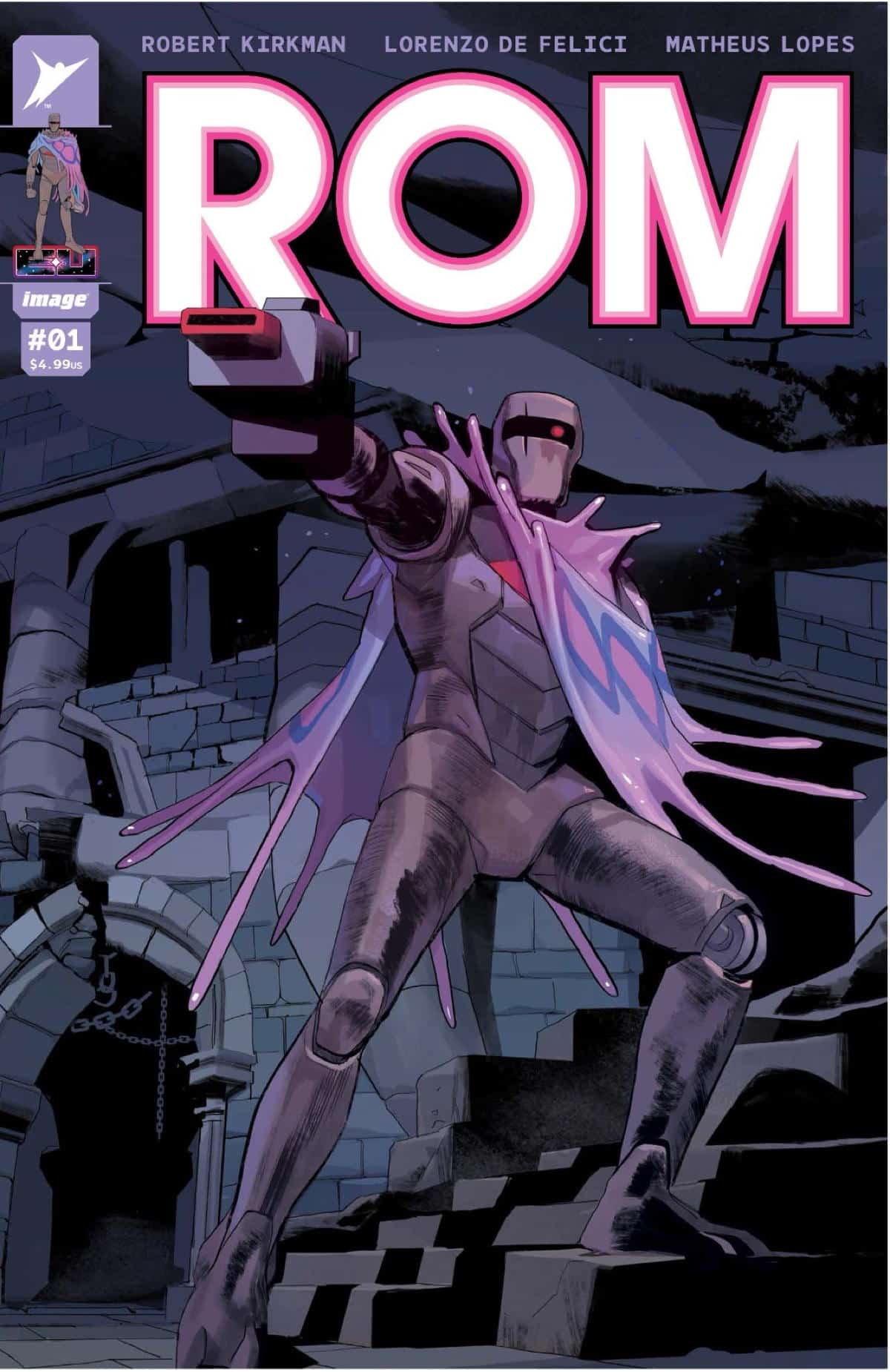
ROM #1 rolls into the Energon Universe looking battered, confused, half-equipped, and still more heroic than most characters operating at full power. WEPA! Robert Kirkman and Lorenzo De Felici could have opened with a giant history lesson explaining every cosmic war, alien civilization, and forgotten Tuesday in ROM’s past. Nah. They make the smarter move. Drop the Spaceknight into a dungeon, rip off one of his arms, surround him with frightened prisoners, and let his actions tell us who this dude really is.
The issue begins with Kulgith the Devourer, a hulking insectoid nightmare who apparently wakes up every morning and chooses dramatic villainy. This fool does not enter a room. He announces despair like he is auditioning for intergalactic Shakespeare. ROM, meanwhile, is trapped in a nearby cell alongside Kranix, a towering robotic scientist who believes escape is impossible. Their conversation immediately establishes the book’s personality. Kranix is weary and sarcastic. ROM speaks with stiff, hyper-logical sincerity, yet there is something quietly funny and sympathetic about him. He may not remember his history, but he knows innocent children are in danger and that’s enough.
Then we meet Carpet. Yep. Carpet. ROM’s ragged pink-and-blue cloak is a living creature capable of slithering beneath doors, opening locks, shielding its companion, and turning itself into a weapon. ROM calls it Carpet because, according to his extremely scientific reasoning, it resembles one. Brooklyn translation: my man saw a cosmic jellyfish poncho crawling across the floor and said, “Yeah, that’s Carpet.” Case closed. Carpet is weird, adorable, useful, and immediately steals every scene without speaking one word.
Kirkman keeps the plot beautifully direct. Escape the cell. Find the children. Fight the monster. Get everybody home. Nothing fancy. Nothing bloated. Yet the simplicity works because ROM’s personality is being revealed through every decision he makes. He is literal without becoming robotic in the boring sense. He is compassionate without delivering speeches about compassion. When the children are threatened, he steps forward. When Kulgith attacks, ROM throws hands. No committee meeting. No twelve-page strategy session. Just one battered Spaceknight telling a giant bug that the fight it demanded is the fight it is about to receive.
That battle is where De Felici starts cooking with the entire adobo cabinet. The action feels heavy, ugly, and physical. ROM does not float through the fight like an untouchable chrome god. He gets smashed, thrown, sliced, and dragged across the dungeon. His armor looks worn rather than polished, which gives him the presence of an ancient soldier who has survived things he cannot currently remember. De Felici’s exaggerated poses make every strike land with tremendous weight, while the dungeon’s hanging chains become part of the choreography. ROM uses everything available, including Carpet, to survive. When the finishing move arrives, it is brutal, inventive, and completely satisfying.
Matheus Lopes gives the issue a wild visual identity. ROM’s rusted browns and muted metal contrast beautifully against Carpet’s electric pinks and blues. Kulgith’s sickly greens and purples make the creature look damp, poisonous, and generally like something you should never touch without industrial gloves. The deep blacks surrounding the prison create a suffocating atmosphere, while the moon settlement outside feels warm and lived-in. Lopes makes this strange corner of space feel dangerous without draining it of personality.
Russ Wooton’s lettering deserves serious love, too. The oversized sound effects do not sit politely beside the artwork. They crash through it. Chains crack, bodies slam, claws slice, and each impact becomes part of the page composition. Kulgith’s loud, theatrical dialogue is balanced against ROM’s calm, measured delivery, strengthening the contrast between raging monster and disciplined warrior. That rhythm keeps the fight readable even when limbs, chains, wings, and living capes are flying everywhere.
The rescue gives the story its emotional payoff, but the final pages deliver the real hook. ROM learns that the creatures he has been searching for are Dire Wraiths, a name that clearly reaches somewhere deep inside his fractured memory. The grateful settlers return a mysterious weapon he had previously entrusted to them. ROM holds it, studies it, and admits that he does not remember what it does. That right there? Money.
Readers familiar with ROM know exactly why that image matters. Newcomers simply understand that this broken warrior has a massive history waiting to come back online. Kirkman plants the mystery without burying the reader beneath continuity homework. You can walk into this knowing absolutely nothing and still understand ROM’s mission, temperament, and tragedy.
The only drawback is that ROM #1 feels more like an expertly constructed launch sequence than the beginning of a traditional standalone monthly series. The ending sends ROM directly into Void Rivals, so anyone expecting this book to establish its own long-running supporting cast or sprawling independent plot may feel like the meal ended right when the plate got interesting. Still, as an introduction, this thing works. Fast. Funny. Visually nasty. Surprisingly tender.
ROM has returned as a protector searching for monsters, memories, and maybe the man buried beneath all that metal. Kirkman gives him a clear moral engine. De Felici gives him a battered new silhouette. Lopes and Wooton make every page crackle. One arm missing. Memory wiped. Mission intact.
Yeah, fam. The Spaceknight is back!
CRUSADERS SCORE:
4/5

Writer: Robert Kirkman
Artist: Lorenzo De Felici
Colorist: Matheus Lopes
Letterer: Rus Wooton
Editor: Ben Abernathy
Publisher: Skybound and Image Comics

Leave a Reply
You must be logged in to post a comment.