
Dungeon Crawler Carl Vol. 1 Review: Apocalypse, Alien Game Shows & Princess Donut Chaos
·Al Mega

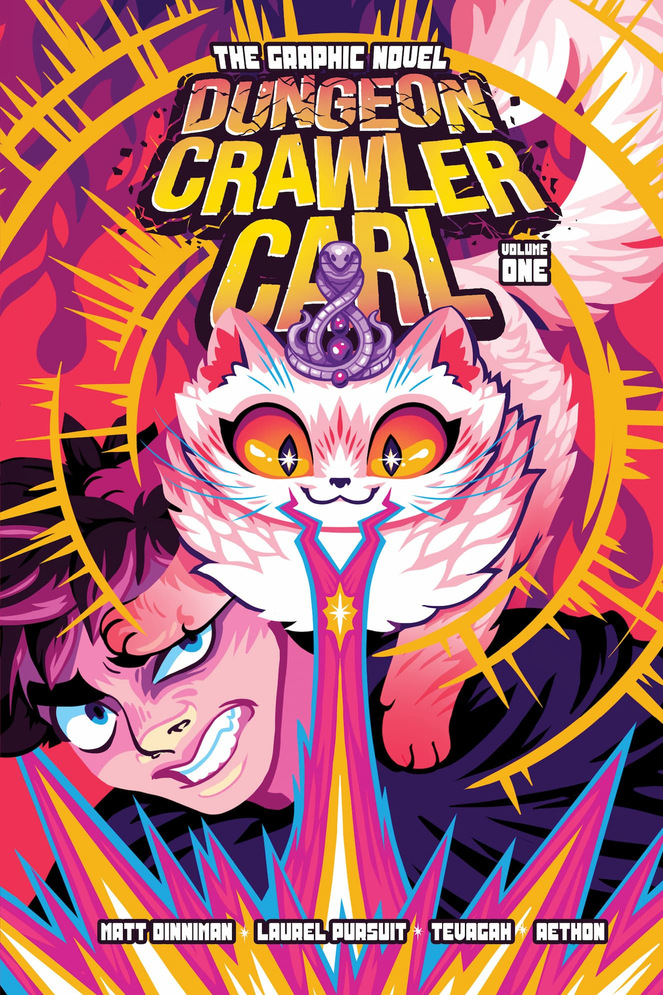 There are comic premises that politely knock on the door, introduce themselves, offer you a cup of coffee, and ease you into the madness. Then there is Dungeon Crawler Carl: The Graphic Novel, Volume One, which kicks the door off the hinges, screams “surviving humans take note,” drops you into the apocalypse wearing heart-covered underwear, hands you an emotionally unstable but fabulously superior cat, and says, “Congratulations, pal, you are now content.” WEPA… now that is how you start a party at the end of civilization.
Based on Matt Dinniman’s wildly beloved Dungeon Crawler Carl universe, this first graphic novel volume takes the savage, hilarious, LitRPG insanity of the webcomic adaptation and brings it into book form with the kind of manic confidence that makes you understand immediately why this property has such a passionate fanbase. This is not just “guy gets trapped in a dungeon.” Nah. This is Earth being crushed, repurposed, monetized, gamified, televised, and served up as intergalactic entertainment by corporate alien lunatics who make reality TV producers look like kindergarten teachers with juice boxes. Carl is not chosen because he is special. He is not wearing heroic armor. He is not standing on a mountain with a flaming sword and destiny blowing his hair like shampoo-commercial Thor. He is outside in the snow, half-dressed, trying to rescue his ex-girlfriend’s cat. That is the beauty of it. Heroism here is not glamorous. It is inconvenient, underdressed, traumatized, and deeply annoyed.
The opening is a masterclass in absurdity smashing headfirst into horror. The book moves from “what is this cat doing?” to “the world is gone” with a velocity that feels like being shoved into a roller coaster by a goblin with a waiver form. Carl’s first minutes after the collapse are funny because everything around him is ridiculous, but they are also genuinely brutal. The book does not let the comedy erase the tragedy. Millions are dead. Cities are pulverized. Humanity has been turned into a game asset. That balance is where this volume really cooks. One second you are laughing at Carl being mocked by the dungeon system for not wearing pants, the next you feel the emotional weight of what he has lost and what the aliens have done. That tonal tightrope could have snapped like cheap convention-center lanyard string, but the creative team walks it with swagger.
Carl himself works because he feels grounded in the middle of all this cosmic nonsense. He is confused, angry, scared, sarcastic, and stubborn in ways that make sense. He is not the smartest guy in the dungeon, and the book has a field day with that, but he has a survival instinct and a moral center that keep him from becoming just another punchline. He sees the cruelty of the system, he understands that everything is being watched, and slowly he starts realizing that survival is not just about stats, weapons, and loot boxes. It is about presentation. Style. Strategy. If the universe is watching, then maybe you have to make the universe pay attention. That is a nasty little commentary on entertainment culture, influencer logic, corporate exploitation, and the way suffering gets packaged for ratings. It is funny until you realize it is also pointing at us. Then it is still funny, but now it has teeth. And then there is Princess Donut.
Let me say this clearly: Princess Donut is not just a sidekick. Princess Donut is the star, the chaos engine, the diva missile, the furry little aristocratic problem with enough charisma to bend the dungeon around her. The moment Donut becomes more than a cat, the book levels up in a major way. Her personality is outrageous, regal, petty, hilarious, and somehow deeply vulnerable. She insults Carl like she has been waiting her whole life to file a formal complaint against his existence, yet their bond becomes the emotional heartbeat of the entire volume. Their dynamic is gold because it is built on irritation, fear, reluctant affection, and survival. Carl needs Donut. Donut needs Carl. Neither one wants to admit it in a clean, sentimental, Hallmark-card way, because this is not that kind of story. This is love in the middle of blood, bugs, bad llamas, goblin machinery, and corporate death games. Beautiful? Yes. Dysfunctional? Also yes. That’s family, baby.
The artwork brings all of this lunacy to life with a bright, kinetic WEBTOON-influenced style that knows when to go cute, when to go grotesque, and when to let a panel punch you right in the eyeballs. The visual language is big, animated, and expressive, which is exactly what a story this ridiculous needs. Carl’s reactions are wonderfully exaggerated without losing the panic underneath. Donut’s wide-eyed fluffy presence gives the book a constant visual contrast against all the blood, monsters, and dungeon garbage. The monsters are gross and funny in that “I should not be laughing at this creature, but here we are” kind of way. Goblins, giant bugs, lava-spitting llamas, bosses made from nightmare fuel and tragedy — the book throws a whole buffet of weird at you, and the art keeps everything clear enough to follow while still feeling delightfully unhinged.
The color work deserves a big shoutout because this could have easily become visual soup. Instead, the book pops. The dungeon has personality. The UI screens, achievement boxes, loot descriptions, and game mechanics all stand out without hijacking the storytelling. That matters because LitRPG can become a cluttered mess if the visual design does not support the narrative. Here, the menus and pop-ups are part of the comedy. They insult Carl. They reward stupidity. They turn survival into a horrible customer-service experience with blood splatter. The lettering and formatting keep that energy moving, especially during the achievement reveals and system announcements. The dungeon’s voice has a personality of its own — smug, cruel, snarky, and weirdly obsessed with embarrassing Carl.
What impressed me most is that Dungeon Crawler Carl Vol. 1 never feels like it is just adapting a popular thing for the sake of cashing in. There is craft here. The team clearly understands the appeal of the original concept: the absurdity, the carnage, the game systems, the social satire, and most importantly, the Carl-and-Donut relationship. The story keeps escalating, but it also gives enough quieter moments for the characters to breathe. When Carl and Donut talk about fear, loneliness, and needing each other, it lands because the book has earned it. You believe these two weirdos might actually survive not because they are the strongest, but because they are starting to become a team. A ridiculous team. A loud team. A possibly doomed team. But a team.
There is also a sharp critique running through the mayhem. The aliens turn catastrophe into programming. Boss fights become content. Death becomes entertainment. Viewers, sponsors, rankings, highlights, branding — it is all grotesque, but not unfamiliar. The book exaggerates modern media culture into a cosmic slaughterhouse, and that is where it becomes more than just funny fantasy violence. It asks what happens when survival depends on being watchable. That is dark. That is clever. That is uncomfortably relevant. And because the book wraps that commentary in jokes about pants, cat royalty, goblin engineering, and dungeon loot, it never feels preachy. It just hits you with the truth while you are laughing. Sneaky little narrative uppercut.
The pacing is relentless in the best way. This volume collects the first thirteen chapters, and it reads like a binge session you did not plan but absolutely refuse to stop. Every new room, enemy, safe zone, loot box, and character interaction adds another wrinkle to the world. Mordecai, Tally, Cascadia, the goblins, the bosses, the other crawlers — they all expand the mythology while keeping the focus locked on Carl and Donut’s desperate scramble to survive. By the time the book starts setting up deeper threats, other humans, dungeon politics, and the twisted ecosystem of the game, you are already strapped in. No seatbelt? Too bad. The murder dozer already started.
Is it subtle? Absolutely not. Thank goodness. This is big, bloody, profane, goofy, tragic, and gloriously excessive. It knows exactly what lane it is in, then drives that lane through a wall and into a boss arena. Readers who enjoy dark comedy, fantasy chaos, RPG mechanics, WEBTOON energy, and odd-couple survival stories are going to eat this up like dungeon biscuits. Longtime Dungeon Crawler Carl fans should appreciate how much care went into preserving the voice and madness of the series, while new readers get an accessible, wild entry point into a universe that clearly has a lot more pain, comedy, and insanity waiting below.
Dungeon Crawler Carl: The Graphic Novel, Volume One is a high-energy, blood-splattered, laugh-out-loud apocalypse romp with real heart under all the carnage. It is weird in the right ways, mean in the funny ways, emotional when it needs to be, and absolutely carried by one of the best human-and-cat dynamics in modern genre storytelling. Carl may not have pants, a plan, or emotional stability, but he has Princess Donut, a growing list of enemies, and the kind of accidental hero energy that makes you root for him immediately. This is the kind of book that grabs readers by the collar, tosses them into the dungeon, and says, “Survive, laugh, cry, loot, repeat.”
CRUSADERS SCORE:
5/5
Writer: Tevagah
Cover and Lead Art: Laurel Pursuit
Art: Kuzomari
Colors: Ludvie
Letters: Ali Zaghwul
Lineart: Huaxuan
Background Art: Anna Kate
Alternate Cover: Yoshi Yoshitani
Reformatting and Lettering: Makma
Publisher: Vault Comics / Aethon Production
5/20/2026
Leave a Reply
You must be logged in to post a comment.