

Endeavour #3 Review: DSTLRY’s Survival Horror Finale Hits Hard
·Al Mega
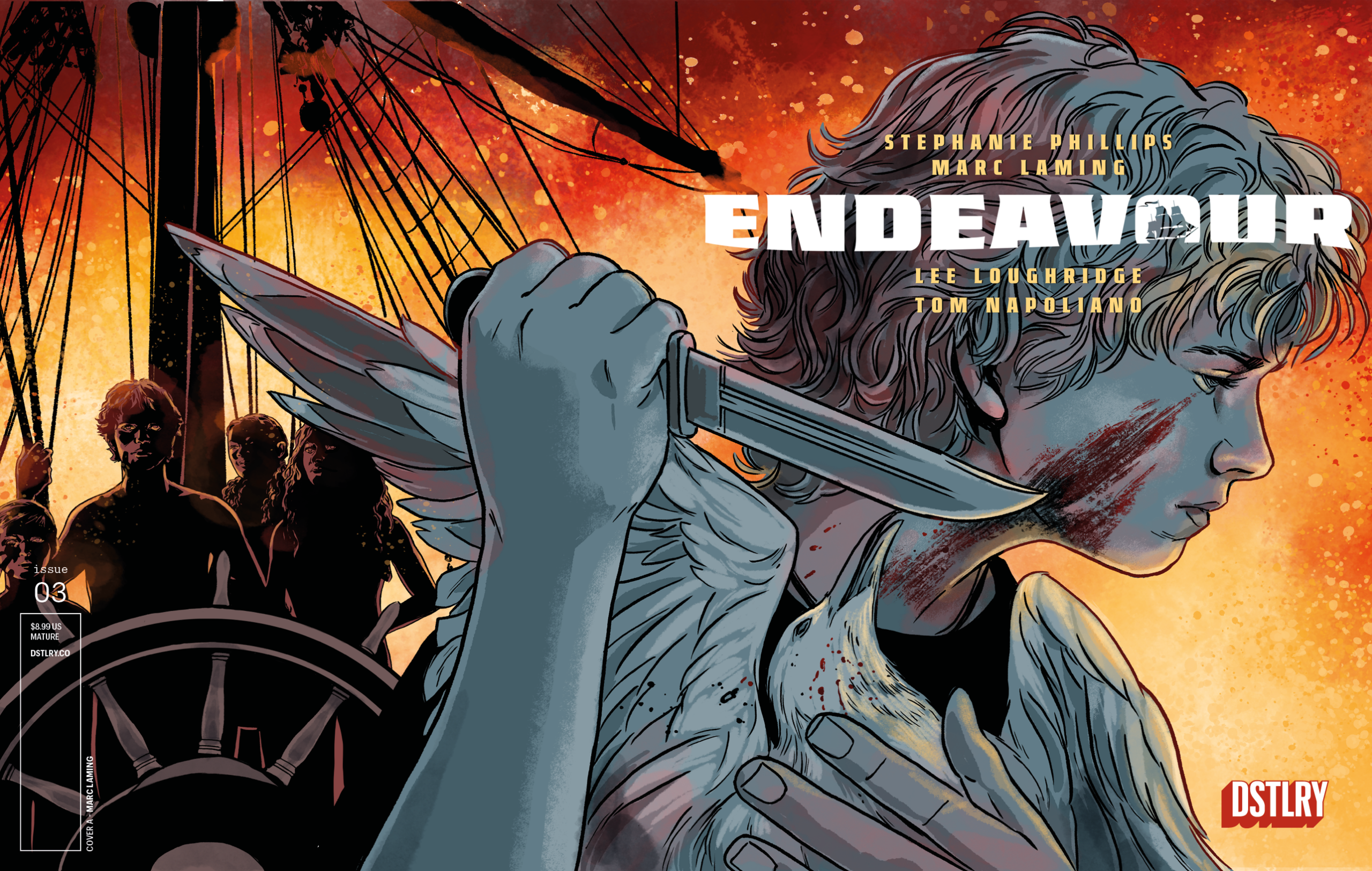
Let’s keep it a buck, Endeavour #3 does not walk into the room politely. It kicks the door open, tracks seawater across the carpet, looks everybody in the eye, and says, “So… which one of you is still pretending civilization exists?” This is the issue where Stephanie Phillips and Marc Laming stop teasing the psychological collapse and fully let the ship become a floating pressure cooker of fear, hunger, trauma, power, and bad decisions. WEPA, this one is nasty in the best comic-book way.
What started as a high-concept survival nightmare aboard a replica historical ship has now evolved into something meaner, sharper, and more emotionally rotten under the deckboards. Endeavour has always carried that “modern Lord of the Flies adrift at sea” energy, but issue #3 is where the comparison stops being cute marketing and starts feeling like a warning label. These kids are not simply lost. They are unraveling. The ship is not simply a setting. It is a crucible. The ocean is not background scenery. It is judge, jury, executioner, and gossiping neighbor all in one.
Stephanie Phillips writes this issue like someone turning screws slowly. Not with cheap shock, not with horror-movie laziness, but with that deliberate, stomach-tightening sense that every character is one bad choice away from becoming the version of themselves they were taught to fear. The brilliance here is that Phillips never lets the kids become one-note monsters. Roy, Via, Carson, Emily, Nora, Isaac, and the others still feel like children, and that is what makes the horror hit harder. They are scared, starving, grieving, jealous, sick, desperate, and carrying all the emotional bruises adults packed into them before they ever stepped foot on that doomed boat. That is the real venom in the story. The sea did not create all this damage. It just removed the guardrails.
Roy becomes the issue’s most combustible element, and wow, this kid is a walking red flag with sea legs. He is not written as some cartoon villain twirling a mustache on the poop deck. He is worse than that. He is wounded, proud, humiliated, shaped by a father who taught him strength like it was a weapon and softness like it was a disease. That flashback material hits hard because it reframes Roy’s power grab as something tragic and dangerous at the same time. You see the machinery behind the menace. You understand the boy without excusing the behavior. That is strong writing. That is grown-folks storytelling in a book full of kids making grown-folks mistakes.
Via remains one of the most compelling anchors of the series, and issue #3 gives her the kind of internal conflict that makes survival fiction sing. She is not just trying to stay alive. She is trying to decide what kind of person she becomes while staying alive. Big difference. The tension between her and Roy feels like a family wound ripped open in public. There is love there, but also resentment, fear, guilt, and that awful sibling shorthand where two people know exactly where to press because they grew up in the same emotional storm. Their scenes carry a rawness that feels painfully believable. It is not just “who gets the food?” It is “who gets to define what survival means?”
Marc Laming’s artwork is absolutely essential to why this issue works. His pages understand stillness as much as violence. The quiet looks, the slumped shoulders, the exhausted faces, the way children occupy adult spaces they do not fully understand—it all builds this suffocating dread. Then, when the violence erupts, it is fast, ugly, and personal. Laming does not romanticize it. Nobody looks cool losing their humanity. Nobody gets superhero choreography. This is panic, instinct, bad leverage, and bodies moving before brains can catch up. Brooklyn translation: when it pops off, it pops off messy.
The ship itself is drawn with such tactile presence that you almost smell the old wood, salt, sweat, and spoiled hope. There is something brilliant about placing these kids on a historical vessel, because the past is literally under their feet. Every rope, hatch, rail, and cabin carries this sense of old-world order, exploration, empire, myth, and “civilized” adventure. But Phillips and Laming keep peeling that romantic nonsense back until the ship becomes what it really is: a stage for human arrogance. The historical flashbacks deepen that idea beautifully. The story keeps reminding us that reason, planning, command, and hierarchy can all collapse when nature bares its teeth. The past and present rhyme like a sea shanty sung by a ghost with bad intentions.
Lee Loughridge’s colors are doing heavyweight work here. The palette shifts between bruised blues, sickly shadows, sun-baked yellows, and claustrophobic interiors that feel like the walls are sweating. The daytime scenes almost hurt because they should feel safe, but they do not. The bright sky and calm water become cruel jokes. At night, the book goes full dread mode, letting moonlight, darkness, and cold ocean tones swallow the characters until they look less like kids on an adventure and more like ghosts auditioning for tragedy. Loughridge understands that horror is not always red. Sometimes horror is pale blue. Sometimes it is the color of someone realizing rescue might not mean salvation.
Tom Napolitano’s lettering keeps the issue clean, readable, and sharp while still letting panic breathe. That matters in a story where silence can be as loud as a scream. The dialogue lands with clarity, the bursts of violence cut through the page, and the quieter captions give the book that literary saltwater sting. The issue also continues its smart use of chapter quotations, pulling from works that echo the sea as seduction, abyss, and psychological mirror. It gives the whole thing a grim, almost mythic backbone without making it feel pretentious. Fancy? Yes. Fake deep? Nah. This one earns it.
What really makes Endeavour hit is that it understands survival horror is not just about who dies. It is about what people justify while trying not to die. Hunger becomes politics. Fear becomes religion. Guilt becomes a weapon. Leadership becomes theater. The kids start building systems because humans cannot help themselves, even when stranded in chaos. But those systems are warped by trauma, ego, and desperation. The book is not subtle about the brutality of hierarchy, but it is smart enough to show how seductive it can be when everyone is scared. Give people uncertainty and someone will show up holding food, rules, or a weapon. Sometimes all three. Boom. Society, but make it cursed.
If there is any critique, it is that the issue moves with such relentless intensity that some emotional beats may leave readers wanting a little extra room to sit in the wreckage. Certain turns come fast because the series is sprinting toward its conclusion, and you can feel the narrative tide pulling hard. But honestly, that urgency also works in the book’s favor. These characters do not have time to process properly, so why should we? This is not therapy on a yacht. This is children turning fear into law on a ship that has become a wooden stomach digesting them one by one.
By the final stretch, Endeavour delivers the kind of ending that does not simply close the story; it leaves a bruise. It is haunting, uncomfortable, and visually unforgettable. The book refuses to hand readers easy comfort, and respect to the creative team for that. A lesser comic would try to tidy the mess. This one understands that trauma does not dock neatly. Rescue, if it comes, does not erase what happened before the spotlight hit the deck.
Endeavour is brutal, elegant, and emotionally barnacled in all the right ways. Stephanie Phillips gives us a survival horror finale about children forced into adult cruelty before they even understand the bill. Marc Laming delivers grounded, cinematic, nerve-tight visual storytelling. Lee Loughridge paints the sea like a beautiful predator. Tom Napolitano keeps the tension sharp and legible. DSTLRY continues to prove that prestige-format comics can feel like events when the right creative team is steering the ship.
This is not a beach read, familia. This is the kind of comic that grabs your flotation device, whispers “good luck,” and sails away laughing. Endeavour is a heavy buy for fans of survival horror, psychological collapse, nautical dread, and comics that are not afraid to ask ugly questions with gorgeous art. The Crusade Never Ends, but this voyage? This one ends with teeth marks.
CRUSADERS SCIRE:
4.5/5

Writer / Story: Stephanie Phillips
Artist: Marc Laming
Colorist: Lee Loughridge
Letterer: Tom Napolitano
Editor: Will Dennis
Logo Design: Rian Hughes
Cover A: Marc Laming
Variant Covers: Stephanie Hans, George Pratt
Publisher: DSTLRY


Leave a Reply
You must be logged in to post a comment.