
Street Fighter vs. The Valiant Universe Special #1 Review: Cammy and Bloodshot Turn the Jungle Into an Arcade Boss Fight
·Al Mega
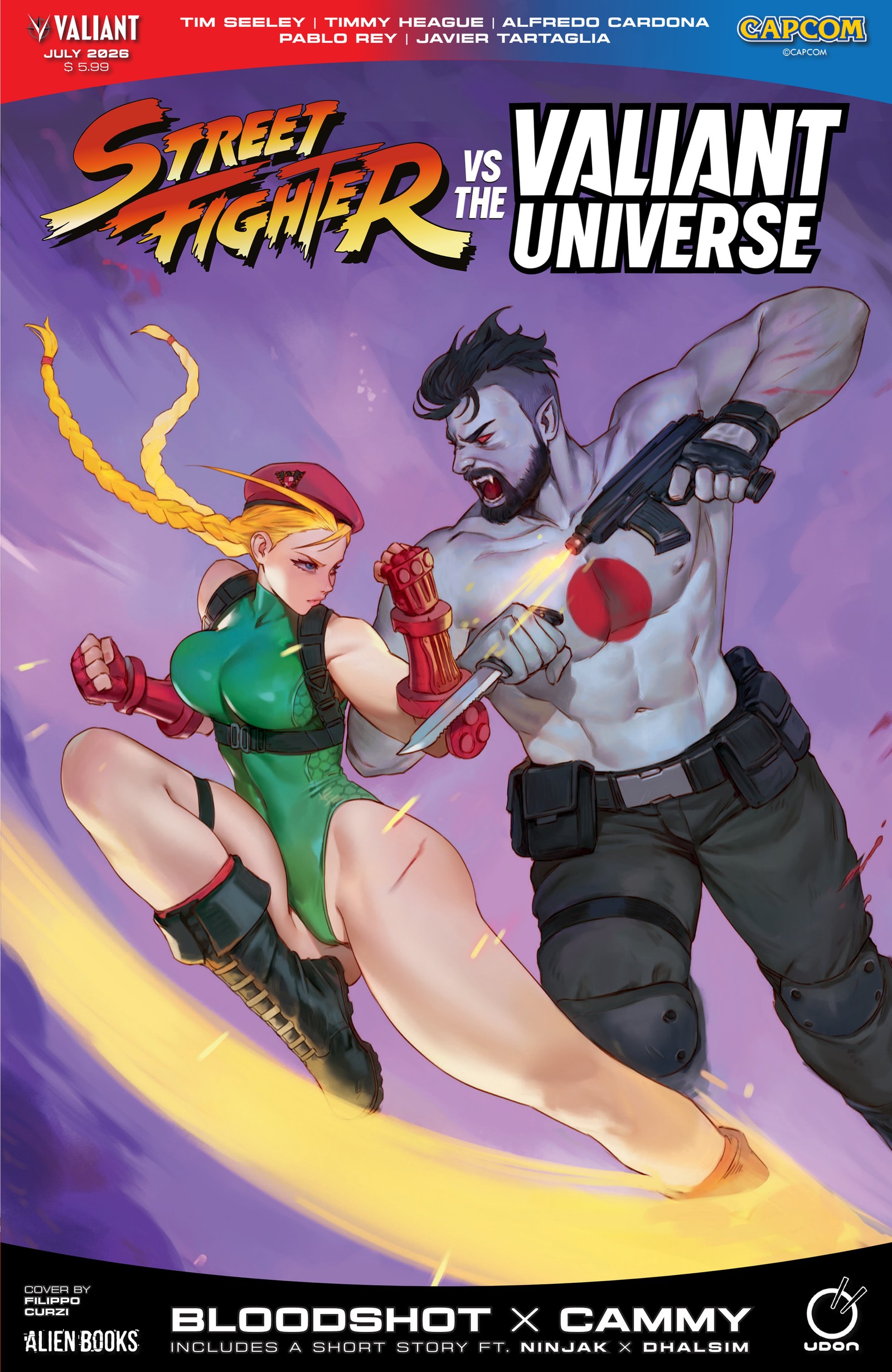
WEPA! Somebody tossed two heavyweight franchises into the same arcade cabinet, kicked the machine twice, and let the chaos fly. Street Fighter vs. The Valiant Universe Special #1 is exactly the kind of wild crossover that could have collapsed under licensing notes, continuity speeches, and corporate handshakes. Instead, it comes out swinging. Cammy meets Bloodshot in the middle of a Shadaloo operation, neither trusts the other, and before anybody can compare mission briefings, fists start moving faster than gossip through a Brooklyn barbershop.
Writer Tim Seeley understands the assignment immediately. Get the characters on the page, establish the danger, and ring the bell. Cammy is tracking Shadaloo activity inside a remote African facility while Bloodshot is investigating the same operation from his side of the battlefield. Both are trained killers with enough emotional damage to fill several longboxes, so naturally, cooperation is not their opening move. Their first encounter turns into a sharp, entertaining scrap that sells the matchup without dragging it across half the issue.
The Cammy and Bloodshot pairing works because their histories actually complement one another. Both were manipulated, programmed, and transformed into weapons by organizations that treated free will like an optional accessory. Seeley does not stop the action to deliver a lecture about shared trauma, but the connection adds weight to their interactions once the misunderstanding begins to clear. They recognize something familiar in each other, even if neither one is about to sit down, light a candle, and talk about feelings. These two communicate through bruises, broken equipment, and the occasional irritated threat. Fair enough.
Cammy feels like Cammy. She is focused, tactical, fast, and completely capable of rearranging somebody’s skeleton without losing control of the mission. Bloodshot comes across as the grizzled tank he should be, absorbing damage, calculating threats, and pushing forward because stopping is apparently not installed in his operating system. Their personalities create an enjoyable rhythm. Cammy moves with precision. Bloodshot crashes through problems like a runaway armored truck with anger management issues.
Seeley keeps the dialogue lean during the combat sequences, which helps the issue maintain its speed. Nobody pauses in mid-kick to explain twenty years of publishing history. Readers familiar with either franchise will catch the references, while newcomers receive enough information to follow the mission without needing three browser tabs and a fan wiki. A few villain lines lean into classic comic-book exposition, but the book moves quickly enough that the heavier dialogue never parks the story on the shoulder. It hits the gas again before impatience can creep in.

Alfredo Cardona’s artwork brings the proper arcade energy to the main story. Characters are muscular, expressive, and built for impact. Cammy’s kicks carry real force, Bloodshot’s attacks feel heavy, and the battles unfold with clean visual direction. You can follow the movement from panel to panel without wondering who landed the hit or why somebody suddenly went flying across the room. In an action crossover, clarity matters. Cardona delivers.
The opening fight between Cammy and Bloodshot is easily one of the issue’s highlights. Cardona plays with angles, close-ups, and sudden bursts of movement to give the exchange the flavor of a video-game round without turning the pages into frozen character-select poses. Cammy stays agile, weaving around Bloodshot’s heavier attacks, while his regeneration allows the artwork to get nasty without removing him from the fight. The man can get stabbed, shot, sliced, and tossed through the scenery, then stand back up looking mildly annoyed. That makes him the perfect opponent for a fighter whose legs hit like wrecking balls.
Cardona also handles the larger threats well once the heroes reach the Shadaloo facility. The comic shifts from hand-to-hand combat into full science-fiction mayhem, complete with genetic experiments, nanite technology, and enough military hardware to make airport security resign. The creature designs have a grotesque edge that fits Bloodshot’s world while remaining exaggerated enough to belong beside Street Fighter’s colorful roster. The two universes do not feel pasted together. Visually, the crossover makes sense.
Javier Tartaglia’s colors give the issue a loud, energetic finish without drowning the linework. The jungle sequences use deep greens and dusty earth tones, then the laboratory scenes introduce colder purples, metallic grays, and glowing energy effects. Cammy’s military green, Bloodshot’s pale skin, and his red chest symbol remain immediately recognizable even when the action gets crowded. Psycho Power and nanite effects pop off the page, helping the supernatural elements feel dangerous instead of decorative.
Camila Jorge’s lettering keeps everything readable through gunfire, martial arts strikes, narration, explosions, and several characters who enjoy shouting while attacking. Bloodshot’s internal captions carry their own visual identity, separating his damaged perspective from Cammy’s more disciplined approach. The sound effects bring arcade-style punch without swallowing the artwork. Every kick lands harder when the lettering feels like it might crack the panel border. Jorge understands that action comics need rhythm on the page, not just noise.

Vega’s appearance gives the main story another jolt of Street Fighter flavor. He enters with all the arrogance, cruelty, and dramatic nonsense fans expect. The dude treats attempted murder like a fashion show, which makes his interaction with the far less theatrical Bloodshot genuinely amusing. Vega wants to pose, taunt, and admire his own work. Bloodshot looks like he wants to throw him through the nearest load-bearing wall. The contrast creates some of the funniest moments in the issue without turning either character into a joke.
The story’s biggest surprise is how much heart it finds beneath the violence. The central Shadaloo experiment could have existed solely as a monster for Cammy and Bloodshot to punch, but the creative team adds enough tragedy to make the conflict matter. Cammy’s history gives her a personal understanding of what it means to have someone else inside your mind, while Bloodshot recognizes what happens when technology steals control of the body. Their response reveals character without slowing the final battle. The emotional element is quick, effective, and never gets syrupy.
The backup story, written by Timmy Heague with artwork by Pablo Rey, shifts the spotlight to Ninjak and Dhalsim. This matchup is lighter, stranger, and more openly playful than the main event. Ninjak arrives ready for espionage and combat, while Dhalsim greets his aggression with patience, wisdom, and limbs that apparently ignore every known law of anatomy. Watching Ninjak try to maintain his deadly seriousness while the situation becomes increasingly ridiculous is a good time.
Rey’s art gives the backup a slicker, more animated appearance. Dhalsim’s stretching attacks snake through panels, flames curl across the page, and the temple environment allows the action to become increasingly surreal. The choreography has a humorous bounce without making Ninjak look incompetent. He is skilled, focused, and completely unprepared for the type of spiritual weirdness Dhalsim considers a normal afternoon. The clash feels different from Cammy versus Bloodshot, which keeps the special from repeating the same fight twice with different costumes.

The backup does feel more like an appetizer for future crossovers than a complete meal. It establishes the matchup, delivers some fun action, and teases a larger collision between both universes, but it ends just as the concept starts gaining momentum. A few extra pages could have given Ninjak and Dhalsim more room to develop their dynamic. Still, the sequence accomplishes what it needs to do. It leaves you wanting another round rather than checking how many pages remain.
The entire special moves at a brisk pace, sometimes almost too brisk. The main story introduces the mission, the misunderstanding, the Shadaloo experiment, Vega, and the final battle in rapid succession. Some scenes could have used another beat to breathe, especially once Cammy and Bloodshot begin understanding one another. On the other hand, stretching this premise into a six-issue epic might have killed the fun. The one-shot format keeps the crossover fast, colorful, and free of unnecessary padding.
Most importantly, the comic feels like a legitimate meeting between two worlds rather than an advertisement wearing staples. Cammy and Bloodshot receive the strongest material because their shared history gives the matchup real substance. Ninjak and Dhalsim offer a completely different type of chemistry, built around discipline, ego, and spiritual balance. Both pairings make sense once they are on the page, which is the biggest compliment you can give a crossover this unexpected.
Street Fighter vs. The Valiant Universe Special #1 delivers exactly what the cover promises. Big fights. Familiar characters. Stylish artwork. A little blood, a little philosophy, and several people getting kicked hard enough to reconsider their career choices. The story will not rewrite either franchise, but it never needed to. It needed to entertain, respect both properties, and make readers hungry for another clash.
Mission accomplished, fam. Insert another quarter!
CRUSADERS SCORE:
4/5
“Weapons”
Writer: Tim Seeley
Artist: Alfredo Cardona
Colors: Javier Tartaglia
Letters: Camila Jorge
“The Inner Mysteries of Yoga”
Writer: Timmy Heague
Artist: Pablo Rey
Colors: Javier Tartaglia
Letters: Camila Jorge
Cover A: Filippo Curzi
Publisher: Alien Books
Partners: Valiant Comics, UDON Studios, and CAPCOM


Leave a Reply
You must be logged in to post a comment.