
RETRO REVIEW: OKTANE #1-4 REDLINES THROUGH 1990s AMERICA WITH MOTOR OIL, MAYHEM, AND ZERO BRAKES
·Al Mega
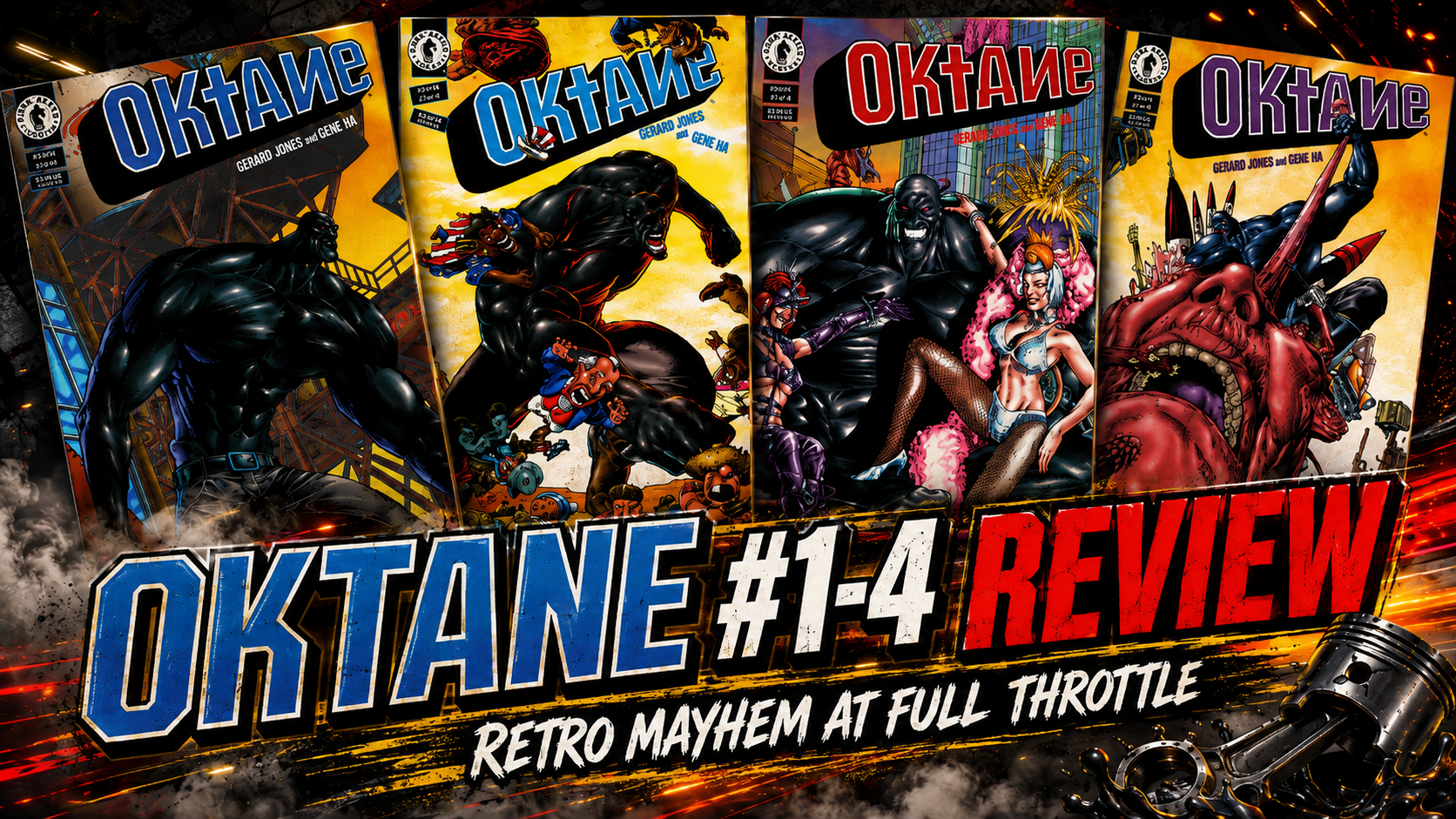
WEPA! Some comics politely turn the key, check the mirrors, and merge carefully into traffic. Oktane #1-4 kicks open the garage door, steals the nearest experimental hot rod, and drives through Las Vegas with a nine-foot mountain of synthetic muscle hanging off the hood. This four-issue Dark Horse oddity is loud, grotesque, politically reckless, occasionally brilliant, and built with the kind of creative audacity that made the mid-1990s independent scene feel like anything could roll off the assembly line.
Oktane is the whole attraction, mi gente. He is nine feet of black synthetic hide, muscle, machinery, appetite, and attitude, a mercenary who drinks motor oil like another dude might grab a cold cerveza after work. He wants his money, his fuel, and as few unnecessary complications as possible. Naturally, the universe responds by throwing the Mafia, federal agents, militant white supremacists, corrupt political operatives, gun-toting showgirls, fanatics, and one severely endangered former Detroit mayor directly into his lane.
That setup could have produced a standard bruiser comic. Big monster hits smaller monsters. Buildings collapse. Everybody goes home with neck pain. Gerard Jones, however, stuffs a political grenade beneath the passenger seat and lets that bad boy rattle around for four issues. Oktane becomes a warped road movie about American identity, racial hatred, economic abandonment, political manipulation, institutional hypocrisy, and the strange collection of lunatics convinced they alone represent the “real” country.

Relax, though. This is not somebody lecturing from a podium while Oktane waits outside with the engine running. Jones delivers those ideas through gunfights, absurd conversations, tribal alliances, betrayals, roadside ambushes, casino warfare, mangled vehicles, and satire sharpened with a rusty screwdriver. The storytelling swerves between street-level grime and gigantic political caricature, sometimes inside the same page. It is messy. Wildly messy. But that disorder feels intentional, like somebody rebuilt American culture from junkyard parts and forgot to include an instruction manual.
Read together as one graphic-novel-sized experience, the series works better than it probably did with weeks separating each chapter. Recurring jokes, political factions, fragmented histories, and Oktane’s shifting relationship with the people around him gain momentum when the issues are consumed back-to-back. The opening chapter establishes the machine-man mythology and his rolling band of automotive misfits. The middle stretches widen the conflict, introduce competing agendas, and repeatedly ask whether Oktane is a weapon, a symbol, a paycheck employee, or something approaching a man. By the final issue, all that ideological exhaust catches fire.
Jones does occasionally overload the vehicle. Pages can become crowded with narration, overlapping agendas, side characters, flashbacks, political commentary, and enough dialogue to make the lettering department demand hazard pay. Some scenes could have reached their destination faster. The book enjoys detours, and not every detour leads somewhere equally rewarding. Still, the density gives Oktane a personality that modern decompressed comics sometimes lack. Nobody will finish these four issues complaining that nothing happened.

Gene Ha’s artwork is the premium fuel keeping this machine alive. Even this early in his career, Ha displays an absurd eye for architecture, machinery, faces, and environments that look genuinely inhabited. Vehicles are not generic boxes with tires. They are mutant contraptions assembled from military scrap, carnival equipment, industrial wreckage, and whatever some maniac found behind an abandoned Detroit factory. Oktane himself feels physically enormous because Ha constantly measures him against doorways, cars, furniture, people, and entire streets.
The emotive/facial acting deserves love too. Every hustler, federal creep, political operator, white supremacist goon, casino worker, mercenary, and terrified civilian arrives with an identifiable posture and expression. Ha makes the satire legible before the dialogue even starts. Then, when the violence erupts, bodies fold, machines buckle, and city blocks appear to tremble beneath the impact. The action is not clean superhero choreography. It is heavy, greasy, industrial combat. You can practically hear the suspension screaming.
Andrew Pepoy’s inks give Ha’s pencils a thick mechanical weight without burying the detail. Oktane’s black surface could have become one shapeless silhouette, but Pepoy carves musculature, expression, and movement into that darkness. James Sinclair’s colors complete the radioactive atmosphere with desert oranges, poisonous greens, bruised purples, casino pinks, and blazing sunset reds. Las Vegas does not merely look damaged. It looks like somebody poured gasoline across a broken pinball machine and struck a match.

Sean Konot also deserves serious recognition because lettering this comic could not have been easy. There are narration blocks, political speeches, overlapping conversations, strange accents, mechanical noises, explosions, gunfire, and sound effects crashing across already dense compositions. Konot maintains enough visual hierarchy to keep the chaos readable. Teena Gores’ design work further binds the package together through distressed textures, maps, typographic experiments, and transitions that make the series resemble a classified government dossier discovered beneath an oil-stained workbench.
Now let us keep it 100! Not everything has aged like a garage-kept Caddie. Some of the language, sexual humor, political terminology, and exaggerated stereotypes hit rougher in 2026 than they probably did in 1995. The book aims its satire in several directions, including directly at racism and militant white supremacy, but its method is frequently to reproduce ugliness at full volume and trust the reader to recognize the target. Sometimes that works. Sometimes the line between exposing garbage and rolling around in it gets mighty thin.
That right there is what makes Oktane hit different. This book ain’t clean, polished, or trying to behave for anybody. Nah, fam. It comes from that glorious era when creator-owned comics could be loud, reckless, brilliant, offensive, confusing, and visually bugged-out all at once, then look you dead in the face like, “Yeah, what?”
Jones and Ha were not building some safe little antihero you could slap on a lunchbox and sell at Target. Oktane is violent, stubborn, money-hungry, weirdly sharp, and built like somebody fused a Mack truck with a bad attitude. Some people look at him and see a god. Others see a straight-up monster. Oktane? My guy is just wondering when the check clears and where the next quart of motor oil is coming from. WEPA!

The real win across these four issues is that Oktane never gets swallowed by all the madness flying around him. At first, he looks like the ultimate visual gag, nine feet of muscle, machinery, and pure truck-stop menace. But the deeper the story goes, the more you realize he might be the only dude in the whole book keeping it real. Everybody else is hiding greed, fear, revenge, and power plays behind flags, speeches, and fake righteous nonsense. Oktane is not playing that game. He wants fuel. He wants his money. That’s it. No heroic speech. No fake patriot act. No politician smile with a knife behind the back. And somehow, in this busted-up version of America where everybody is selling something, Oktane ends up being the most honest cat on the road.
Oktane issues #1-4 is are greasy, overstuffed, high-octane artifact from the creator-driven 1990s, powered by Gene Ha’s phenomenal visual imagination and Gerard Jones’ willingness to let satire crash directly into superhero spectacle. It stumbles. It sputters. A few jokes are sitting on four flat tires. But when the series finds open road, this thing moves like a stolen muscle car with nitrous in the trunk and the cops three exits behind.
Strap in, fam. This is strange American comic-book machinery, hand-built, politically combustible, and still capable of leaving tire marks across your brain. WEPA!
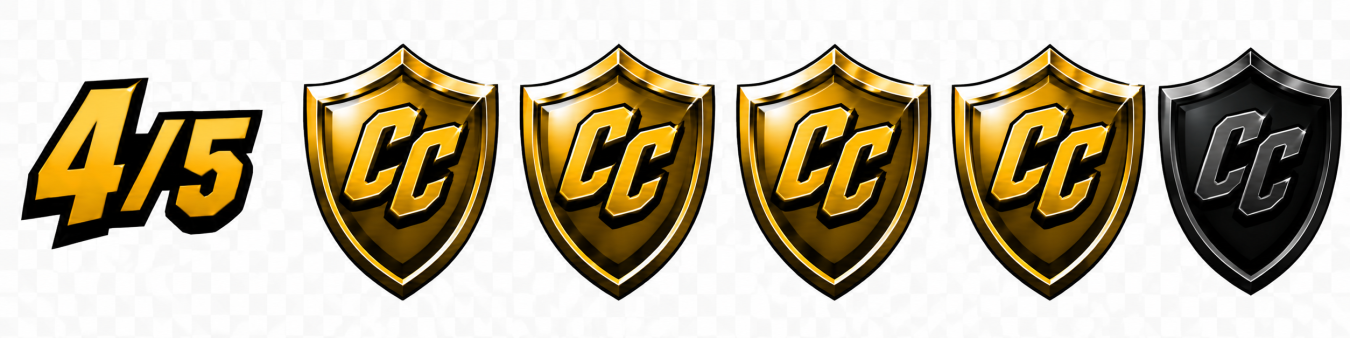
CRUSADERS SCORE:
4 /5
Writer: Gerard Jones
Penciller: Gene Ha
Inker: Andrew Pepoy
Colorist: James Sinclair
Letterer: Sean Konot
Editors: Anina Bennett and Lynn Adair
Designer: Teena Gores
Cover Artists: Gene Ha and Andrew Pepoy
Publisher: Dark Horse Comics
Original Publication: 1995

Leave a Reply
You must be logged in to post a comment.