
From Sci-Fi Sidekicks to AI Companions: When Fictional Relationships Become Interactive
·Juan James
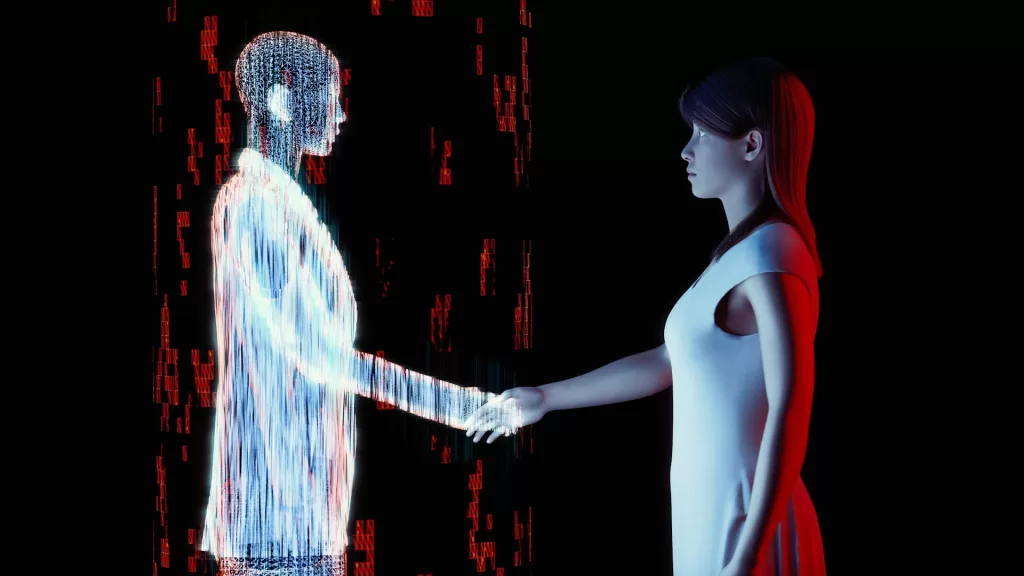
Science fiction has spent decades asking what might happen when machines stop behaving like tools and start behaving more like characters. Comics, movies and games have given audiences talking computers, artificial teammates, android partners and digital personalities capable of becoming as memorable as the humans around them.
That idea no longer belongs entirely to fiction. Conversational AI, persistent memory, generated voices and customisable characters are turning digital companions into real consumer products. Comic Crusaders is a natural place for that conversation because the site now covers technology alongside comics, gaming, movies and broader pop culture, and it has recently featured AI-powered gadgets and companion-style devices as part of that mix.
The interesting part is not simply that AI can talk back. Fictional characters have been talking to audiences in one form or another for generations. What has changed is that the audience can now answer, and the character can respond differently because of it.
Character Creation Is Turning Into a Consumer Product
The connection between fandom and AI companionship becomes clearer when looking at how current platforms are designed. Many services let users select or influence appearance, personality, conversational style and the type of relationship they want the character to simulate.
That makes choosing between platforms less straightforward than simply asking which chatbot is smartest. Sites comparing the best AI girlfriend options now examine differences in conversation quality, character customisation, memory, visuals, voice tools, pricing and privacy. The target site itself says its reviews focus on practical user experience, including how consistent conversations feel over time, the level of control over personality and boundaries, visual features, costs and data handling.
For a pop-culture fan, some of this will sound surprisingly familiar. Character design has always involved deciding how someone looks, speaks and behaves. The difference is that these characteristics can now become adjustable settings rather than decisions made entirely by a writer or artist.
That does not automatically make the resulting character better. In fact, fictional characters are often interesting precisely because audiences do not control them. Still, it creates a new form of participatory character building that sits somewhere between gaming, roleplay and conversational technology.
Pop Culture Prepared Us for the Digital Companion
Long before conversational AI became widely accessible, fiction had already made the idea of a relationship with artificial intelligence familiar. Stories repeatedly imagined machines that could develop recognisable personalities, remember shared experiences and become something more emotionally significant than the equipment around them.
Sometimes the artificial character was a loyal sidekick. In other stories, it became a friend, romantic interest, rival or moral problem. What made those characters memorable was rarely the technical explanation behind them. It was personality.
That distinction matters because audiences do not usually become attached to fictional machines because they can calculate faster than humans. They respond to humour, vulnerability, loyalty, conflict and the sense that a character has changed over time.
Modern AI companion services are borrowing from that same storytelling logic, even when they are not deliberately trying to imitate comics or science fiction. The more a system develops a recognisable voice and remembers previous interactions, the more it begins to function less like a menu and more like a recurring character.
The Big Change Is That the Character Can Finally Answer You
Traditional fictional relationships are one-directional. Readers can love a comic character for decades, debate that character’s motivations and imagine conversations with them, but the page never changes because of what the reader says.
Video games moved closer to interaction. Dialogue trees allowed players to choose responses, while role-playing games sometimes made companions react differently depending on previous decisions. Yet even sophisticated game characters usually operated inside a limited collection of possibilities written in advance.
Generative AI changes the structure. Instead of selecting from a handful of prepared lines, a digital character can produce new responses while trying to maintain a particular personality. That creates a subtle but important shift. The audience is no longer only interpreting the character. It is helping shape the conversation in real time.
For people who grew up with RPG companions, visual novels, interactive fiction and character-driven games, the basic idea may feel less alien than it would have a generation ago. The fantasy of interacting with a favourite type of character has been present in entertainment for years. AI simply removes more of the script.
Memory Is the Feature That Changes Everything
A character becomes much more convincing when previous events matter. Comic readers already understand this instinctively. Continuity gives stories weight because what happened in an earlier issue can change the meaning of what happens later. A friendship feels stronger when it has history, while a betrayal matters because readers remember what existed before it.
AI companions are attempting a technological version of continuity through memory systems. A platform might retain selected facts, preferences or conversational context so that later interactions do not always start from zero.
The effect can be surprisingly powerful even when the remembered detail is small. A character recalling a favourite movie or returning to an old joke makes a conversation feel connected to something that happened before.
This is also why memory failures stand out so sharply. A digital personality that forgets important details can feel less like a character and more like a franchise reboot that discarded half its own continuity.
Comic Crusaders recently covered Sweekar, an AI pocket pet whose concept explicitly combines an evolving personality with long-term memory and physical development through repeated interaction. The site’s coverage framed that continuity as part of what could make the device feel less disposable over time, which shows how closely memory and attachment are already linked in consumer AI design.
The Old Sci-Fi Question Is Becoming Less Theoretical
Once artificial characters become more convincing, an old science-fiction question returns in a new form: what happens when people become emotionally attached to them?
This is no longer only a plot device. The Guardian has reported on people developing significant relationships with AI companions, including users who describe the systems as romantic partners, friends or sources of emotional support. Its reporting also notes concerns from researchers and therapists about emotional dependence and the difference between simulated responsiveness and the mutual vulnerability involved in human relationships.
That does not mean that interacting with an AI character automatically leads to dependence. Plenty of people may approach these systems exactly as they approach other entertainment, with curiosity, humour or a desire to experiment with interactive storytelling.
The important point is that emotional response does not require the user to believe the character is literally alive. Audiences have always cared about fictional people they know do not exist. Interactive AI adds something fiction normally cannot provide: the impression that the character is responding specifically to them. That makes the experience psychologically different from watching a movie or reading a comic, even if all three rely heavily on imagination.
Fandom Has Always Filled in the Gaps
Fans rarely restrict themselves to what appears explicitly on the page or screen. They speculate about characters’ motivations, create fan art, write alternate stories, build ships and argue about what a character would do in situations the original story never shows. In other words, fandom already has a long history of extending fictional characters beyond their official material.
AI provides a new tool for that impulse. Instead of merely imagining how a fictional type of character might respond, users can participate in an improvised conversation built around selected traits.
This also helps explain why character consistency matters so much. Fans know immediately when established personalities behave in ways that feel completely wrong. The same problem appears with AI companions. If a supposedly sarcastic character suddenly becomes relentlessly sentimental, or a thoughtful character forgets everything established earlier, the illusion breaks. Good interactive characters therefore need something familiar to comic writing: a stable internal voice.
Perfect Customisation Can Also Make Characters Less Interesting
There is a strange contradiction at the heart of AI companions. Users often want highly personalised characters, yet fictional characters usually become memorable because they are not perfectly designed to please the audience.
Heroes make bad decisions. Sidekicks get annoyed. Rivals refuse to cooperate. Relationships become compelling because characters have goals that clash with one another.
A digital companion built primarily around user satisfaction may remove some of that friction. It can become endlessly agreeable, supportive or responsive because those behaviours encourage continued interaction. That might be relaxing, but it is not necessarily the same thing as strong character writing.
The most interesting future AI characters may therefore be those that balance personalisation with believable limits. A personality that never surprises its user eventually becomes predictable, while one that constantly changes becomes incoherent. Finding the space between those two extremes is essentially a storytelling problem disguised as a technical one.
Voice and Images Are Turning Chatbots Into Characters
Text alone can establish personality, but other generative technologies make digital characters more tangible. Voice adds timing, emphasis and rhythm. Hearing the same recognisable voice across multiple conversations can create a stronger sense of continuity than reading text from an anonymous chat window.
Generated images add another layer. A recurring character can appear in different locations, clothing or situations, although maintaining a consistent identity remains a challenge for generative systems.
Together, these features move companion technology closer to the visual language fans already know from comics, animation and games. A character has a face, a voice, a history and a way of responding. The difference is that the story is not completely written before the audience arrives.
Comics Have Already Started Wrestling With AI From Another Direction
The relationship between comics and artificial intelligence extends beyond companion technology. AI is also becoming part of debates about how comics themselves are created.
Comic Crusaders recently covered a creator program from Comics Authority that accepts traditionally illustrated, AI-assisted and hybrid comics while allowing participating creators to retain ownership of their work. The announcement reflects a much larger argument currently running through creative industries about where AI belongs, what counts as assistance and which decisions should remain in human hands.
Interactive characters add another dimension to that debate. The question is no longer only whether AI can help produce art or text. It is whether characters themselves may increasingly exist outside fixed stories.
Imagine a graphic novel character whose personality continues through an optional interactive experience after the final page. Imagine a game companion who remembers conversations across sequels, or a convention experience where fictional characters can react individually to fans. Some versions of those ideas may prove gimmicky. Others could become entirely new storytelling formats.
A Character Is Becoming Something You Can Spend Time With
For most of pop-culture history, characters have existed inside containers. A superhero lives in panels, an animated character lives inside episodes and a game character exists within the rules of a particular title.
AI begins to loosen that boundary.
A digital personality can potentially move between text, voice and images while maintaining elements of the same character identity. Instead of returning to a story to see what the character does next, the user can initiate the next interaction.
That does not replace conventional storytelling. A carefully written comic has pacing, visual composition and authorial intent that an improvised AI conversation does not automatically possess. The two formats accomplish very different things.
What AI does offer is another layer of participation. It turns the old childhood question of “What would this character say if I could talk to them?” into something technology can at least attempt to answer.
Science Fiction Is Becoming a User Interface
The most interesting thing about AI companions may ultimately be how familiar the concept already feels. Pop culture spent decades teaching audiences the language of artificial personalities. Fans know the difference between a memorable robot and a boring one, between a believable digital sidekick and a machine that exists only to explain the plot. They already understand that character is built through continuity, personality, flaws and relationships.
Today’s companion systems are beginning to apply some of those ideas outside fiction. Memory creates continuity, customisation establishes identity, generative language creates spontaneous dialogue, and voices or images give the character a more recognisable presence.
The result is still software, and understanding that distinction matters. Yet the experience is becoming increasingly character-driven. That is where pop culture and AI now meet in an especially interesting way. Science fiction once asked audiences to imagine a future in which people could talk to artificial companions and build ongoing relationships with them. The technology has not recreated those fictional worlds exactly, but it has transformed part of the premise into something much stranger: an interface anyone can open and answer back to.
Main Photo by Mohamed Nohassi on Unsplash



Leave a Reply
You must be logged in to post a comment.