
The Slot-Machine Game That Helped Shape Balatro
·Juan James
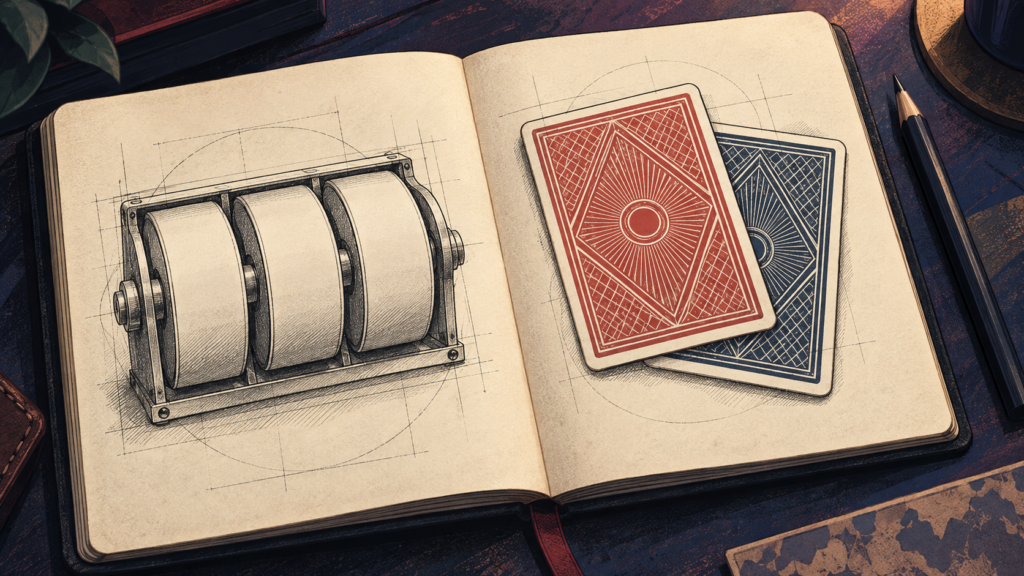
Balatro’s playing cards make its connection to poker easy to spot. One of its acknowledged influences is less obvious: Luck be a Landlord, a standalone video game built around a slot machine. The connection concerns the scoring challenge beneath those different appearances.
In his development timeline, published on March 6, 2025, Balatro creator LocalThunk recalls watching Northernlion’s Luck be a Landlord videos in December 2021. He identifies its score-attack concept as an influence on his project’s direction. His account places that influence early in development, before several recognizable parts of Balatro had arrived, and separates it from the origins of a particular scoring formula.
How Luck be a Landlord uses its reels
The slot format begins with reels, symbols, and a result to interpret. In real-money online slots, those elements belong to a wagering game: the paytable explains how qualifying outcomes pay. The symbols carry information about the result, whatever theme surrounds them. There are lots of different slots, and they depend on a wide range of themes and setups to create variety and offer inspiration to their players. A standalone video game can use the same visual vocabulary while giving the numbers a different purpose. Luck be a Landlord makes the slot machine part of a challenge contained within the game, without real-world currency gambling.
In Luck be a Landlord, the collection of symbols functions as the deck. Collecting symbols and developing combinations makes the relationships between them part of the challenge. The player’s collection supplies the material for subsequent spins, so building it becomes an ongoing task. The familiar reel display and the deck-building structure work together: the machine presents results, while decisions about the collection help shape how the game develops across a run.
The idea that reached Balatro
LocalThunk’s initial plan in December 2021 was a multiplayer card game. By the end of that month, he had abandoned that direction and had a prototype with card enhancements and a scoring system. The project already used chips multiplied by a multiplier. He explicitly says he does not know where that formula came from. His credit to Luck be a Landlord concerns the score-attack concept that encouraged the project’s direction.
Score attack makes the total a central objective. A scoring system can give familiar objects a different role by changing what they contribute and how their effects combine. For a deckbuilder, collecting more pieces is only part of the task; the collection also needs to perform. That relationship between building and scoring can remain useful when the objects change from symbols to cards.
The prototype still lacked Jokers at the end of December. In January 2022, LocalThunk experimented with a shop-like system that allowed cards to receive multiple upgrades. He began adding Jokers and different boss rounds in February. These details put some distance between the initial scoring concept and the systems players associate with Balatro. The acknowledged influence arrived while the rules were still being worked out.
LocalThunk also describes deliberately avoiding more roguelikes from late December 2021. Discovering design solutions independently was part of the enjoyment of making games. He wanted room to make mistakes and work through problems himself, without claiming this would necessarily produce a better game. Recognizing an influence and preserving that freedom were compatible parts of his approach. His account credits something that helped him choose a direction while leaving the subsequent design work visible. He first played Slay the Spire in May 2023 and planned a difficulty system inspired by it that October, so his early pause in playing other roguelikes was temporary.
A separate branch reaches Cupiclaw
Cupiclaw provides another developer’s account of the same source of inspiration. In a September 2025 interview with MonsterVine, creator Typin explains that the project began as a simple collection game. Playing Luck be a Landlord suggested that a roguelike system could work with a claw machine. The familiar grabbing activity became part of a game structured around runs and developing combinations.
Typin describes changing the grab itself so that multiple prizes can be collected together. That change creates combinations and interactions between the prizes, extending their purpose beyond individual objects to acquire. His explanation identifies an actual design decision that followed the broader idea of adding a roguelike structure. The claw stays central to the activity, while the surrounding rules give its contents additional relationships.
The interview also establishes choices behind Cupiclaw’s appearance. Typin says he drew the assets himself and gave the claw expressions to add personality. He wanted a simple, colorful style recalling Nintendo DS-era games. Those visual decisions give the project its own character alongside the structural influence he acknowledges.
What the two accounts reveal
Read together, these accounts show two developers identifying different contributions from the same game, which in turn drew much of its inspiration from existing slot machines. LocalThunk emphasizes score attack; Typin describes finding a structure for a collection game. Their explanations are more precise than a shared genre label and do not depend on the finished games looking alike.
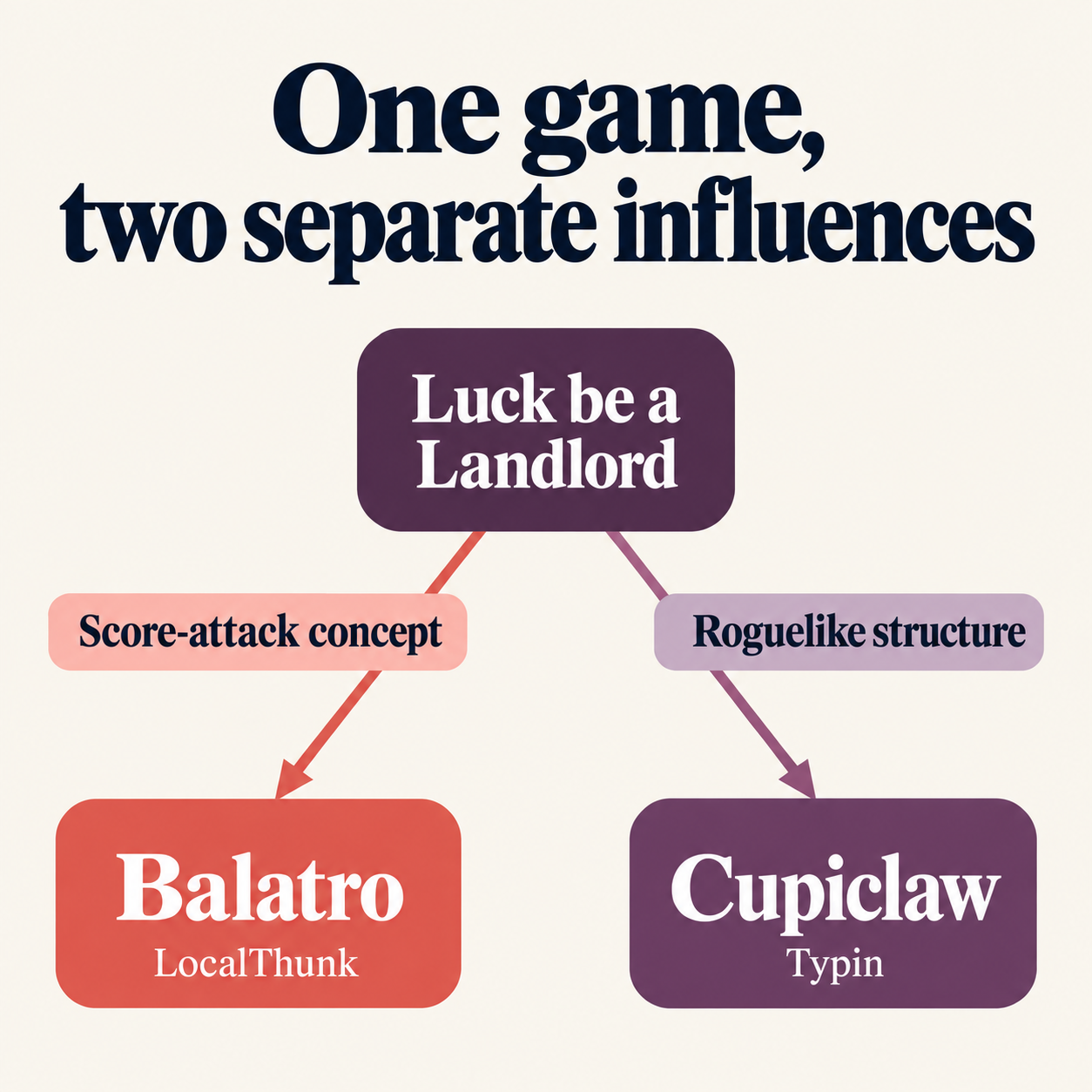
For Balatro, the connection is therefore strongest at the level LocalThunk names: an early direction for the scoring challenge. It explains why Luck be a Landlord belongs in the game’s creative history without treating every later feature as an inheritance. An influence can help establish what a game is trying to do while leaving its creator substantial work deciding how it will do it. Looking at how different games inspire each other and how we got to this point from the relatively humble slot machine provides fascinating insight into the world of game development.
Leave a Reply
You must be logged in to post a comment.