
A1 Deadline Special Review: A Punk-Rock Resurrection With Ink Under Its Nails
·Al Mega
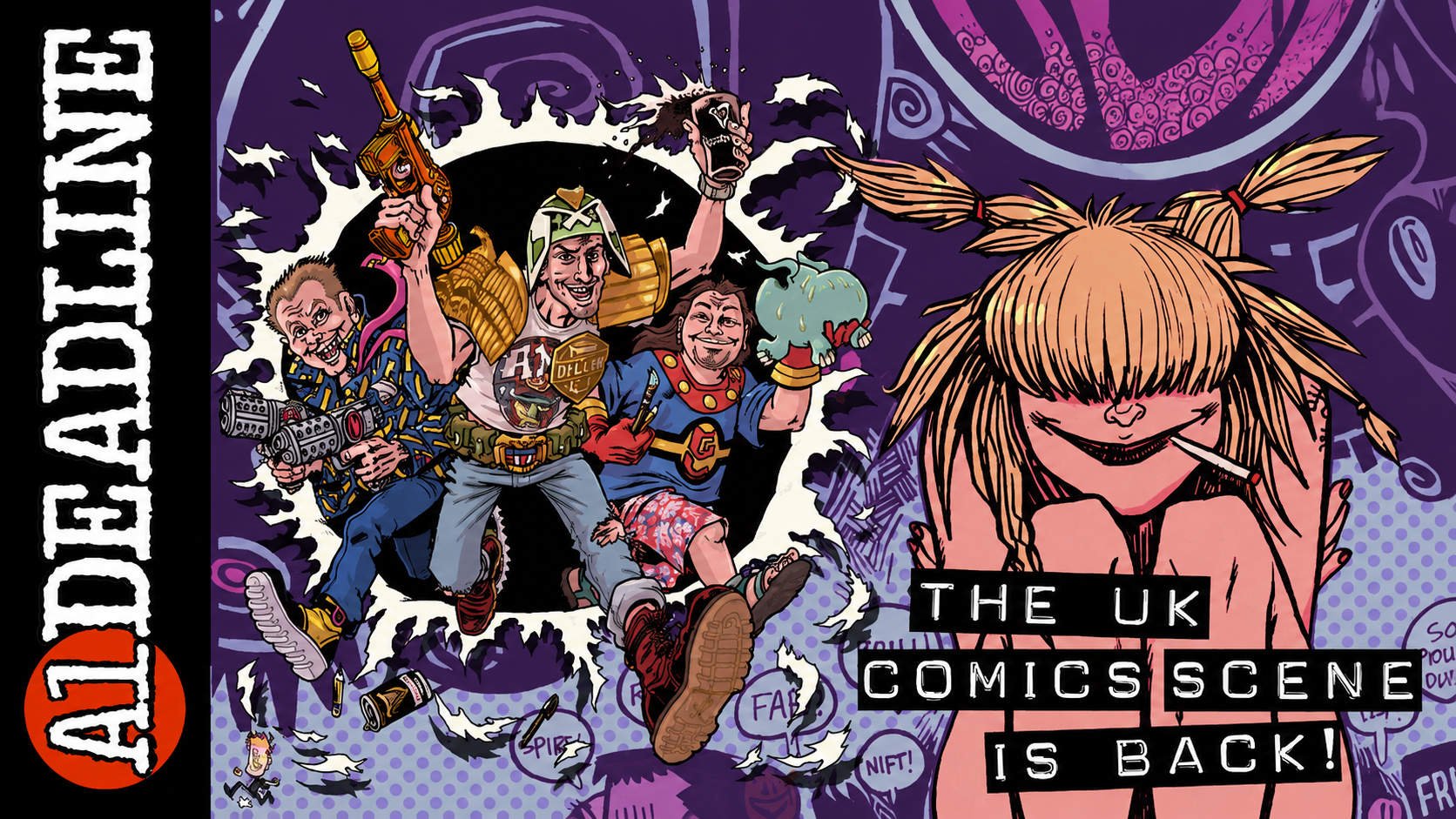
WEPA! Every now and then a comic project does not walk into the room. It kicks the door off the hinges, steps over the splinters, grabs the aux cord, and says, “Nah, we’re not doing safe today.” That is exactly the energy A1 Deadline Special brings to the table. This oversized beast from Dave Elliott, Atomeka Press, and Horrible Future is not just a magazine, not just an anthology, and definitely not some polite museum-piece resurrection trying to sell you nostalgia in a glass case. Nah, fam. This thing has scuffed boots, a loud mouth, paint under its fingernails, and a heartbeat thumping like somebody blasting punk, hip-hop, Britpop, and comic-shop chaos out of a busted speaker in a Brooklyn basement.
A1 Deadline Special is a raw, fearless love letter to 90s UK counterculture, but what makes it hit hard is that it does not feel embalmed in the past. It feels alive. Loudly alive. Messy alive. The kind of alive that still has unpaid parking tickets, half-finished zines on the table, and one eye on the corporate machine trying to sanitize everything into algorithm-friendly oatmeal. The fusion of A1 and Deadline works because both brands were born out of that beautiful, stubborn belief that comics should not be boxed into one lane. Comics can be rebellion. Comics can be comedy. Comics can be art, music, politics, nonsense, body horror, street culture, satire, and a middle finger with panel borders. This special understands that assignment so deeply it probably wrote it on a pub bathroom wall at 2 a.m.
What Dave Elliott and company have built here is less a traditional reading experience and more a cultural collision. You get classic material sitting next to newer voices, wild visual shifts, sharp interviews, punky essays, fever-dream gags, social commentary, and enough artistic whiplash to make your neck file a complaint. And that is the juice. Anthologies should not feel like one flavor repeated until your brain goes numb. They should feel like crate digging. One page gives you a strange gem, the next gives you a noisy oddball, then suddenly you are face-to-face with something heartfelt, furious, absurd, or brilliant. A1 Deadline Special moves like that. It does not ask for permission. It changes gears like a getaway car.
 The opening with Milk and Cheese immediately sets the tone. It is absurd, crunchy, and ridiculous in the best possible way, reminding the reader that this is not a safe corporate relaunch wearing a leather jacket it bought online. This is a book that wants attitude baked into the margins. Then you get pieces like Dragon, which has this scratchy, charming, hand-made spell to it, the kind of short comic that understands how much personality can live in linework when the artist is not trying to polish every corner into digital sterility. It feels folk-tale strange and playful, like a pub story got drunk, wandered into a sketchbook, and found a soul.
Then Carpe Diem comes through like somebody poured Saturday morning action, spy parody, heavy metal album-cover swagger, and madcap superhero nonsense into a blender and hit “obliterate.” The colors pop, the character designs are wild, and the whole thing has that “let’s make comics fun again before everyone forgets how” kind of rhythm. It is over-the-top, theatrical, and unapologetically goofy in a way that lands because it knows exactly what it is doing. That is important. There is a difference between chaotic and careless. A1 Deadline Special is chaotic, but it is rarely careless. The book has a zine soul, but it is assembled with real editorial intention.
One of the strongest anchors in the issue is the Alice Pasquini interview, Not A Target, conducted by Chloe Maveal. This is where the magazine’s “comics, art, music, culture” promise really starts cooking. Pasquini’s conversation about street art, graffiti, identity, public space, gender, and empathy gives the issue weight without draining its electricity. It connects the rebellious visual language of comics to the walls of real cities, to bodies moving through public spaces, to art as something that does not need a velvet rope or a donor plaque to matter. That piece hits especially hard because it reminds us that counterculture is not an aesthetic. It is a lived practice. It is what happens when people who are not being invited into the official room start painting, printing, singing, drawing, and shouting from outside the window.

The Beard is another standout, and let me tell you, this one is weird in all the right ways. Fred Van Lente, Alison Sampson, Jason Wordie, and Chris Northrop deliver something that starts as an uncanny body-horror joke and then slides into identity anxiety, media noise, loneliness, and the exhausting pressure of being perceived. Alison Sampson’s art has a brittle elegance to it, making the grotesque feel intimate instead of just shocking. The story pokes at the way the internet turns every insecurity into a public referendum. One minute you are dealing with your own reflection, next minute the whole digital peanut gallery is throwing tomatoes from the balcony. It is funny, uncomfortable, human, and nasty enough to leave a mark.
And then there is Tank Girl. Come on now. You cannot talk about Deadline energy without Tank Girl stomping into the conversation with a grin, a tank, and zero interest in being respectable. The Chloe Maveal feature on Tank Girl’s anarchic legacy understands why this character still matters. It is not just the look. It is not just the chaos. It is that Tank Girl embodies defiance as a lifestyle, not a branding exercise. She is not here to be inspirational in a sanitized superhero way. She is here to remind tyrants, creeps, gatekeepers, and joyless control freaks that ridicule can be a weapon. Sometimes the revolution does not arrive with a speech. Sometimes it arrives laughing, covered in dust, and ready to ruin some pompous fool’s day.
The classic Tank Girl material that follows is exactly the kind of rude, volatile, deliciously improper madness you either vibe with or you do not. It is crude, theatrical, and jagged around the edges, but that is the flavor. This is not dinner at a Michelin-starred restaurant. This is greasy chips, loud friends, and the kind of story your responsible cousin would tell you to turn down. Good. Let it breathe. Let it be improper. Comics have enough boardroom-approved content trying to make sure nobody ever raises an eyebrow.

What impressed me most about A1 Deadline Special as a whole is how it refuses to separate entertainment from opinion. The Image Duplicator material is a perfect example. By revisiting the conversation around Roy Lichtenstein, comic art appropriation, credit, and the old “high art versus low art” nonsense, the special reminds readers that comics have always been doing the heavy lifting while other institutions tried to act like they discovered the muscle. That section is sharp because it is not simply complaining. It is reclaiming. It is saying, “You liked the language? Cool. Respect the people who built it.” That is big energy. That is necessary energy.
The newer satire lands too, especially Aisle 5, which feels painfully current in its riff on AI, smart devices, productivity culture, and the weird emotional surveillance of modern life. Every object being “smarter” than the person living with it is funny until you realize we are basically already there, with toasters judging our bread choices and apps trying to optimize our sadness. The strip works because it finds humor inside exhaustion. That is very Deadline. Laugh because screaming is too expensive.
Now, real talk from your boy Mega: this book will not be for every reader. If someone needs a clean, linear, single-story experience with a beginning, middle, end, and a tidy little bow, this special may feel like being shoved into a mosh pit while holding a cup of tea. The transitions can be abrupt. The tone leaps from irreverent gag to culture essay to restored classic to weird sci-fi like it is changing subway cars while the train is still moving. Some readers may want a little more breathing room between the loudest pieces, and a few segments are so proudly inside their own punky language that newcomers might need a second pass to catch the full seasoning. But honestly? That is also part of the identity. A1 Deadline Special is not trying to spoon-feed. It trusts readers to keep up, wander, discover, and occasionally get smacked upside the head by something strange.

The design deserves major love. Chris Northrop’s project management and design work helps the issue feel curated rather than randomly assembled. Even when the magazine is intentionally unruly, the pages carry a visual confidence that keeps the whole monster from falling apart. The oversized format gives the art room to flex, whether it is clean, scratchy, painted, neon, grotesque, or stripped-down. You feel the physicality of it. This is the kind of comic magazine that wants to exist in your hands, not just your screen. It wants coffee stains, bent corners, and a place on the shelf next to the stuff you keep because it reminds you why you fell in love with comics in the first place.
Dave Elliott’s larger mission is also felt all over the book. This does not read like a cash-in. It reads like a creative flare fired into the sky. The editorial spirit is clear: creator-owned work matters, short-form comics need a home, and artists deserve spaces where they can test boundaries without being flattened by corporate caution. In a market often obsessed with IP farms, variant panic, and brand-safe storytelling, A1 Deadline Special feels like somebody opened a window and let the smoke out.
A1 Deadline Special is punk, cheeky, smart, filthy, heartfelt, and sometimes completely off its rocker. Bless it for that. It honors the past without kneeling before it. It brings the old fire forward and lets new voices throw gasoline on it. It is not perfect, but perfect would have been wrong for this project. This thing needs its dents. It needs the noise. It needs the attitude. That is the point. This is a magazine that remembers when comics felt dangerous, funny, political, weird, sexy, ugly, beautiful, and alive all at once.

For fans of A1, Deadline, Tank Girl, UK comics, underground art culture, creator-owned storytelling, and anthologies that actually have teeth, A1 Deadline Special is a must-grab. For younger readers who only know “counterculture” as a mood board, this is a proper history lesson with the volume turned up. For creators? It is a reminder: stop waiting for permission. Make the thing. Draw the thing. Write the thing. Shout the thing. A1 Deadline Special is a glorious, unruly resurrection with boots on the table and ink in its veins. It is loud, weird, necessary, and alive. WEPA approved.
CRUSADERS SCORE:
4.5/5
Published by: Atomeka Ltd. in association with Horrible Future LLC
Editor-in-Chief: Dave Elliott
Project Manager & Design: Chris Northrop
Features Editor: Chloe Maveal
A1 Created by: Garry Leach & Dave Elliott
Deadline Created by: Steve Dillon & Brett Ewins
Covers: Alex Horley, Shaky Kane, Cathy Kwan, Laura Helsby, Mark Nelson
Special Thanks: Tom Astor, Rufus Dayglo
Publisher: Atomeka Press
Contributors: Alice Pasquini, Alison Sampson, Alan Martin, Brett Ewins, Chloe Maveal, Dave Gibbons, Eryk Donovan, Fraser Campbell, Fred Van Lente, Garry Leach, Glenn Fabry, Gloria Caeli, Ilya, Jason Wordie, Jamie Hewlett, Kempo Cornelius, Kek-W, Krime-1, Laura Martin, Lucy Sullivan, Mark Schey, Mark Stafford, Matt Harding, PJ Holden, Rhoald Marcellius, Rian Hughes, Rob Jones, Roger Langridge, Russ Heath, Sakti Yuwono, Séamus Hanly, Shaky Kane, Simon D’Souza, Steve Dillon, Umar Ditta, Warwick Johnson-Cadwell, W.H. Rauf.
Visible Story/Feature Credits:
Dragon Written by Matthew Hardy; Art by Warwick Johnson-Cadwell; Letters by Rob Jones.
Carpe Diem Writer W.H. Rauf; Artist/Creator Rhoald Marcellius; Colorist Sakti Yuwono; Letterer Imam E. Wibowo; Editor Dave Elliott.
Fanciful Head Case Writer Simon D’Souza; Artist Ilya.
Not A Target Alice Pasquini interview by Chloe Maveal; photographs supplied by Alice Pasquini, taken by Gloria Viggiani, Carmelo Battaglia, Alberto Blasetti, and Accursio Graffeo.
The Beard Script by Fred Van Lente; Art by Alison Sampson; Colors by Jason Wordie; Letters by Chris Northrop.
Visitors Umar Ditta & PJ Holden.
Anarchy, Identity, and the Girl in the Turret By Chloe Maveal.
Image Duplicator / Image Dupe Featuring commentary and work connected to Rian Hughes, Dave Gibbons, Howard Chaykin, Jason Atomic, Mark Blamire, and contributing artists.
Milk and Cheese Evan Dorkin.
Leave a Reply
You must be logged in to post a comment.