
DIANA Review: Nate Powell Cranks Punk-Rock Memory, Heartbreak, and Ozark Sorcery Past the Redline
·Al Mega
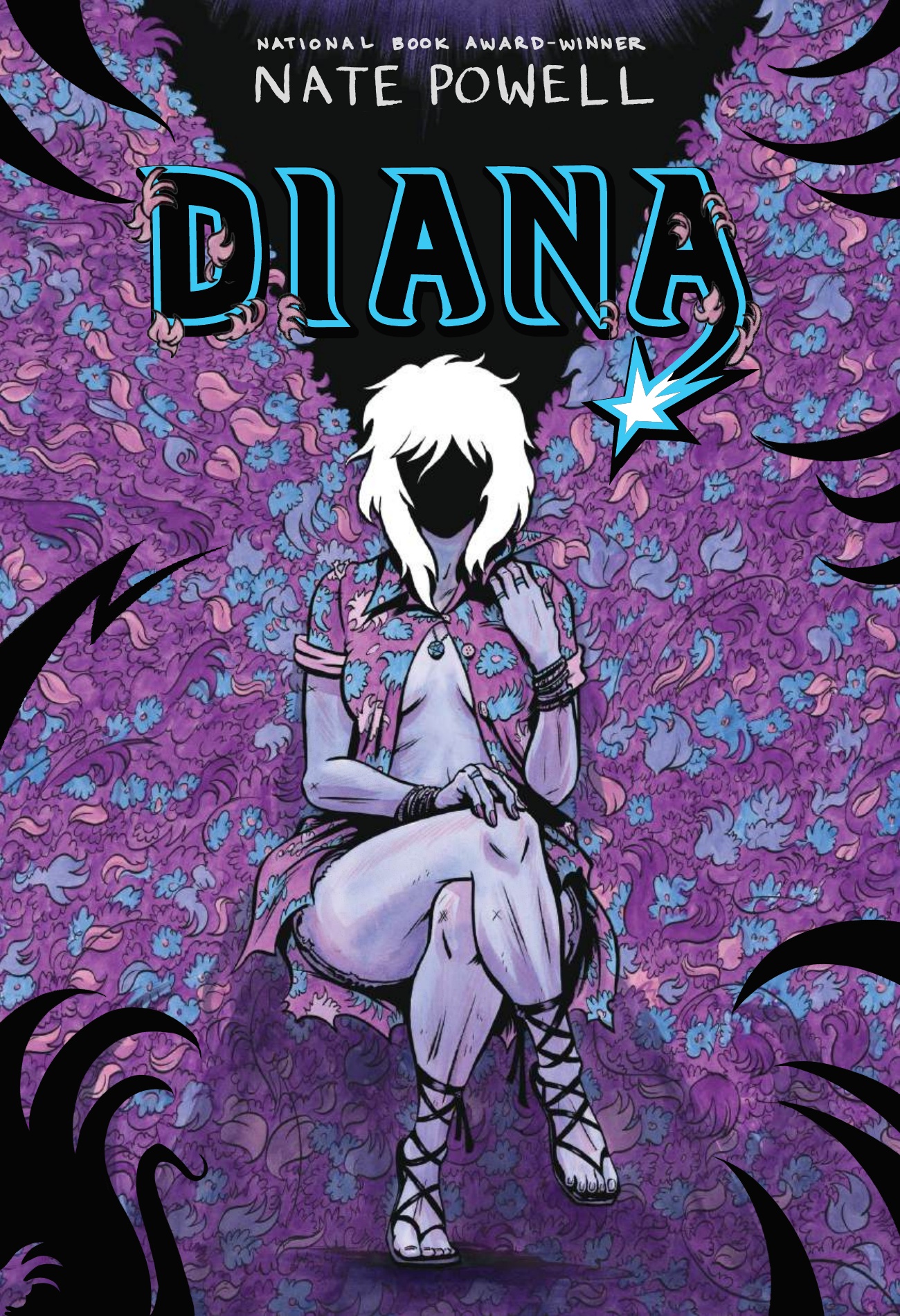
WEPA! Nate Powell’s Diana does not stroll into the room politely, introduce itself, and wait for somebody to offer it a seat. This joint kicks the door open, drags a battered amp across the floor, lights a candle beside a pile of handwritten spells, and asks everybody nearby why they keep lying to themselves. Set against the Arkansas punk scene of the early 1990s, Diana carries the sweat, noise, bruised romance, and beautiful recklessness of people building a family because the homes they came from never gave them room to breathe.
Diana herself is the kind of person who can make a dead room feel alive within thirty seconds. She sings, flirts, provokes, disappears, returns, and somehow leaves everybody wondering whether they just met their new best friend or the beginning of their next emotional disaster. Powell does not soften her edges or clean up her contradictions. She is funny, passionate, selfish, vulnerable, manipulative, generous, and completely capable of loving somebody while simultaneously running over their heart like it owes her money.
Diana’s mercurial nature keeps the graphic novel running hot. Diana grew up trapped inside a repressive religious environment where curiosity, desire, and individuality came wrapped in shame, punishment, and fear. Punk music becomes her escape lane, but she is still driving with all that old damage rattling around in the trunk. She wants freedom badly, yet she has no clue how to stop recreating pieces of the cage wherever she goes. Yo, that is painfully human. Sometimes we escape the people who hurt us, then unknowingly borrow their tools.
Powell surrounds Diana with a crew who feel like actual people instead of background extras wearing ripped shirts and holding records. Jody, Steff, Todd, Shane, Napoleon, and the rest of the scene all bring different needs, insecurities, loyalties, and emotional limits into Diana’s orbit. They crash on couches, share rides, trade music, make out, fight, forgive, and occasionally pretend everything is cool when everybody knows the whole situation is one bad conversation away from blowing a tire.

Chosen family sits at the center of the story, but Powell does not romanticize it into some perfect little support group where everybody speaks in therapy language and respects boundaries by page ten. These characters are young, broke, queer, creative, angry, and trying to assemble adulthood out of duct tape, cheap food, borrowed bedrooms, and whatever gas is left in the tank. They save one another constantly. They also hurt each other, because love does not automatically make somebody emotionally equipped to handle another person’s damage.
The queer relationships hit hard because they never feel packaged for applause. Attraction arrives through nervous glances, goofy jokes, reckless kisses, jealousy, confusion, and those strange quiet moments when somebody realizes their life may be wider than the rules they were handed. Powell lets those feelings stay complicated. Nobody receives a magical handbook explaining how to become honest, secure, and emotionally mature overnight. People stumble into themselves, sometimes gracefully and sometimes face-first into the pavement. Then Powell starts opening the supernatural throttle.
Diana’s homegrown sorcery grows from memory, obsession, handwritten notes, candles, buried objects, private rituals, and the dangerous belief that she might rewrite the past if she performs the right action with enough conviction. There is no corny wizard school lecture explaining every rule. Magic creeps through the story like smoke under a bedroom door. One minute everybody is arguing over music or relationships, and the next Diana is trying to bend grief, memory, and desire into a shape she can control.
The magic works because it never floats away from Diana’s emotional reality. She does not simply want power. She wants a do-over. She wants to grab the master tape of her life, erase the ugliest tracks, punch in new vocals, and pretend the original recording never happened. Problem is, memory does not work like that, mi gente. You can remix it, bury it, scream over it, or play it backward at three in the morning, but sooner or later the old song finds its way back through the speakers.

Powell’s storytelling moves like a mixtape somebody made during a nervous breakdown. The narrative jumps across 1977, 1979, the 1980s, and the frantic months of 1992 and 1993, layering childhood memories, letters, concerts, relationships, religious trauma, and supernatural imagery until everything starts bleeding together. Readers looking for a clean, straight road may need a minute to adjust because Powell prefers back roads, sudden turns, and headlights cutting through fog.
Stay with it, though. The emotional pieces begin locking together as the book progresses, and scenes that initially feel distant return with a different charge once more of Diana’s history is revealed. Some moments read like memories being reconstructed while they are happening. Others feel like guilt sneaking into the passenger seat without asking permission. By the final stretch, every letter, song, promise, ritual, and ugly silence is carrying extra weight.
At roughly 320 pages, Diana takes its time. A few sections linger longer than expected, and the middle can feel emotionally crowded because Powell keeps adding relationships, timelines, symbols, and unresolved tension to the ride. I am not going to front and tell you every page flies by like a superhero slugfest. This is a slow burn in places. Still, the density feels intentional because the story is examining obsession, identity, trauma, and memory, subjects that do not fit neatly inside a quick three-act joyride.
Visually, Powell goes completely off the rails, and I mean that with love. Lavender, violet, gray, black, and bruised pink dominate the quieter scenes, giving Arkansas a haunted, half-remembered atmosphere. Then the yellows and oranges hit whenever music, desire, revelation, or danger punches through. Those bright colors do not merely decorate the page. They explode across it like headlights appearing around a blind curve.

The concert scenes are straight thunder. Powell turns lyrics into movement, letting words stretch, bend, crash across gutters, and wrap themselves around performers. Notes shoot through panels. Bodies twist beyond borders. Crowds become one sweating organism pressed against the stage while the music shakes loose everything the characters have been trying not to feel.
He also knows when to kill the noise. Black pages swallow characters during moments of fear, shame, and emotional isolation, leaving faces, hands, letters, or fragments of memory floating in empty space. White pages create a different kind of silence, one filled with awkward pauses, distance, and things nobody wants to say out loud. Powell keeps shifting the visual rhythm depending on whose emotional wheels are about to come flying off.
The lettering deserves its flowers too. Dialogue, narration, song lyrics, sound effects, scribbled notes, crossed-out thoughts, and handwritten spells all become part of the artwork instead of sitting on top of it. A ringing telephone can invade the entire composition. A lyric can drag somebody into the past. A written confession can feel more threatening than any creature hiding in the dark.
Powell handles the story, art, colors, and lettering himself, and that complete control gives the graphic novel a unified pulse. Every image, word, pause, color change, and explosion of music feels connected to the same emotional frequency. Nothing looks like it was handed from one department to another and assembled later. Diana plays like one musician recorded every instrument, mixed the album alone, then turned the volume up until the walls started sweating.
Most importantly, Powell never turns Diana into a simple hero, victim, villain, or symbol. She can be inspiring and dangerous in the same breath. Her charisma pulls people together, but her need for control keeps warping those connections. Loving her feels exciting until everybody realizes they are standing too close to the sparks.
Diana is not a clean nostalgia trip through the 1990s punk scene. It is a bruised, loud, romantic, frightening story about people trying to invent themselves before the past catches up. The magic gets wild, the emotions get ugly, and the artwork keeps swinging between intimate silence and full-volume chaos without losing the human heart underneath it all.
Nate Powell built a graphic novel that feels like finding an old cassette under the car seat, pressing play, and hearing a voice you thought you forgot. Some songs bring you home. Others remind you why you ran.
CRUSADERS SCORE:
4.5/5

Creator: Nate Powell
Story, artwork, colors, and hand lettering: Nate Powell
Format: Hardcover, 320 pages
Publisher: Abrams ComicArts
Release date: October 6, 2026
Leave a Reply
You must be logged in to post a comment.