
NOSFERATU NIGHTMARES #1 Review: Count Orlok Still Owns the Damn Dark
·Al Mega
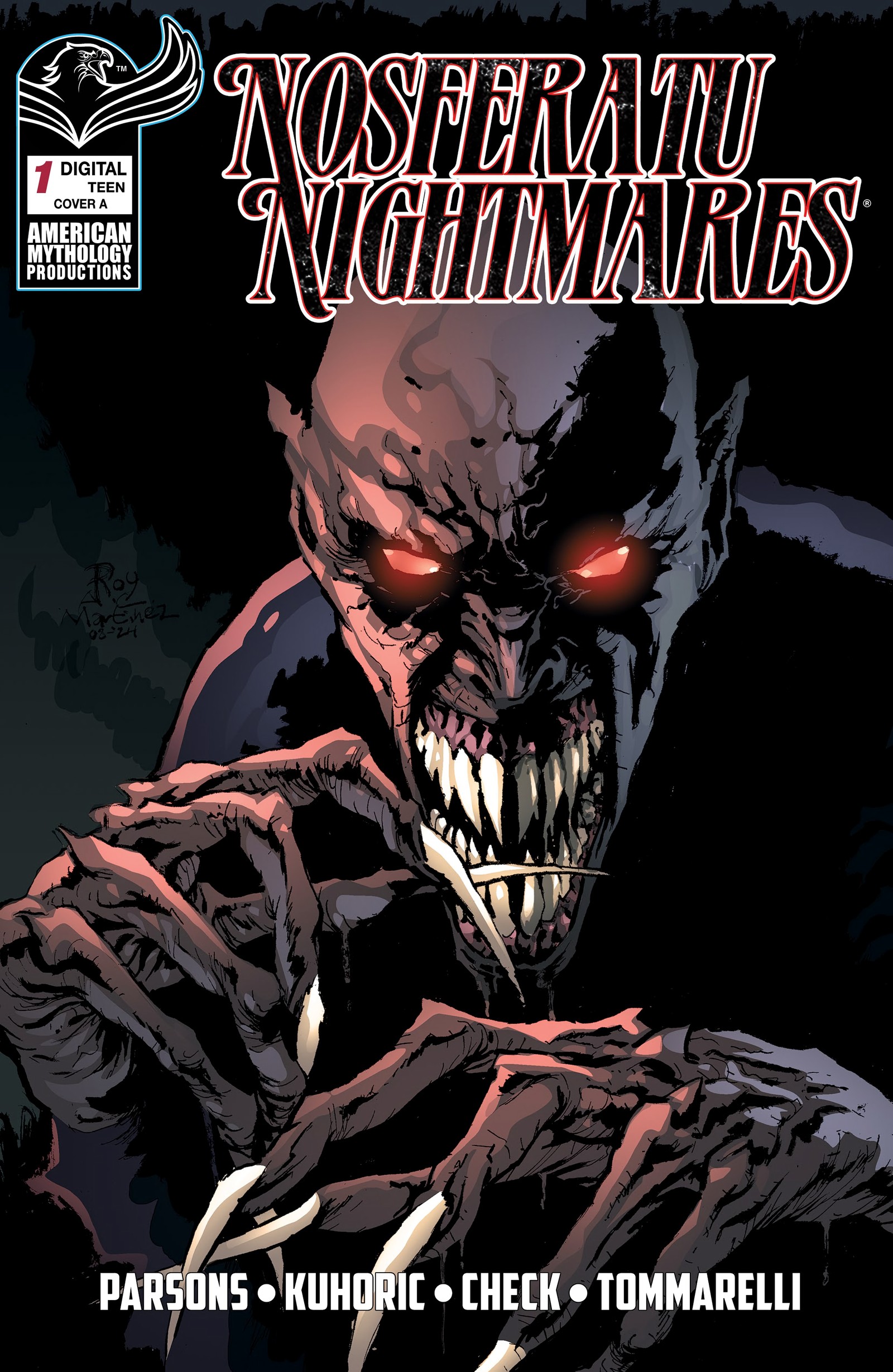
Yo, kill the lights, put the phone face down, and leave the garlic in the kitchen, because Nosferatu Nightmares #1 comes creeping out of the coffin like somebody discovered an old-school black-and-white monster magazine underneath a Brooklyn bodega and said, “Nah, horror got way too comfortable. Fix that.” WEPA! American Mythology Productions understands the assignment here. Nobody is trying to make Count Orlok handsome, misunderstood, sparkly, thirsty in the romantic sense, or ready for his little thirst-trap era. Forget all that. This book wants the vampire looking like DEATH owes him money. Across three connected-by-spirit tales, Nosferatu Nightmares grabs the diseased atmosphere, elongated shadows, plague imagery, silent-film theatricality and predatory unease of the 1922 classic, then lets modern comic creators play in that graveyard without turning the source material into a museum exhibit. The result feels appropriately old, strangely fresh and nasty enough to remind you why Orlok’s silhouette has been living rent-free in horror’s attic for more than a century.
G.O. Parsons kicks the door open with “The Plague,” and this joint immediately tells you what kind of party you walked into. Rather than bury the concept under dialogue, Parsons leans hard into silent-film grammar: ominous title cards, desperate imagery, quarantine orders, bodies, fire and a city slowly suffocating beneath something medicine cannot quite explain. Emanuele Tommarelli gets room to carry the story visually, and man, that choice pays dividends. Pages breathe. Faces register panic without needing six balloons explaining why everybody is panicking. The stark images of burning bodies, abandoned streets, frightened citizens and plague-doctor iconography create this deliciously diseased rhythm where your eyes start scanning the corners before moving to the next panel. You know something foul is coming. The comic knows you know. It still makes you wait. That is horror, fam. Not twenty gallons of blood dumped on page two because somebody got impatient, but tension tightening one notch at a time.

James Kuhoric’s “The Long Shadow of Orlok” shifts gears without breaking the spell, picking up emotional residue from the original Nosferatu rather than merely photocopying its most famous scenes. Hutter’s recollections bring grief into the equation, and suddenly Orlok isn’t simply some iconic bald dude with fingers longer than your CVS receipt. He’s trauma. He’s memory. He’s the thing you survived physically that still gets into the room every night when the candle burns low. Kuhoric’s journal-style narration gives this chapter a mournful gothic texture, while Tommarelli toys with windows, negative space, looming silhouettes and candlelight to make absence feel almost as threatening as the vampire himself. There are panels here where almost nothing is happening mechanically, yet your brain starts screaming, “Bro, LOOK BEHIND YOU!” I love when a horror comic has enough confidence to let dread do some of the lifting. The chapter also respects Ellen’s importance to the original mythology while finding a wicked little avenue to keep Orlok’s influence crawling forward. No spoilers from me. I ain’t that dude.

Then S.A. Check pulls up with “Carpe Momentum,” which takes the anthology’s obsession with film history and flips it into something more mischievous. Phillip Moloch, a successful movie critic and serious horror obsessive, gets his hands on something collectors would probably sell a kidney and somebody else’s kidney to own: an original master print of Nosferatu. You already know this man isn’t putting that thing in a temperature-controlled vault and acting responsible. Come on now. Check taps into that beautifully irrational collector mentality where “possibly cursed artifact” somehow translates to “yo, everybody come over Saturday!” The chapter has more contemporary banter and dark comedy than the preceding pieces, which gives the anthology a needed change of tempo before the shadows start acting disrespectful again. There is also something wonderfully cheeky about horror fandom itself becoming part of the danger. We preserve these monsters, obsess over them, restore them, merchandise them and keep projecting them onto new screens. Eventually, maybe the monsters start watching us back.

Tommarelli is the connective tissue holding the whole bloody operation together, and giving one interior artist all three stories was a smart move. Anthologies sometimes feel like channel surfing after somebody sat on the remote, but Nosferatu Nightmares maintains a visual identity even as the storytelling modes change. His black-and-white work thrives on contrast. Deep pools of ink chew through backgrounds, white space becomes hostile territory, Orlok’s angular anatomy practically slices panels apart, and expressions bend just far enough toward theatrical without wandering into accidental comedy. Better yet, Tommarelli understands the source movie’s greatest weapon: shape. The vampire doesn’t always need detailed rendering. Sometimes a crooked shoulder, clawed hand or impossible silhouette is enough to tell your nervous system, “Yeah, nah. We’re leaving.” Panel compositions regularly evoke stage blocking and silent cinema without blindly imitating movie frames, so the comic remains a comic instead of becoming storyboard cosplay.
The visual storytelling gets another boost from the lettering. Rob Jones handles “The Long Shadow of Orlok,” while Shawn Babborin letters “Carpe Momentum,” and neither fights the artwork for attention. Kuhoric’s narration could have become a wall of gothic exposition in the wrong hands, but the captions remain digestible and integrated into the compositions. Babborin has a different job once conversations, reactions and escalating chaos begin driving Check’s tale, and the page flow stays clean even when the action gets rowdier. Meanwhile, the title-card presentation throughout “The Plague” gives Parsons’ opener its own cadence entirely. Three stories, three slightly different reading rhythms, one overall aesthetic. That’s the sauce. It sounds simple until you read anthologies where every transition feels like changing subway lines during rush hour.
Now, I got one little side-eye for the book. These stories are compact, and a couple of ideas are so tasty that I wanted another page or two to let them marinate. Right when the atmosphere starts putting both hands around your neck, boom, here comes the payoff. Classic anthology math, absolutely, but I would not have complained about a few more pages of creeping sickness in “The Plague” or more psychological torment inside “The Long Shadow of Orlok.” Still, the brevity keeps the issue mean and mobile. Nobody overstays their welcome. Even the backmatter understands the vibe, with silent-horror performance material and a closing appreciation of Nosferatu’s continuing impact. Instead of feeling like padding tossed behind three shorts, those extras help the entire package resemble the monster magazines this thing is clearly crushing on. You can almost smell old newsprint. Somebody get me a spinner rack.
The real win here is that this book ain’t just riding the Nosferatu nostalgia train, it actually brings something nasty, fresh, and worth remembering to the crypt. Plenty of throwback books put on vintage typography, splash some fake film grain around and expect the reader to clap because they recognized the reference. Nah. Nosferatu Nightmares #1 actually plays with the machinery that made the original imagery endure: disease, mortality, superstition, shadows, obsession, grief and the frightening idea that evil doesn’t necessarily disappear just because somebody turned on the lights. Parsons approaches that legacy through near-silent nightmare imagery. Kuhoric pushes into aftermath and memory. Check gets playful with cinematic obsession. Tommarelli binds all three together through an unapologetically monochromatic visual language. Different doors. Same crypt.
So where we landing, Crusaders? Nosferatu Nightmares #1 is a sinister little love letter with dirty fingernails. It respects what came before without embalming it, understands that black-and-white artwork can feel more violent and uncanny than a bucket of digital red, and reminds everybody that Count Orlok didn’t need a cinematic universe, six post-credit scenes or a hot vampire makeover to become immortal. He needed a doorway, a wall and one horrible shadow. This comic gets that. Horror heads, classic-monster junkies, silent-film devotees and anybody missing the funky swagger of old monster anthologies should absolutely give this one a bite. American Mythology didn’t reinvent Nosferatu here. They did something smarter. They invited the old bastard back inside and let him turn the lights off.
CRUSADERS SCORE:
4/5

“The Plague” is written by G.O. Parsons with art by Emanuele Tommarelli.
“The Long Shadow of Orlok” is written by James Kuhoric, illustrated by Emanuele Tommarelli and lettered by Rob Jones.
“Carpe Momentum” is written by S.A. Check, illustrated by Emanuele Tommarelli and lettered by Shawn Babborin.
Cover A and the limited cover credit Roy A. Martinez and Emmanuel Ordaz;
Cover B credits Buz Hasson and Emmanuel Ordaz;
Cover C credits Neil Vokes and Emmanuel Ordaz;
Cover D credits Andrew Mangum and Emmanuel Ordaz.
Publisher: American Mythology Productions
Leave a Reply
You must be logged in to post a comment.