
Papa Drew a Thousand Birds Review: A Father, a Daughter, a Thousand Birds, and One Hell of a Journey Home
·Al Mega
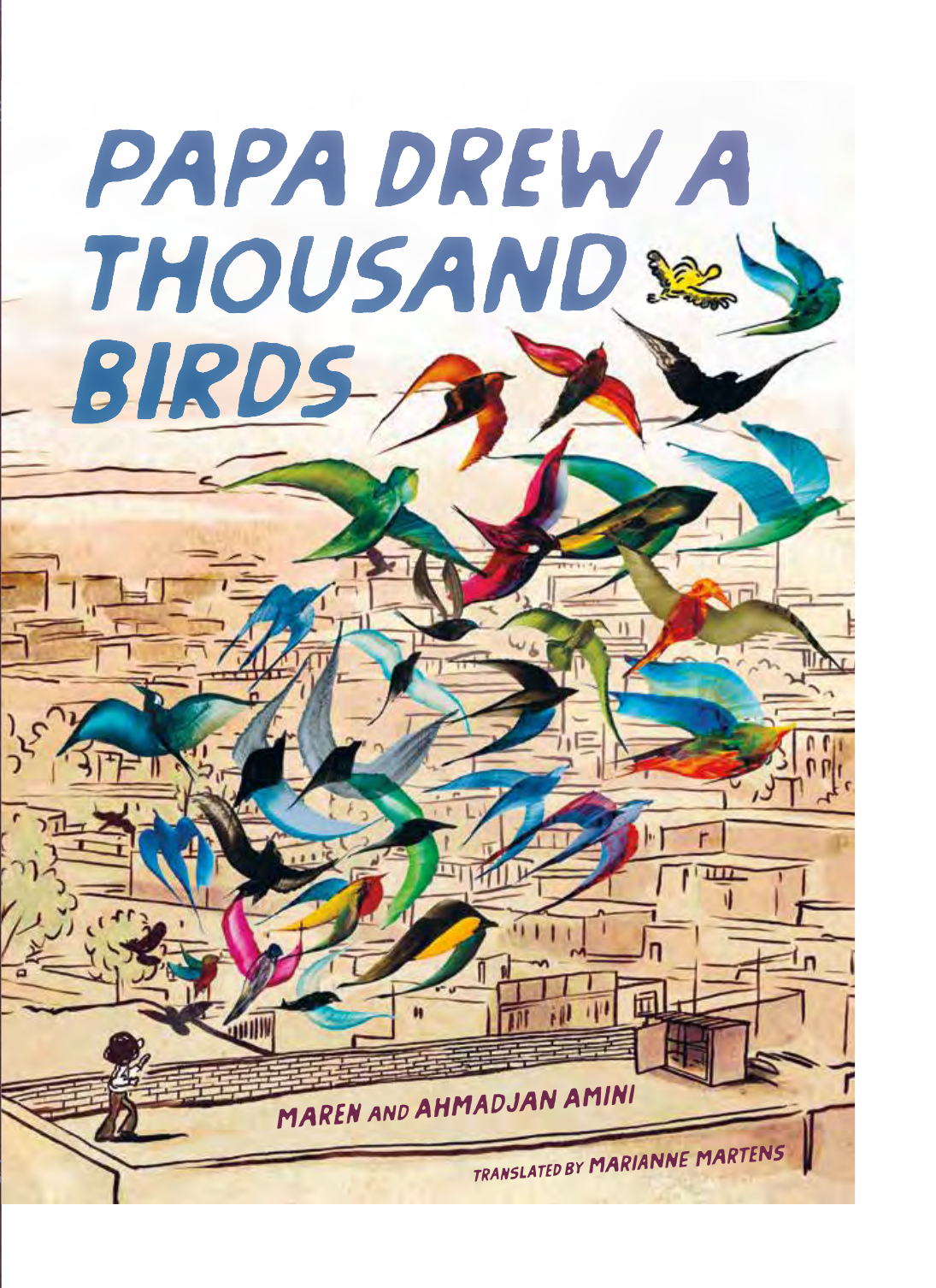
Yo, Papa Drew a Thousand Birds hit me with something I wasn’t expecting, fam. On the surface, you’re following Ahmadjan Amini, a kid coming up in Afghanistan’s Panjshir Valley with art in his heart and a bigger world calling his name, but Maren and Ahmadjan Amini are telling a much richer story than some simple chase-your-dreams memoir. Published in the United States by Levine Querido and translated by Marianne Martens, this book carries us through childhood, poverty, faith, family, Kabul, political upheaval, war, migration, exile, love and the stubborn need to create when life keeps throwing bricks at the windshield. Then they lace that journey through the Persian epic The Conference of the Birds, and now we’re not just talking about one man trying to become an artist. We’re talking about somebody spending a lifetime trying to figure out who he is, where he belongs and what “home” even means when the place you came from, the place you escaped to and the person you became are all pulling on you at the same damn time. Yeah, fam. This book got some mileage on it, and I mean that in the best possible way.
Maren and Ahmadjan do something wickedly smart with the structure because Ahmadjan’s life is intertwined with Fariduddin Attar’s 12th-century Persian Sufi poem The Conference of the Birds. The birds are searching for the Simurgh, their mythical king, traveling through seven valleys filled with doubt, longing, suffering and revelation. Meanwhile, Ahmadjan is making his own pilgrimage through the Valley of Quest, the Valley of Love, Understanding, Loneliness, Unity, Awe and Death. Sounds heavy as a truck transmission, right? Yet the book never drives like some philosophy lecture wearing a comic-book costume. The mythology becomes the navigation system for Ahmadjan’s real life, showing up beside childhood hunger, school, girlfriends, hippies, military service, refugees, art exhibitions and war. One journey keeps echoing the other until you understand that The Conference of the Birds is not decorative mythology tossed into the trunk. It’s the chassis holding this whole ride together.
Ahmadjan himself is why the book moves. My dude is curious, stubborn, funny, occasionally reckless and absolutely allergic to living the life everybody else planned for him. He grows up poor in Panjshir, raised largely by his grandfather after losing his mother young, surrounded by family expectations that would logically push him toward becoming a farmer or shepherd. Ahmadjan looks at that road and basically says, nah, there’s another exit somewhere. Education takes him to Kabul, art grabs hold of him, Western music and visiting hippies widen his imagination, and before long he’s working odd jobs, studying, dancing, painting buses, chasing exhibitions and plotting his way toward Europe. The Aminis never polish him into some flawless inspirational mascot either. He spends money stupidly. He makes selfish decisions. He falls hard for people and ideas. He distances himself from family. Sometimes you’re cheering for him, sometimes you want to grab him by the shoulders and yell, “BRO, WHAT ARE YOU DOING?” That’s life. That’s also why he feels alive.

One of the book’s biggest victories is the Afghanistan it remembers. Western storytelling has spent decades reducing Afghanistan to grainy television footage of invasions, terrorism, military operations and rubble. Papa Drew a Thousand Birds pulls the camera backward. Kabul has music, movie theaters, discos, schools, art, political debate, tourists, fashion, students, intellectual movements and young people trying to figure themselves out just like young people everywhere else. Ahmadjan hears Western records, meets travelers following the Hippie Trail, hangs around musicians and discovers worlds through foreign visitors. Then history keeps tightening the screws. Coups arrive. Communism rises. Soviet tanks roll through Kabul. Panjshir is devastated. Friends and family are scattered. The transition hurts precisely because the Aminis first let us see what existed before destruction tried to overwrite the memory. That’s the emotional jab. Afghanistan isn’t introduced as a battlefield. It’s introduced as a home.
Once Ahmadjan reaches Germany, the book changes lanes again without wrecking the pacing. Hamburg isn’t presented as some magical finish line where refugee meets Europe and everybody starts hugging under a rainbow. Nah, son. Ahmadjan gets culture shock, bad housing, terrible jobs, language barriers, expired papers, new friends, new lovers, art school, squats, political unrest and enough strange encounters to fill another graphic novel by themselves. There’s comedy all over these passages, and thank goodness for it. Ahmadjan and his friend Zaher hauling bananas at the docks, working Oktoberfest, getting robbed when they barely own anything, navigating German bureaucracy and stumbling through different subcultures gives the story oxygen. Maren Amini understands something crucial about memoir: pain lands harder when you’ve also allowed people to laugh. Life rarely separates tragedy and absurdity into neat little filing cabinets. Sometimes the roof is collapsing while somebody nearby is worried about their pants. That’s humans for you.
Visually, Papa Drew a Thousand Birds is playing its own game. Maren’s cartooning looks deceptively simple, with loose black lines, exaggerated noses, expressive scribbled hair, broad gestures and a ton of negative space. Then she’ll suddenly crack open the page with huge washes of color, Persian miniature influences, enormous symbolic compositions or one of Ahmadjan’s original pieces. The shift can hit like somebody opened a window. Ahmadjan’s birds, created with liquid acrylic and a palette knife, have this beautifully calligraphic quality where shape and motion almost become handwriting, while Maren’s digital ink and watercolor work keeps the memoir nimble and conversational. The red rose sequence is gorgeous. The mountain landscapes breathe. Dark purples swallow characters during moments of depression or uncertainty. Giant birds, oceans, mountains and painted skies slide into everyday reality without the book ever announcing, “Attention readers, symbolism incoming!” The visual language simply changes gears and trusts you to ride along.

Page construction is another sneaky strength. Some sequences unfold through tiny cartoon beats floating across white space, creating rhythm almost like animation thumbnails. Others expand into full spreads where scale does the talking. A lone Ahmadjan placed against enormous mountains instantly communicates isolation better than three paragraphs of narration ever could. Political upheaval sometimes becomes crowded speech balloons and compressed bodies, while grief pushes figures into blank environments where suddenly there is nowhere for your eye to hide. Even the lettering participates. The main text uses a typeface derived from Maren’s handwriting, keeping the book personal and handmade in spirit even when the artwork itself is digitally assembled. Marianne Martens’ translation deserves serious credit too because the English never feels stiff. Ahmadjan’s humor stays intact, the conversations remain casual, and the lyrical passages from The Conference of the Birds retain their meditative weight without sounding like somebody dropped an ancient textbook onto the page.
The only place some readers may need to adjust their suspension is the sheer amount of life packed inside these pages. Ahmadjan’s journey crosses decades, governments, relationships, careers, countries and spiritual stages, so portions of the middle stretch can feel less like a traditional plot accelerating toward a climax and more like somebody opening a box of memories and saying, “Yo, you need to see this too.” For me, that texture mostly works because the book is not trying to manufacture a perfectly symmetrical Hollywood biography. Memory is messy. History interrupts. People disappear and return. Wars don’t wait for your character arc to finish cooking. The excellent historical notes in the back matter also give readers additional context about Afghanistan, the political movements referenced throughout the story, the Hippie Trail, the Soviet invasion, Ahmad Shah Massoud and other people and events that move through Ahmadjan’s life without forcing the comic itself to stop every five minutes for a history lesson.
By the time Papa Drew a Thousand Birds circles back toward family, homeland, memory and those birds, the title hits completely differently than it did when you started. The Aminis have made a book about an Afghan artist, sure, but they have also made something deeply universal about the identities we collect while surviving our own journeys. Ahmadjan spends much of his life believing the destination will finally explain who he is. Artist. Refugee. Afghan. German resident. Husband. Father. Son. Outsider. Dreamer. Every new label helps and fails at the same time because no single word can carry the whole person. The birds understand before we do. Home isn’t always a place waiting at the end of the road. Sometimes it’s everybody, everything and every version of yourself that somehow made the trip with you.

Maren and Ahmadjan Amini put family history, Persian literary tradition, political memory and visual experimentation into the same vehicle and somehow keep the wheels on. More importantly, they made it feel alive. Funny when life is funny. Brutal when history gets brutal. Beautiful without getting precious. Papa Drew a Thousand Birds doesn’t beg you to admire Ahmadjan’s survival. It lets you walk beside him long enough to understand what survival cost, what art preserved, and why somebody might keep painting birds while the world outside appears determined to tear itself apart. That’s powerful work, fam. Levine Querido has something special landing November 3, 2026, and graphic memoir readers should absolutely have this one on the radar.
CRUSADERS SCORE:
4.5/5

Creators: Maren Amini and Ahmadjan Amini
Art: Maren Amini with original artwork and bird paintings by Ahmadjan Amini
English Translation: Marianne Martens
Editor: Nick Thomas
Book Design: Maya Tatsukawa
Cover Art: Maren and Ahmadjan Amini
Cover Design: Maya Tatsukawa
U.S. Publisher: Levine Querido
Original Text and Art Copyright: Carlsen Verlag, 2024
U.S. Publication: November 3, 2026
Hardcover ISBN: 978-1-64614-707-6
Leave a Reply
You must be logged in to post a comment.