
THOR #800 Review: Eight Hundred Issues In, The God of Thunder Still Has Something to Prove
·Al Mega
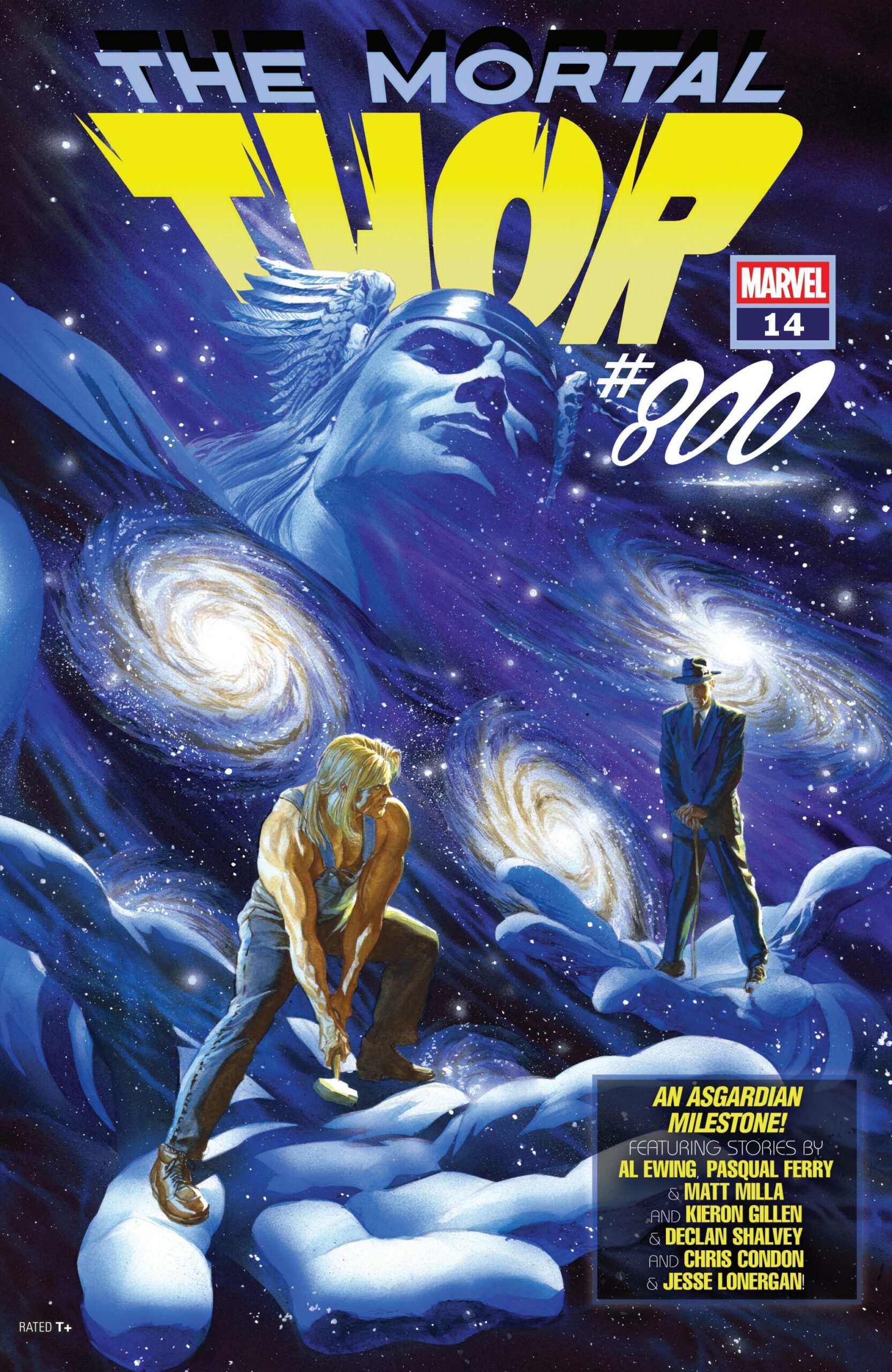
Marvel could have treated Thor #800 like one of those anniversary victory laps where everybody waves at the crowd, somebody cuts a cake, seventeen old costumes get referenced, and we all go home feeling nostalgic. Al Ewing said nah, forget the parade. Put Sigurd Jarlson through hell, take away the hammer, strip the mythology down to the chassis, redline the engine and find out whether there is still a Thor underneath all that divine chrome. THAT is the energy powering this monster milestone, and mi gente, it gives the book something far more valuable than empty celebration. It gives #800 a reason to exist. Under that ridiculously majestic Alex Ross cover, where cosmic grandeur and human vulnerability are staring each other straight in the face, this oversized issue becomes a three-story examination of worthiness, mortality, identity, storytelling and one deceptively nasty question: when you remove every advantage from a god, what exactly is left?
The main event, “Ouroboros,” written by Al Ewing with art by Pasqual Ferry, colors by Matt Milla and lettering by VC’s Joe Sabino, opens by doing something deliciously cruel to Sigurd. No thunder. No hammer. No glamorous Asgardian entrance. Dude is sitting in prison looking like life ran him over, backed up, then checked the mirrors to make sure it got him twice. Years pass. Freedom does not magically improve things. Bureaucracy crushes him, hunger gnaws at him, memory starts getting slippery, and even basic questions about who he is become weapons. Ewing takes the grandiose language of Thor and crashes it directly into mundane human misery. That collision is the whole damn point. Worthiness means something different when nobody is cheering, when your power is gone, when the universe does not recognize your name and surviving another day feels more heroic than punching a frost giant through a mountain.
Ewing hits the gas right there and gets downright vicious in the best possible way. Sigurd’s trial is not merely about whether he can win a fight. The Serpent is coming after the concept of him. Memory, hope, identity, endurance, mortality, all of it gets tossed into the grinder. The repeated refusal to yield becomes the heartbeat of the story, but Ewing keeps escalating what those words cost. When the mythology finally starts flooding back into the page, it feels earned because Ferry has spent so much time trapping Sigurd inside ordinary spaces, narrow cells, bureaucratic counters, alleys, streets and hard little boxes. The story starts with the parking brake locked and the engine choking, then suddenly that sucker blows onto the cosmic freeway with gods, monsters and impossible scale whipping past the windshield. WEPAAAA! The change in visual velocity hits because the book makes you wait for it.

Pasqual Ferry absolutely understands that gear shift. His quieter Sigurd pages carry weight through posture and expression instead of overplaying the misery. Shoulders sag. Faces tighten. Rooms feel too small. Then the Serpent enters the visual conversation and Ferry starts bending scale until the city itself feels like something caught underneath a monster’s coils. When divine imagery explodes across the pages, the compositions become larger, stranger and almost psychedelic without losing narrative direction. Matt Milla deserves serious love too because the color story is doing heavy lifting. Institutional greens, sickly yellows and cold urban blues slowly give way to radiant golds, burning oranges and supernatural hues as reality starts getting peeled apart. Joe Sabino’s lettering keeps the mythological voices distinct, especially when dialogue shifts between mortal conversation and that serpentine supernatural menace. Those choices matter. Comics ain’t illustrated screenplays, fam. The words, balloons, colors, panel rhythm and art all have to dance together, and this crew knows the steps.
There is one lil’ speed bump, and I’m not gonna fake like it isn’t there. Thor #800 is still deep inside Ewing’s ongoing mythology. A reader parachuting in because they saw “800” on the cover may spend a few pages wondering who moved all the furniture while they were gone. The book trusts you to roll with questions before answers arrive, and Ewing’s affection for mythic recursion, identities within identities, stories commenting on stories and gods being shaped by narrative can get dense. But the emotional lane stays surprisingly clean. Sigurd is fighting not merely for power, but for the right to remain himself. You can lose track of a continuity breadcrumb and still understand that. By the time the Serpent and the gods start smashing concepts together like demolition-derby cars, the human foundation underneath all that cosmic noise keeps the story from floating away.
Then Kieron Gillen and Declan Shalvey pull up with “Worthy,” and good LORD, what a beautiful little anniversary grenade. Rather than coughing up another history lesson filled with captions explaining everybody who ever touched Mjolnir, Gillen lets the hammer itself contemplate what worthiness means. That immediately changes the angle. We move through different moments and wielders, but the story refuses to reduce worthiness to some celestial DMV exam where the universe stamps APPROVED on your superhero license. Gillen plays with the idea that the question itself may be flawed, while Shalvey tears across Thor history using bold silhouettes, hard blacks, explosive primary color accents and layouts that move like memory instead of chronology. It feels old-school without becoming imitation. Modern without disrespecting what came before. Fast too. Five pages and out. No wasted motion. That is comic-book efficiency with the throttle pinned.

Shalvey’s visual storytelling deserves another salute because “Worthy” could easily have become a greatest-hits slideshow. Instead, he uses repetition and variation around Mjolnir itself, changing bodies, eras and circumstances while allowing that familiar rectangular hammer to become the connective tissue. You feel decades of Thor storytelling without somebody standing there reciting Wikipedia at you. That’s how you honor 800 issues. Give me the emotion of history, not an inventory spreadsheet. The final imagery lands because Gillen and Shalvey understand something Thor stories sometimes forget: the hammer is iconic, but Thor cannot simply be a hammer delivery system. Worthiness gets interesting when it stops being about whether somebody can lift Mjolnir and becomes a question about what they choose to do once power answers them.
Finally, Chris Condon and Jesse Lonergan come screaming around the corner with “Decide,” easily the strangest piece of the package and maybe the one comic-art nerds are going to keep flipping back through after everybody else finishes arguing about continuity. Condon drops us into a distant universe after the assassination of a god and starts playing cosmic murder mystery with the boundary between mythology and fact. Then Monark Starstalker enters the equation and the story starts digging into witnesses, divine death, conflicting versions of reality and the dangerous power of deciding what actually happened. There is classic Marvel cosmic DNA floating around this thing, but it is filtered through something much grimier and more experimental. Condon doesn’t treat the backup like leftover trunk space. He gives it its own engine.
Jesse Lonergan goes berserk with the layouts. In a good way. A VERY good way. Panels curve, fracture, redirect the eye and occasionally behave more like diagrams than traditional comic boxes. Color becomes information. Perspective becomes part of the mystery. Certain sequences practically force your eye to physically trace movement through the page, and the handmade quality gives the story this weird pulp-noir-meets-underground-sci-fi personality that looks nothing like Ferry or Shalvey. That difference is exactly why the book works so well as a whole. Three creative teams. Three visual languages. One giant conversation about gods, stories and the people trapped inside both. Sabino adjusts the lettering again to fit Lonergan’s more idiosyncratic page architecture instead of forcing the same presentation onto every chapter, which helps “Decide” maintain its own voice.

Read straight through, Thor #800 plays less like an oversized single issue and more like a compact graphic-novel triptych. “Ouroboros” asks whether a god remains worthy when everything divine is stripped away. “Worthy” questions what worthiness even means when viewed across the long history of Mjolnir and its wielders. “Decide” starts poking at who gets to determine the truth when gods become stories and stories become history. See the connection? This ain’t three random backups stapled together because somebody found extra pages in the budget. Each piece approaches Thor’s legacy from a different lane. Ewing comes through character and endurance. Gillen through myth and inheritance. Condon through truth and perception. Ferry brings elastic cosmic grandeur, Shalvey brings muscular graphic iconography, and Lonergan comes in sideways with visual jazz.
Eight hundred issues is a ridiculous number when you really think about it. Characters get rebooted, rewritten, killed, resurrected, replaced, renumbered, deconstructed and reconstructed so many times that eventually the real enemy becomes creative exhaustion. Thor #800 does not feel exhausted. That may be its biggest victory. Instead of asking us to applaud because the odometer rolled over, this team looks at the miles, hears the engine still growling and floors the damn thing again. Longtime Thor readers get the mythology, callbacks and philosophical weirdness they came for. Ewing fans get another chapter in his grand argument about stories shaping reality. Art heads get three radically different visual approaches. Newer readers may hit some turbulence, but the core idea still punches through: a hammer does not make Thor. Power does not make Thor. Even godhood alone does not make Thor. Somewhere beneath all of it lives a choice to stand back up when everything says stay down.
That’s Thor.
Eight hundred issues later, the thunder still hits.
CRUSADERS SCORE:
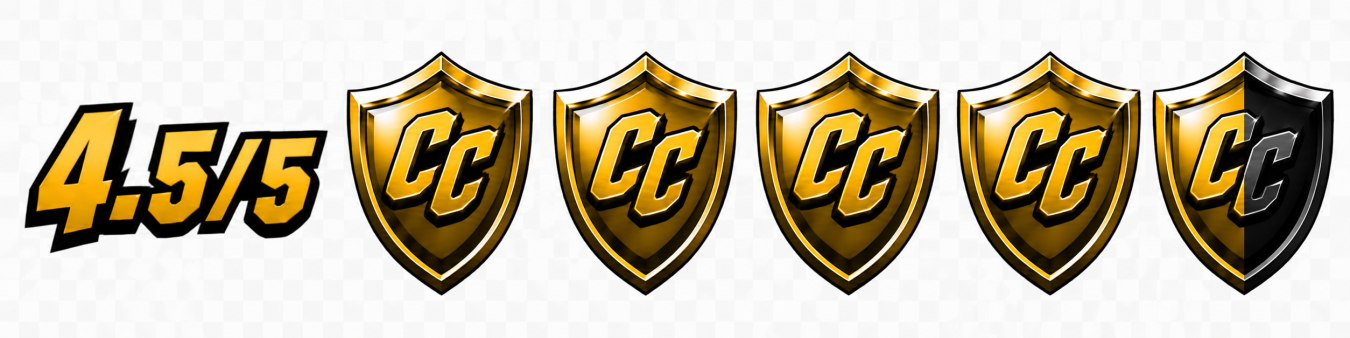
4.5 / 5
Writer, “Ouroboros”: Al Ewing
Artist, “Ouroboros”: Pasqual Ferry
Color Artist, “Ouroboros”: Matt Milla
Letterer: VC’s Joe Sabino
Writer, “Worthy”: Kieron Gillen
Artist/Colorist, “Worthy”: Declan Shalvey
Letterer: VC’s Joe Sabino
Writer, “Decide”: Chris Condon
Artist/Colorist, “Decide”: Jesse Lonergan
Letterer: VC’s Joe Sabino
Cover Artist: Alex Ross
Variant Cover Artists: Walter Simonson & Alex Sinclair; Russell Dauterman; Declan Shalvey; Pablo Villalobos; Elizabeth Torque & Federico Blee; Ryan Stegman & Marcelo Maiolo; InHyuk Lee
Associate Editor: Danny Khazem
Editor: Wil Moss
Editor in Chief: C.B. Cebulski
Publisher: Marvel Comics
Thor Created by: Stan Lee, Larry Lieber & Jack Kirby
Leave a Reply
You must be logged in to post a comment.