
Diamond’s Collapse Proved the Comic Industry Needed More Than One Road to the Store
·Al Mega
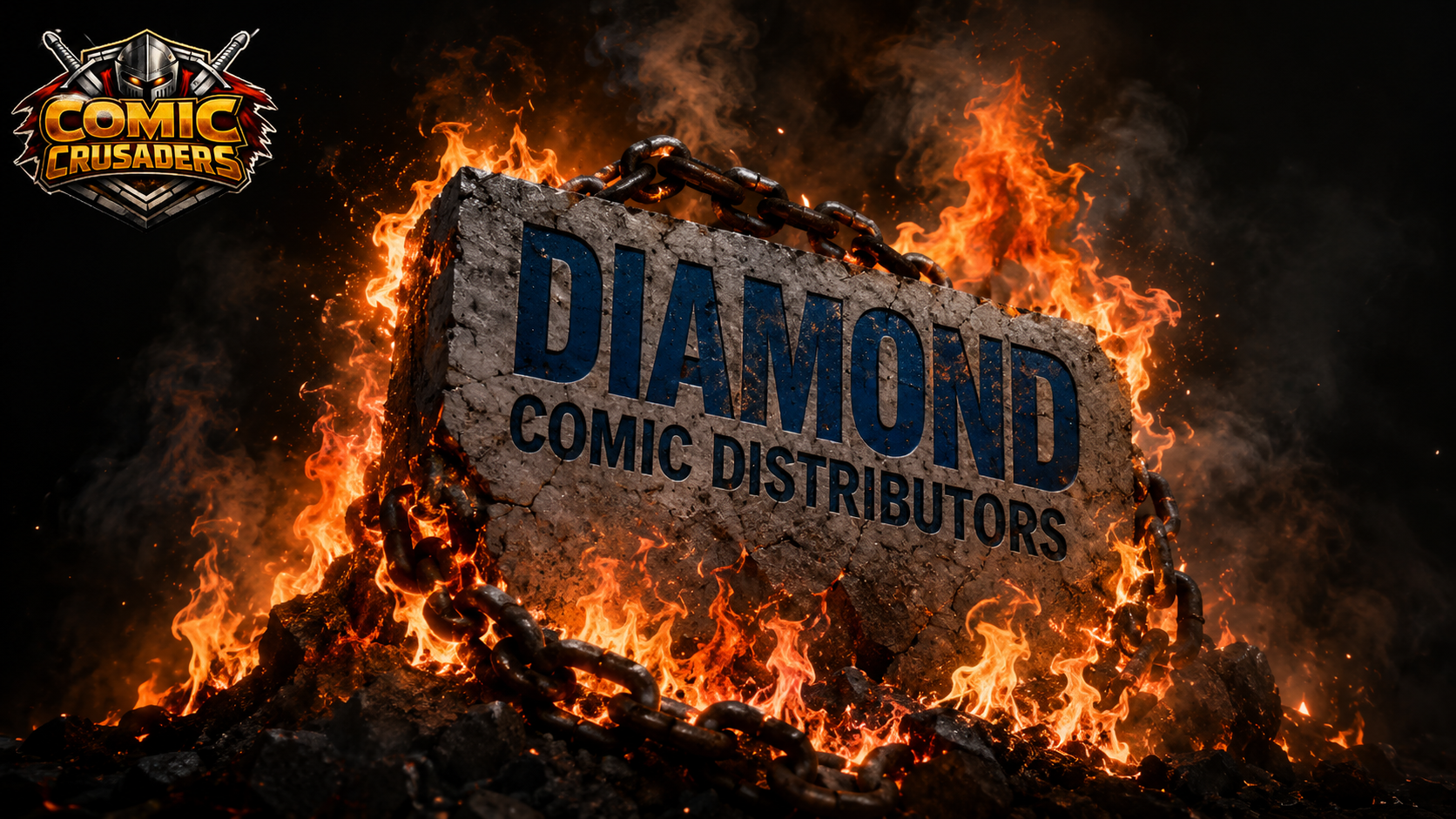
For years, the comic book industry moved like it had one main highway to survival. One road. One gate. One distributor sitting in the middle of publishers, retailers, creators, collectors, and fans like the toll booth boss of the whole block. That road was Diamond Comic Distributors. And for a long time, everybody acted like that was simply how things had to be.
You wanted comics in stores? Go through Diamond. You wanted retailers to see your book? Get into Previews. You wanted weekly releases to land on shelves? Hope the system worked, hope the boxes arrived, hope the books were not damaged, and hope delays did not punch your release plan right in the face. That is not a strategy. That is dependency wearing a suit.
Then Diamond filed for Chapter 11 bankruptcy, and the whole industry had to stop pretending the old model was untouchable. This was not just another business headline. This was the longtime distributor giant showing the danger of one company having too much control over the path between books and readers. Diamond helped build the modern direct market, and pretending otherwise would be lazy history. But real talk, just because something helped build the house does not mean we ignore the cracks in the foundation.
Diamond mattered. It connected publishers to comic shops. It gave retailers a central place to order. It turned Previews into a monthly ritual. For decades, Diamond was not just part of the machine. It was the machine. But that was also the problem. The industry leaned too hard on one central system for too long. One road carried too much traffic. One failure point had too much power. When that road cracked, everybody felt the shake.
Retailers felt it. Publishers felt it. Small press felt it. Fans felt it. Creators definitely felt it. And the warning signs were not hiding in a secret cave guarded by ninjas. Publishers had already started moving away from Diamond before the collapse became the big public drama. The Comics Journal noted that publishers had been deserting Diamond after the bankruptcy filing, while many had limited options because the system had been so deeply tied to Diamond for so long.
That right there is the real lesson. The problem was never just Diamond. The problem was that comics allowed one distribution path to become too important. When one company becomes the road, the industry starts confusing convenience with health. Yeah, one central distributor made ordering easier in some ways. But easy does not always mean strong. Sometimes easy just means nobody built a backup plan.
Now the industry is living in the aftermath. New distributors and new players are pushing into the space, including Lunar and IPG, as publishers and graphic novel companies look for post-Diamond options. That is messy, no doubt. More roads mean more systems, more accounts, more invoices, more shipping rules, and more headaches for shops that already work brutal hours. But you know what is worse than a complicated road map? Being trapped on one road when the bridge gives out.
The comic industry needed more than one road to the store because comics are bigger than one road. Comics are not only Wednesday warriors walking into local shops, even though those fans remain the heartbeat of the direct market. Comics are also Kickstarter backers waiting for deluxe hardcovers. They are manga readers finding stories in bookstores. They are webcomic fans scrolling on their phones at 1 a.m. They are kids discovering graphic novels in libraries. They are collectors buying online. They are indie fans at conventions. They are parents buying books for their kids. They are horror fans, romance fans, sci-fi fans, superhero fans, underground fans, and people who do not even know they are comic fans yet because nobody has handed them the right book.
One road cannot serve all of that. That is like trying to move all of Brooklyn traffic through one bodega entrance. Somebody is getting elbowed, somebody is dropping a bacon, egg, and cheese, and nobody is happy.
The industry needs a distribution ecosystem, not a distribution chokehold. Lunar matters. Penguin Random House matters. Direct-to-retailer sales matter. Crowdfunding fulfillment matters. Bookstores matter. Libraries matter. Conventions matter. Digital platforms matter. Local comic shops matter more than ever. This is not about replacing one king with another king. We do not need a new throne. We need a network.
And let’s talk about the shops, because they are the ones who always end up catching the flying debris. Comic shops are not giant warehouses with unlimited staff. Many are owner-operated, overworked, underpaid, and powered by love, caffeine, and the fear of late rent. Asking them to juggle multiple distributors without better tools is rough. If the future is multi-distributor, then the industry needs cleaner ordering systems, better communication, clearer invoicing, stronger retailer support, and fewer “surprise, figure it out” moments.
Comic shops should not need detective skills to order books. Publishers should not need prayer circles to get books on shelves. Creators should not need to become logistics experts just to tell stories. Fans should not have to chase basic releases like they are hunting ancient relics.
The smaller publishers and indie creators are the ones we really need to watch. Big publishers have options. They have leverage. They have infrastructure. Small publishers do not always have that luxury. For smaller companies, Diamond was not just a distributor. It was access. It was visibility. It was how retailers found them. When that system trembled, many smaller players had to ask the terrifying questions nobody likes asking out loud. Where do we go now? Who carries us? How do shops find us? How do we avoid disappearing?
That is why this moment matters. If the new distribution era only works for the biggest publishers, then we did not fix the problem. We just moved the velvet rope. A healthy comic industry cannot be built only around the biggest names. The soul of comics lives in the weird books, the indie books, the self-funded books, the creator-owned swings, and the small press experiments. That is where the next wave starts.
The collapse of Diamond signaled the end of an era, and outlets across the industry recognized how deeply it shook the business. But the end of an era does not have to mean the end of the mission. The mission was never to protect one company’s place in the middle. The mission is to get comics into the hands of readers.
That is the part we cannot lose. Comics are a medium, not a delivery method. A comic that sells through Kickstarter counts. A graphic novel that sells through a bookstore counts. A manga volume that reaches a teenager who never heard of Previews counts. A webcomic that builds a global audience counts. A small press book sold hand-to-hand at a convention table counts. A local shop exclusive counts. A library checkout counts. A digital sale counts. A comic is not less real because it took a different road to reach a reader.
Diamond’s collapse did not prove comics are dying. It proved the old map was too narrow. The direct market matters. Comic shops matter. But the industry cannot survive by treating one lane as the only lane. We need options. We need backup routes. We need smarter systems. We need access for small press. We need shops supported, not buried. We need publishers communicating like professionals, not sending smoke signals from a cave.
The future of comics will not be saved by nostalgia. Nostalgia is warm. It smells like old newsprint and Saturday morning cartoons. But nostalgia cannot ship books, fix cash flow, build new readers, or make broken systems functional. Strategy can. Options can. Adaptation can.
So here is the truth with the volume turned all the way up. A single road is fragile. Multiple roads create resilience. If the comic industry is smart, it will stop mourning the comfort of the old map and start building a better one. The books are coming. The readers are waiting. The shops are fighting. The creators are building. The future has options.
Adapt, rebuild, or get left standing in the dust holding an outdated catalog and a bad attitude.
WEPA. The Crusade Never Ends.
AI Disclosure: This image may include AI-generated or AI-assisted artwork reviewed by Comic Crusaders before publication.
Leave a Reply
You must be logged in to post a comment.