
The Indie Comics Printing Squeeze: Comix Wellspring, POD, Pricing & Creator Concerns
·Al Mega
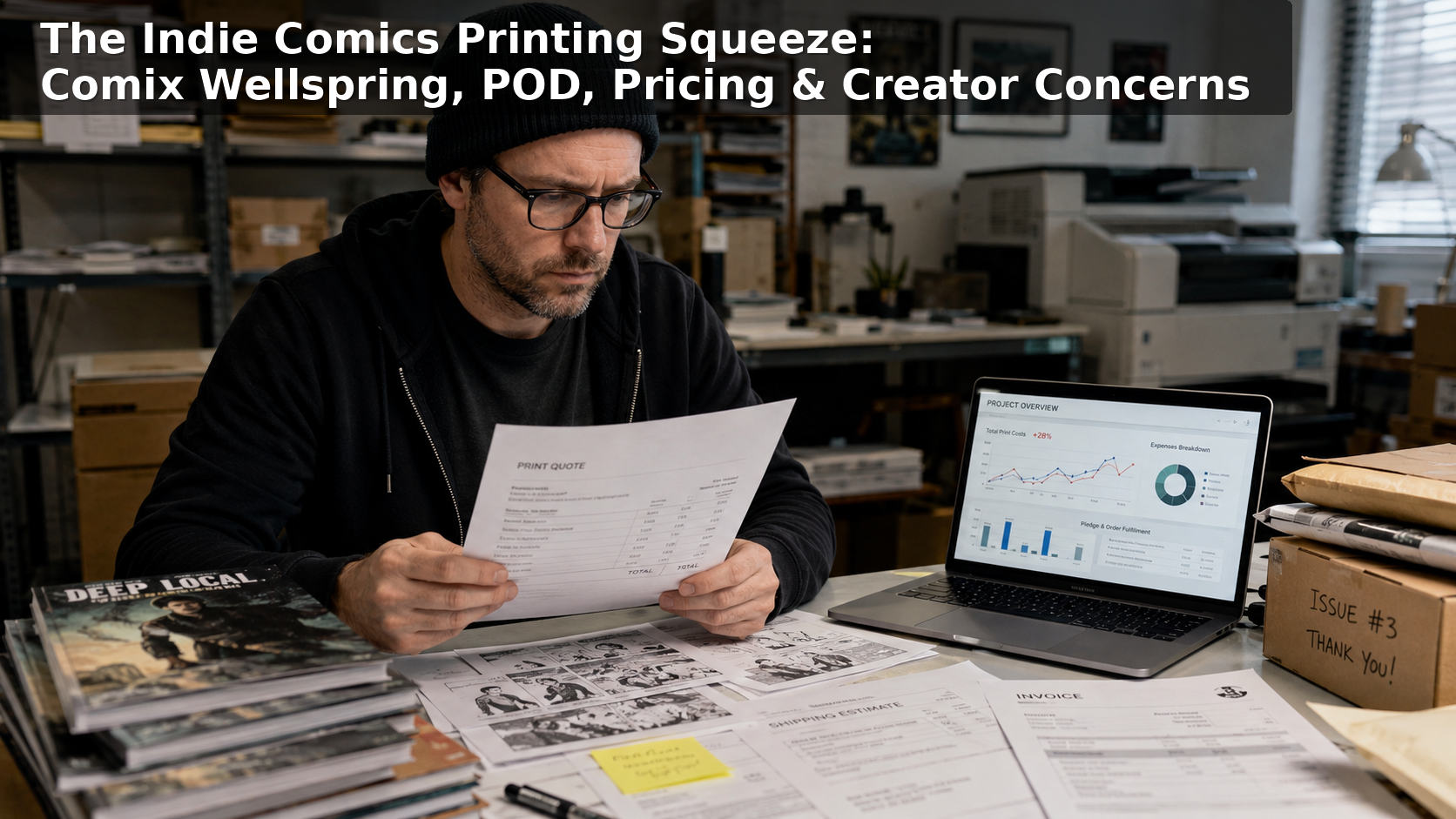
For years, indie comic creators have treated printing like the final boss battle of crowdfunding. You survive the script, the art, the campaign, the emails, the shipping quotes, the backer questions, the “where’s my book?” messages… and then comes the printer. That’s where dreams either become beautiful saddle-stitched glory or a stress-induced trip to the bodega for emergency empanadas and emotional support coffee. Lately, Comix Wellspring has found itself in the middle of that creator anxiety, not because there is one confirmed smoking-gun scandal, but because several pressure points are hitting at once: pricing, print-on-demand promises, file-prep changes, and crowdfunding program terms that raise fair questions about creator control.
Let’s keep this clean: based on the public information currently available, this is not a “company exposed” story. That would be irresponsible. What it is is a very real indie comics business story. Comix Wellspring itself has publicly acknowledged that after a site relaunch, creators and crowdfunding teams shared feedback about pricing, and the company said it worked to bring pricing back down while maintaining quality and turnaround expectations.
That matters because comic crowdfunding is built on tight math. A creator can raise what looks like a healthy campaign total, but once printing, shipping, taxes, damaged copies, platform fees, creative costs, and stretch goals hit the table, that money starts disappearing like pizza at a convention after-party. If printing costs rise suddenly, creators do not just lose margin. They may lose the ability to fulfill without going into the red.
The bigger story is Comix Wellspring’s push toward print-on-demand. In July 2025, GlobalComix and Comix Wellspring announced a creator-first POD partnership designed to help digital comics move into physical print without creators managing inventory or large minimum print runs. Coverage framed the deal as a bridge between digital reach and physical publishing. On paper, that sounds like a dream. One copy, no garage full of boxes, no spouse asking why the hallway looks like Diamond Distribution had a baby with UPS.
But POD also creates expectations. If creators are told the future is frictionless printing, they will expect clarity, timing, and reliability. A Reddit thread from five months ago shows at least some creator frustration or uncertainty around the status of GlobalComix-related POD updates. That is not proof of failure, but it is a signal worth watching.
There is also a workflow issue bubbling in creator spaces. One recent Reddit post from a longtime Comix Wellspring user described frustration over now having to submit work as a multi-page PDF instead of TIFF or JPEG files. Again, not a scandal. But for indie creators, workflow changes matter. A file-prep shift can mean lost time, added software confusion, or paying someone else to fix production files. Comix Wellspring’s own file-prep materials point creators toward PDF templates, which may streamline production for the printer, but not every artist is fluent in that pipeline.
The sharpest editorial angle sits inside the crowdfunding program. Comix Wellspring advertises campaign support with benefits including a 10% discount, marketing support, and website placement, but the public terms also include requirements: creators must print exclusively with Comix Wellspring for the campaign, include Comix Wellspring ad placement on campaign pages, include ad placement inside printed books, and display a Comix Wellspring badge on the cover.
That is where the conversation gets spicy not “throw chairs at the cookout” spicy, but definitely “somebody explain this calmly before the group chat explodes” spicy. A discount and marketing support can be valuable. But when support comes with exclusivity, brand placement, and cover-badge requirements, creators have to ask: What am I giving up, and is the discount worth it?
The terms also state that marketing support is not guaranteed to produce specific performance outcomes and that placement timing, format, and visibility are determined by Comix Wellspring. That does not mean the program is unfair. It means creators should read the fine print before building campaign budgets around assumed promotional benefits.
Comix Wellspring’s legal terms also include standard but important limits around color accuracy, refunds, shipping delays, damaged items, and lost UPS shipments. The company states that delivery windows are estimates, color shifts may occur when RGB files convert to CMYK, and certain refund or reprint situations require proof or carrier confirmation. None of that is unusual in printing, but it is crucial for creators who promise backers specific timelines and premium-quality books.
So, is this newsworthy? Yes, but not as a hit piece. The real story is bigger than one printer. It is about how indie comics are maturing into a serious creator economy while still operating on fragile margins, unclear expectations, and handshake-energy trust. Crowdfunding gave creators power. Printing, shipping, and fulfillment remind them that power still has invoices attached.
Comix Wellspring remains a major name in indie comics printing and publicly describes itself as a creator-focused comic-book-only printer. The company is also listed by the BBB as not accredited, which is not the same as a negative rating or proof of misconduct, but it is another data point creators may check when evaluating vendors.
The responsible headline is not “What is Comix Wellspring hiding?” That would be cheap heat. The better question is: As indie comics grows, are creators getting enough transparency from the companies that profit from their campaigns?
That is the real crusade here.
Because creators are not just buying paper. They are buying trust.
And in comics, trust is the one thing you cannot reprint.
Image Disclosure: This visual may include AI-generated or AI-assisted elements created for editorial, promotional, or illustrative use.


Leave a Reply
You must be logged in to post a comment.