
Superhero Fatigue Ain’t Real. Hollywood Got Lazy, and Fans Need to Stop Babysitting Billion-Dollar Studios
·Al Mega
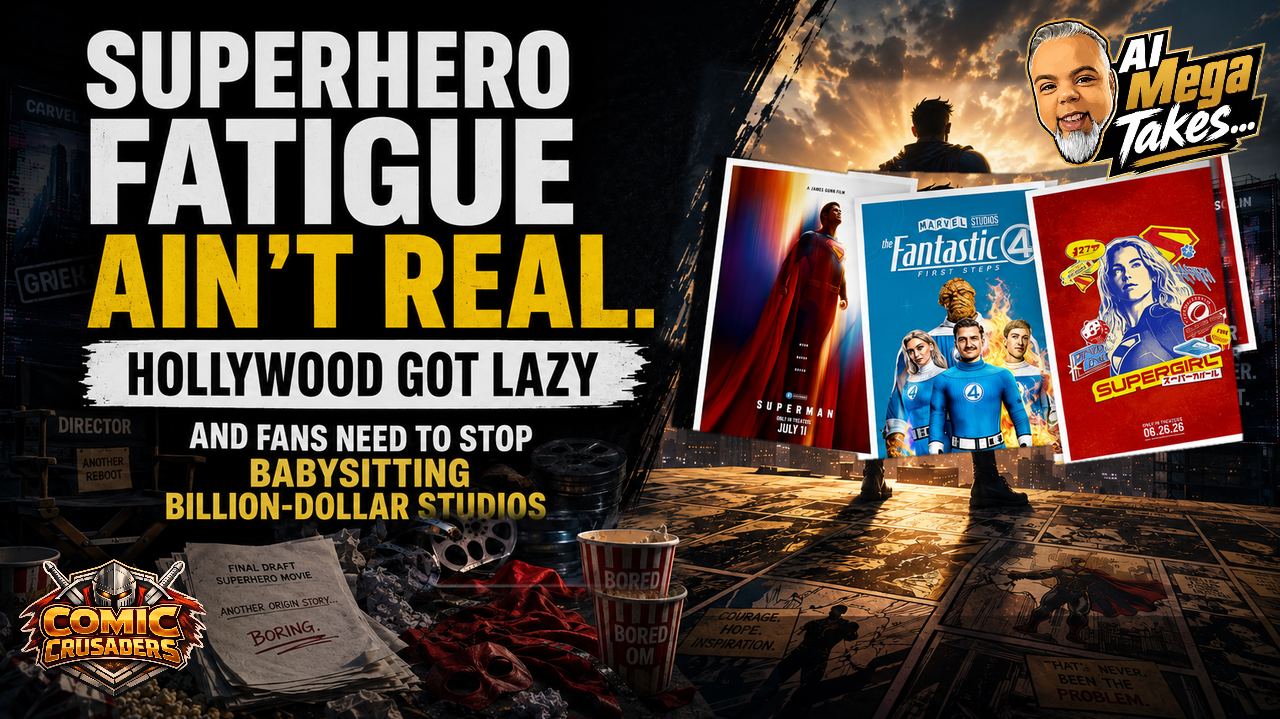
Let’s stop playing games, fam. Superhero fatigue is not the problem. That phrase is Hollywood’s lazy little comfort blanket, the thing executives wrap around themselves when the audience refuses to reward a movie that feels like it was assembled in a conference room by people allergic to soul. The cape is not the issue. The logo is not the issue. The problem is that too many studios keep treating superheroes like automatic money machines, then act shocked when the machine starts coughing smoke and asking for therapy.
The latest body on the table is Supergirl, a film that should have been a victory lap for DC Studios and instead became another warning flare in the sky. According to Entertainment Weekly, the movie opened with about $68 million worldwide against a reported production budget of around $170 million, with domestic ticket sales around $38 million. DC Studios co-chief Peter Safran admitted the film “didn’t meet our box office expectations,” while still framing it as one piece of a larger long-term plan. Translation from executive to Brooklyn English: “Yeah, this hurt, but we are not flipping the table yet.” Fair enough. But let’s not pretend the table is not wobbling.
GamesRadar reported that Supergirl opened to $37.1 million domestically, the lowest opening for a DC movie since Aquaman and the Lost Kingdom, and projected a steep second-weekend drop of about 60 percent. That is not a hiccup. That is the kind of number that makes accountants stare out windows like they just saw the ghost of Blockbuster. But before the usual suspects start shouting “superhero fatigue” like it is a magic spell, let’s be grown for five seconds. Audiences did not suddenly wake up and hate heroes. They woke up and started smelling leftovers. There is a difference.
People are not tired of superheroes. People are tired of movies that do not feel like they matter. They are tired of watching iconic characters get tossed into expensive noise machines where every third-act battle looks like two screensavers fighting in a thunderstorm. They are tired of being told a movie is important because it connects to six other projects, three streaming shows, a post-credit tease, and a spreadsheet called “Phase Whatever.” Mi gente, that is not storytelling. That is homework with explosions.
Even DC’s own leadership has flirted with the truth. Earlier this year, Peter Safran told the Associated Press, through reporting carried by GamesRadar, that he never believed the issue was superhero fatigue. He called it “mediocre movie fatigue.” James Gunn has made a similar point, saying audiences get tired when spectacle loses its emotional grounding and when movies forget character. Now that is the receipt right there. Not from a fanboy on Reddit. Not from your cousin who still argues about Snyder cuts at Thanksgiving. From the people running the shop. And they are right.
Superheroes have never survived because they punch hard. They survive because they mean something. Superman is not beloved because he can lift a building. He is beloved because, when written right, he makes decency look powerful. Batman is not interesting because he has gadgets. Half the planet has gadgets now, including your uncle who still cannot find the Bluetooth button. Batman matters because he turns trauma into mission, pain into discipline, and darkness into a code. Spider-Man works because every win costs him something. The X-Men work because they turn fear, difference, survival, identity, and found family into pop-culture electricity. Wonder Woman works when she is not just a warrior, but a moral force walking into a broken world with compassion and a sword. That is the sauce. Not the cape. The meaning.
The Conversation recently argued that audiences are not tired of superheroes as much as they are tired of stories that no longer speak to the political and emotional anxieties that made the genre connect in the first place. That is the adult conversation right there. Superheroes pop when the world feels unstable because they offer a mythic answer to real fear. They give shape to chaos. They say, “Yes, the world is burning, but somebody still believes saving people is worth the trouble.” When the story loses that emotional nerve, all you have left is branding with a gym membership. And Hollywood has been leaning way too hard on branding.
For years, the industry trained fans to treat announcements like events, logos like scripture, casting rumors like stock tips, and trailers like national holidays. It worked for a while. The machine was loud, shiny, and profitable. Marvel built one of the most successful cinematic runs in history. DC, even with all its chaos, still put characters into the global conversation that could move serious money when handled right. But success has a nasty side effect: it makes people think the system is bulletproof. It is not.
A superhero movie still has to be a good movie. Crazy concept, I know. Somebody alert the boardroom. You cannot just throw a known name on a poster, add a sarcastic trailer song, hire a few familiar faces, and expect fans to line up like rent is free. Audiences have options now. Big options. Video games. Anime. Streaming. Indie comics. YouTube creators. TikTok drama. Wrestling. Podcasts. Forty different things screaming for attention before breakfast. If Hollywood wants people to leave the couch and pay theater prices, the movie better feel like more than a content appointment.
That is where the fans come in too, because y’all are not innocent either. I say this with love, but some of you defend studios like they are your cousins trying to keep the lights on at the family bodega. These are billion-dollar companies, not fragile little baby birds. You do not need to throw yourself in front of every criticism like Captain Save-A-Franchise. If a movie underperforms, we can say it. If the marketing was weak, we can say it. If the story did not connect, we can say it. If a studio fumbled a character with decades of comic book gold sitting right there, we can absolutely say it. That is not hate. That is accountability.
The weirdest part of modern fan culture is how some people act like criticism is betrayal. Nah, fam. Criticism is how the thing gets better. Real fans are not unpaid publicists. Real fans are the people who love something enough to say, “Yo, fix this.” The old-school comic shop energy was built on debate. You walked into the shop, grabbed your pull list, argued about continuity, complained about bad creative choices, praised the heat, roasted the nonsense, and still came back next Wednesday. That was love with seasoning. Now too many online spaces treat every disagreement like a war crime. Relax. Nobody is attacking your childhood because they said the third act looked like a PlayStation cutscene that got left in the microwave.
Hollywood has used that defensive fan energy as a shield for too long. When things work, the studio takes the parade. When things wobble, suddenly it is the audience’s fault. “Gen Z does not care.” “Fans are too divided.” “The genre is exhausted.” “People do not go to theaters anymore.” Stop it. People go when they care. People show up when the promise is clear. People show up when the movie feels alive. If the audience can turn a video game plumber into a box office monster, if horror can keep printing money on smaller budgets, if animated films can turn families into weekend warriors, then maybe the issue is not that people hate superheroes. Maybe the issue is that people hate being treated like predictable wallets with nostalgia buttons. That is the part nobody in the fancy meeting wants to say out loud.
A weak opening does not mean Supergirl is a bad character. Kara Zor-El is one of DC’s richest emotional lanes when handled right. She is not just “girl Superman,” and anybody saying that needs to go sit in the corner with a warm juice box and read a comic. Kara carries grief differently. She remembers Krypton. She carries survival, anger, displacement, and identity in ways Superman does not. There is a rawness there. A messiness. A beautiful emotional storm. That should be cinematic gold. The fact that a movie centered on her struggled does not prove audiences reject Supergirl. It proves that even great characters need the right story, the right timing, the right marketing, and the right reason to exist. That matters. Because if Hollywood learns the wrong lesson, we all lose. The wrong lesson is, “Audiences do not want female superheroes.” No. The wrong lesson is, “People do not want lesser-known characters.” Wrong again. The wrong lesson is, “The cape era is over.” Please. The cape era is not over. The lazy era needs to be over.
The right lesson is simple: respect the characters, respect the audience, and stop treating lore like a vending machine. Comic book movies need a reset, not a funeral. Smaller budgets. Stronger scripts. Actual directors with point of view. Less obsession with setting up future content and more obsession with making the current movie unforgettable. Let characters breathe. Let worlds feel lived in. Let stakes hurt. Let heroes fail in ways that actually cost something. Stop making every movie look like it was color-corrected inside a wet parking garage. Stop using multiverse logic as duct tape. Stop assuming the fans will show up just because a logo glows for two seconds at the end of a trailer. Give us a reason.
Also fans, we need to stop confusing support with blind loyalty. You can love DC and still say DC fumbled. You can love Marvel and still say Marvel got too comfortable. You can love superheroes and still admit that some of these movies have been giving “group project where nobody read the book.” That does not make you toxic. That makes you honest. The toxic part is pretending everything is amazing until the box office hits, then blaming the audience for not clapping hard enough.
The irony is that superheroes are built for this exact moment. The world is anxious. People are tired. Institutions feel shaky. Everybody is online, overstimulated, broke, annoyed, and one bad email away from becoming a villain origin story. This should be prime superhero territory. Not because people want escapism only, but because they want meaning dressed in spectacle. They want hope with bruises. They want justice that costs something. They want characters who make them feel bigger than the mess outside their door. That is why superhero fatigue is fake.
What is real is lazy storytelling fatigue. Franchise fatigue. Mediocre movie fatigue. Corporate excuse fatigue. Fake event fatigue. Trailer hype fatigue. “Please watch this so we can set up the next thing” fatigue. And yes, fanbase babysitting fatigue, because some of y’all need to clock out of the unpaid defense department and go drink water. The cape still works. The symbol still works. The myth still works. But the industry has to earn it again.
So no, Hollywood, people are not done with superheroes. They are done with being served reheated spectacle and told it is a feast. And fans, stop saving these studios from the consequences of their own choices. Love the characters. Defend the art. Support the creators. But do not throw your credibility into traffic for a corporation that would reboot your favorite universe before the check clears. Superheroes are not dead. The audience is just finally acting like Alfred in the Batcave, calm, tired, and brutally honest:
“Master Bruce, perhaps the problem is not the cape. Perhaps the script is trash.”
Weepppppppaaaaaaaaaa…
Receipts/Sources:
- Entertainment Weekly reported Supergirl opened with about $68 million worldwide, around $38 million domestically, against a reported $170 million budget, and quoted Peter Safran saying the movie did not meet DC Studios’ box office expectations.
- GamesRadar reported Supergirl opened to $37.1 million domestically, projected a 60 percent second-weekend drop, and compared the opening to recent DC underperformers.
- GamesRadar also reported Peter Safran’s “mediocre movie fatigue” framing and James Gunn’s comments about spectacle fatigue when stories lose emotional grounding.
- The Conversation argued that audiences are not tired of superheroes so much as stories that no longer speak to the anxieties that made the genre connect.
- No Film School argued the opposing case, that superhero fatigue is visible in box office trends.
Editorial Disclaimer:
This article is an opinion/editorial commentary based on publicly available reporting, box office coverage, and industry discussion around superhero films, including Supergirl and the broader “superhero fatigue” debate. It is not intended as a personal attack on any actor, filmmaker, creator, fan, or specific audience group. Comic Crusaders supports comic book creators, fans, performers, and the continued success of superhero storytelling across comics, film, television, animation, and games. The criticism here is aimed at industry trends, studio decision-making, marketing habits, franchise strategy, and the way major corporations sometimes frame audience response.
*Ai Disclosure: The main image includes AI-assisted artwork reviewed by Comic Crusaders before publication.


Leave a Reply
You must be logged in to post a comment.