

Webtoon’s AI Bet: Creator Freedom or the Next Platform Power Grab?
·Al Mega
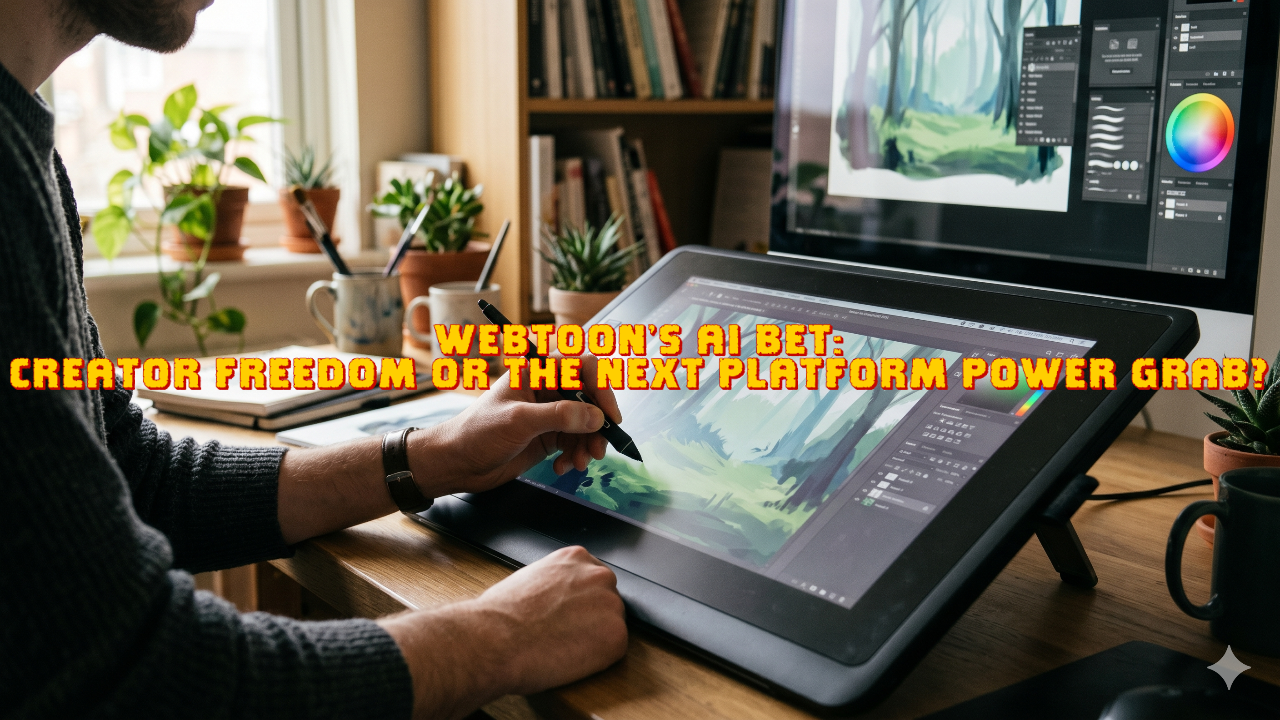
For years, indie comics creators were told the internet would set them free. No gatekeepers. No distributor bottlenecks. No begging for shelf space. Just upload the work, find the audience, build the fandom, and let the story speak. It sounded beautiful. It still does. But now, as Webtoon moves deeper into AI-powered translation, expanded creator analytics, global monetization, and platform-controlled discovery, the question becomes harder to dodge: when a platform gives creators the tools to reach the world, how much of the world does the platform quietly end up owning?
That is the real story behind Webtoon’s new AI push. Not the lazy version of the debate where everyone runs to their corners and starts yelling “AI bad” or “AI future” like two drunk uncles at a family barbecue. The smarter question is this: can artificial intelligence help independent comics creators cross language barriers and earn real money without turning them into tenants on someone else’s digital land?
Webtoon says the goal is empowerment. The company’s new Canvas tools are designed to help creators translate their work into multiple languages, understand their audience better, manage community engagement, and participate more broadly in ad revenue opportunities. On paper, that is huge. For a creator working after a day job, drawing at 1 a.m. with cold coffee, wrist pain, and a dream that refuses to die, translation can be the difference between being local and being global. A romance comic made in Queens could find readers in Mexico City. A fantasy series from Manila could build a fanbase in Paris. A horror strip from São Paulo could land in front of readers in Thailand. That is not small potatoes. That is the promise of the digital comics era finally putting some muscle behind the speech. But every promise in the creator economy comes with fine print, and the fine print is where the monsters hide.
The first concern is quality. Translation is not just swapping words from one language to another. Anyone who has ever watched a bad subtitle knows the pain. A joke dies. A romantic line becomes cardboard. A threat loses its teeth. Cultural rhythm gets flattened into airport-menu English. Comics are even trickier because dialogue has to fit the panel, match the character’s voice, preserve pacing, and respect tone. A character who talks like a Brooklyn wiseguy cannot suddenly sound like a corporate email because the machine got nervous. That is how you turn flavor into oatmeal.
Webtoon’s approach appears to understand part of that problem. The company has described glossary tools and human review processes for reported issues. That matters. But the burden still shifts. If the creator must review every translation to protect character voice, then the tool is not replacing work it is relocating work. Instead of paying a professional translator upfront, the creator may now become editor, cultural consultant, quality-control manager, and customer-service department. That is not necessarily exploitation, but let’s not sell it as magic. It is still labor. Different room, same rent.
The second concern is dependency. This is where the article leaves the tech demo and walks into the boardroom. Webtoon is not some tiny hobby site trying things out in a basement. It is a global entertainment company with a massive user base, public-market pressure, partnerships, monetization layers, and a growing interest in turning comics into video, games, merchandise, and screen-ready IP. That does not make Webtoon evil. Business is business. But it does mean creators should pay close attention to what happens when their growth depends on platform-native tools.
If Webtoon translates your comic, hosts the translated versions, provides the analytics, controls the discovery system, manages the audience relationship, and connects the monetization pipeline, then the creator gains reach but may lose leverage. That is the classic platform trade. You get the stadium, but they own the lights, the ticket booth, the exits, and the hot dog stand. Wepa, welcome to the future.
The best version of this future is exciting. A young creator with no publishing connections can build a global audience faster than ever before. Readers get more stories from more countries. Language stops being a wall. Smaller creators gain access to tools that only major publishers, studios, or wealthy agencies could afford. Webtoon could become a powerful accelerator for creators who would otherwise remain buried under the brutal economics of digital attention.
The worst version is also easy to imagine. AI translation becomes another metric machine. Creators are pressured, directly or indirectly, to localize faster, post more, chase more markets, and adjust stories to whatever the dashboard rewards. The platform becomes not just a host but a silent co-producer of creative behavior. The artist still owns the pencil, but the algorithm starts tapping the table: shorter scene here, cleaner joke there, make the romance more universal, make the pacing more bingeable, make the character easier to merchandise. That is not science fiction. That is the internet.
Comics have already lived through versions of this. Direct-market comics were shaped by retailers, distributors, preorders, variants, and collector behavior. Social-media comics are shaped by shares, panels that crop well, and outrage cycles. Crowdfunding comics are shaped by reward tiers, campaign videos, stretch goals, and the constant need to sell the dream before the book exists. Every system changes the art that lives inside it. Webtoon’s AI era will be no different. The difference is scale.
A traditional publisher could influence a print run. A distributor could influence access. A retailer could influence visibility. A global digital platform with AI translation, reader data, ad monetization, and IP development can influence almost everything: language, pacing, audience geography, engagement habits, and commercial potential. That is why this moment deserves more than cheap panic. It deserves adult conversation.
Creators should not reject these tools just because they are AI. That would be too easy, and frankly, too weak. Tools are tools. A brush does not paint the masterpiece. A camera does not direct the film. A translation engine does not automatically steal the soul from a comic. But tools become dangerous when creators do not understand the business model behind them.
The constructive path is transparency. Creators should know exactly what data is processed, what is stored, what is used for training, who can access translated scripts, who owns the localized versions, how corrections are handled, how revenue is split across languages, and whether translated editions can be removed or exported. Readers should know when they are reading machine-assisted translations. Translators should not be erased from the conversation either, because localization is a craft, not a plug-in. A good translator is not a dictionary with rent. A good translator is a co-pilot for meaning.
That last point matters because comics are human work. They are not just content units sliding down a vertical scroll. They are heartbreak, comedy, identity, obsession, deadlines, cultural memory, dumb jokes, brave confessions, and late-night madness arranged into panels. AI can help move those panels across borders. But it should never be allowed to pretend it created the soul inside them.
To be fair, many creators will welcome this. And they should. For an independent artist with no budget, AI-assisted translation may be the only realistic way to reach readers outside their primary language. Professional localization is expensive. Audience-building is slow. Marketing is exhausting. If Webtoon can reduce those barriers while preserving creator control, that is not a villain story. That is a powerful opportunity.
But the comics industry has to stop acting surprised every time a helpful platform becomes a powerful landlord. We have seen this movie. Streaming platforms promised exposure, then changed residual economics. Social platforms promised reach, then throttled organic visibility. Digital marketplaces promised independence, then made creators chase opaque systems. The first hit is always free. The second one comes with a dashboard.
So the Webtoon AI question is not whether creators should use the tool. Some absolutely should. The question is whether the industry will demand rules before the tool becomes infrastructure. Because once a platform feature becomes the default path to global reach, opting out stops feeling like a choice. It starts feeling like exile.
That is where Comic Crusaders should plant the flag. Not anti-technology. Not blind cheerleading. Pro-creator. Pro-transparency. Pro-human authorship. Pro-tools that serve artists instead of slowly training artists to serve tools.
The future of comics will not be protected by pretending AI is going away. It will be protected by asking hard questions while the contracts are still being written, while the dashboards are still being designed, and while creators still have enough leverage to say, “Hold up, who benefits from this?”
Because if AI helps a creator from one corner of the world find readers in ten others, that is beautiful. That is the dream. But if the price of that dream is giving the platform deeper control over language, audience, monetization, and identity, then creators need to walk in with both eyes open.
The door to the global comics market is opening wider. That is good news.
Now the industry has to make sure creators are not just invited inside as guests.
They need to own the keys too! Wepaaaaaaaa…

Leave a Reply
You must be logged in to post a comment.