
From Military Intelligence to Indie Comics: Eric Corbridge Turns Heartbreak Into Hope With BadWill
·Al Mega
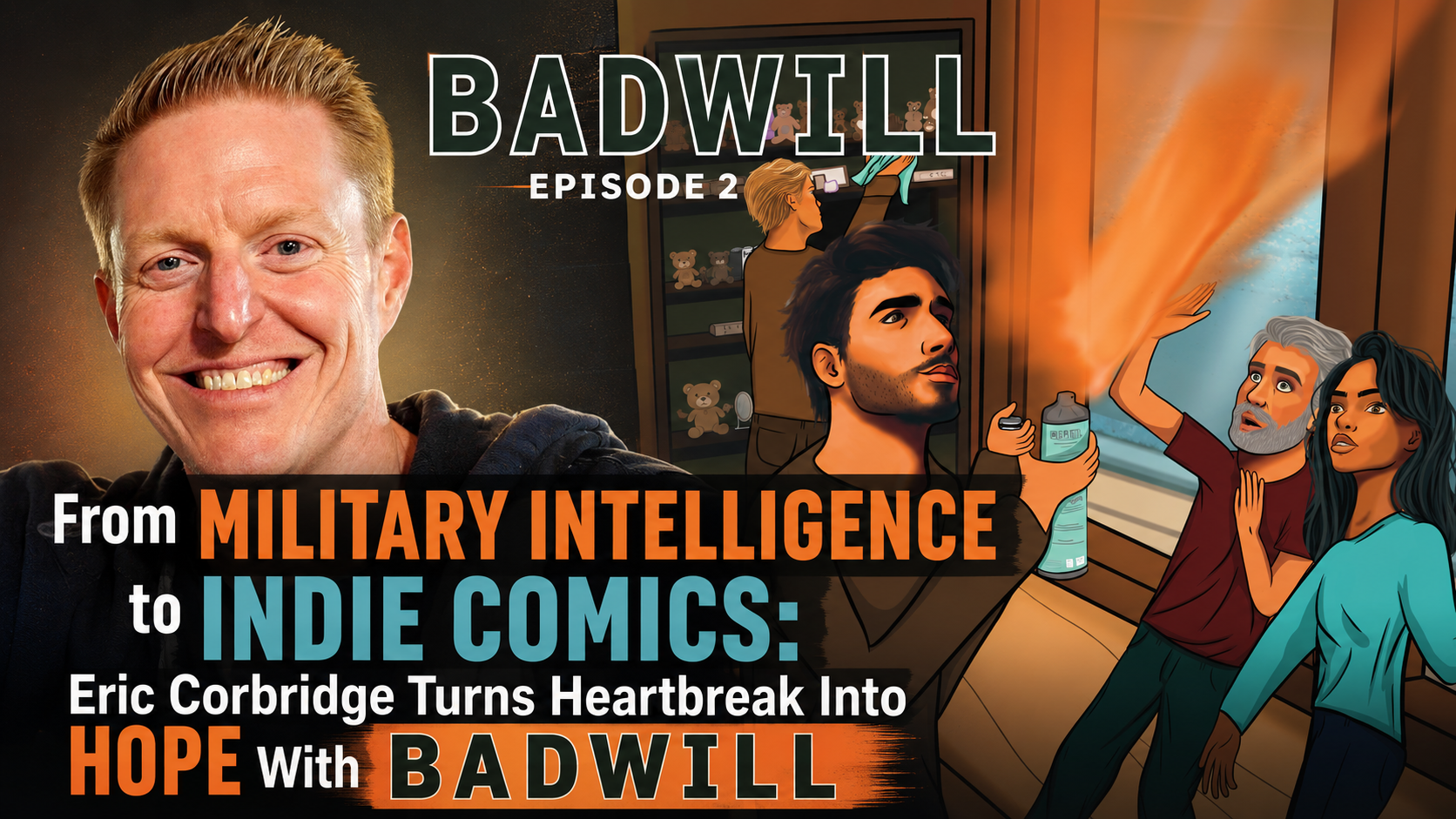
After 22 years in the U.S. Air Force, Corbridge traded the expected path of government contracting for creator-owned storytelling and built a Maryland workplace dramedy where broken relationships become the beginning of something new.
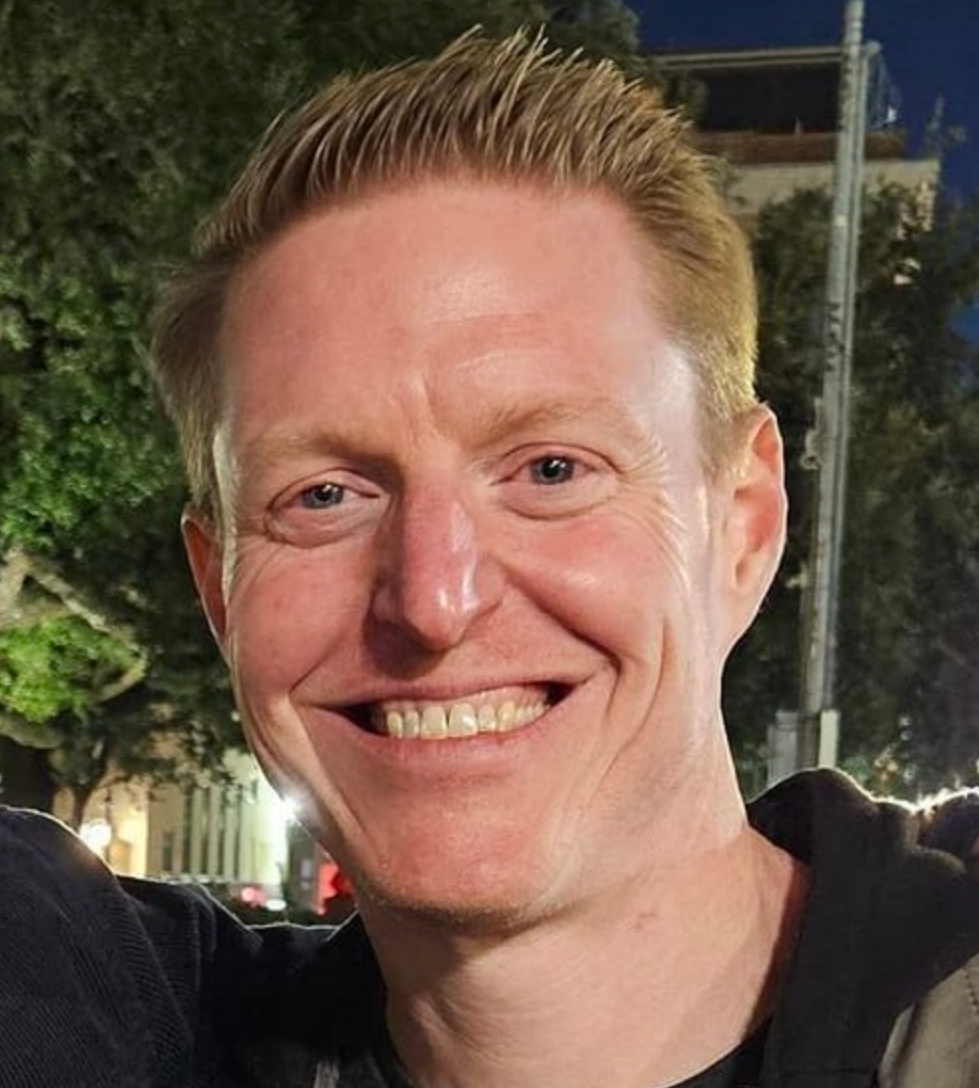 Some creators enter comics carrying childhood sketches, half-finished scripts, and a dream they have been chasing forever. Eric Corbridge arrived carrying something heavier: 22 years of military service, the uncertainty of retirement, and one deceptively simple question born during a conversation on a Maryland tennis court.
What if there were a thrift store called BadWill?
The joke could have lived for five minutes and disappeared. Instead, Corbridge turned it into a fully written ten-episode season about heartbreak, identity, redemption, community, and the strange objects people leave behind when relationships fall apart. Set in Harford County, Maryland, BadWill follows the employees and customers of a thrift store that only accepts donations connected to failed relationships.
Corbridge originally developed the project for television before recognizing that comics offered something the screen industry would not readily give an unknown creator: a realistic path forward and meaningful creative control. Working alongside illustrator Hailey MacIsaac, he successfully introduced the series through Kickstarter, where Episode 1 attracted 141 backers and raised $7,737.
Now Corbridge is continuing the story with BadWill Episode 2: Omaha, a 48-page chapter centered on Greg Johnson, a man attempting to rebuild his life after a decision whose consequences cannot be easily sorted into right and wrong.
Comic Crusaders spoke with Corbridge about leaving the Air Force, adapting television scripts into comics, writing emotionally complicated characters, learning the business of independent publishing, and why BadWill ultimately rests on one message: giving back instead of giving up.
CC: You retired from the U.S. Air Force after 22 years of service and then moved into a completely different chapter as an independent comic creator. What was that transition like emotionally and creatively, and at what point did BadWill stop feeling like an idea you were playing with and become the mission you needed to pursue?
Eric: Retiring from the Air Force after 22 years was exciting, but it was also scary. For over two decades, my identity had been wrapped up in being a military professional and leader. You get used to people seeing you a certain way when you wear the uniform, whether it’s at work or even out in public. I found myself wondering, “Without that, who am I?” I was also nervous because most people in my career field become contractors or government civilian employees after retiring. There’s a lot of financial stability in that path. I’m incredibly proud of my military career and service, but I knew I wanted to follow a different path and chase a passion.
Creatively, the transition was liberating. I had started to feel creatively stagnant. The work I did in the Air Force was vitally important and directly impacted our nation’s security, but it wasn’t a career that encouraged creativity. I’ve always loved storytelling, escapism, and creating things, so finally being able to throw myself into that side of my personality was incredibly fulfilling.
As for BadWill, I think it stopped being just an idea after I finished writing Episode 1. At first, my mission was simply to see if I could write a television show, and more specifically, BadWill. I always believed the premise had potential, but I had no idea if I could execute it. Finishing that first episode proved to me that I could. From there, the mission kept growing. I found myself weaving in important experiences and observations from my own life that I hoped would resonate with people. The more the story came together, the more I believed in it. By the time I finished writing Season 1, I wasn’t just proud that I’d written it. I knew I wanted to help BadWill find its place in the world.

CC: The original idea reportedly came from a conversation on a tennis court when somebody mentioned making a Goodwill donation, leading you to ask, “What if there were a store called BadWill?” That is a strong hook but a hook alone cannot carry ten episodes. When did you realize the concept had enough emotional depth, characters, and conflict to sustain an entire series?
Eric: It wasn’t one specific moment. I knew pretty early on that Cara’s journey would be the backbone of the story. She goes through a difficult breakup, doesn’t know what comes next, and ultimately opens BadWill, all while trying to figure out if a store like that could even exist in the world.
As I kept developing the series, though, I realized the real strength wasn’t just the premise. It was the characters. Every member of the BadWill crew had their own reasons for wanting to work there, their own personalities, and their own journey. The more I explored how they interacted with each other, the more I realized there were endless stories to tell.
Then I started thinking about the customers. In a store built around failed relationships, someone could walk in wanting to donate just about anything, which creates a steady stream of new situations and new characters. Setting the series in a strip mall expanded that even further by giving me neighboring businesses and another layer of relationships to explore.
That’s when I realized BadWill could sustain a full series. The premise may open the door, but it’s the people inside that world who keep creating new stories.
CC: BadWill was originally written as a television series before you adapted it into comics. Why did you make that change, and what can comics accomplish with this story that television could not? Is the comic now the final form of BadWill, or do you still see it as a possible bridge toward television or another medium?
Eric: After I finished writing the television scripts, I sent them to a friend of mine named Lance who had written a few novels. He told me he’d read thousands of scripts over the years, and mine was only the second one he’d ever felt absolutely needed to be shared. That gave me a lot of confidence, but I also knew the reality of the industry. I wasn’t represented by an agent, and I knew no television network or publisher was going to take a chance on an unknown writer with an original series. I briefly considered adapting the scripts into a novel, but that would have required a complete rewrite. Since the scripts were already built around dialogue and scene descriptions, adapting them into a comic felt like a much more natural fit. As a lifelong comic book reader, I also started to realize how exciting it would be to create my own comic series.
One of the things I’ve come to appreciate most about comics is the amount of creative control they give me. Hailey and I work closely together on every page, and I’m able to provide direction on everything from panel composition to facial expressions and pacing. I also love that comics invite readers to participate in the storytelling. Someone can spend ten seconds on a page or ten minutes. They might notice a small expression or background detail that someone else completely misses, and they may even interpret a moment differently than I intended. I don’t think those interpretations are wrong. I think that’s one of the strengths of the medium. Most importantly, adapting BadWill into a comic gave me the opportunity to actually bring this story into the world, something that simply wasn’t realistic as an independent television series.
Although BadWill began as a television series, I’m completely invested in telling it as a comic. Creating this series has become an incredibly rewarding experience, and I’m proud of what Hailey and I have built together. If an opportunity ever came along to adapt BadWill into television or another medium, I’d certainly be open to exploring it. But my focus right now is telling the best comic series I possibly can.
CC: A thrift store that accepts objects from failed relationships could easily become a collection of jokes about angry exes and awkward breakups. How are you making sure the series treats heartbreak as something emotionally real rather than simply using it as the setup for comedy?
Eric: I think the biggest thing is that I’ve always viewed BadWill as a character-driven dramedy first and a high-concept premise second. The store may be what catches someone’s attention, but at its core, BadWill is a story about people trying to move forward after things don’t go according to plan. The story isn’t really about making jokes at the expense of failed relationships. It’s about people trying to rebuild after them.
I also wanted to broaden the idea of what heartbreak means. Cara’s story begins with a traditional romantic breakup, but heartbreak can come from many different places. It can come from a fractured relationship with a parent, a sibling, a friend, or anyone else who once meant something to you. Those experiences can shape people just as much as a failed romance does.
Humor is also part of how many people deal with pain. Sometimes people joke because they’re uncomfortable. Sometimes they joke because it’s easier than letting other people see what they’re really feeling. Sadiq is a good example of that. On the surface he’s loud, eccentric, and constantly entertaining everyone around him. Underneath all of that, though, his real heartbreak is wondering if he’ll ever truly fit in and find people who accept him for who he is.
That’s really what BadWill is about. The workplace is just the container. The story has always been about the people inside it. The premise creates opportunities for comedy, but it’s the characters, their relationships, and the way they move forward that give the series its heart.
CC: You have compared the series to ensemble-driven shows such as The Office, Superstore, Ted Lasso, and LOST. Those stories work because every major character carries secrets, flaws, and long-term emotional consequences. What does each central character in BadWill want, and what are they unwilling or unable to admit about themselves?
Eric: One of the things I love most about ensemble stories is that every major character feels like the main character in their own life. They all have different goals, different flaws, and different emotional baggage, and I wanted BadWill to feel the same way. People sometimes ask me which character is based on me, and I always give the same answer: “None of them. And all of them.” I don’t base my characters on real people because I think everyone deserves to be their own person. Instead, every character is built from pieces of my own experiences, people I’ve met, books I’ve read, and shows I’ve watched.
Cara wants to rebuild her life and regain control after a devastating breakup by creating something meaningful through BadWill. What she’s unwilling to admit is that she’s spent much of her life seeking validation from other people instead of believing in herself.
Greg wants a fresh start and the chance to build a better life than the one he left behind. He’s unwilling to admit that a part of him still isn’t sure he deserves that second chance.
Sadiq wants to find people who genuinely accept him and value him for who he is. He’s unwilling to admit that the humor, bravado, and constant fun facts are often a shield for someone who has spent much of his life wondering where he truly belongs.
Alicia wants stability, genuine connection, and a place where she feels she belongs. She’s unwilling to admit that years of putting other people first have made it difficult for her to trust that someone might choose to be there for her.
Jenny wants to be there for Cara while also figuring out what she wants for her own future. She’s unwilling to admit that she’s afraid to let people get too close because she’s terrified her vulnerability will be exploited or violated.
Aiden wants people to see him as more than just a good-looking teenager. He’s unwilling to admit that he often lets other people define his worth instead of deciding it for himself.
Lucille wants to use her experience and optimism to help the people around her while building a new sense of community. She’s unwilling to admit that even someone who appears so confident and resilient can still be deeply affected by loss and uncertainty.
Jim wants redemption and the chance to believe he has value after years of disappointment. He’s unable to admit that he often sees himself as the failure everyone else sees, even when the people around him don’t.

CC: Episode 2, Omaha, focuses on Greg Johnson and a life-changing mistake from his past. Without spoiling the reveal, what makes Greg’s mistake more complicated than a simple case of right and wrong, and what do you want readers to question about forgiveness, responsibility, and whether someone truly deserves a fresh start?
Eric: One of the things that interested me most about Greg was writing someone whose biggest mistake couldn’t simply be labeled as “good” or “bad.” He makes a terrible decision, and there are very real consequences for the people around him. He’s responsible for those consequences, and I never wanted readers to lose sight of that. But I also wanted them to see the human being behind the mistake.
Throughout Episode 2, readers see Greg trying to rebuild his life and earn a fresh start. That doesn’t erase what happened. It just raises a difficult question: how much should one mistake define the rest of someone’s life?
More than anything, I hope readers wrestle with forgiveness, responsibility, and second chances. I don’t think forgiveness means pretending something never happened, and I don’t think taking responsibility automatically guarantees redemption either. Sometimes people sincerely want to change. Sometimes they do change. The difficult question is whether the people around them can ever truly trust them again. I don’t think there’s one right answer, and I wanted Greg’s story to live in that uncomfortable space.
CC: Your Air Force career included military intelligence and leadership responsibilities. Did that experience influence how you build an ensemble cast, observe human behavior, handle secrets, or write people working together under pressure? Are there parts of military life that unexpectedly found their way into this civilian workplace comedy?
Eric: Absolutely. One of the biggest lessons I took from my 22 years in the Air Force, especially as a Master Sergeant responsible for developing young Airmen, is that you can never assume you know what someone is thinking or going through. People often present one version of themselves to the world, but when you take the time to really get to know them, you often discover struggles, motivations, fears, and strengths you never would have expected. That lesson has had a huge influence on how I write characters.
It also shaped how I write an ensemble cast. In the military, I worked alongside people from all kinds of backgrounds and personalities, all trying to accomplish a common mission. That taught me that every person brings something different to the table, and that’s exactly what I wanted the BadWill crew to feel like. They don’t always agree, but they each have unique strengths, flaws, and perspectives that make the team stronger.
My military career also gave me the opportunity to work alongside people from many different cultures. Those experiences reminded me how important it is to write characters as complete human beings rather than stereotypes. Sadiq is a good example of that. While his Egyptian heritage is part of who he is, I wanted readers to get to know him because of his personality, his humor, his insecurities, and his heart, not simply because of his background.

CC: Harford County, Maryland, is not merely a generic backdrop for the story it is the series’ home. What specific details of the community, its people, and its personality are built into BadWill, and why was it important to tell this story somewhere that readers do not usually see represented in mainstream comics?
Eric: Growing up in Harford County, it was important to me that BadWill felt like it belonged somewhere real instead of taking place in a fictional “Anytown, USA.” If I’m telling a story that draws on my own observations and experiences, it only made sense to set it in the place that helped shape me. I wanted readers to recognize the community, whether it’s the shopping centers, the neighborhoods, the local references, or simply the feeling of the area.
That authenticity carried over into the world itself. When I imagined the strip mall where BadWill is located, I found myself picturing the layouts of stores I had worked in growing up. Those little details came naturally because they were already part of my life, and I think they help make the world feel lived in.
I also think there are great stories happening everywhere, not just in New York City, Los Angeles, or Gotham. Harford County has its own personality, its own charm, and its own people, and I wanted to celebrate that. If someone from the area reads BadWill and recognizes a place or thinks, “I’ve met someone just like that,” then I feel like I’ve done my job.
At the same time, I don’t think you have to be from Harford County to connect with the story. The setting may be specific, but the characters and the emotions are universal. My hope is that readers from anywhere can enjoy BadWill, while people from Harford County get the added experience of seeing a place they know and love represented in a comic series.
CC: Episode 1 brought in 141 backers and $7,737, which is a meaningful start for a new creator-owned series. What did that first campaign teach you about your audience, your costs, and the difference between successfully funding one comic and building a readership that will return for all ten episodes?
Eric: The first Kickstarter taught me that many of the people backing BadWill weren’t just supporting a comic. They were supporting me. That meant a great deal, but it also came with a responsibility. I wanted to make sure I delivered something they enjoyed enough that they’d want to come back for Episode 2, and hopefully every episode after that.
It also taught me that creating the comic is only one small part of the job. Since Hailey is a freelance artist, I’m essentially a one-man business. Before BadWill, I’d never owned a business or sold anything professionally. Along the way I’ve learned how to build a website, work with comic shops, create a convention display, navigate printing and fulfillment, sell books legally, and constantly look for new ways to reach readers. That’s led me to some places I never expected, like signing a vendor contract with the military exchanges so I could set up at bases across Maryland, and exhibiting at local community festivals. Every experience has taught me something new.
As for building a readership, I think I always knew that was going to come down to telling a good story with well-developed characters that people genuinely care about. My goal has never been to convince someone to back one Kickstarter. It’s to create readers who want to keep coming back because they’re invested in these characters and want to know what happens next. I know BadWill is a slice-of-life dramedy that isn’t written for young children, but I believe there’s a place for an uplifting, hopeful, character-driven story like this in today’s world. If readers finish an episode smiling and excited to return for the next one, then I know I’m building something much bigger than a single campaign.
CC: You already have the ten-episode first season written, which means you know where these characters are heading even while readers are only beginning their journey. What is the larger emotional promise of BadWill? When readers reach the end of that first season, how do you hope their understanding of heartbreak, second chances, and belonging will have changed?
Eric: Even though I know where these characters are headed, my biggest hope isn’t that readers are surprised by the twists. It’s that they come away seeing people a little differently. At its core, BadWill is about moving forward. Heartbreak isn’t something to laugh at or simply “get over.” It’s something everyone experiences in different ways, and while it can shape us, it doesn’t have to define us.
I also hope readers come away with a greater appreciation for how complicated people really are. Second chances aren’t black and white. Sometimes people deserve them. Sometimes they squander them. Sometimes they aren’t given one. There aren’t easy answers. The same is true of belonging. Nearly every major character in BadWill is searching for people who truly see them, accept them, and make them feel like they have a place in the world.
More than anything, I hope readers become a little more empathetic. One of the biggest lessons I’ve learned in life is that we rarely know what someone else is carrying. People are almost always deeper than first impressions, and I hope BadWill encourages readers to be a little slower to judge and a little quicker to understand.
The phrase I keep coming back to is “giving back instead of giving up.” That’s really what BadWill is about. Taking heartbreak, disappointment, failure, or regret and choosing to create something positive from it instead. If readers finish Season 1 believing that moving forward is possible, even when life doesn’t go according to plan, then I’ll feel like I’ve accomplished what I set out to do.

This chat with Eric Corbridge reveals why BadWill has room to become more than a funny title attached to a clever premise. This is not simply a comic about dumping an ex’s belongings at a store and walking away lighter. It is about the emotional weight that remains after the boxes are gone. That distinction matters!
Through Cara, Greg, Sadiq, Alicia, Jenny, Aiden, Lucille, Jim, and the wider Harford County community surrounding them, Corbridge is building a story where people are allowed to be wounded, funny, mistaken, hopeful, and difficult sometimes all before lunch. Nobody gets reduced to the worst thing they have done, but nobody receives a magical forgiveness coupon either. Redemption still has a bill attached.
Corbridge also represents a road many independent creators eventually face. He could wait for an agent, studio, publisher, or executive to grant permission. Instead, he adapted the work, assembled a creative partnership, learned crowdfunding, printing, fulfillment, retail outreach, convention sales, and business operations, and placed the story directly in front of readers.
That is the real creator-owned grind, fam. The glamorous part is holding the finished comic. The rest is invoices, shipping supplies, vendor forms, unanswered emails, and discovering that “independent” often means congratulations you now have twelve jobs.
Still, the heart of BadWill remains simple: disappointment does not have to be the final chapter. Sometimes the pieces left behind can become the raw material for something better.
BadWill Episode 2: Omaha continues that journey by examining responsibility, forgiveness, and whether a person can move forward without pretending the past never happened.
Support and Follow BadWill
Kickstarter:
https://www.kickstarter.com/projects/ericcorbridge/badwill-episode-2-omaha
Trailer:
https://youtu.be/VwjbvMDW7SY
Official Website:
https://badwillcomic.com
Leave a Reply
You must be logged in to post a comment.