
Retro Review: The Avengers #198 & #199 Put the Pedal Down and Let Red Ronin Run Wild
·Al Mega
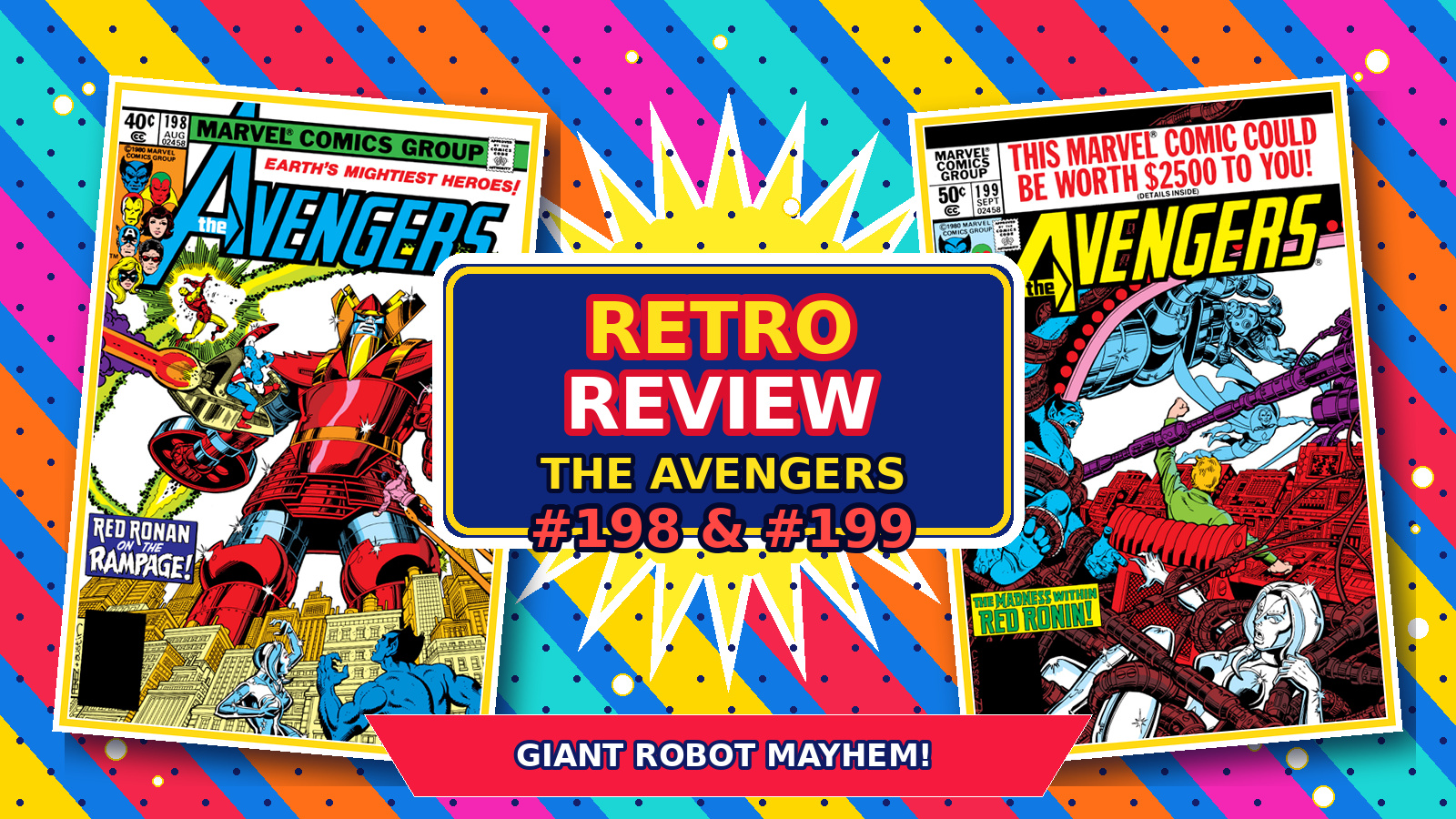
WEEEPAAA, mi gente, strap in, tighten the seat belt, and keep both hands on the wheel because The Avengers #198 and #199 do not ease onto the highway. These Bronze Age bruisers dump the clutch, light up the tires, and send a skyscraper-sized samurai robot stomping across New York with Earth’s Mightiest Heroes scrambling to keep the whole borough from becoming expensive gravel. David Michelinie and George Pérez take Red Ronin, a character built for Marvel’s Godzilla run, drop him into Avengers traffic, and create a two-issue chase that feels massive without forgetting the personalities trapped beneath all that glorious metal-on-metal chaos. The premise is pure comic-book octane: somebody has stolen control of Red Ronin, the enormous S.H.I.E.L.D. robot, and pointed him toward a mission so catastrophically misguided that every footstep becomes a countdown.
Issue #198, “Better Red Than Ronin!,” opens with Wonder Man and Beast staggering home after a spectacularly lousy double date, and right there Michelinie tells you what kind of ride this will be. Before the sirens, missiles, and giant-robot mayhem arrive, Simon Williams and Hank McCoy are two buddies clowning through a bad night. Their banter is loose, affectionate, and genuinely funny. Pérez sells the friendship through posture and expression before Red Ronin barges into their sunrise like a runaway eighteen-wheeler wearing samurai armor. The swing from barroom comedy to citywide emergency is smooth as fresh asphalt, giving the destruction a human point of entry. We are not watching action figures get deployed. We are watching exhausted friends realize the workday just started early.

Once Red Ronin gets rolling, Pérez goes bananas in the best possible way. Scale is the engine. Low angles turn the robot’s feet into moving buildings. Narrow vertical panels track heroes climbing, falling, firing, and improvising around a machine too large to fight conventionally. Wide panels let the hardware breathe, especially when S.H.I.E.L.D.’s Behemoth joins the pursuit and the sky becomes a junkyard brawl waiting to happen. Dan Green’s inks give the machinery weight without smothering Pérez’s kinetic line, while the colors keep every Avenger readable inside scenes packed with steel, smoke, energy, water, and military hardware. There is a lot happening on these pages, fam, but the storytelling never needs a traffic cop.
Michelinie also understands team-book rhythm. Captain America thinks tactically. Iron Man becomes both weapon and problem solver. Jocasta reads technology in ways the others cannot. Wonder Man wants to hit the crisis hard enough to make it behave. Beast jokes because that is how Hank handles pressure. Nick Fury arrives sounding like he swallowed a cigar and a classified briefing. Nobody feels interchangeable, and every contribution grows from character instead of somebody randomly announcing a power. Even the plan that looks brilliant on paper can fail once it meets a forty-story robot with bad intentions. Heroes make decisions, pay for them, adapt, and keep moving.

Behind Red Ronin’s rampage sits Dr. Earl Cowan, whose plan is nuttier than a bodega fruitcake but built on an anxiety the era’s readers knew intimately. Cowan has spent his life marinating in Cold War dread, racial conflict, political betrayal, energy panic, crime, and the looming possibility of nuclear annihilation. His solution is to manufacture a greater catastrophe, attack the Soviet Union, and force humanity to unite against a common enemy. Brother, that is not therapy. That is global arson with extra steps. Still, Michelinie gives the madness a recognizable emotional motor. Cowan is not chasing money or cackling because evil looks good on a résumé. He is a terrified man trying to murder fear by making everyone more afraid, and the contradiction makes him unsettling.
The quieter hospital sequence involving Carol Danvers lands very differently in 2026, especially with the notorious events of The Avengers #200 waiting immediately ahead. Carol’s impossible, rapidly advancing pregnancy is treated by the people around her with concern and tenderness, and Wanda’s decision to offer her real name as an expression of trust is emotionally sincere. Yet the storyline carries a deeply troubling shadow because readers know where Marvel takes it next. Reviewing these issues honestly means holding both reactions at once. Michelinie and Pérez give Carol fear, confusion, and a moment of compassionate friendship here, but this subplot is the on-ramp to one of the franchise’s most heavily criticized violations of character agency. The scene works on its own page. The destination poisons the rearview mirror.

Issue #199, “Last Stand on Long Island!,” brings Hawkeye roaring into the pursuit and immediately changes the flavor. Clint Barton is working security for Cross Technological Enterprises when Red Ronin crashes his shift, which is the Bronze Age equivalent of your quiet office job getting sideswiped by a kaiju. Hawkeye’s wisecracks have bite, but Pérez never lets the comedy shrink the danger. Clint is a human-sized target beneath an impossible opponent, and his willingness to engage anyway captures why he belongs among gods, synthezoids, armored geniuses, and living powerhouses. He cannot overpower Red Ronin. He can irritate him, redirect him, buy seconds, and trust the team to turn those seconds into a plan.
The second chapter is where Michelinie’s Avengers chemistry really cooks. The heroes must decide how much risk is acceptable when Beast and Jocasta may still be trapped inside the robot. Wonder Man reacts like a friend who refuses to reduce people to numbers. Iron Man responds like a field commander staring at the possibility of hundreds or thousands of civilian deaths. Neither position is treated like cheap melodrama. Both men are right enough to hurt, and that tension gives the eventual strategy emotional torque. Team comics hit hardest when the conflict is not simply hero versus villain but responsibility versus loyalty, with no spotless lane through the collision.

Pérez turns the final operation into sequential-art machinery. Every Avenger becomes a moving component in a larger trap, and John Costanza’s lettering keeps the communications, warnings, sound effects, and frantic timing easy to follow. The page layouts tighten as the plan reaches its critical seconds. Red Ronin’s shield, laser blade, propulsion, and sheer mass stop being cool accessories and become variables the team must manipulate. Panels accelerate. Angles sharpen. Distance closes. You can practically hear the gears chew. The beauty is not merely that the Avengers attack together. They think together, fail together, and recalibrate together, which is the real fuel behind the title when it is operating at championship level.
Do these comics carry a few Bronze Age dents? Absolutely. The narration sometimes describes an image Pérez has already communicated, Cowan’s stammer is leaned on heavily, and several cultural gags belong firmly to 1980. Red Ronin’s motivation also becomes mechanically repetitive once his controller loses command and the machine keeps following its last instruction. None of those scratches kill the ride. At 17 story pages per issue, Michelinie packs comedy, character business, tactical problem-solving, civilian danger, supporting-cast development, and a gigantic action set piece into space many modern comics would use for the opening act alone. Dense does not mean sluggish when every panel has a job.

Reading #198 and #199 together reveals a compact graphic-novel structure hiding inside two monthly issues. The first chapter identifies the runaway threat, demonstrates why brute force will not solve it, exposes the wounded mind behind the controls, and ends with the crisis still accelerating. The second pays off Hawkeye’s arrival, deepens the moral stakes, reorganizes the team, and converts Red Ronin’s hardware into the key to stopping him. Setup becomes payoff. Character becomes strategy. Spectacle becomes consequence. Simple, clean, effective. No six-issue decompression fog, no wandering detour disguised as mystery, just creators who know where the finish line sits and still make every turn exciting.
These issues offer a beautiful snapshot of the Avengers before the property became a global cinematic juggernaut. The roster is wonderfully eccentric, the headquarters feels lived in, the heroes maintain jobs and messy friendships, and S.H.I.E.L.D. owns an anti-Godzilla aircraft because comics once understood that “Why not?” could be a complete business plan. Pérez draws the impossible with absolute conviction, Michelinie keeps the cast human, Green supplies muscle, Costanza controls the noise, and the color work gives the collision that unmistakable vintage Marvel voltage. The result is not merely nostalgia with a shiny hood ornament. It is sturdy team-comic engineering.

The Avengers #198 and #199 are big, brisk, funny, anxious, and unapologetically comic-book wild. Red Ronin brings the thunder, but the Avengers’ personalities make the noise matter. Hawkeye earns his lane. Wonder Man and Beast bring heart. Iron Man and Cap bring command. Jocasta brings the technical edge. Even the uncomfortable Carol Danvers material deserves examination because retro reviewing should never buff away history’s ugliest scratches. We admire what still runs beautifully, call out what aged badly, and understand how both belong to the same machine. These two issues may not be the most famous laps in Avengers history, but once that red giant hits the road, good luck looking away. Pop the hood, smell that Bronze Age ink, and let this old-school engine roar. WEPAAAA!
CRUSADERS SCORE:
4/5
Writer: David Michelinie
Penciler: George Pérez
Inker: Dan Green
Letterer: John Costanza
Colorists: Gafford and Sean (#198); Ben Sean (#199)
Editor: Jim Salicrup
Editor-in-Chief: Jim Shooter
Cover Artists: George Pérez and Terry Austin
Publisher: Marvel Comics
Original Publication: August and September 1980
Leave a Reply
You must be logged in to post a comment.