

From Gotham to Las Vegas: Why Comic Casinos Work Well
·Juan James
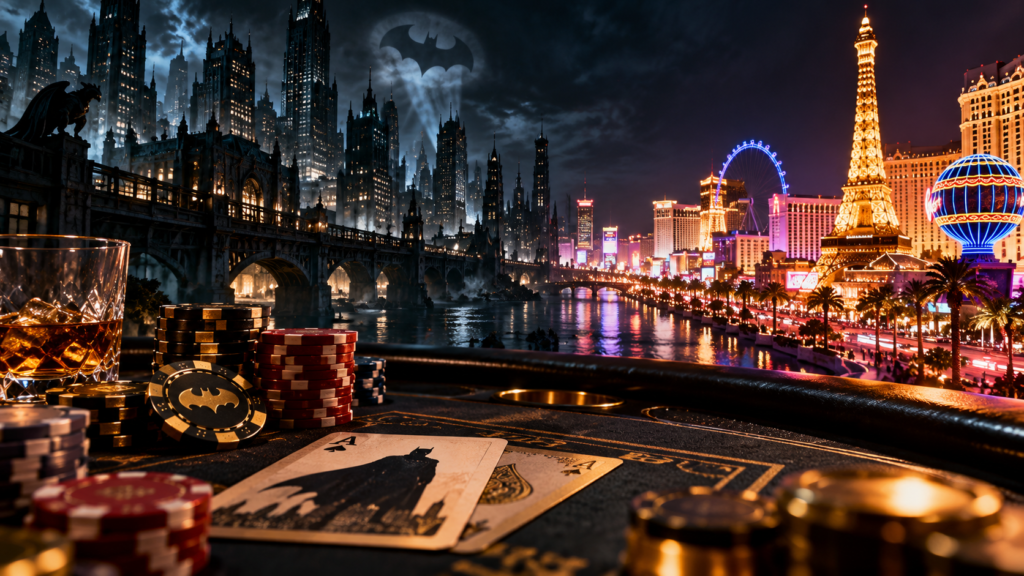
Batman can brood on a gargoyle, yet a roulette wheel still feels like home in his city. Comics love casinos because a casino turns private hunger into public theater: chips click, cameras blink, and every smile could be a lie. The mix fits capes, masks, and crooked deals. A blackjack table gives Bruce Wayne a polite mask; a back room gives Two-Face a coin-flip sermon; a penthouse pit gives Catwoman a reason to smile at the lock before stealing the necklace.
Real betting pages borrow some of that mood. A Czech fan comparing online casino cz sites may find zahranicni online casina listed with an international license, but the comic version strips the topic down to risk, swagger, and one bad tell.
Editors get a clean stage in five panels. The hero enters, the villain raises, and the room understands the stakes before anyone throws a punch.
The room solves exposition fast
A casino floor explains itself at a glance. There is money on felt, a boss behind glass, and a crowd trained to stare at tiny changes. No caption box has to work hard.
That speed helps serialized comics. In a twenty-page issue, the artist can show the hero’s wealth, the villain’s vanity, and the city’s class split without parking characters in a diner for four pages. A single splash of slot machines and red carpet does the job.
Researching the market can even sharpen a scene. The phrase mezinárodní online casino appears beside https://extremfood.cz/ offers for Czech players, while a writer can turn that kind of ad language into a crooked billboard above a strip.
The gag writes itself.
A different panel might show zahraniční review of online casino choices for Czech players on a villain’s tablet before the wifi drops and the heist timer starts.
Tiny detail. Big pressure.
Masks, tells, and crooked math
Poker is a gift to artists because faces matter as much as fists. A clenched jaw, a relaxed hand, or a bead of sweat under a domino mask reads faster than a paragraph of doubt.
Villains fit the table even better. The Riddler treats odds as insults. Penguin treats the house as a private bank. Kingpin, in Daredevil stories, barely needs to touch a card; the other players fold because his silence weighs more than the pot.
The casino also gives moral gray space. A hero can cheat a cheater, which feels wrong for half a second and then feels right when the marked deck appears. That little wobble keeps the scene alive.
Luck has a face here. It grins.
Comics run on symbols, and casino math is full of them: doubles, pairs, jokers, queens, aces, snake eyes. Even a losing hand looks like a clue when a penciller frames it in close-up.
Las Vegas makes excess visible
Las Vegas works in comics because it never whispers. Neon letters are already graphic shapes, stacked like sound effects. A casino sign can look like a punch, a prayer, or a warning, depending on the colorist’s palette.
The city lets a story grow loud without feeling random. A runaway limo on the Strip, a magician’s tiger in a service hall, a villain meeting under a fake Eiffel Tower: none of it needs much defense. The place has trained readers to accept spectacle.
Gotham uses casinos differently. Its gambling rooms feel hidden, smoky, and old. Even when the carpet is new, rot sits under it. Las Vegas sells the sin in public; Gotham hides it behind a membership list and a guard with cauliflower ears.
Both settings love performance.
That is why Harley Quinn can turn a blackjack table into a comedy beat, while Batman can turn the same table into evidence. The prop stays simple. The tone flips.
A heist map drawn in chips
Casino stories also give artists clean geography. There is a lobby, a cage, a pit, elevators, cameras, vault doors, and service corridors where henchmen smoke beside laundry carts. A reader understands the map fast.
That matters during a heist. If Nightwing drops through the ceiling above table twelve, the reader knows the vault is still across the floor and down one level. If the power fails, the backup generator becomes a goal, not a random gadget.
The best comic heists make money feel heavy. A stack of chips is easy to draw, but a pallet of chips is absurd. Gold bars look classic. Cash bricks look dirty. Digital credits on a screen look fragile, which makes them perfect for a hacker hero with shaky ethics.
The clock ticks.
Casinos add built-in countdowns: shift changes, scheduled fights, midnight draws, whale arrivals, and surveillance loops. A writer gets tension without inventing a doomsday machine every month.
Class conflict under gold lights
Superhero comics keep returning to casinos because wealth is visible there in uncomfortable ways. One panel can hold a janitor, a cocktail server, a billionaire in a tux, and a mob accountant pretending to be bored. Nobody needs a speech.
The room sorts people by access. Some walk through velvet ropes. Some get scanned by security. Some clean ash from trays after the party ends. That quiet sorting gives street-level heroes a reason to care, especially in stories about rent, medical bills, and debt collectors.
Daredevil fits this pressure. So does Luke Cage. A casino in their orbit is less about glamour and more about who pays when the house wins. The answer is rarely the man in the nicest suit.
Small stakes hit hard.
A mother pawning jewelry for one last bet can hurt more than a satellite laser, because the loss fits in a hand. Comics need scale, but they also need faces in the crowd. Casinos supply both without much setup.
Drawing chance without explaining it
Chance is tricky on a comics page. A prose writer can linger inside a gambler’s head, but a penciller has to make probability visible. Dice help. Cards help more. The reader sees the queen appear, then sees the villain’s eye twitch.
Panel layout can mimic a bet. A narrow panel feels like a held breath. A wide reveal feels like the turn of a card. Repeated close-ups of chips, hands, and camera lenses create rhythm before the action breaks it.
Color does heavy work too. Green felt cools a page. Red neon makes every face look guilty. Gold light turns greed into weather. In good casino scenes, the palette tells the reader who feels safe and who is lying.
Silence matters.
That restraint keeps the casino from becoming wallpaper. If every machine flashes and every guest shouts, the page turns into noise. One quiet dealer, one unlucky chip, and one camera dot in the ceiling are enough. The reader fills the rest, which is exactly how suspense earns its rent in the panel gutters after midnight too.
A page with no dialogue, just a dealer’s hand and a hero watching reflections in a chip rack, can carry more suspicion than six balloons of threat. The next useful move for a comic writer is simple: pick one game, one secret, and one object on the table that will betray someone by page five.
Leave a Reply
You must be logged in to post a comment.