

REVIEW: A Touch of Truth Turns Island Grief Into a Time-Bending Mystery
·Al Mega
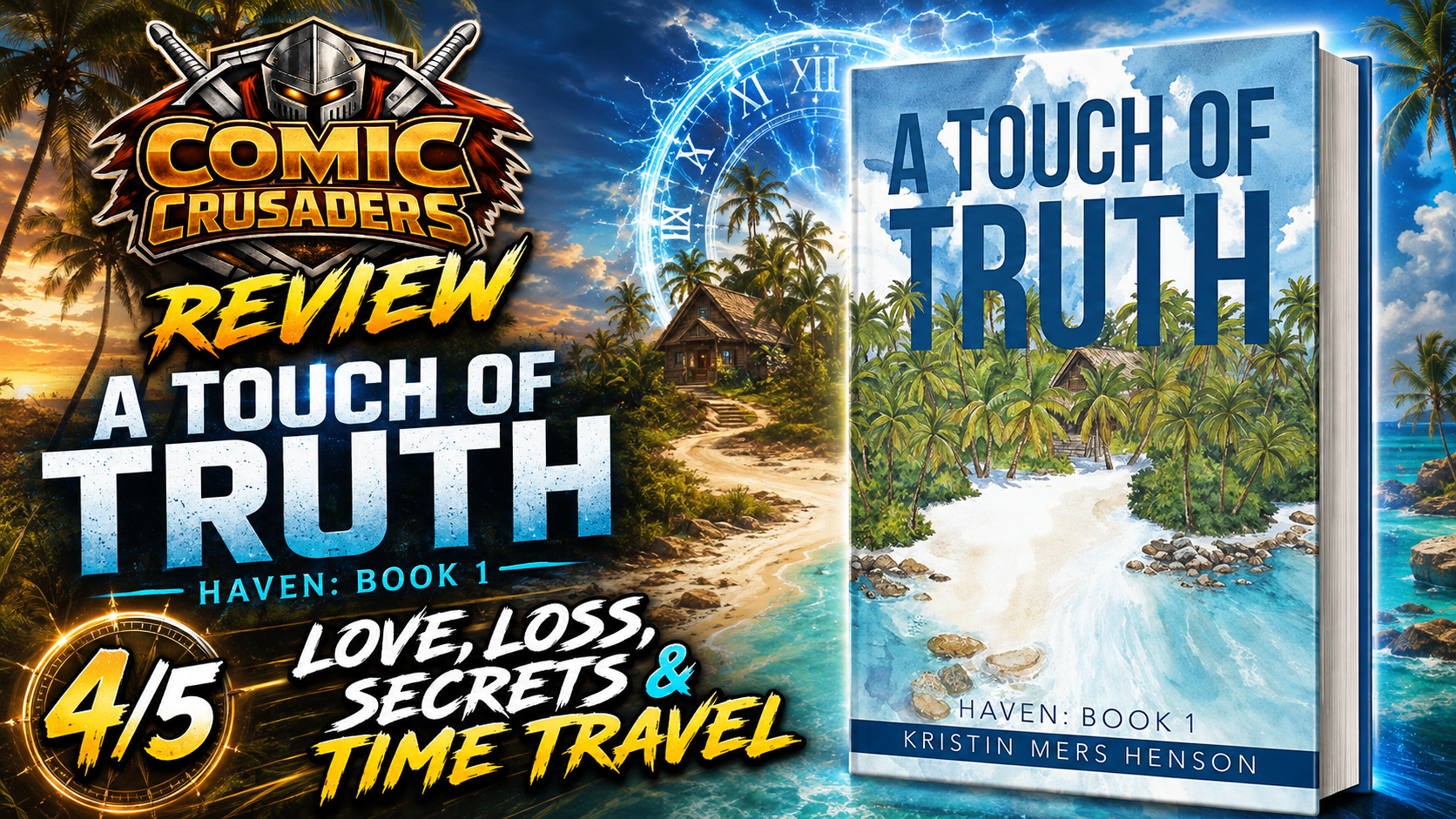
 A Touch of Truth starts like it wants to be a sun-soaked island drama about grief, memory, and going home, then quietly slides a skeleton key into the lock and blows the whole thing wide open. Kristin Mers Henson brings Kendra Cosgrove back to Coral Cay in 1996 carrying more than luggage. She is carrying the ashes of her parents, the weight of unfinished mourning, and a lifetime of memories tied to a place that once represented safety. That emotional foundation gives the novel something solid to stand on before the time-travel mystery ever shows its face.
Henson’s biggest weapon is atmosphere. Coral Cay is written with the kind of sensory detail that makes the heat feel heavy, the ocean feel endless, and the old resort feel haunted before anything supernatural actually happens. The blues of the water, the overgrown grounds, the abandoned buildings, the island pace, and the constant pull of memory turn the setting into more than scenery. The island feels like a place holding secrets in its walls, which is exactly what this story needs.
The novel really finds its identity once Kendra’s curiosity leads her through the hidden door and out of her own time. Instead of treating time travel like a flashy science-fiction gimmick, Henson uses it as a bridge between people whose lives are separated by decades but connected by the same location. The story moves between Kendra’s 1996 journey, Ian Stowe’s brutal beginnings in 1878, Aubrey Mayfaire’s path through the late nineteenth and early twentieth centuries, and the resort as it existed in 1946. That layered structure gradually transforms the Mayfaire from a ruin into a living piece of history.
Ian’s material gives the book some of its darkest weight. His childhood under the shadow of factory labor and class cruelty is far removed from Kendra’s tropical present, yet his discovery of the mysterious door becomes the thread that binds the novel’s timelines together. Henson takes time establishing that history, and while those chapters initially feel like a hard left turn away from Kendra, they pay off once the pieces begin connecting. By the time Aubrey enters the larger story, the door is no longer simply a magical object. It becomes a source of freedom, danger, opportunity, and unintended consequences.
The 1946 sections are where the emotional and romantic sides of the novel meet the mystery most effectively. Kendra’s relationship with Martin develops inside a world she already knows as history, which gives even simple conversations a strange tension. She knows this place has a future. Martin lives in a present she has already seen reduced to ruins. That imbalance creates an underlying sadness even when the scenes themselves are warm, funny, or romantic.
Martin, Maggie, and Devin give Kendra something she desperately needs after the loss of her parents: a temporary sense of family. Those relationships are among the novel’s strongest emotional elements because they make the question of getting home more complicated. Kendra is not simply trapped in another time. She gradually becomes attached to people and a version of Coral Cay that no longer exists in her own era. Henson understands that the real tension in a time-travel story is not always how somebody gets back. Sometimes it is whether they still want to.
The book also has a strong sense of inherited mystery. Keys change hands. Doors move. Histories overlap. Characters make choices that ripple forward into lives they will never see. The later introduction of additional travelers makes it clear that Kendra’s experience is only one piece of something much larger, and the final chapters push the story from personal mystery into the beginning of a broader mythology. As the first part of a trilogy, the ending does what it should: it answers enough to validate the journey while opening a much bigger question about why these people are being brought together.
Where the book loses some momentum is pacing. At 300-plus pages, Henson gives almost every emotional realization, scenic detail, and conversation room to breathe, sometimes more room than it needs. The island descriptions are beautiful, but similar images and feelings occasionally repeat. Characters also have moments where dialogue explains information the reader has already pieced together. A tighter edit could have made the mystery hit harder without sacrificing the reflective tone.
The romance is sweet and easy to root for, though parts of it arrive on familiar rails. Martin is immediately positioned as dependable, kind, and emotionally safe, while Kendra’s grief and displacement make the connection feel like a natural refuge. It works because their chemistry is built through time together rather than instant melodrama, but readers who prefer messier or less idealized romantic dynamics may find the direction predictable.
The historical storylines are compelling, especially when they reveal how the Mayfaire resort came to exist and why the hidden door matters, but some periods are painted in broad emotional strokes rather than dense historical texture. Henson is more interested in what history does to people than in turning the novel into a research-heavy period piece. That choice keeps the book accessible, though readers looking for hard-edged historical fiction may want more complexity in those sections.
What kept me engaged was the way grief, place, and time are tied together. Kendra returns to Coral Cay because she believes the island belongs to her past. The story slowly forces her to realize that the past is not fixed, not distant, and definitely not finished with her. The magical mechanics are important, but the book’s real question is about what we inherit from the people who came before us and what responsibility comes with discovering the truth.
A Touch of Truth is a warm, emotional, deliberately paced first chapter in a larger time-travel mystery. It blends island romance, family loss, historical drama, and supernatural adventure without losing sight of Kendra’s personal journey. It could use a sharper editorial blade in places, but the mystery deepens at the right moments, the setting has real personality, and the final hook gives the HAVEN trilogy plenty of road left to travel.
Crusaders Score:
4/5

Author: Kristin Mers Henson
Series: HAVEN: Book 1
Publisher: AuthorHouse


Leave a Reply
You must be logged in to post a comment.