
Free to Play: A Video Games Anthology Review: Difference Engine Hits Continue on the Human Condition
·Al Mega
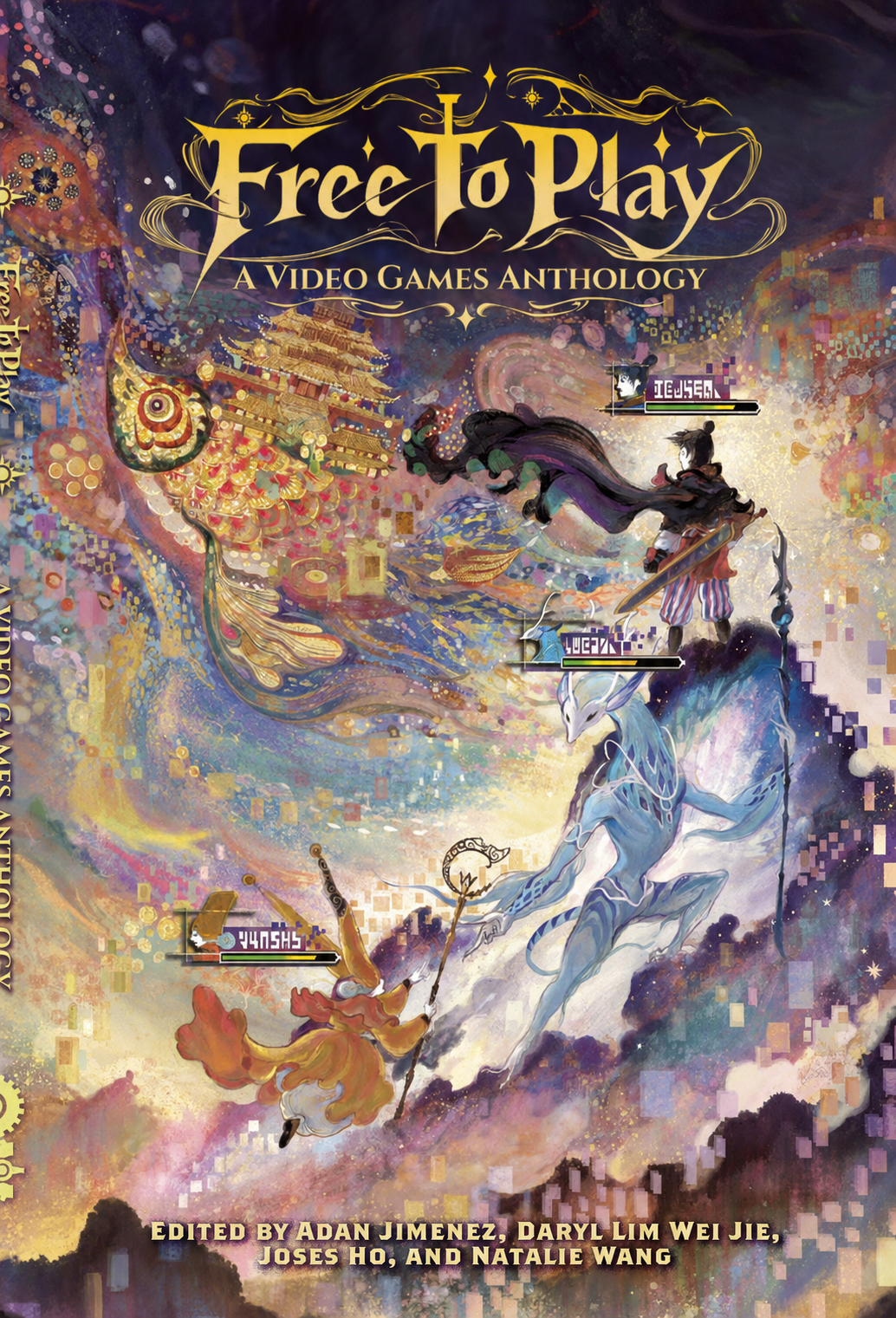
WEPA! Aight, gamers, comic heads, button mashers, save-scummers, old-school cartridge blowers and anybody who ever told their family, “Hold up, I can’t pause this!” Difference Engine just pulled up with Free to Play: A Video Games Anthology, and nah, this ain’t 224 pages of writers arguing over whether the SNES was better than Genesis. Although Brooklyn me would absolutely entertain that smoke. This thing gets underneath gaming culture and starts poking around where the controller cables get tangled with memory, grief, identity, family, loneliness, relationships and that weird emotional alchemy where some digital place you never physically visited somehow feels more like home than places where you actually paid rent.
The smartest move editors Adan Jimenez, Daryl Lim Wei Jie, Joses Ho and Natalie Wang make is refusing to force every contributor onto the same track. Free to Play contains six comics, three fiction stories, seven nonfiction essays, three poems and two multimedia pieces, selected from 165 submissions representing 16 countries. That’s not just variety for bragging rights. The format switching becomes part of the experience. Read a comic, hit some prose, slide into poetry, suddenly a piece is messing with interactive storytelling or Choose Your Own Adventure mechanics. The book behaves like somebody handed literature a controller and said, “Yo, stop standing there. Explore.”

Ellie Black’s “No Man is an Island” gets the engine warmed up beautifully, using deceptively simple black-and-white cartooning to revisit Animal Crossing before and during the pandemic. What once seemed like a goofy simulation of chores becomes something altogether different when real-world companionship disappears. Black’s page construction has tremendous comic timing, but underneath the laughs is isolation, longing and the strange miracle of virtual presence. Anybody who spent 2020 building islands, hunting turnips, visiting friends digitally or pretending everything was normal for twenty minutes is gonna feel this one creeping up behind them. It’s funny until it ain’t. Then it gets you.
Just when you think you know where this anthology is taking you, it switches lanes and hits you from a whole different direction. Gabriela Lee’s “The Short, Sweet Life of Commander Brian” turns repetition and respawning into a story about memory and existence. Myle Yan Tay and Natalie M. E. Tan’s “The Last Bonfire” goes straight into the psyche of a fantasy warrior abandoned after the player logs off, with dense cross-hatching, oppressive blacks and visual glitches making the world itself feel like corrupted software. Ken Liu’s “Side-Scroller” takes gaming perspective and uses it to examine how much of another human being we can ever truly see. Meanwhile Nuraliah Norasid’s sprawling, deeply personal “All the Times I Was Dragonborn” turns countless hours of Skyrim into something way more intimate than another “why this game rules” piece, touching home, caregiving, routine, violence, responsibility and the lives we quietly rehearse through avatars.
Then Jack Xi’s “Less Than Three Stars” comes through and interrogates Pokémon, optimization and disability without losing sight of why people love these worlds in the first place. That’s important. The anthology doesn’t spend 200 pages shaking its finger at gaming. It understands the medium too well for that cheap mess. Even when contributors challenge accessibility, gender restrictions, toxicity, violence or the compulsive pursuit of “winning,” the criticism comes from people who clearly know what it feels like when a game becomes refuge. Free to Play can criticize the arcade while still loving the sound of the machines.

Noor Tannir’s “Press ‘Y’ to Reboot” is one of the collection’s heaviest punches, connecting Fortnite, bereavement and real-world violence in ways that make respawning suddenly feel loaded with meaning. Varsha Sivaram’s “A Seat at Venba’s Table” finds an entirely different emotional frequency, beginning with playing Venba alongside their Tamil parents and letting cooking mechanics open conversations around culture, family, migration and identity. These pieces understand something folks outside gaming still occasionally miss: mechanics aren’t separate from storytelling. Cooking, dying, inventory management, character creation, fast travel and respawning can carry emotional meaning just as surely as dialogue does.
The comics keep this beast visually alive too. Anthony Falleroni’s “It’s Dangerous to Go Alone” is hilarious, wonderfully expressive stuff about backseat gaming, using exaggerated reactions and game-interface imagery like visual punchlines. Erica Eng’s “Shadow Stone” has a softer touch, following strangers connecting through cooperative play with clean layouts, warm character acting and enough environmental detail to sell that beautiful convention-floor electricity. Hana Yaacob’s “He Is You, She’s For You” plays directly with character-selection conventions and how game design can encode assumptions before somebody even presses Start. Across all of these, the anthology doesn’t settle on one “gaming aesthetic.” Each creator bends comics language toward the particular game experience being explored.
Wen-yi Lee’s “Your Inventory is Filling Up Again” might have one of my favorite concepts in the book, treating romance and memory like inventory items, complete with rarity classifications and emotional clutter. Alvin Pang likewise toys with branching, Choose Your Own Adventure logic in “The Writer as Gamer,” while judith huang’s “snake on a train” turns the old Snake structure into poetic form. That’s when this anthology really cooks. Instead of merely writing about games, contributors start stealing gaming’s grammar, HUDs, choices, loops, inventories, cameras, quests and movement, then remapping those mechanics onto literature. Yo, that’s the good stuff.

Is every selection going to land equally for everybody? Nah. Anthologies don’t work like that, and anybody telling you otherwise probably has a preorder bonus to sell. Some of the longer prose entries demand more patience, and readers walking in expecting a wall-to-wall graphic novel may initially wonder where all the panels went. The multimedia experiments also intentionally interrupt the comfortable rhythm of simply turning pages. But that’s part of the identity here. Free to Play isn’t trying to be one long comic wearing twenty-one different jackets. It wants each creator to decide what “play” can mean.
By the time the book reaches its afterword and reflects on the fantasy of completing every task, escaping responsibility and simply existing inside a finished digital world, the connective tissue snaps into focus. Games throughout this collection aren’t treated as escape because reality doesn’t matter. They’re meaningful precisely because reality does matter. We bring our dead, our childhoods, our anxiety, our families, our identities, our unfinished business and our whole overloaded inventory into these worlds with us.
That’s why Free to Play works, mi gente. The anthology understands that nobody ever really picks up a controller empty-handed. We’re carrying something. Maybe we’re looking for competition. Maybe community. Maybe one more night with somebody who’s gone. Maybe we’re trying on another identity, rebuilding a home, murdering dragons after a garbage day at work, or sitting beside somebody we love while they yell, “BRO, THE KEY WAS BACK THERE!” It’s all play, sure. But play has always been serious business when humans get involved.
Difference Engine didn’t make a book explaining why video games matter. They made one showing all the beautifully messy ways they already do. WEPA!
CRUSADERS SCORE:
4.5/5

Publisher: Difference Engine
Editors: Adan Jimenez, Daryl Lim Wei Jie, Joses Ho, Natalie Wang
Cover Art & Logos: D.Daddystar
Book Design & Layout: May Thu
Project Management: Hairul Amar, Aditi Shivaramakrishnan
Publisher: Felicia Low-Jimenez
On Sale October 6, 2026

Leave a Reply
You must be logged in to post a comment.