
Ides of Blood Review: Rome Wasn’t Built in a Day, But It Sure Bled in One!
·Al Mega
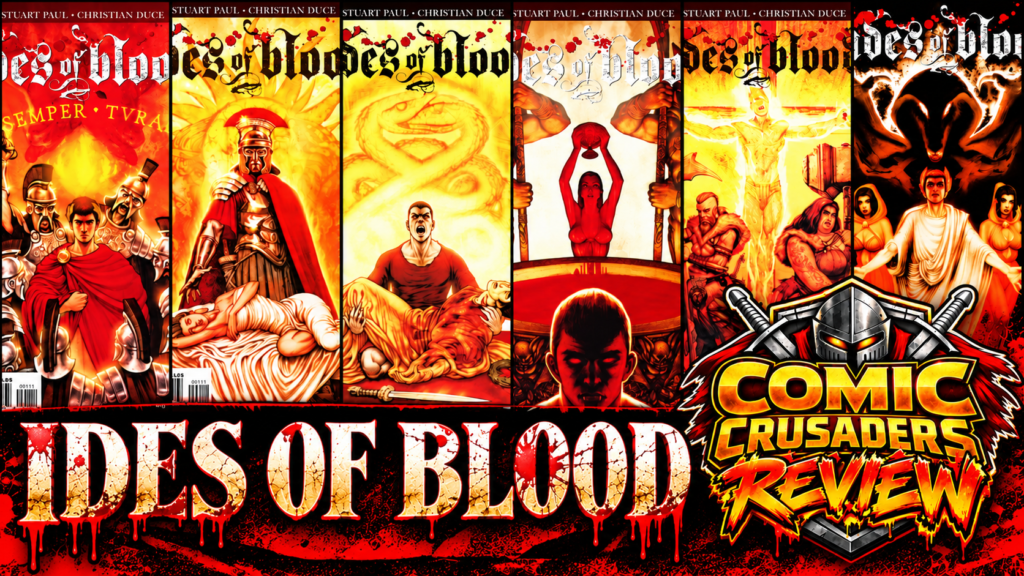
Ancient Rome already had enough crooked politicians, backroom deals, and people sticking knives where they didn’t belong. Somebody at WildStorm apparently looked at that historical circus and said, “Know what this needs? Vampires.” Now THAT is the kind of wonderfully unhinged comic-book thinking I can get behind. Ides of Blood takes six issues, originally released across 2010 and 2011, and turns the world surrounding Julius Caesar into a supernatural crime scene. Forget the clean statues and fancy sandals from those old history movies. This Rome is soaked in red, loaded with suspicion, and crawling with people who would sell out their own relatives for another taste of power. Stuart C. Paul and Christian Duce aren’t inviting us on a sightseeing tour, papi. They’re walking us through the back door of an empire where the worst monsters don’t necessarily announce themselves with a pair of fangs. Reading the whole run together makes the scope of that idea clearer. This is a story about what happens when a civilization that already feeds on people gets a few citizens who can do it literally.
The first issue sets its attitude before you even have time to get comfortable. A statue overlooks the city while the narration calls upon Janus, the Roman god of beginnings, and promises an account that history would rather forget. Then we drop from that grand view into the streets, where survival is a whole different religion. One caption describes Rome as a city built on mud and blood, then corrects itself: mostly blood. Oye, that’s not exactly the tourism slogan you put on a postcard! Paul knows the assassination of Caesar is already one of the biggest political betrayals in human history, so the vampire premise has to do more than decorate it. He connects the supernatural threat to Rome’s existing machinery of class, ambition, violence, and control. The republic and the empire are pulling in different directions; the living and the undead have their own appetites. Everybody talks about honor until their own neck is on the line. Tell me that doesn’t sound like politics on any block in any century.
Across the six chapters, Paul approaches the material with a blend of historical thriller, murder mystery, and full-on pulp horror. There’s an investigation-minded quality to the story that I appreciate because it gives the characters reasons to move through different corners of Rome instead of simply standing around waiting for the next attack. The danger doesn’t belong exclusively to a creature hiding in the dark. It lives in the conversations, the allegiances, and the way people with influence can turn somebody else’s suffering into an opportunity. I also dig how the book treats its alternate history with a straight face. Nobody’s winking at the reader like this is some cheap novelty mash-up. The premise is outrageous, sure, but the people inside the story are fighting for their lives. That commitment helps. Paul can get a little too comfortable with exposition, though. There are stretches where a character explains the politics or a caption underlines something Duce has already shown us. Fam, trust your artist! A grim expression, a bloodied street, and somebody reaching for a blade can tell me plenty without another speech.
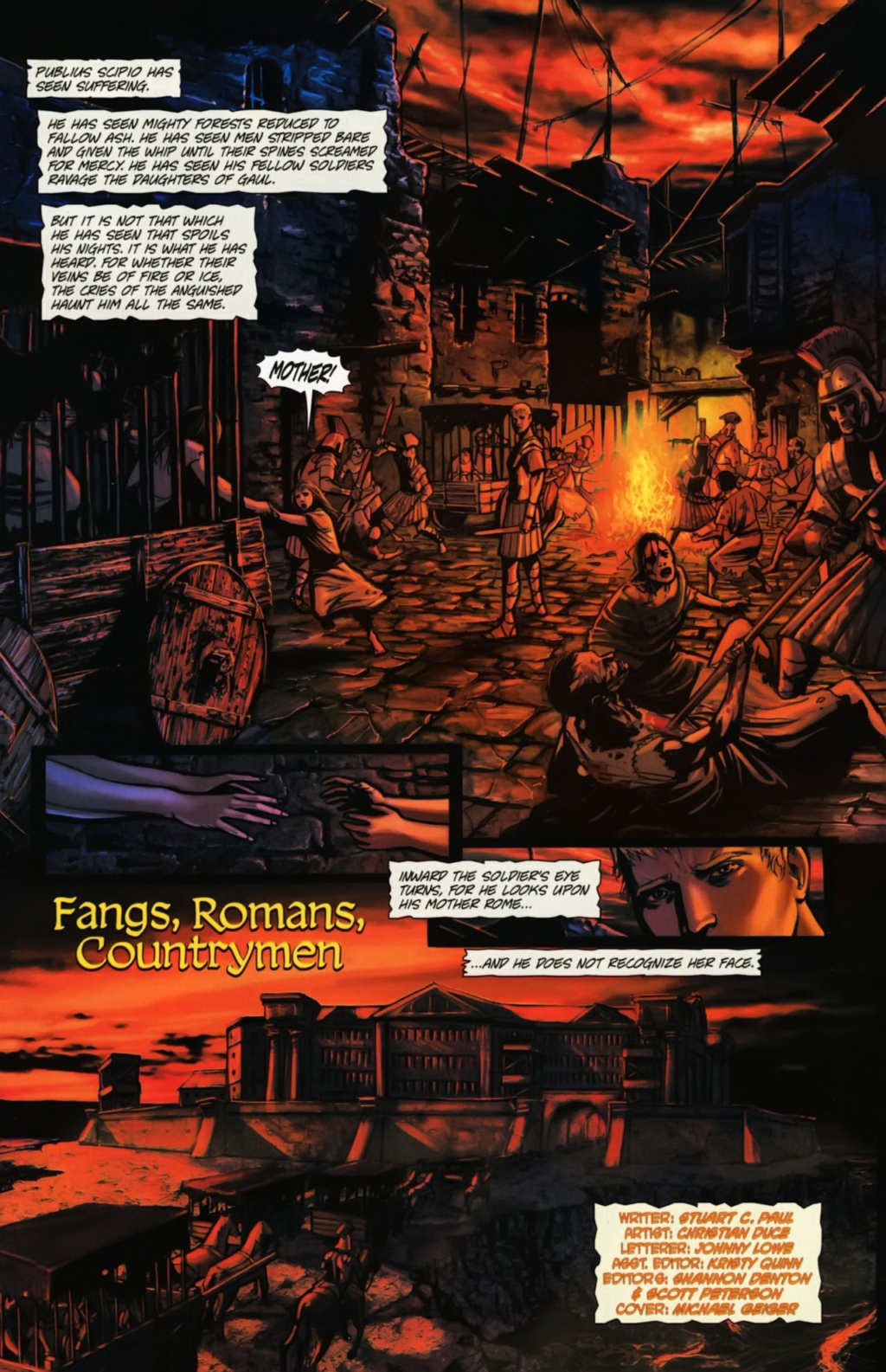
Christian Duce is a big reason this joint has a pulse. Look at how the opening pages establish Rome from above, all monumental architecture and imposing stone, before dragging us down into the alleys and the people who actually have to live in that mess. The transition tells you exactly whose version of history you’re about to hear. His characters carry the fatigue and suspicion of people who haven’t enjoyed a peaceful night’s sleep in years. Faces tighten when the wrong person enters a room. Soldiers look like soldiers, not mannequins dressed for a convention. When the violence erupts, Duce doesn’t suddenly abandon the atmosphere for generic superhero poses. There’s physicality to the bodies, the weapons, and the way figures collide inside the panels. I especially like the visual tension between Rome’s enormous public spaces and the cramped places where the real dirty business goes down. A city can look magnificent from a distance while being absolutely rotten up close. That’s the Rome this artwork gives us.
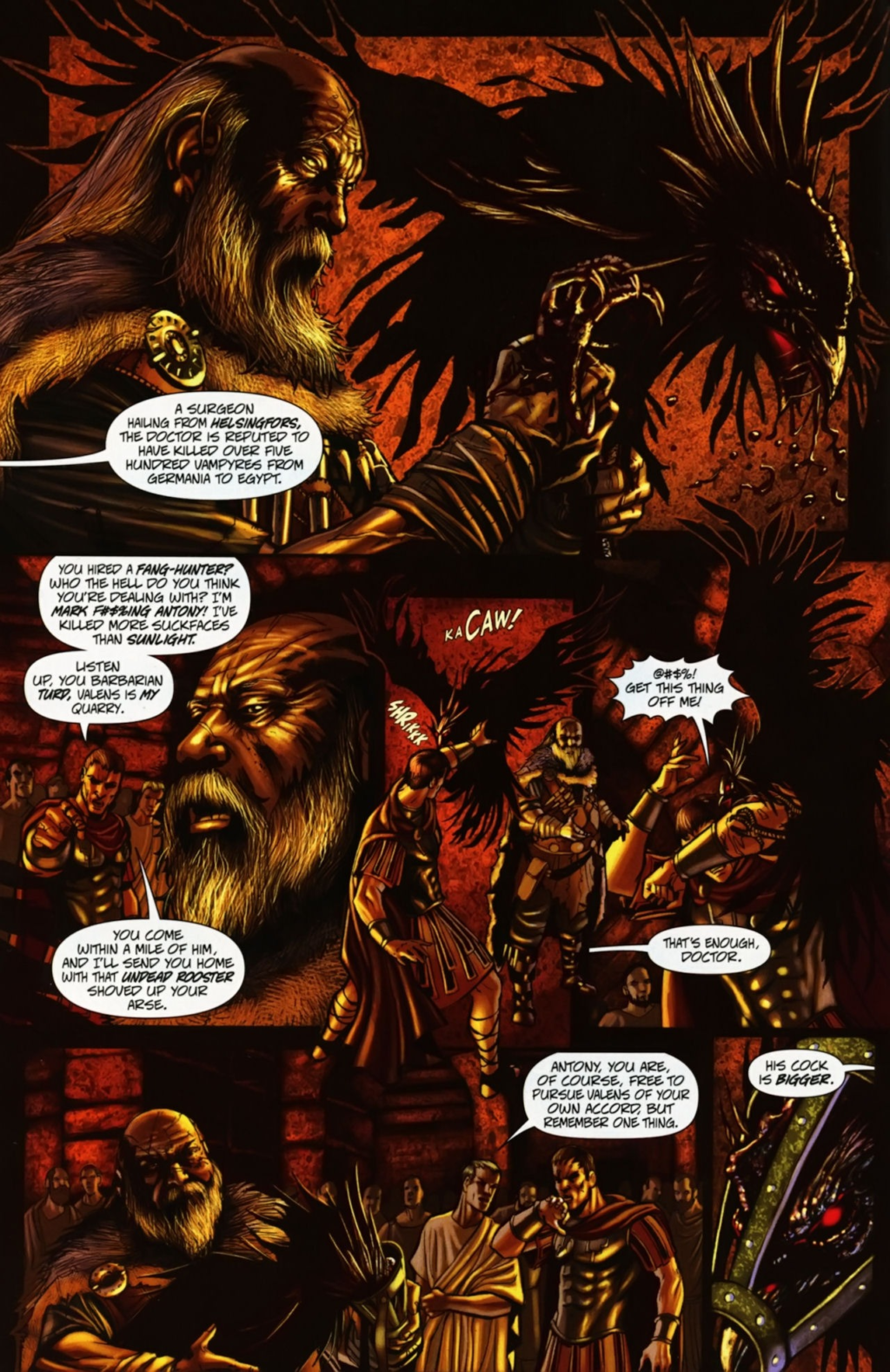
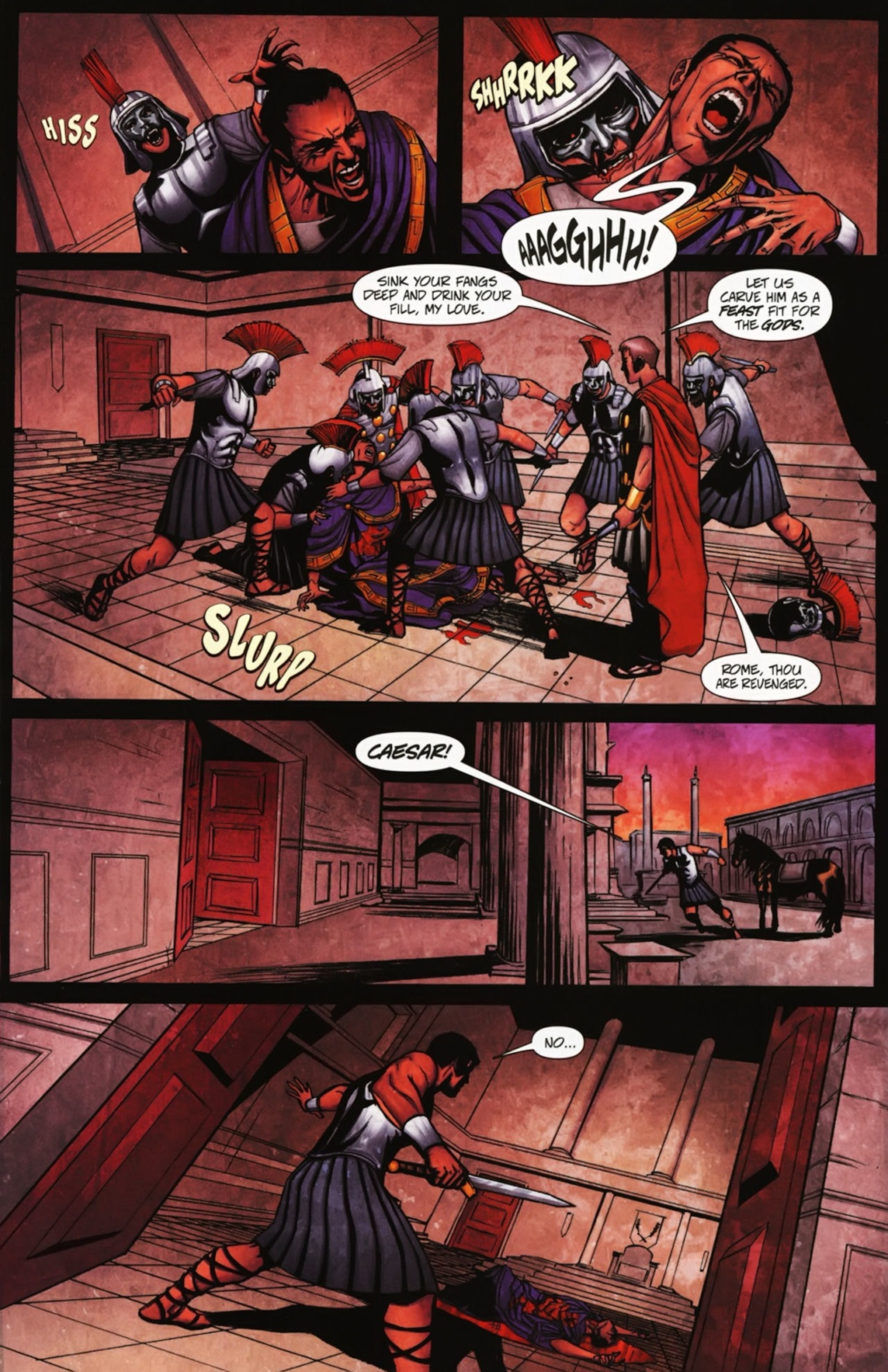
The six-issue format also gives Duce room to play with pacing and visual scale. One moment we’re looking at a carefully staged conversation where everybody seems to be measuring everybody else, and the next we’re getting a brutal interruption that changes the temperature of the page. His panel compositions know when to crowd the reader and when to pull back so the setting can do the talking. There’s a theatrical streak to the imagery, which fits a Roman epic, but the blood and grime keep it from looking too polished. I won’t pretend every action sequence is equally easy to follow. Some pages get busy, particularly when the dialogue, figures, and dark backgrounds all compete for attention. Still, the visual ambition is there from beginning to end. Duce makes this place feel inhabited, dangerous, and expensive to survive in. You can almost hear the sandals on the stone and the guards yelling from the next street. That’s the kind of environment I want from a period comic, not three generic columns in the background and a caption telling me I’m in Rome.
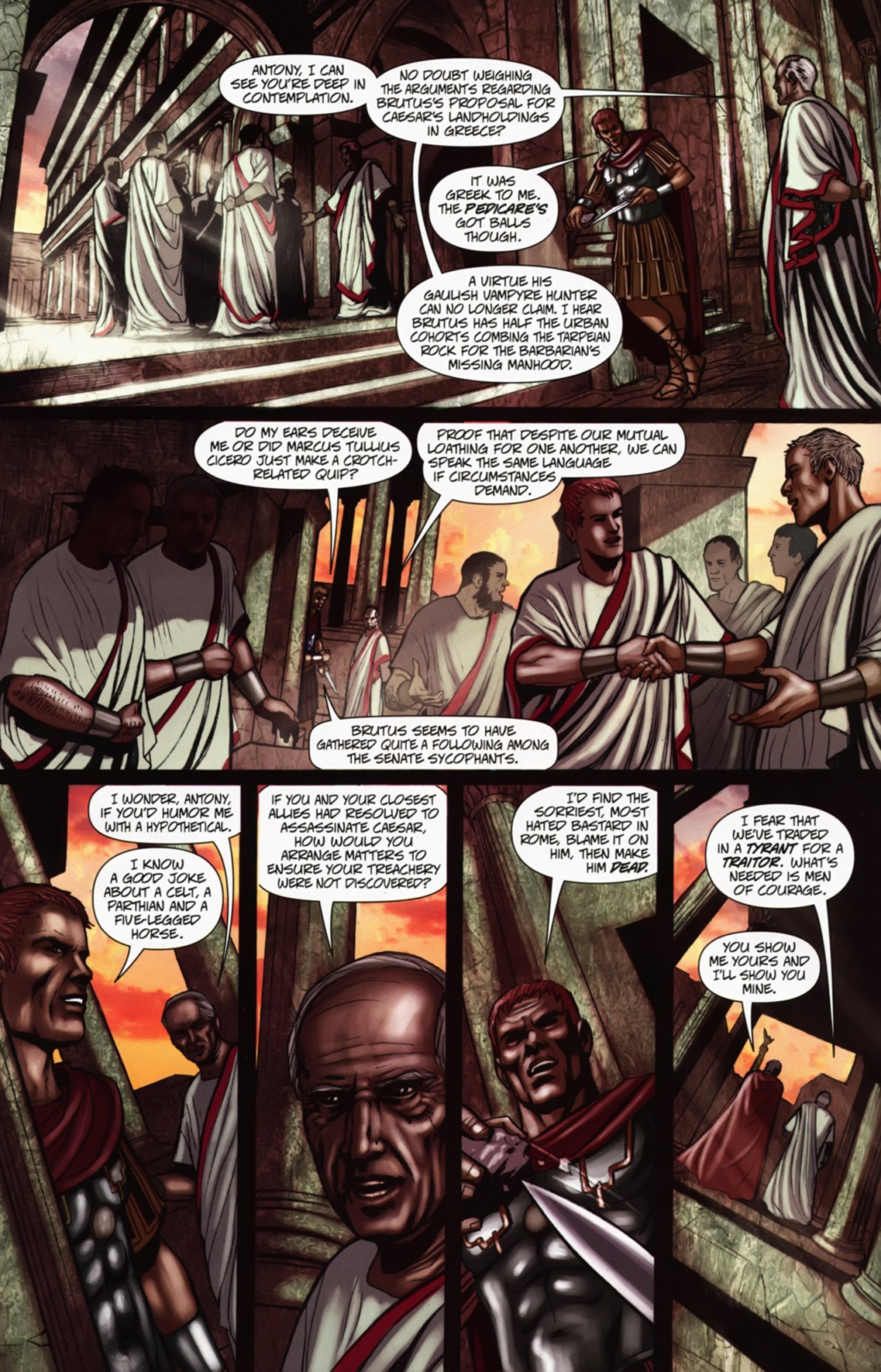
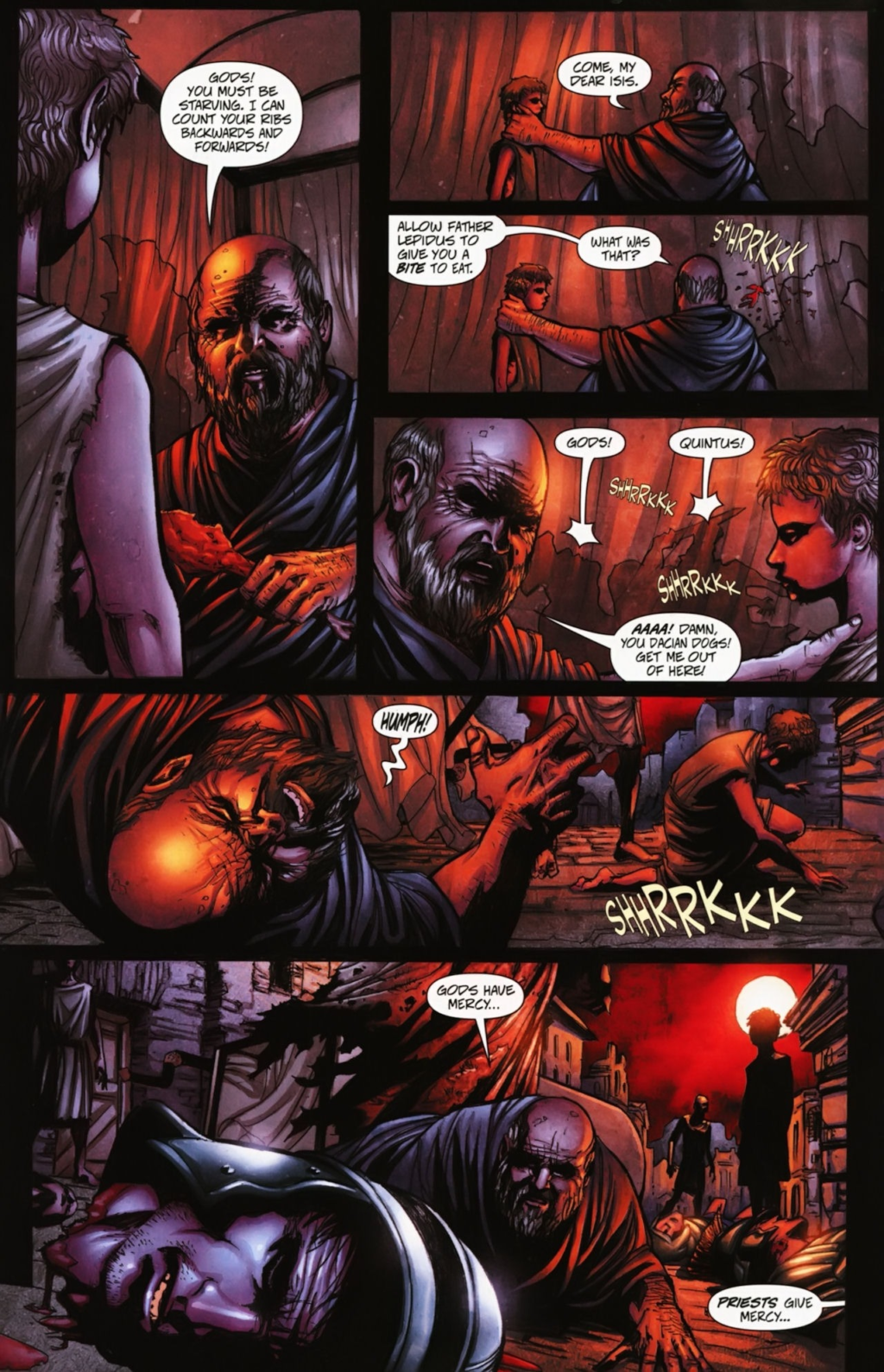
Carlos Badilla’s colors deserve more than a quick name-drop because the palette practically announces the book’s intentions. The opening pages are drenched in furious reds, dirty purples, orange firelight, and heavy shadow. Rome looks like the sun went down three days ago and nobody has been brave enough to ask when it’s coming back. Those reds aren’t just there because vampires drink blood. They make the whole city feel infected by violence before the story even gets to its ugliest moments. As the run progresses, the changes in lighting and atmosphere help distinguish the different spaces and moods without breaking the book’s identity. Johnny Lowe is carrying his share of the workload on letters, too. Paul gives him plenty of captions, plenty of dialogue, and plenty of opportunities for balloons to swallow the artwork. Lowe keeps the information readable while leaving the panels room to breathe, and the effects during the rougher moments add punch without turning the page into alphabet soup. Respect to both of them. Pencils get the applause first, but color and lettering are what keep a book like this from collapsing under its own ambition.
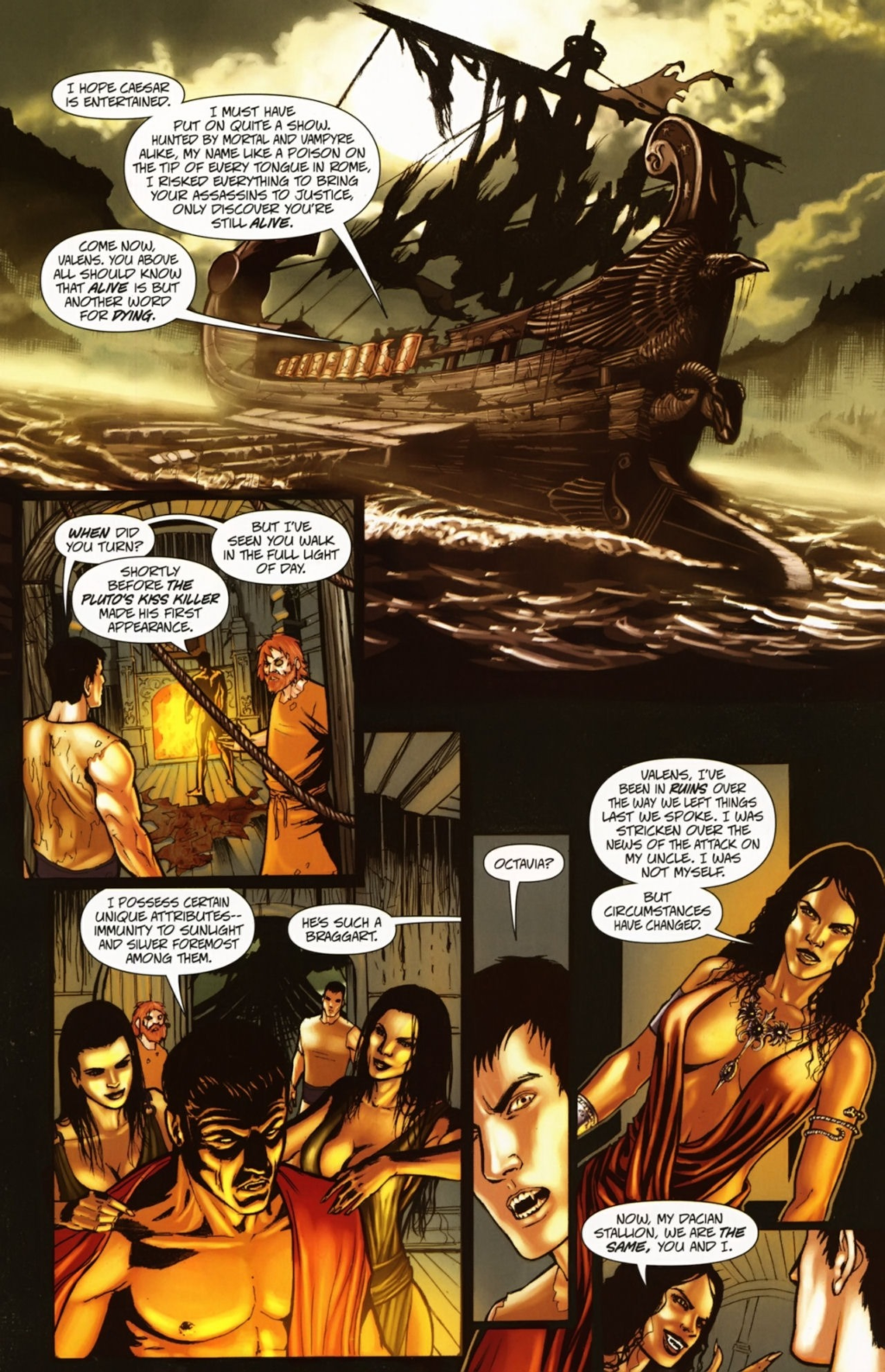
Now, let me give the series a little Brooklyn-style grief, because loving comics doesn’t mean clapping for every single page. Six issues should give a writer room to develop a conspiracy, deepen the cast, and make the payoff hit like somebody just slammed the barbershop door in the middle of a heated argument. Ides of Blood has the ingredients, but it doesn’t always balance them. The historical exposition can slow the momentum, especially when the plot is itching to move. Some personal beats could use another quiet scene before the next round of political maneuvering or violence barges in. The later chapters lean harder into the consequences and action, which gives the collection a welcome push toward its conclusion, but I missed some of the slow-burn dread that makes the opening so effective. I would also have liked more breathing room for certain confrontations. A betrayal lands harder when you’ve had time to sit with the relationship being broken. None of this makes the series a wash. It means the creators were swinging at a pretty ambitious target, and a few punches landed cleaner than others.
After spending six issues in this blood-soaked version of Rome, I’m glad I took the trip. Ides of Blood is the kind of oddball WildStorm book that deserves another look from readers who missed it on the shelves. It’s got a genuinely fun alternate-history premise, a city with a nasty personality, striking artwork, and enough political treachery to keep the vampire angle from feeling like a gimmick. Stuart C. Paul sometimes talks more than he needs to, and the story’s balance between mystery and action isn’t flawless, but Christian Duce, Carlos Badilla, and Johnny Lowe give the whole saga a visual identity that sticks with you. Big love to editor Shannon Eric Denton, assistant editor Kristy Quinn, and the crew who helped put this wild experiment into readers’ hands. I love seeing a publisher take a chance on something that doesn’t fit neatly into the usual superhero boxes. If you like your historical fiction with teeth, your Roman politics filthy, and your comics just a little out of their damn minds, go hunting for these six issues. Rome wasn’t built in a day, fam, and this version sure as hell wasn’t going to survive without spilling some blood.
Writer: Stuart C. Paul
Artist: Christian Duce
Colors: Carlos Badilla
Letters: Johnny Lowe
Editor: Shannon Eric Denton
Assistant Editor: Kristy Quinn
Publisher: WildStorm
Leave a Reply
You must be logged in to post a comment.