
TEN Vol. 1 Review: Christopher Rhodes Builds a Superhero Universe With Fists, Fire, Politics, and a Whole Lotta Nerve
·Al Mega
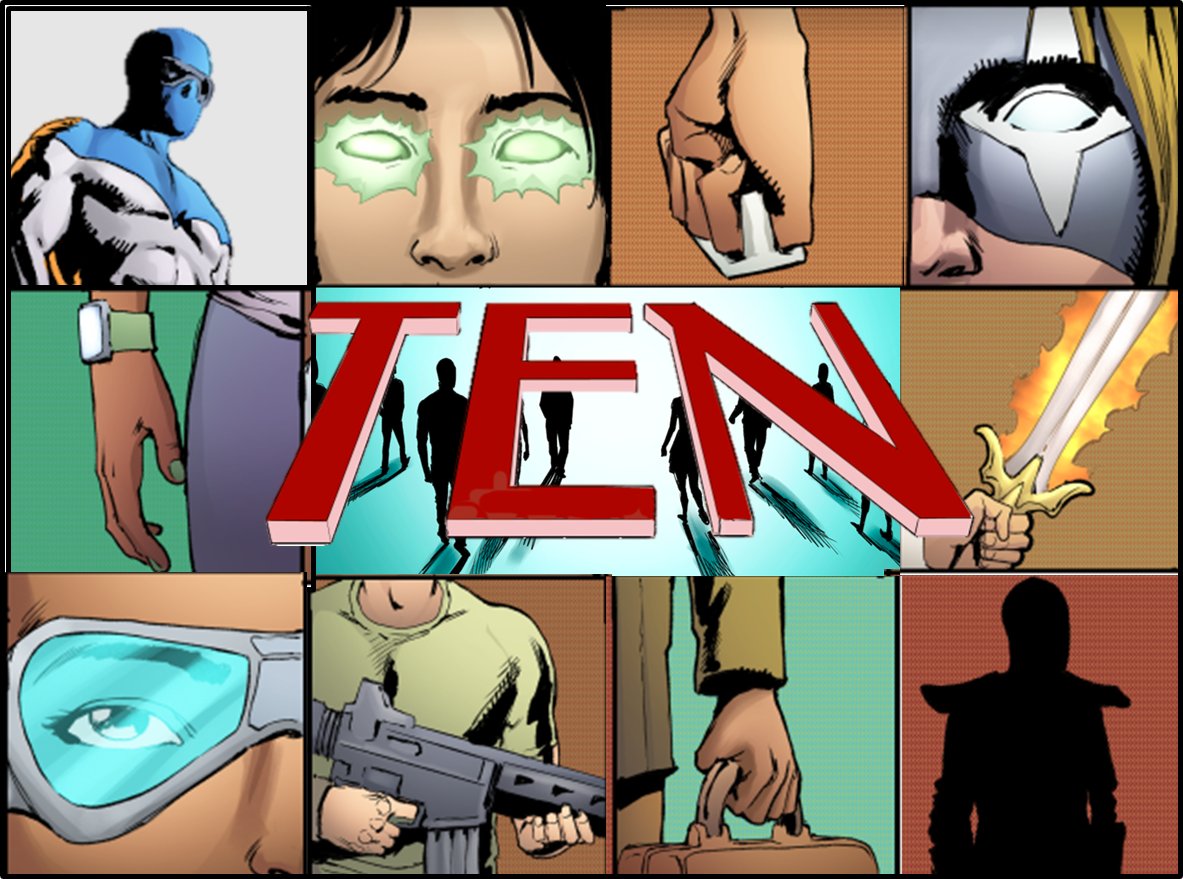
TEN Vol. 1, coming to Kickstarter from creator and writer Christopher Rhodes, brings together the first five chapters of a superhero epic that knows exactly what lane it wants to drive in, then floors it like somebody yelled “last exit before the bridge!” The creative team across the volume includes Christopher Rhodes as writer and creator, Marcos Lima as penciler and inker across the series, Sal Monaco as colorist on TEN #1 and TEN #3, Marcos Lima also handling color work on TEN #2 and TEN #5, Ralf Singh contributing color work on TEN #4, Buddy Beaudoin lettering the full run, with variant cover work from Lane Lloyd, Marcus Jimenez, Sim Art, and Nicholas Mueller. That is a strong indie squad right there, fam. No fluff. No wack “look, Ma, I made a cape” nonsense. This book came to build.
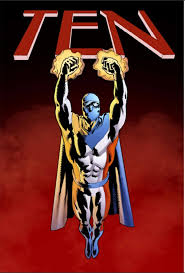 The premise is deliciously clean and dangerous: ten people across the globe are chosen to represent humanity and are given amazing powers by visitors from another world. Sounds simple, right? Nah. That is the setup. The real engine is what happens after the shine wears off, after the press conferences, after governments start sweating through their suits, after the public stops saying “thank you” and starts asking “who gave you permission?” Rhodes understands something a lot of superhero stories forget while flexing in the mirror: power is not just about who can lift the tank. Power is about who gets trusted, who gets feared, who gets regulated, who gets platformed, and who gets told to sit down even after saving lives. That is where TEN starts cooking with gas.
Issue #1, “Resignation,” centers Brian Johnson, a Black Navy veteran turned superhero PeaceKeeper, and right away Rhodes makes the room uncomfortable in the best way. PeaceKeeper can fight for America abroad, but he is banned from operating at home. Read that again and tell me that is not superhero fiction grabbing real-world hypocrisy by the collar. Brian is not just some flying symbol in a clean cape. He is a man caught between service and suspicion, between patriotism and prohibition, between being useful to the state and being seen as a threat by that same state. Ay yo, that is not just a cape problem. That is America asking for help while keeping one hand on the panic button.
Marcos Lima’s art gives PeaceKeeper a classic superhero silhouette with an indie edge, like old-school four-color confidence got dragged through today’s political smoke. The action hits, especially when the book lets PeaceKeeper move with speed and impact, but the quieter beats do just as much heavy lifting. The conversations around race, protest, government optics, and “acceptable heroism” give the issue its bite. At times, the dialogue comes in thick, almost like Rhodes is trying to get five arguments into one room before the cops show up. But honestly? That urgency fits. The book is not whispering from the back row. It is standing on the stoop yelling, “Yo, you seeing this?”
Then issue #2, “Scrutiny,” shifts the spotlight to Leticia Ferreira, also known as Iris, and the whole vibe changes without losing the main heartbeat. Iris is Brazilian and Mexican, a superhero and a media mogul, the kind of character who instantly raises the temperature because her power is not only physical. She controls narrative. She understands image. She knows attention is currency, and baby, in this world, attention spends real nice. Where PeaceKeeper’s story wrestles with restriction, Iris’ chapter wrestles with visibility. What does it mean when the hero is also the brand? When the rescuer owns the cameras? When the person saving the day might also shape the way the day gets remembered?
That is spicy. That is not regular mild salsa from the corner deli. That is “somebody’s abuela made this and you better respect it” level spicy.
Visually, Iris brings a sleek, green-energy presence that gives her scenes a sharp identity. The action has a cleaner, more controlled rhythm than PeaceKeeper’s issue, which makes sense because Iris feels more calculated in how she operates. She is not simply reacting to crisis. She is managing perception while fighting through it. Rhodes uses her to poke at media power, celebrity hero culture, and the uneasy line between public good and personal empire. The backmatter-style worldbuilding around her profile is a great touch, too. It makes the universe feel larger than the page, like there are websites, arguments, fan edits, conspiracy threads, and cable news panels running around these heroes 24/7. Dead-ass, that is how a powered world would operate now. Nobody just saves a bus anymore. Somebody is livestreaming it, clipping it, arguing about it, monetizing it, and making a reaction video with a thumbnail face looking like they smelled burnt rice.
Issue #3, “Vendetta,” pulls the book into darker territory with Purifier, a mysterious vigilante stalking Tokyo and Asia while hunting dangerous criminals with lethal force. Now we are in the moral mud. Purifier is not here for applause. He is not doing press tours. He is not shaking hands at the ribbon cutting. He is violence with a thesis statement, and Rhodes does not let the reader get too comfortable with him. The reward letter that frames part of the issue is a smart storytelling device, turning Purifier from urban legend into target, myth, monster, and maybe necessary evil depending on who you ask and how bad their day has been.
This is where TEN starts showing range. PeaceKeeper asks what happens when society fears a hero’s identity. Iris asks what happens when a hero controls attention. Purifier asks what happens when a hero stops caring about permission entirely. The fight choreography here has that shadowy martial-arts grit, and Lima’s pencils, paired with Monaco’s colors, give the chapter a harder edge. The red caption boxes and grimmer palette make it feel like the book got quiet before something very expensive broke. Good. Let it break.
Then comes issue #4, which heads to India and introduces Streamline, and this chapter is where the series plays with fandom, speed, spectacle, and heroism in the age of constant digital eyeballs. Streamline’s story has a different flavor, more immediate and socially wired. This is a hero living in a world where saving somebody can turn into content before the dust settles. There is warmth here, especially in the way the character’s origin connects to everyday danger and community memory. There is also a sly critique running underneath it all: when heroism becomes visible enough to be loved, it can also become consumed. Fans want access. Platforms want engagement. The world wants miracles on demand. Say less!
Streamline’s issue has one of the volume’s most contemporary pulses. It understands that modern hero worship is not just statues and parades anymore. It is comments, livestreams, followers, stans, haters, reaction culture, and people yelling “help!” into the same device they use to roast strangers for sport. That is wild, but also painfully accurate. The art leans into motion and crowd energy well, and the social media framing gives the issue a poppier texture. It may be the chapter that feels the most different from the others, and that is a good thing. A global superhero universe should not feel like every city speaks the same visual language. Brooklyn does not move like Tokyo. Mumbai does not move like Washington. Rio does not move like anywhere else. That variety matters.
Issue #5, “Shockwaves,” is the volume’s big connective tissue, and this is where Rhodes starts pulling the scattered sparks into one larger electrical storm. Several members of the Ten gather and reflect on their debut, their first mission together, and what may have been their last. That structure gives the book room to finally show these characters not just as individual case studies, but as part of a shared experiment that is already cracking at the edges. The team dynamic is not clean. It should not be. You do not take ten empowered people from across the globe, drop them into a politically fractured world, and expect everybody to hold hands like a Saturday morning theme song. Nah, son. Somebody is going to question the mission. Somebody is going to push too far. Somebody is going to smile for the cameras while hiding a nuclear-level secret in the basement.
The ending material with Project Athanatoi is a strong hook, the kind of final turn that says, “Oh, you thought the aliens were the only thing to worry about? That is adorable.” Bio-battery harvesting, replication facilities, psionic dampening, tactical drills, obedience training, the whole thing smells like mad science with a government budget. That is the kind of sinister back-end worldbuilding that makes this volume feel bigger than the five issues collected here. The superheroes are the billboard. The real horror may be in the lab.
What makes TEN work is that Rhodes is not trying to hide the politics inside the cape. He puts them on the front lawn. This book is about race, media, state power, vigilantism, celebrity, global identity, foreign policy, surveillance, and public trust. But it is also about people punching through walls, flying through danger, and making dramatic choices while wearing outfits that would absolutely get side-eyed on the subway. That balance is the secret sauce. A superhero story without ideas is just cardio in tights. TEN has ideas. Big ones.
Is it perfect? Not quite. Some pages are dialogue-heavy, and certain exposition drops could breathe more if the art were given extra silent space to let emotion simmer. There are moments where the ambition tries to fit through a doorway that is just a little too narrow. But I will take an indie comic swinging big over a safe comic doing polite little jumping jacks any day of the week. The slight density is also part of the book’s personality. Rhodes writes like he has been waiting to have these conversations and finally got the mic. Sometimes he leans into that mic hard. Good. The genre can handle it.
Marcos Lima deserves a strong salute here because keeping five issues visually coherent while the book jumps across tones, nations, political moods, and hero types is no small lift. The character designs feel iconic enough to register fast but grounded enough to live in Rhodes’ more politically textured world. Buddy Beaudoin’s lettering keeps dense pages readable, which is huge because this book is not shy with text. Sal Monaco, Ralf Singh, and Lima’s color work give each chapter its own atmospheric signature, from PeaceKeeper’s classic superhero punch to Purifier’s harder shadows, Iris’ sleek glow, Streamline’s warmer pop, and Shockwaves’ team-scale clarity.
TEN is not just another “what if regular people got powers?” comic. We got plenty of those. This is more like, “what if the world got ten miracles and immediately started arguing over jurisdiction, race, media rights, state violence, and who gets to call themselves saved?” That is the good stuff. That is where superhero fiction still has meat on the bone. Christopher Rhodes and the team are building a universe with brains, bruises, and backbone, and this first volume makes a strong case that TEN belongs on the radar of readers who want their capes with consequence.
Wepa, this one has juice. TEN is global superhero storytelling with a political nerve, an indie heart, and enough worldbuilding ammunition to keep the next campaign feeling like a must-watch. Back it, read it, argue about it, and then pull up for the next chapter, because this universe is just getting loud.
CRUSADERS SCORE:
4/5
Created & Written By: Christopher Rhodes
Publisher: TEN Comics
Penciler / Inker: Marcos Lima
Colorists: Sal Monaco, Marcos Lima, Ralf Singh
Letterer: Buddy Beaudoin
Variant Cover Artists: Lane Lloyd, Marcus Jimenez, Sim Art, Nicholas Mueller
Featured Chapters:
TEN #1: “Resignation”
TEN #2: “Scrutiny”
TEN #3: “Vendetta”
TEN #4
TEN #5: “Shockwaves”
Coming Soon To Kickstarter:
TEN Vol. 1 / TEN Max #2-3
Follow TEN Comics:
Twitter/X: @Ten_Comics
Instagram: @Ten_Comics
Facebook: @TheTenComics
BlueSky: @TenComics.bsky.social
TikTok: @Ten_Comics
Leave a Reply
You must be logged in to post a comment.